
Tag Archives: creativity

Julia, It’s either You or Me

Julia Cameron possesses the rare talent of crafting an instructional book that is a treat to read, an invitation to be seen, and a storehouse of insight and wisdom. But I’m not happy with her right now. With some friends, I’m going through her book, The Artist’s Way. And it’s fun—the reading, our group dynamic, the exercises. Under her tutelage I’m learning to date my inner artist, a practice designed to fill my creative well.

I’m not mad at Julia about these Artist Dates. Or about the fact that I seem to have less creative flow since starting The Artist’s Way coursework. It’s probably hormones or the time of year or the other things on my calendar. Or maybe I’m just too contented to write. I like most of what’s on my schedule, and since I don’t fight against myself all the time any more, the emotional atmosphere in my life is pretty calm. In any case, I can’t put Julia on the hook for my stagnant writing.

It’s Morning Pages I’m mad about—three pages of stream-of-consciousness writing every morning. Julia swears they will change your life. Morning Pages—along with Artist Dates—are Julia’s favorite tools for recovering creativity. They are “a loving witness to our growth process,” a form of meditation, a journey inside. “We find our own quiet center,” she writes, “the place where we hear the still, small voice that is at once our creator’s and our own.” I think I know exactly what she’s talking about. I’ve been journaling with God for decades. I found my quiet center. I love to sit with my Creator and a pen and see what happens, or to hash out on paper a nagging question, perplexing circumstance, or angry diatribe. On the page, in communion with the Spirit, I have found myself and have discovered with some surprise that I like myself.

Julia takes care to point out that many people have resistance to Morning Pages, but two months ago I just knew that would not be me. What could be better than starting the day with three pages of stream-of-consciousness writing? Well, after nearly two months of writing (almost) daily, I can think of at least three things: snuggling in bed with my warm husband a little longer, sitting with God and watching the sunrise, or spending time with whichever daughter awakens early.

As is often the case, the thing I thought would be hard (Artist Dates) slipped into my life like a new and delightful friend, and what I thought would be easy (Morning Pages) is causing considerable discomfort. I try to wrestle it into submission by reminding myself that it is a perfect fit for me. I totally look great in this outfit. But after weeks of early-morning writing in which I have discovered next to nothing about myself, except that I’m chafing at this requirement, I must admit Morning Pages are not a perfect fit. I don’t want to record random thoughts. I want to finish a thought. I don’t want to write fragments and ramblings. I don’t want to lose valuable insights in pages of jibber-jabber.

Besides, my “consciousness” seems to be a bit of a worrier. Following it around for three pages is more stressful than sitting in silence, practicing gratitude, or praying for friends. Perhaps those things are allowable for Morning Pages and I’m just getting this all wrong. But stream-of-conscious, to me, doesn’t sound like directed thoughts and meditations. And I’m not supposed to pause. Keep writing, bypass the left brain, or some crap like that.

I don’t like to admit it, but I don’t like being told what to do. The rule-follower in me really wants to cross every “t” and dot every “i,” so doing what I’m told can be excruciating. It takes a lot of energy to get things right. If you’re going to tell me what to do, you better know what you’re talking about and the payoff better be good, because I’m not self-actualized enough to put in a proper (balanced) amount of effort. And once I over-blow my efforts, I expect an equally overblown result. I’m not about to spend hours every week writing a bunch of gibberish because you, Julia, say it’s the best thing since sliced bread.

Take that.

I’m not very good at agency yet, so I make up for it by pushing back on everyone who wants something from me. I live in the tension of hoarding my time and emotions out of fear, and giving them too freely, also out of fear. This is not Julia’s fault. She has simply made a request and I can’t handle requests. Isn’t every request an obligation? And if it’s not—if this whole course is actually about helpful tools and creative recovery—then how do I know whether to force myself to do Morning Pages? Do I choose them because my resistance needs to be seen but not given charge? Or do I choose not to do them because I gave it an honest try and found I already have practices in place that work better for me? Is that prideful? Rebellious? Naive? How could I know more than Julia Cameron?

I’m stuck. And stuck makes me angry. And anger makes me want a “bad guy,” which in this case is either me or Julia. Who’s it gonna be?

Sigh.

There is no bad guy.

There is no right answer.

Morning Pages could be helpful today or next year or never. It could be unhelpful in winter or while I’m content in life, or forever. I hate that. How does ambiguity manage to be such heart-wrenching torture, and simultaneously an elegant freedom? I am free to choose. I can decide to write Morning Pages when I don’t feel like it. Or I can not write them at all. Or I can try one page, or evening pages, or weekend pages. Who decided to give me this much power?

Some say it’s God, the only One crazy enough to hand out freedom-of-choice like candy. The rest of us know that some amount of control is the only thing keeping us humans washing our hands before we eat, and stopping us from eating each other alive. But maybe I’ll go with God on this one. I don’t have to fight with Julia, or Morning Pages, or even with myself. I can decide. Then I can change my mind and try something else next week. There’s not much at stake here. Maybe the best part of Morning Pages is learning that life is not graded, but lived.

Potential

Potential

Blessed are You,
Lord our God,
King of the Universe,
for potential—
a door ajar,
a hint of what I can’t see.
What is there?

Blessed are You
for potential
to give and receive,
comfort and be comforted,
see and be seen—
relational miracles.

Blessed are You
for creative energy
to birth poems and essays,
make spring rolls and peanut sauce,
weave laughter through dinner and bedtime.

Blessed are You,
Lord our God,
King of the Universe, for this—
Potential means I don’t know.
Not knowing means I’m not in control.
Not controlling means I’m free to love.
And love makes even the impossible possible.
Potential.


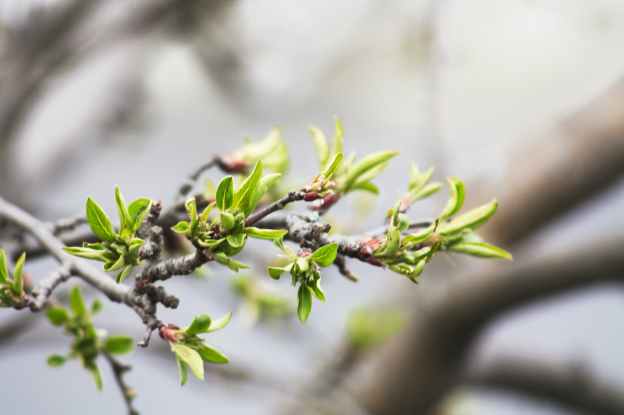
Green fruit has potential to become ripe.
Ripe fruit is potent with flavor and satisfaction.
Empty things have potential to be filled with anything—even dust and spiders.
Full things contain possibilities for all kinds of creation.
Best of all, potential is NOT something I can DO.

The Light Between Us

I’m taking a break this week from Father’s House and The Whole Language, to write about a different small group I’m in. There are four of us, meeting via Zoom to share our experiences through a compassion and wholeness workbook. The author of this workbook is my beloved sister, Dr. Jody Washburn. “Dr. Washburn” doesn’t roll off my tongue right, so at the risk of being an impudent younger sister, I’ll refer to her as “Jody.”

The full title of the workbook is, “Compassion & Wholeness: Engaging with Care and Curiosity on the Healing Journey.” This makes me smile. I love every beautiful word strung together into an invitation. Compassion… my invitation to care for another. Wholeness… my invitation to care for myself. And each of these spaces explored with curiosity, which is the antidote for judgement and shame—a healing journey indeed.

Jody writes about two barriers to belonging: 1) feeling “we have to hide or downplay who we are in order to belong,” or 2) feeling like belonging will come when we can “fix” others so they are more like us. Is there a space in which we can maintain our individuality, allow others to maintain theirs, and experience intimacy, belonging?

I have often felt this tension between hiding me or fixing you. I’m certain I will only be accepted if I meet expectations—not just in the workplace, but in friendship and at home as well. Therefore much of my energy goes into meeting expectations (real or imagined). Yet I know from painful experience that performance does not breed intimacy. People may “like” me, but they don’t know me. They know my performing self, or my “representative,” as Glennon Doyle would say. My real self suspects that if she were known, she would be rejected. Each time I allow my tired or confused or sad self show, there is a real possibility of shame-reinforcing rejection. People need me to make sense, to show up consistently, and to manage my own emotions. I suppose the most awful thing about this is that there is some truth to it. But this truth no longer has my loyalty. I have left it behind for something else.

I suppose my “something else” could be described as discomfort, but it is a discomfort leading to delicious comfort, to an internal wholeness I didn’t know was possible, and an intimacy with others I could not imagine. The discomfort is in losing control (or the illusion of control), receiving my own impossible-to-understand internal experiences, and receiving the experiences of others. No fixing. This is a terrifying freedom and a portal to a new dimension, a tangled and beautiful garden of love.

“Connection with [myself] and connection with others,” Jody writes. Yes, I respond. Yes.

Jody illustrates these two connections with pairs of words from various authors and speakers:
individuation and intimacy
authenticity and attachment
individuality and belonging
and my personal favorite, from Maya Angelou: “I belong to everyone. I belong to no one.”

Jody is a Hebrew scholar (I know, my sister is super cool). She describes the Hebrew word “Shalom,” which we often equate with peace, as “the harmonious working of a complex system”—another way to imagine this space we occupy of belonging both to ourselves and to others. Shalom makes an outrageous suggestion, that the complexities of ourselves and our world are somehow beautifully compatible. My own existence and the existence of each person I know, is an invitation to dance. I am invited to dance with myself, and I am invited to dance with you. Together we find a balance we could not find alone. This balance requires authenticity—a willingness to see and share my own insides, and to see and receive your insides. This seeing shines a lights into the shared spaces we occupy and allows us to dance the dance of intimacy, a miraculous, harmonious duet emerging from what seemed like incompatible notes and unwilling instruments.

As my friends and I talk on Zoom about all these ideas, we are drawn repeatedly to our own desire for an increased capacity to show compassion. As mothers, we lament our bitterness, anger, and attempts to control our children. Yet it is clear that compassion is not a “fake-it-till-you-make-it” prospect, nor is it achieved by trying harder or learning more. How are we to cultivate something that cannot be wrestled or prayed or shamed into being? How do I move from desiring compassion to a real response of curiosity and care when my children are battling for the upper hand in an insult war, or waking me up for the fifth time in one night? I am certain compassion must come from my core, yet I know I cannot surgically place it there. Oh, how I wish for a compassion pace-maker to fill in my glitches and keep me alive.

My sister’s workbook holds hints about what it looks like to move into compassionate space. One hint is embodiment. Hillary McBride writes, “Embodiment is a coming home, a remembering of our wholeness, and a reunion with the fullness of ourselves.” This remembering is the beginning of creating. Before I create, I need to make friends with my body. I answer Jody’s workbook questions. “What messages have you received, growing up and at other times in your life, about your body?” My answer surprises me. I had not put this into words until now: “My body is useful apart from my spirit/emotions/mind. It is useful for showing up where I don’t want to be, doing what I don’t want to do, accomplishing things for other people.” It makes sudden sense that I have felt divided against myself, ill with chronic internal bickering. I have used my body, and allowed others to use it. I didn’t know my body was me. I think this is what “dis-integration” means. Resentment and a lack of agency follow disintegration, and all at once it makes sense that I have been mired in a stinking swamp of resentment.

Another hint about compassionate space is “compassionate witnessing,” which includes the ability to hold space for what feel like mutually exclusive experiences. How can I feel comforted and fearful at the same time in my husband’s arms? How can I desire time alone and long for connection in one moment? How can my friends be both graceful and judgmental? How can my world be crammed so full of pain and beauty that I find the two squashed together in uncomfortable proximity? Jody talks about expanding circles of compassionate witnessing, encompassing self and others. She closes her workbook with these words from Stephanie Foo.

So this is healing, then, the opposite of ambiguous dread: fullness. I am full of anger, pain, peace, love, of horrible shards and exquisite beauty, and the lifelong challenge will be to balance all of those things, while keeping them in the circle. Healing is never final. It is never perfection. But along with the losses are the triumphs.

Little by little, I find the spaces inside me where compassion resides, and I step into those spaces more often. Compassion lives in my awareness of my body. It comes to life in my imagination and springs forth from my inherent creativity. I am shocked to discover that as I occupy these spaces, I walk out of fear into love. I see without squinting and I touch without recoiling. My life appears before me as a patch of wildflowers to enjoy rather than a blotch of weeds to destroy. An invitation to compassion is ultimately an invitation to joy and pain. It is the wonder of occupying what at one time seemed untouchable—the space between two people. Jody shares the words of Orland Bishop: “Future is the space between two or more human beings.” God invites me into that future, into what Jody describes as an emerging, co-created, relational space, and what I like to call, “the light between us.”

Dr. Jody Washburn’s “Compassion & Wholeness” workbook is available here. All quotes in this post are from her material.

Photo by Ray Bilcliff: https://www.pexels.com/photo/antelope-canyon-arizona-1533512/