Tag Archives: intimacy

On Deprivation

Absence makes the heart grow fonder.

Absence make the heart go wander.

Both, I suppose, are true.

I’m thinking about deprivation—absence—because I have been on a vegetable juice fast for over 48 hours and am deliriously hungry for something I can chew, something with texture and flavor, something buttered. My husband, Michael, has juice-fasted with me these past two days and we are preparing to break our fast. I peeled an assortment of white and orange sweet potatoes, cut them into rounds—cut their fat middles into half-rounds—put them in a casserole dish with plops of butter, and slid them into the oven while it was still preheating.

Years ago, when Michael and I hadn’t had sex for two months, we sought counseling. It wasn’t that we didn’t want to have sex, we just weren’t having it. It was too risky, to vulnerable, took too much energy. It was intimidating, easier left undone. I had a cognitive desire to partake in body-to-body intimacy, but my emotional and physical self was highjacked, under the control of an exhausted mommy-brain and a litany of fears that I would never be enough. The counselor’s advice? Abstinence. Set a period of time in which we would not allow ourselves sexual intimacy. See if our desire found space to rise up and write the story. I’m sorry to disappoint, but I don’t remember if it worked. One way or another we got back into a rhythm of intimacy.

After 20 minutes I returned to the kitchen to stir and fork the potatoes. The smell drew me in. I began almost to feel the potato on my tongue—the texture, the saltiness, the butter and warmth, even the way those sweet potatoes would feel in my stomach, a meal of substance. My fork couldn’t pierce the potato chunks. I set another timer and returned upstairs to my bed, where I lay devouring a book about writing.

I went to a MOPS meeting once and listened to a woman talk about having sex daily—or more—with her husband. It appeared to be an intentional stress-management technique: stop in the bedroom before a stressful meeting, and return there after the stressful meeting. Was this couple addicted to sex? Maybe. For better or worse, I have been more addicted to abstinence than indulgence. I am better at not relating, not watching, not eating, not sexing, not reading, not cleaning. The one exception, my most joyous indulgence, is sleep.

The second 20-minute timer on my phone made me jump. This time the fork sunk into the potatoes. I speared two chunks and returned the rest to the oven. With vigor I blew on the procured samples, fearful of burning my tongue in my excitement. I felt almost guilty eating those potatoes by myself in the kitchen—like candy Michael didn’t know about—first one piece, then the next. How quickly it became pedestrian, the tasting, the chewing, the swallowing—I have done it a million times. How rapidly I moved from fast to feast. Yes, absence made the heart grow fonder, but it wasn’t a new fondness; it was a remembrance, a desire to return to what nourished me. So if absence makes the heart go wander, is it because the thing that it left was not nourishing?

Motherhood subjected me, unwillingly, to sleep deprivation. Did my heart “grow fonder” or “go wander”? It got bitter. Seethingly bitter. Now that I sleep most nights uninterrupted, do I appreciate sleep with greater depth? Yes. But I also hold it more loosely, because I experienced the pain of losing it when I held it with passionate desire and commitment. Honestly? I wish I had let myself “go wander” during those years of little sleep—drink coffee, ask for help, eat chocolate, binge on a TV show. Loyalty can be a real drag.

I fetched Michael from his office with the promise of “real food.” He nearly leaped from his chair. A few minutes later we sat behind a white plate piled high with the entire contents of the baking pan, Michael’s arm around my shoulders, each with a fork in hand. We ate in satisfied silence, broken only by exaggerated mmmm’s, and an occasional thought from the day.

Motherhood also pried rigidity from my desperate, clinging hands. Unwillingly, I abstained from control. This was the worst kind of deprivation. Eventually I grew tired of dwelling on what I couldn’t have, so I wandered over to the “flexible” aisle and shopped there. Did I sometimes miss the old feeling of having control? Sure. Would I return to the way I was before? Hell no. These days I can be late, forget an item at the store, give a friend wrong information, leave the dishes in the sink and the laundry in the washing machine for days—and come back around to it when I have the time and capacity. Sometimes a forced absence is the only way to move forward.

At this moment, I am more grateful than usual for food. I am grateful for farmers and shippers, grateful for money to buy food, grateful for peeler and knife, oven and spices, and perhaps most of all, tastebuds—proof that pleasure is God’s idea, and food Her sensual offering.

Absence makes the heart grow fonder.

Absence makes the heart go wander.

Absence makes the heart glad it left behind what it didn’t need.

Try absence sometime. See which way your heart turns. Maybe you will become grateful for something plain. Maybe you will discover a new love. Maybe you will leave behind a person or habit you don’t need.

What Is Kinship?

This morning I’m sitting in a favorite coffee shop as I write. Country music plays a little louder than I’d like from a speaker above, but quiet enough that I can overhear conversation. Two men in their seventies talk about therapy, travel plans, searching for a church that fits, and learning to support a recently-divorced family member. These men share themselves, hear each other, and speak encouragement. This, I think, is kinship.

I’m on a quest to learn about kinship. A google search provides this uninspiring two-word definition: blood relationship. But kinship can be so much bigger than that, a new way to see myself and others, a way that assumes value and connection. In kinship we are all on the same side of the line, rendering divides impotent. No “them,” only “us,” as Father Boyle would say. Only us.

Kinship has been slow-coming in my life. I grew up in a home where social time was considered a waste of time. If it wasn’t an event—like a birthday party or a hike to the lake—socializing didn’t happen. Although I’d like to blame my family and upbringing for my struggle to settle into friendship—I lived in a tiny community and was homeschooled through tenth grade—I’ve discovered my fears are not unique. Many women feel a lack of intimacy, and fear they don’t know how to participate in friendship. And, of course, each of us thinks other women have it figured out.

Every year I make a photo book commemorating our previous year. That may sound very organized, but it’s actually quite haphazard. Recently, I’ve been sorting through pictures from the last two years. As I put photos into categories and months—pets, school, March, November—a new category emerged: fun with girlfriends. These photo books will be the first to include a friendship photo spread—pictures of lunches out, movie nights, birthday coffee dates, pottery painting, and shopping fun. Looking at them, I feel connected, grateful, and not at all sure how it happened. I used to “do” friendship; now I enjoy friendship. I wish I could tell you five steps from lonely and anxious to connected and content, but, at least for me, it has been more mystical than methodical.

For most of my adult life I have compensated for lack of friendship by joining or creating small groups. A ladies group is my happy place. Crafts, Bible study, accountability, book-reading—it doesn’t matter. The structure provides a place for me to show up, participate in the mutual honoring of each other with our time, and complete the prescribed activity. Slowly I have ventured into one-on-one time with a handful of girlfriends, and casual activities together, like shopping. My circles of belonging widen.

The terror and the joy of intimacy with friends cannot be understated. Could one text or one misunderstanding upset it all and leave me in pain? Yes, it could. But in these relationships, do I feel seen, known, and safe? Do I invite these women into my home when I haven’t mopped the kitchen floor for three months, or done the dishes for three days? Yes, I do. Do I text them when I’m discouraged and take them coffee when I have a free morning? I do. Is it still scary, and do I have social anxiety? You bet.

Intimate relationships cannot be wrangled. It is a fools errand, seeking to avoid anxiety or relational fallout. Instead, I will allow anxiety and fear of intimacy to remind me that I am not impermeable. I am not above pain and misunderstanding. And this capacity for pain, this vulnerability, is what allows me life-giving connection, the joy of belonging, and the wonder of holding safe space for another person. This is the magic of being human.

Stories about men and women who stand in the gaps, go to the margins, hold hands with the desperate—these are my favorite. I want to be the hero in every story—the woman who taught homeless children, the man who endured exhausting legal battles to free wrongly-incarcerated men and women, the writer who teaches veterans to tell their stories, and the 22-year-old who adopted more than a dozen impoverished children.

At the same time, I don’t want to get anywhere near such unpredictable, messy situations. Can you imagine teaching at a homeless shelter, where traumatized children are in your classroom for 90 days or less? What about working long hours as a lawyer, toiling for years to see one ruling overturned, more years to find out it’s too late, the execution is scheduled. That may be charity, but it’s also insanity. How much could I handle?

There is tension between my relentless desire to love, and the ever-present awareness and fear of my limitations. I don’t know what’s coming for me in life, but I know I want to rise to the occasion and choose real love over false safety. I’m grateful for the thousands who have done this before me, proving it is possible and powerful. I watch the nonprofits in my hometown of Walla Walla, Washington, as they construct shelters for homeless, hold hands with the formerly incarcerated, provide dental services, food and clothing, love and dignity. I want to be part of that.

Children’s Home Society,* a local charity that works tirelessly to keep families together through in-home visits and a score of other services, has discovered the power of kinship—linking arms with the marginalized and misunderstood. Each year at their fundraising luncheon, one of their clients gives a keynote presentation, a story of their move from the thinness of broken family, addiction, and poverty, to a wholeness they didn’t know was possible. These people, unlike many of the donors in the room, haven’t been able to keep their lives “together” and show the polished side to society. But for that very reason, their stories are potent with hope. Every person in the room feels the energy of kinship. Hearts beat faster. Smiles appear. Applause is loud and long. Every one of us loves stories of redemption, and kinship is the catalyst for redemption.

Jesus born in a barn is kinship. He grew up to touch the untouchables, teach the stubborn, and include the rejected. He forever found beauty in ashes, wholeness in tragedy, and life in death. He defied categories, sweeping them into a circle and inviting them to hold hands, mix together like a delicious, forbidden stew. With a twinkle in His eye, He invites me into spaces where the ground is dry and barren. He invites me to bring kinship—the first drop of rain.


*Children’s Home Society is in the process of re-branding as Akin. I love this short-and-sweet name that includes the concept of kinship—the earth-shaking power of standing at the margins and holding hands.

Rich Notes

Rich Notes

Blessed are You,
Lord our God,
Queen of the Universe,
for music—
the sound of feelings;
the sound of deep knowledge
too meaty, or mystical,
for words.

Blessed are You
for my favorite song,
captivating me still,
aural delight,
richer even than I remembered.

Blessed are You,
Lord our God,
Queen of the Universe,
for music—
a pile of invitations,
to laugh, weep, dance,
sing in the kitchen,
turn up the radio,
raise our hands, as if reaching
to toast Heaven with a glass
of our best and richest creation,
notes and words,
instruments and voices,
breaking us wide open,
intimacy with You,
our divine Mother.

God Is Not in Control, Part 1

“God is in control.” Words meant to comfort. Words spoken when I lose control—whether through error in judgement, the economy, the uncensored hand of death, actions of those I love, or the wildness of the elements. Is it because I cannot bear to lose control that I grab God by the shoulders and shove Him into the driver’s seat? “Jesus, take the wheel!”

“God is in control,” country singers sing and preachers preach and friends placate.

“God is in control.”

Some can’t quite get those words out of their mouth because they have looked around. If God were in control, wouldn’t She do something about the multi-billion-dollar porn industry in the West, and war in the Middle East? What about starvation? “Well, God is ultimately in control,” we say, as if God has a free pass to wait to use His control for our good until later.

It’s later.

“God is in control, but He gives us the power of choice.” This I have believed my whole life, but I don’t know what it means. Ministers explain it with scripture and compelling illustrations, but I’m lost. So, God can send an angel down here to save someone’s life (control), but She can’t tell me what to do (choice)? Wait, but She does tell me what to do and I’m supposed to obey Her. So She does control me, but only with my consent? Is that consent once-and-for-all, like a blank check for God to sign my destiny, or does my consent essentially stay in my bank account, spent only as I respond to God?

Perhaps parenting holds a partial answer to these questions. Last I noticed, I am not in control of my kids. I employ emotional manipulation, vocal volume, stonewalling, imposed consequences, removal of privileges, or plain old anger, but my kids do as they choose with their minds, their little arms and legs, their exasperating attention spans. My children did not consent to my control when they were born into our family, nor do they sign over their destiny as they reach a more mature age. They don’t think, Wow. Look at this adult who knows more than I do. I’ll let her make my decisions.

On the contrary, they watch me make my own decisions and think, I want to do that. When do I get to be independent? And they practice independence daily, as they leave food on their plates, sneak candy, take 27 minutes to dress, give spontaneous hugs, and say, “You’re the best Mama in the world.” Those words are meaningful precisely because I am not in control of them.

What if God is not in control? What if He doesn’t choose to comfort us, to save us, by being in control?

A visit to my Strong’s concordance reveals the word “control” is not in the Bible. At least not in the King James Version. More recent versions have a handful of instances. A Google search doesn’t reveal anything about the origins of this saying—that will be a research project for another day. I suspect somewhere along the line we devised “God is in control” to sidestep unanswerable questions. But this leaves us in a precarious position.

Gregory Boyle writes, “God no more has a plan than holds a grudge. There is, of course, a short hop between ‘God had a plan for me to become an orthopedic surgeon’ to ‘My four-year-old son just died of a brain tumor.’ Short hop. You can’t have this both ways. If God ‘plans’ you getting your medical license, God also has orchestrated your son’s demise.”1 I may not share Boyle’s certainty, but it makes me think twice about saying God is in control.

If God is not in control, what is He? In charge? This, too, is a question for another day. Today I want to consider what I gain and what I lose if God is not in control.

First, what do I lose? I lose the comfort of predictability. God is not holding the wheel. The blessings do not rain down as the prayers go up. The miracles don’t happen in proportion to my prayer life. Chaos is actually chaos, not just the appearance of it. Natural disasters are natural. Most disappointing of all is that if God doesn’t get to control me, I don’t get to control Her.

But, I gain intimacy. The word “intimacy” brings up other words, like “close” and “safe,” images of connection. Yet real intimacy is messy. In the book False Intimacy, I was surprised to find this statement: “Within the enjoyment of real intimacy, both partners experience fear of being exposed, fear of abandonment, fear of loss of control, and fear of their respective sexual desires.”2 I had assumed those fears indicated a lack of intimacy, yet when I reflected on this definition and my own experience of intimacy in marriage, the two were a perfect match. It was in encountering fear, speaking it and feeling it, that Michael and I escaped the confines of our good behavior and embraced being broken together. Belonging.

How does this work with God? Does He feel these fears? Is intimacy vulnerable for Her? “Intimate” may be the best word to describe getting stripped naked, beaten, nailed to thick boards, and erected like a monument. Intimacy—releasing control of image, of hateful people, of relationship. Watching those who love you run for cover, and those who loathe you crowd closer. Exposure, abandonment, loss of control—it’s all there. It’s our invitation to reveal our own exposures, abandonment, and inability to control, and in so doing to become one flesh with God.


Endnotes:
1Boyle, Gregory. The Whole Language (page 5)
2Schaumburg, Harry. False Intimacy (page 18)

When I See God Glowing

“It would be a good sign of our spiritual well-being if, when asked to describe a moment we felt close to God, we said, ‘When I loved another.’”
– Philip Gulley, Unlearning God: How Unbelieving Helped Me Believe

“Assuredly, I say to you, inasmuch as you did it to one of the least of these My brethren, you did it to Me.”
– the King, speaking to the sheep, as told by Jesus in Matthew 25:40

Intimacy with human beings is intimacy with God. When I interact with the “least,” I connect with God. This is humbling. This is not light beaming from heaven, or a pipe organ in a cathedral, or gallant green trees, or even my favorite books. Yes, God is in those things. But He makes a point to tell me He is in the least.

Who are my “least”?

My bickering, balking, button-pushing children.

Friends I avoid because they are “too Christian.”

The folks I pay money to—cashiers, wait staff, contractors, plumbers, produce stand vendors.

People asking for money at the entrance to the Walmart parking lot or sleeping in shop doorways downtown.

I’m good at hiding—behind a smile, a book, “safe” sharing. When I tap my credit card, I don’t have to see the person behind the counter. When I’m on a phone call—to the bank, dentist, tax office—I hide behind the professional relationship. I scurry down the soup aisle at the grocery store to avoid greeting an acquaintance. My kids get the short end of the stick as I shield myself with anger and control at home. I give money to charities because it’s easier than being charitable.

Then again, I keep bags, packed with snacks, water, and toiletries, in my car, and hand them to folks on street corners. I give a stranger a ride home. I pray with the cashier at the grocery story. I forgive my children before they ask.

I don’t know if I’m a nice person. I lean in; I pull away. Does this mean sometimes I have time for Jesus and sometimes I don’t?

Are there tally marks in the Book of Life?

Does it matter?

Human tally marks are about control, about externals. If there are tally marks on the cosmic whiteboard, they’re a kind I’ve never seen before. If God is measuring, let Him measure. I wouldn’t know what to measure anyway.

How well am I loving Jesus in the flesh and bones before me, wearing leggings and sweat and weariness? I do not think God is worrying about this. He is busy inhabiting arrogant leaders and polarizing politicians; beggars and cheaters and liars and beaters; starving children and sex slaves; and that guy who drives too fast down my street at 10pm most evenings. God is holding hands with humble pastors and hardworking husbands, earthquake victims and suicidal teenagers, relief workers and therapists, and mothers worn so thin you can see the light through them.

I rest assured that I will find Jesus today—at lunch with girlfriends, at school pickup, in text messages and emails, at the dinner table, and while the kids brush their teeth before bed. Intimacy with God is built into my existence. Intimacy with God is the breath of life in my own warm body.

The world is pulsing with light—a heat map of warm bodies—in the layers of houses I can see from my front window, the drivers of cars, the shoppers and walkers, glowing. Everywhere, God is glowing.

All Over My Face

All Over My Face

Blessed are You,
Lord our God,
King of the Universe,
for the sudden rise of mirth
up through my torso,
rushing out my open mouth
to be heard: laughter.

Blessed are You
for the intimacy of a laugh,
bypassing my mental security system
to embrace a stranger.
Or, taking its place
at the dining room table
to remember for the hundredth time
when Papa split his jeans open
while trying a dance move.

Blessed are You,
Lord our God,
King of the Universe
for the relational
bridge-building
of laughter.
For a moment I forget
all other things
to enjoy the one thing.
I am released,
reduced,
re-membered,
and it’s written
all over
my face.

Freedom! From My Husband

“You have time for everything but me.” Michael spoke with resignation from his side of the bed.

I sat tense on my side of the bed. We’d had this conversation many times, and it always sounded the same. We knew it so well we probably could’ve saved time and argued in our sleep.

Not sure what to say, I listed a few of the times I had spent with him recently—a three-hour conversation Monday night, a date last Thursday, a movie yesterday after the kids were in bed. It didn’t matter. He was talking about his heart, not my schedule.

We have been awkward partners in the dance of intimacy since we met. We were head-over-heels for each other and spent up to sixty hours a week together—every moment outside of sleep, classes, and our part-time jobs on the college campus. Sometimes I wanted space, but I didn’t know how to say that. Since I didn’t ask for space, I created space with busyness or emotional distance. This had the opposite of the desired effect. Whenever I created space, Michael came closer. He wanted more time, more talking, more touching—always more. I generally tried to keep showing up, but when I inevitably created space in an under-handed way, Michael would be hurt and ask for more from me to reassure him that we were okay.

This pattern continued into our marriage. We were happy together, made decisions with minimal drama, enjoyed each other’s friendship and company, and survived many difficult conversations. But the pattern of me moving away and Michael moving closer (until he lost hope and stonewalled) stayed the same, and perhaps became even more pronounced. When kids came along and being alone was my deepest desire and most cherished dream, it didn’t help the situation.

That thing they say about the only way out of your pain is through it?—they’re right. Over the last few years, we’ve had some awful days and weeks walking through our pain. We’ve both had to make peace with feelings of rejection. Michael feels rejected when I move away from him, and I feel rejected when he can’t respect my desire for space. We both feel wrong sometimes—about ourselves, about each other. But it turns out you can’t mechanically fix a person or a relationship.

Mainly we talked, we listened, we cried, and we felt a lot of pain we had been avoiding. Michael slowly came to believe that I like him and I’m not going anywhere, even though sometimes I crave space. I slowly came to believe that Michael likes me and will still be my friend even if I move away from him. I think this is called trust.

Earlier this month, as Michael was preparing for a work trip, I kept reminding him to give me his flight times so I’d know when he would be leaving and getting back. The info was on his work computer and never handy when I asked. One evening when I brought it up again, I handed him my laptop and asked him to put the info in my calendar. He still didn’t have it nearby. Instead of flight times, he blocked out four days with the heading “Freedom!”

While he was away the following week, I chuckled each time I looked at my calendar, and every time it felt like a small miracle that we could joke about me enjoying some alone time. What used to be a trigger, a subject so dreaded that we tiptoed around it, is now an open conversation and a relational dynamic to laugh about. Oh the joys of setting the thermostat however I want and having the bed to myself.

I can’t tell you how it happened, and I guess that’s why I use the word “miracle.” Yes, we walked through our pain, we went to counseling, we fought and cried and believed lies about ourselves and each other and had to pry those lies up with a crowbar to find the truth. But then there was an element of magic, a change in the weather, a glimmer of hope that turned into quiet trust. And that is something no amount of work can bring about.

Freedom!

Worthwhile

Worthwhile

Blessed are You,
Lord our God,
King of the Universe,
for deciding human life was a good idea,
and for the total helplessness
of an infant,
causing mother and child to turn
toward each other over and over,
a hundred times
and then a hundred more.

Blessed are You
for giving us courage,
the desire to survive
and—even more so—to thrive,
to persist in the relationships
that continually test
and sustain us.

Blessed are You
for giving us courage
to believe in one another:
I am worthwhile, worth stillness.
You are worthwhile, worth time.
We are worthwhile, worth effort.

Blessed are You,
Lord our God,
King of the Universe,
for giving us courage
to act, or to be still,
to affirm our own dignity
and the dignity of another,
gifting us the intimacy
You created us for,
eternal turning
toward each other,
seeing and being seen.

Tell My Body I’m Innocent

Tell My Body I’m Innocent

Reflections – week 3

Welcome to the third week of reflections inspired by my current small groups. Together with some of my favorite women, I’m exploring these books: Father’s House: The Path That Leads Home, and The Whole Language. This is week three of eight. I’m finding joy here, and I’m pleased you’re with me on this journey.

Forgiven Future

“I am fully forgiven forever.”1 This is key #3 in Father’s House.

The exercises in the workbook are designed to walk me through past grievances, but I find myself feeling more guilt and shame for my potential to mess up, than for past behaviors. I feel like a walking liability, a mistake waiting to happen, impatience and selfishness and bitterness piled up on an over-filled plate, waiting to get bumped and spill everywhere.

I believe that forgiveness from God is complete. It doesn’t happen when or because I ask for it. It’s done for all people for all time, and my invitation is simply to accept awareness of it. But I realize I have not allowed this to permeate my present and my future. I see everything in front of me through the filter of my imperfection. And I believe my capacity to act without love means I deserve a diminished life. Father’s House declares, “In Papa’s House your past doesn’t stand a chance.”2 Could I believe that in Papa’s house my future doesn’t stand a chance?

The ability to walk forward is not only dependent on being untied from the past, but also on a clear way ahead. Papa doesn’t expect me to walk embarrassed, afraid, tentative—advancing slowly to improve the chance of catching myself when I trip. I have believed I must hold back because getting things right is more important than anything else. But if my future is forgiven and I am “innocent and pure forever,”3 I can’t possibly make things any more “right” than they already are.

I can walk with confidence, run with abandon, knowing that tripping is expected. God isn’t surprised when I make mistakes or protect my ego or forget to love. All of this is understood and received into His expansiveness. He is not keeping track. He is not expecting perfection. He is not asking me to go back to the starting line and try again. He is not putting his hand up and requiring me to kneel and beg forgiveness before I go on.

I have tried to avoid forgiveness by getting things right. I have believed that if I need to think about forgiveness, something has gone wrong. But Jesus didn’t shy away from forgiveness. He gave it out left and right, and not because people were asking for it. He never suggested we should be trying to not need to be forgiven. Perfection—“rightness”—is a distraction, a black hole, handcuffs.

Tension

A few months ago I began to notice tension in my body. The tension wasn’t new, but my notice was. I first became aware of it when I was lying in bed. I noticed I could allow my scalp and forehead and cheeks and shoulders and arms and back and legs and feet to relax. Five minutes later, I would become aware of the tension again, and again I could relax. After a day or two, I realized the tension was always there, but when I took notice of it I could release it. I don’t know what prompted this awareness, but it became an ongoing invitation to rest. Perhaps it was a result of internalizing freedom in Father’s House, knowing “It is finished”—what Jesus completed is my starting point and my resting place. I belong in Papa’s house. I’m exactly where I need to be. I sit in Papa’s house calm and light, because I’m no longer juggling while climbing stairs and holding my breath.

Holding

Children who have been abused often speak of a moment in their healing when they realize that the abuse was not their fault, not their destiny, not normal, not what they deserved. It becomes something that happened to them, but it is no longer their secret identity, the truth of who they are, or the predictor of who they will be.

Gregory Boyle tells the story of a kid named Sharky, whose father continued to find and terrorize the family, despite restraining orders. One day Sharky came home to find his father hiding there, waiting to interrogate him. When he couldn’t take any more, he ran to a neighbor’s house and called his mom, who arranged a meeting place. When they both arrive, “She just holds him there, in the gym bleachers, as he sobs all the more and her only message is this: ‘I’m so sorry you had to go through that.’” Many years later, Sharky is alone in a prison cell, and “comes a message from God… a singular expression of tenderness. God holding a sobbing Sharky and saying only this: ‘I’m so sorry you had to go through that.’ Sharky tells me later that this has become the notion of God that holds him still. It fills him enough to say finally to his own father, ‘I’m so sorry you had to go through all that.’ The Tender One… is sorry that we go through what we do.”4 He is holding us in the bleachers. He is speaking the truth that neither “abuser” nor “abused” is our identity, releasing us to healing and wholeness.

Innocent

“Father God doesn’t just consider you forgiven,” write the authors of Father’s House, “but He sees you as completely innocent—as though you had never sinned.”5 I don’t know what this means. It can’t mean I’m perfect. It can’t mean I’m not human. It can’t mean I don’t need to heal. Surely God sees my wounds, because He touches them and restores health. Ultimately, I think innocence is about intimacy. Innocence is, “There is nothing between you and Father God, for He sees you as holy, flawless, and restored,”6—forever. Innocence is an invitation to uncouple from shame. “Shame and intimacy will never share a seat at the same table. You have to let go of one to have the other.”7

Gregory Boyle writes, “Unshakeable goodness is our royal nature.” When we see this, he says, “We then undertake the search for innocence in the other. We cease to find the guilty party. We no longer divide into camps: Heroes and Villains. We end up only seeing heroes. We look for the unchangeable goodness that’s always there in the other… In this, we find the unbearable beauty of our own life.”8

Intimacy seems fragile to me, a rare treasure—not something that can be promised forever. But God Of The Impossible is promising infinite intimacy, and He is suggesting that innocence and intimacy are inextricably connected. Nothing between us.

Rest

My innocence, and the innocence of every human being, is an invitation to rest. Boyle writes, “It will always be less exhausting to love than to find fault. When we see fault, we immediately believe that something has to be done about it. But love knows that nothing is ever needed.”9 I no longer need to find fault. Instead, I find goodness. There is nothing left to fix, and my muscles relax in gratitude. I am not a tripping hazard. I am forgiven, innocent, whole. I breathe this in and release “fixing” so I can see love. Everywhere, and in everyone, love.

Endnotes:
1Father’s House, page 46
2Father’s House, activation #3
3Ibid
4The Whole Language, pages 23, 24
5Father’s House, page 46
6Colossians 1:22 TPT, emphasis mine
7Father’s House, page 50
8The Whole Language, pages 40, 41
9The Whole Language, page 41

Tears

Tears

Blessed are You,
Lord our God,
King of the Universe,
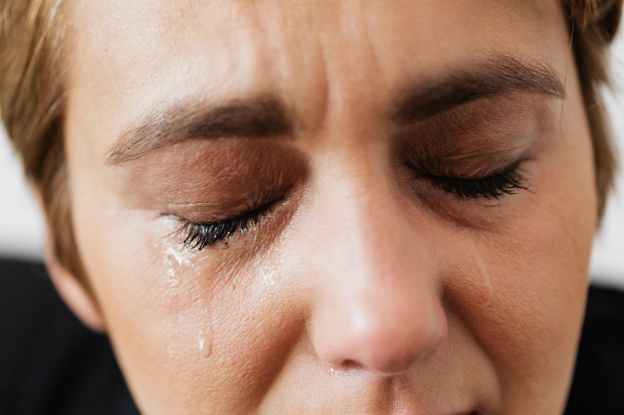
for tears—
gentle trickle wetting cheeks,
or soggy, snotty tears of billowing sorrow
or fear,
or shame.

Blessed are You
for the intimacy of tears,
the honor of witnessing
the inside
of another human being,
coming out.

Blessed are You,
Lord our God,
King of the Universe,
for Jesus weeping
tears of sorrow,
anguish,
compassion,
consecrating our tears with Yours.