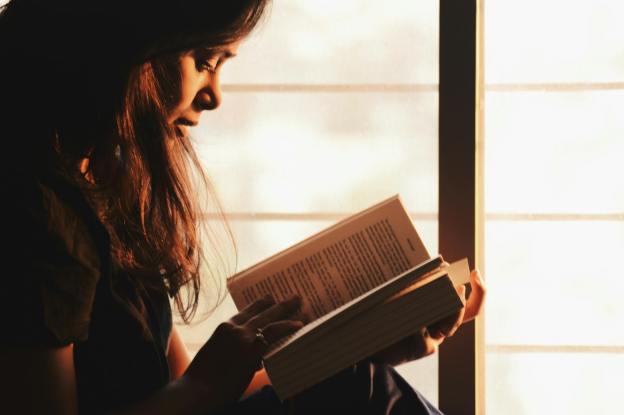
I read 26 books last year. Let’s look at the boring category first: SELF HELP. (I won’t tell if you skip down the page)
Two of these books were suggested by friends, who read them with me. I’ve copied a favorite quote from each book.
“People who don’t know what they find satisfying generally struggle to know who they really are. Our identity and our passions are intimately connected.” (page 168)
The 4 Habits of Joy-Filled People, Marcus Warner and Chris M. Coursey, 179
“… if we are to stay connected with our soul, we will need to have the capacity to sometimes be dreadful, objectionable, or offensive.” (pages 64-65)
The Vital Spark: Reclaim Your Outlaw Energies and Find Your Feminine Fire, Lisa Marchiano, LCSW, 249
“Other people’s frustrations won’t kill you. Their opinions can’t take you out. You can indeed choose a new yes, or a continued yes. You can keep at the thing you love, even if it isn’t producing results yet. You can say yes to what you want to say yes to. … Are you just into it? That is reason enough.” (page 129)
Fierce, Free, and Full of Fire: The Guide to Being Glorious You, Jen Hatmaker, 221
“There is a season between deliverance and dominion that is called dependence.” (page 193)
She Is Free: Learning the Truth About the Lies That Hold You Captive, Andi Andrew, 203
FICTION. In 2023 I read only one work of fiction—I edited it for a friend. I determined to read more fiction in 2024, and I did! I enjoyed, but didn’t love, these reads. Maybe 2025 will be the year I find a fiction book to love.
The Innocents at Home: Children of the 1940’s, Mary Stone, 241
Facing the Dawn, Cynthia Ruchti, 310
Love, Jacaranda, Alex Flinn, 356
All Other Nights, Dara Horn, 363
One Corpse Too Many, Ellis Peters, 275
The Minister’s Restoration, George MacDonald, edited by Michael R. Phillips, 207
POETRY. I had the privilege of joining the book launch team for Marla Taviano’s book whole: poems on reclaiming the pieces of ourselves and creating something new (268 pp.). It’s a quick, fun read, and Marla’s authenticity creates space for a whole range of questions and “questionable thoughts” about Christianity/religion.
Made of Rivers by Emory Hall (68 pp.) is fabulous. It was recently re-released with thirty additional poems. Go buy it.
OR, if you can only buy one book of poetry today, you might consider All Along You Were Blooming: Thoughts for Boundless Living, by Morgan Harper Nichols (182 pp.). My dream as a writer is to create spaces with my words that allow folks to breathe, allow their souls to sit down in peace. This collection of poems did those exact things for me. It’s a wonderful read for a quiet hour on the weekend, or a way to rest your spirit when you climb in bed at night.
CREATIVITY AND WRITING. I’ve read some pretty amazing books by writers, about writing. Lots of people write about things they know about, and the books are good, but reading the words of a skilled writer is always more fun. Maybe I’m biased, but I think the best how-to books are about writing, because writers wrote them. Am I making any sense?
Julia Cameron’s book, The Artist’s Way: A Spiritual Path to Higher Creativity (235 pp.), would fall in the category of excellent-book-about-writing, written by an excellent writer. And if you like The Artist’s Way, she has perhaps a dozen more books with related content. Take a deep dive.
The Artist’s Rule: Nurturing Your Creative Soul With Monastic Wisdom, by Christine Valters Paintner (162 pp.), is an invitation to embrace the intersection of the spiritual and the creative—or, in her words, your inner monk and inner artist. I loved every page, had a lot of fun with the writing prompts, and tried some new things, like wabi-sabi photography.
Mark Yaconelli’s book, Between the Listening and the Telling: How Stories Can Save Us (183 pp.), is a compelling showcase for the power of story. It reignited my passion for storytelling and story-listening as community activities.
STORIES. All good. Of course the one about Gregory Boyle (G-dog) was a favorite, along with What My Bones Know. My daughter picked up The Invisible Thread at a used book fair. It’s the memoir of a young second-generation Japanese American who lived in a U.S. concentration camp during World War II. I read it because I knew nothing about the experience of Japanese Americans during the war, and to see if it was appropriate for an 11-year-old to read (in my opinion, it is).
G-Dog and the Homeboys: Father Greg Boyle and the Gangs of East Los Angeles, Celeste Fremon, 314
Happy Trails: The Story of Roy Rogers and Dale Evans, with Carlton Stowers, 207
I Know Why the Caged Bird Sings, Maya Angelou, 289
Surviving the White Gaze: A Memoir, Rebecca Carroll, 318
A Beautiful Mind: The Life of Mathematical Genius and Nobel Laureate John Nash, Sylvia Nasar, 390
What My Bones Know: A Memoir of Healing from Complex Trauma, Stephanie Foo, 321
The Invisible Thread, Yoshiko Uchida, 133
SOUL FOOD, my favorite! The books in the CREATIVITY AND WRITING category would fit here as well.
Eat, Pray, Love, by Elizabeth Gilbert (331 pp.)—it’s popular for a reason. The blend of delectable writing with deep insight and the permission to be human made it a special occasion each time I sat down to read. I celebrated these good feelings by taking the book to a coffee shop a few times, to revel in the experience.
Here’s a favorite passage from Somehow: Thoughts on Love, by Anne Lamott (191 pp.). I don’t know how I got by with reading only one Lamott book in 2024, and I plan to partake of at least a few this year.
“When we screw up … it is never the final word. The fact that this happens to all of us allows us to have a tenderness about the broken places. … hope is believing this one thing, that love is bigger than any grim, bleak shit anyone can throw at us. And I believe. Also, my experience is that grace bats last.” (pages 85-86)
And, without planning it, the first book I read in 2024 is last on the list: Running to the Mountain: A Midlife Adventure, by Jon Katz (242 pp). Here’s a quote.
“Spirituality is usually presented in terms of the Big Payoff—Merton finds faith sitting in a church one day. I’d expected something similarly dramatic. It took me weeks to grasp that this was going to be painstaking and meticulous work, hand-to-hand combat of the most intensely personal sort—with myself. Day by day, chore by chore, I’d know more in six months or a year—if I were lucky—than I did now.” (page 83)
And that concludes my reading for last year.
 My Favorite Subject