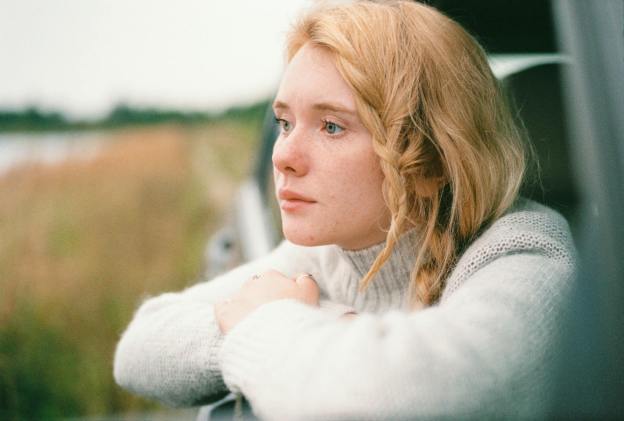
Escape. This is what she wants most in the world.
She has bumped into a cliché, that this is not the life she wanted.
But also it is. The husband, the house, the backyard with towering trees and a play-set for her daughters.
She has decided she needs a week alone, preferably on an island far from here. Away from the husband who wants sex. Away from the house that is just a little too full of life and all that life implies. Away from the back yard where nothing bothers to ask before it grows another foot, and her young daughters still need supervision to be outdoors and help to go down the slide. Every fall the towering trees dump a million and one leaves, and in the prickly cold the family rakes and hauls and piles.
The worst thing of all is that when she reaches the ends of her fantasies—the deserted island, the silent retreat at a monastery, or even the house to herself for a week with no kids and no husband—yes, at the ends of the fantasies she is still weary, estranged from herself, married to her chosen life, nothing has changed. And that is the dagger to her heart. Past the hopeful fantasies lies the truth, that she doesn’t want another life, but neither does she want this one—the sleep-challenged nights, the rotting homemade play-doh, the almost-empty bin of cat food, dishes on repeat, never alone but often lonely, a dutiful, tired, empty well.
She is lying. About the escape. This is what she wants most in the world.
She has explored her options and reached a conclusion. She wants to be at home with herself. She wants to feel relaxed in her own skin, perhaps even to like herself. She is aware of this possibility only dimly, and aware it will cost more than the option of escape. Escape is quick. Therapy is slow. But it becomes apparent that her own hostility toward herself is the culprit of her discontent. And this revelation is an invitation. To what, she’s not sure. Is this a battle? A puzzle? A zombie apocalypse?
Perhaps yes to all of the above. This is unsettling, though perhaps less unsettling than the lonely, empty well. This battle/puzzle/apocalypse promises change, momentum. She gets to keep the husband, the house, and the kids, and discard the shame and scarcity.
She doesn’t know it yet, but she will discover self-friendship. She will experience her own self as her most trustworthy ally, and she will learn to enjoy her own company. She will discover that friendship with herself is an expansive container, able to hold the pieces of her life, even those that seem incongruous. She is not a pantry, but a cathedral.
And when she has absorbed this truth, she might still take that week alone when she gets the chance, but rather than an escape, it will be a celebration.
 My Favorite Subject