Author Archives: Tobi Goff

Unknown's avatar

About Tobi Goff

I am a writer, impertinent Christian, and recovering perfectionist. I (mostly) enjoy life in the Pacific Northwest with my husband and two daughters. Sleep is my drug of choice, and I like books, hugs, and piña colada milkshakes.

Cone of Shame

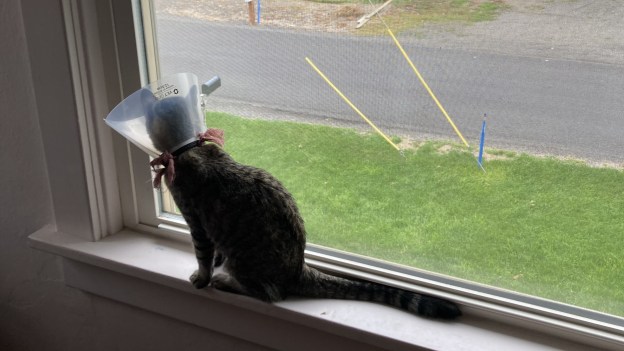
The youngest member of our family is sporting a cone of shame. She’s our six-month-old shorthair female cat, Phiona, and last week she had an overnight stay at the veterinary office to get spayed. We picked her up Wednesday morning, with a page of post-op instructions and a bag of syringes pre-filled with kitten-sized doses of pain medication. The vet assistant who discharged her instructed us to keep her as calm as possible for the next ten days, so we moved her food and litter into my office and there she convalesces.

Half of Phiona’s belly is shaved, with a one-and-a-half inch incision in the center, neatly sewn up. She wears a small cone on her small head, though it must seem large to her, and tremendously inconvenient. She can’t eat or drink without a person there to hold the dish still. Noises seem to come at her from strange directions, funneled through the cone. She licks the cone instead of her fur, and when her ear itches, the hind foot that pops up scratches at smooth plastic. There is no curling up to rest, no itching, and no bathing. Poop sometimes gets on the cone when she uses the litter box. Playing is a difficult proposition, as she can’t quite see her paws, nor coordinate them with her mouth to bite what she grabs, as kittens do.

Phiona doesn’t know the cone will come off after 10-14 days. As far as she knows, this may be her new normal—cooped up in one room of the house, wearing a constricting cone, unable to eat or drink until she has a visitor. If I were she, I would find this unbearable, and my attitude and behavior would follow suit. I’ve been watching her and imagining the deprivation of cat pleasures—a luxurious licking bath; a nap, curled up with nose tucked under tail; or a fierce romp, attacking string or toy with body, mouth, and all four appendages.

Phiona wears a cone of shame—or “Elizabethan collar” as it is called on the vet’s invoice—but she has no concept of shame. She doesn’t hide or hang her head. She purrs and plays and eats and drinks, and takes her medicine without complaint. How does she do this? I have watched her in amazement for a week, and I have no answer, only an increased awareness of how quick I am to sink into despair, to become angry when things aren’t how I want them to be, and to receive shame as my rightful state of mind. Phiona’s disposition is a compelling suggestion that there may be another way. Perhaps my humanity is not as volatile as I think, and the essentials of being human are more dependable than I realize. When I am limited, inconvenienced, slowed down, I do not lose my identity as a human being. I belong and I am invited to pleasure and peace as surely as when things are going my way.

I don’t have to always be well, productive, respectable, functional. I can rest when I am unwell. I can slow down when I am tired. I can enjoy the company of friends when I feel un-respectable. I can be waited on when I am not functional. I have permission to be human, and being human carries dignity with it through any circumstance. Whether buried in dept, or addiction, or depression, weighed down by sorrow and loss, or suffocating under secrets, each person is dignified. Whether disappointed in myself as a mom, humiliated by misunderstanding, or fearful of fallout after a mistake, I am dignified.

Thank you, Phiona, for teaching me that dignity is not complicated. You have modeled it through pain and confusion and the cone of shame, and have taught me again that my value is not in performance and my happiness is not in circumstances. But, I look forward to taking that cone off and watching you run and bathe and eat and drink, unrestricted.

He Brought Me to His Banqueting Table

He Brought Me to His Banqueting Table

Blessed are You,
Lord our God,
King of the Universe,
for celebration—
a handshake
or handmade card,
a hatful of money
or armful of flowers.

Blessed are You
for birthday parties
and white elephant gifts,
balloon bouquets
and long-stemmed roses,
graduation caps
and dance recitals,
fireworks, hot dogs,
folks gathered together.

Blessed are You,
Lord our God,
King of the Universe,
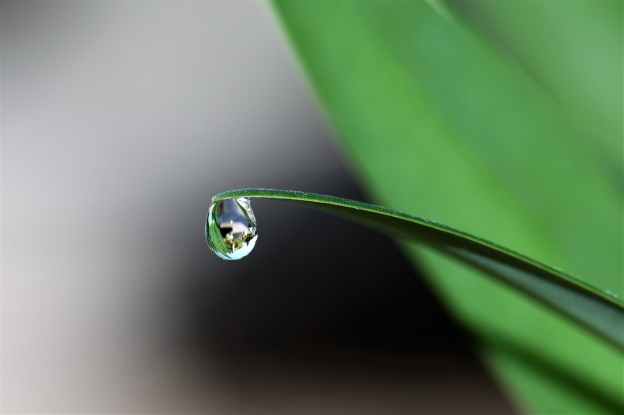
for water drops on flower petals,
rainbows and radiant children.
Birdcalls announce morning,
crickets herald evening,
wordless celebration,
sun setting, moon rising,
Your banner over me is
love.

Love Is a Pain

I escaped the anxiety epidemic, I thought. Until this year.

I didn’t admit depression. Until last year. Only after taking antidepressants did I know the truth of my years of depression.

It’s late September, and anxiety adds itself to my truth. Anxiety feels different than depression, which for me exhibits as heaviness, intense overwhelm, and anger. Instead, a growing undercurrent of angst and tension in my thoughts and feelings came as a surprise—anxiety. I feel resentful about being “the only one who cleans around here,” nervous about irritating my friends, and more grouchy than usual because the kids “never listen to me”—anxiety.

I can’t blame a change in circumstances; life carries on as usual. I have to own an internal landscape of crankiness. In my journal I write, “I’m anxious but somehow I’m not letting it rise up. I’m not connecting well with myself or others. I don’t know what to do with this inner Rubik’s Cube of mental and emotional colors. There is no ‘lining up,’ just a lot of turning and twisting and muttering. I don’t feel depressed or exhausted, just a buzz of not-okay-ness, and fretting about what other people are thinking or doing.”

When my inner world gets uncomfortable, I settle for the companionship of fear. When I settle for fear, I choose to think instead of feeling. If I think rather than feel, I’ll have an an acceptable answer for most questions. If I think rather than feel, I tell myself, I reduce the risk of rejection; I avoid confronting what I don’t understand about myself; I cannot get stuck in feelings. If I think rather than feel, I will be dependable, and that, my friends, is very important.

I fear transience of warm feelings, and permanence of cold feelings.

I fear loss of control. Not measuring up. Disappointing someone. Sigh. Doesn’t that essentially mean I live afraid of life? No wonder I feel anxious. I can’t stop the world and get off.

Now that I know I’m anxious, what’s next? There are too many options: medication or meditation, solitary confinement (okay, that’s more of a wish than a real option), exercise, more coffee or less coffee, structure or flexibility.

I’ve been through this enough times to know fixing is not the loving response. But what is? Does love sit in the feelings? Maybe the loving response is reception—not the kind with cake and punch, but the kind that’s about welcome. Could receiving feelings be different than sitting in feelings? More like open hands and less like sackcloth and ashes?

When I think about setting the emotional tone in myself and in our home, I think of zen peacefulness—wouldn’t it be lovely if I were un-ruffleable?

But love is not only the ocean’s vast calm. It also knows the waves of anger, fear, and bitterness. Is it a ship? A lighthouse? A squawking seagull? What form does love take in the steady pounding of reality?

Perhaps love is the pain of not being in control.

I know well the pain of trying to control, and the aftermath of disconnection when I succeed in control. I am less familiar with the pain of releasing control. This pain is the pain of God’s very existence; the pain of having children who have a choice.

I want to control my children. I really, really want to control them. Also, I don’t want to control them. I know it’s not love, and desperately I want to love them.

I want to feel the raw pain of love rather than the grasping anxiety of control. I want my discomfort to be worthwhile. Let me trade in an obsession with control for the wildness of not being in control. Here my soul will meet with God, inside the terrifying invitation to feel. I will feel the risks of rejection, unknowing, and transience. They accompany my choice to love, and indicate that I have chosen to feel. God is here. Let control crash and burn. Loving is enough.

Also, I will medicate, and meditate, and drink more or less caffeine.


Berries Will Turn Red

Berries Will Turn Red

Blessed are You,
Lord our God,
King of the Universe,
for warm mug in hand,
steam rising,
tea sweet with creamer.

Blessed are You
for Phrank—the cat—
purring on my lap,
face pinched with old age;
for leaves edged thinly with brown,
hinting at Autumn;
for the last bucket
of grapes from the vine,
complete with spiders,
ladybugs, and earwigs.

Blessed are You,
Lord our God,
King of the Universe,
for tiny green berries
hidden in green leaves
surrounding our porch.
The berries will turn red,
the leaves will flame with color
and I will cut
a handful of branches
and put them in a vase
and say, Thank You for this,
for life.

When I See God Glowing

“It would be a good sign of our spiritual well-being if, when asked to describe a moment we felt close to God, we said, ‘When I loved another.’”
– Philip Gulley, Unlearning God: How Unbelieving Helped Me Believe

“Assuredly, I say to you, inasmuch as you did it to one of the least of these My brethren, you did it to Me.”
– the King, speaking to the sheep, as told by Jesus in Matthew 25:40

Intimacy with human beings is intimacy with God. When I interact with the “least,” I connect with God. This is humbling. This is not light beaming from heaven, or a pipe organ in a cathedral, or gallant green trees, or even my favorite books. Yes, God is in those things. But He makes a point to tell me He is in the least.

Who are my “least”?

My bickering, balking, button-pushing children.

Friends I avoid because they are “too Christian.”

The folks I pay money to—cashiers, wait staff, contractors, plumbers, produce stand vendors.

People asking for money at the entrance to the Walmart parking lot or sleeping in shop doorways downtown.

I’m good at hiding—behind a smile, a book, “safe” sharing. When I tap my credit card, I don’t have to see the person behind the counter. When I’m on a phone call—to the bank, dentist, tax office—I hide behind the professional relationship. I scurry down the soup aisle at the grocery store to avoid greeting an acquaintance. My kids get the short end of the stick as I shield myself with anger and control at home. I give money to charities because it’s easier than being charitable.

Then again, I keep bags, packed with snacks, water, and toiletries, in my car, and hand them to folks on street corners. I give a stranger a ride home. I pray with the cashier at the grocery story. I forgive my children before they ask.

I don’t know if I’m a nice person. I lean in; I pull away. Does this mean sometimes I have time for Jesus and sometimes I don’t?

Are there tally marks in the Book of Life?

Does it matter?

Human tally marks are about control, about externals. If there are tally marks on the cosmic whiteboard, they’re a kind I’ve never seen before. If God is measuring, let Him measure. I wouldn’t know what to measure anyway.

How well am I loving Jesus in the flesh and bones before me, wearing leggings and sweat and weariness? I do not think God is worrying about this. He is busy inhabiting arrogant leaders and polarizing politicians; beggars and cheaters and liars and beaters; starving children and sex slaves; and that guy who drives too fast down my street at 10pm most evenings. God is holding hands with humble pastors and hardworking husbands, earthquake victims and suicidal teenagers, relief workers and therapists, and mothers worn so thin you can see the light through them.

I rest assured that I will find Jesus today—at lunch with girlfriends, at school pickup, in text messages and emails, at the dinner table, and while the kids brush their teeth before bed. Intimacy with God is built into my existence. Intimacy with God is the breath of life in my own warm body.

The world is pulsing with light—a heat map of warm bodies—in the layers of houses I can see from my front window, the drivers of cars, the shoppers and walkers, glowing. Everywhere, God is glowing.

For 18 Years

For 18 Years

Blessed are You
Lord our God
King of the Universe
for 18 years of marriage,
of love—
bitter / sweet
comforting / unsettling
lonely / intimate
full

Blessed are You,
for I have seen You
in Michael’s face
in his words
his steadfastness
forgiveness

Blessed are You
Lord our God
King of the Universe
for duck pond dates
pillow talk and pillow tears
Ted Lasso
role reversals
one-liners
friendship

Blessed are You
for we have loved and endured
each other
and each other’s families.
We have learned by participation
what hurts and what heals.
Seeing, seeing
seeing each other
and then again
forever

Naked, Sacred Spirits

Friendship drama. I feel it in my body. I watch my daughters ride the waves of acceptance and rejection in the classroom or at play dates. I listen to adult friends struggling with relational tension. I talk about my own social anxiety and parasitic desire to look good and be right. I try to help my children understand their own and others’ behaviors, to see with a heart of grace. But when there’s nothing left to do or say, tension lingers in my body. Why?

Relationships are tenuous and fragile. I don’t like that. The clock ticks, lies are believed, trust breaks, narratives are written into the brain, and suddenly I am aware that I still question my value, my belonging, my place. Maybe I was skating by on trusting that everyone, including myself, would behave maturely. Then a moment of triggering or misunderstanding cracks me open, revealing a child who is still asking if she belongs here. Is she worthy of love?

Seeing through the crack to another person’s inner child is as frightening and vulnerable as being seen through my own cracks. I don’t feel authorized to talk to another person’s inner child. I sense the import of this mutual seeing—my inner child gazing at hers through our cracks—and I freeze. The stakes are high. I know that even if she is gracious to me, I may hide in fear; and even if I reach a gentle hand toward her, she may perceive a monster, commissioned to hurt her or keep her in her place.

How will our spirits see and feel and hear each other? I have no control over this. Maybe our faces and our words will look like friendship, but our spirits will henceforth sleep with one eye open when the other person is in the room. Maybe our spirits will come out of hiding, hold hands.

Her naked spirit and my naked spirit are sacred. They live in the company of the Great Spirit, God who shaped and breathed and spoke them to life. The connections I make to prove myself, or break to save myself—God imparts holiness to each one.

The overused analogy about how we’re all God’s children may be useful here. We squabble. We finagle to divide God’s affections or allegiance, but He is unaffected. “You are my favorite,” He says. “You are my favorite,”—to a sibling who took the lion’s share of ice cream, or lied about what I did, or made a face at me when He wasn’t looking, or apologized in a sour tone. Ugh.

God is 100% on my side. God is 100% on her side. I will lean in to this challenge. I will say Namaste—the divine in me greets the divine in you.

My Favorite Greens

My Favorite Greens

Blessed are You,
Lord our God,
King of the Universe,
for bouncy green parrots,
moss, and mint ice cream,
firm green limes,
green toenail polish.

Blessed are You
for green smoothies and green tea,
guacamole on yellow corn chips,
green apples and green beans,
zucchini sautéed with Portabellos.

Blessed are You,
Lord our God,
King of the Universe;
green was, I suppose, Your idea—
humans with green eyes,
frogs with green bodies,
lily pads and spinach,
tropical green fish—
these are a few of my favorite greens.

Hopeful Loyalty

God suggested that I love Her with loyalty, and it didn’t take long for fear of myself to surface. Offering my loyalty to God is essentially agreeing to fail. I will not be perfectly loyal. My loyalty will ebb and flow as it rides the waves of selfishness, embarrassment, and fear. Memories of rejection, and the possibility of future rejection, will poke holes in it. Rejection lends credence to my spectral but faithful companion, shame, who points a judging finger at me, and with her other hand beckons crowds to gawk at my failures, to know I am a fraud. Rejection turns her back on me, not to walk away, but to stay, as a reminder that a back is what I deserve. No face has time for me.

Perhaps loyalty to God involves agreeing there is a face with time for me. It involves looking at His face when I would rather serve time for my crime before I show my face.

Loyalty means I show up in our relationship even when my own divinity seems tarnished beyond the redemptive powers of a polishing cloth, or love.

Loyalty means I give up being the poster child for God so I can be the friend of God.

Loyalty means I will stick with the relationship when I fail, and when God appears to fail.

Loyalty means I will practice allowing myself to be seen, and I might stop to see God, stop when everyone else is running.

Yes, fear of loyalty is fear of myself. But it is fear of God, too. Fear that I will show up at our meeting place and She will not be there. Fear that He is easily distracted, easily frustrated. Fear of misunderstandings and loneliness. Fear that She is greedy and I will never be able to satisfy Her demands. Fear that He’ll like me better when I’m not the way I am right now.

Loyalty involves accepting these fears and allowing them to be in the story, to swirl around my divine center and say their piece. Loving God with loyalty is knowing that She is not the fears or the feelings, the knowing or the not-knowing, the intimacy or rejection. God is the floors and the walls and the roof. She is the foundation holding it all steady. She is the home where our story takes place. Her loyalty begets mine, because these walls see failure, ego, and embarrassment, and they remain standing. These walls also witness joy, inclusion, and peace. They are walls of hope.

And hope is fuel for the next moment of loyalty to God.

Will I Be Friends With My Mind?

Will I Be Friends With My Mind?

Blessed are You,
Lord our God,
King of the Universe,
for my mind.
I’d rather curse You for it,
but that wouldn’t fit my poem.
My mind is prone to operating
with one wheel in the ditch.
Sleep is my drug of choice,
sweet relief from my mind.

Blessed are You
for meeting me in my mind,
proving once again
that You have a taste
for dinner with a sinner.
Because of Your audacity,
I consider making amends
with my mind.
Maybe we can get along
despite everything.

Blessed are You,
Lord our God,
King of the Universe,
for my mind—
filing cabinets of facts,
drawers in disarray,
windrows of worries,
and stacks of stories.
If it were empty
I would cease to exist.
So, thank You for the mess
and the miracle
that is my mind.