Author Archives: Tobi Goff

Unknown's avatar

About Tobi Goff

I am a writer, impertinent Christian, and recovering perfectionist. I (mostly) enjoy life in the Pacific Northwest with my husband and two daughters. Sleep is my drug of choice, and I like books, hugs, and piña colada milkshakes.

“Sell Your Cleverness”

“Sell your cleverness and buy bewilderment.”

– Jalal ad-Din Rumi

I wish I’d had a good enough read on the market to sell my cleverness before it plummeted in value, which happened sometime after my second daughter was born. Cleverness worked like a charm when I was employed. Often I held the unnamed distinction, boss’s favorite. So I brought cleverness home when I quit work for full-time momming.

In retrospect, I should’ve sold cleverness the moment I stepped out of my office for the last time. But at that point bewilderment was nowhere on my radar. I didn’t know anyone who traded it, had never even heard of it.

Fast forward three years. Everything about my children was unpredictable—what they’d eat, when they’d sleep, which emotional roller coaster they’d ride next. Their chaotic reach extended far beyond the length of their dimpled arms, changing my relationships with friends and extended family, my calendar, the size of my purse, and my mental health.

Cleverness steadily dropped in value. Too exhausted to do anything about it, I felt relieved when my portfolio manager stepped in and started buying… wait, what? You’re buying bewilderment? How does one trade with a currency that by its definition means you don’t know what you’re doing?

Before I knew it, cleverness held only 5% of my total investment. Bewilderment dominated my portfolio. I didn’t like it one bit. But, over time its value increased.

I mourned cleverness far too long, pining over it and remembering its heyday. I wanted it back. I took some small amount of comfort in knowing that every parent before me learned to invest in bewilderment. But mostly I missed cleverness. I went to therapy. That helped. I deconstructed my faith. That helped. I got on medication. That helped. I dropped most of the balls I was juggling and concentrated on just a couple. That helped.

Reluctantly, at the growth speed of a bonsai tree, I grew into ownership of bewilderment. I kind of started to like bewilderment. It gave me permission to have no idea what I’m doing as a mom, to not know what God is up to, to let my marriage be messy, and my friendships be spontaneous.

Truth be told, had Rumi sat me down on my last day of work and advised me to sell cleverness and buy bewilderment, I would’ve told him cleverness had always served me well and motherhood would be no exception. I didn’t know what I didn’t know.

At the time of this writing, my daughters are 9 and 11 years old, and I’m settled quite nicely into bewilderment. But I have a suspicion that my portfolio manager is on the hunt for something, maybe a new investment that will climb in value during the kids’ teen years. I am definitely not okay with this, but I have a feeling I’m gonna have to run with it. I mean, it couldn’t be worse than selling cleverness to buy bewilderment. Could it?

Blessed Books

Blessed Books

Blessed are You,
Lord our God,
King of the Universe,
for books of all shapes and sizes.
My Bible concordance weighs 4.6 pounds,
a giant next to the tiny hardcover
book of proper etiquette, 2.2 ounces.

Blessed are You for books—strangers,
who may become friends as I turn the pages,
or allies, or acquaintances,
or enemies who confine me,
mentors who challenge me,
or therapists who help me find myself.
Books have saved me, expanded me, held me.

Blessed are You,
Lord our God,
King of the Universe,
for the pleasure of reading in bed
with a comforter and pillows
and a cat curled at my feet;
for the companionship
of books that fit in purses or pockets
and travel with me on an airplane,
or to a chair in the back yard.
Each is a gift in some way:
friendship, adventure, humor, mystery, wit and wisdom;
and every story is a sacred portrait of those made in Your image.

The Bible Is Bananas

A wise man once said there is a time for everything. I used to interpret that as a statement about seasons—one thing in one season, another thing in another season. But maybe it’s also a statement about concurrency, about different things at the same time. In stead of either/or, I find myself more often thinking both/and. I am both connected to people and separate from them. I am both anxious and at peace. The world is breathtakingly beautiful and excruciatingly broken. Family is an asset and a pain in the ass. Love is ultimate safety and ultimate risk. God is male and female and non-gender.

But now and then I wonder if I’m being too permissive. My conservative evangelical upbringing tells me there are definite wrongs and rights, and one typically excludes the other. The church also told me the Bible makes sense. Read it “right” and you can reconcile what is confusing, and even package it all up nicely in bullet points on illustrated pamphlets. So if I don’t believe in one right answer any more, do I still believe in the Bible?

I don’t open my Bible much these days, but today I do. I read Lamentations chapter 3, and find it to be a lovely example of both/and thinking. (Or an example of irreconcilable contradiction. Take your pick.) Lamentations 3 contains 66 verses of despair, hope, and vengeance, penned by the prophet Jeremiah. As I begin to read, I feel a growing sense of contrast between these verses and the scriptures I see stenciled on wall art at Hobby Lobby, or screen-printed on church youth group t-shirts. I certainly didn’t memorize these verses in Sabbath School.

v. 2 He has led me and made me walk in darkness and not in light.

v. 3 Surely He has turned His hand against me time and time again throughout the day.

v. 7 He has hedged me in so that I cannot get out; He has made my chain heavy.

v. 11 He has turned aside my ways and torn me in pieces; He has made me desolate.

v. 16 He has also broken my teeth with gravel, and covered me with ashes.

I’m not even gonna try to wrap those up with a nice bow. Not only are these sentiments a dark portrayal of God, they stand in open disagreement with texts elsewhere in the Bible. For example:

v. 2 He has led me and made me walk in darkness and not in light.
AND Your word is a lamp for my feet, a light on my path. Psalm 119:105

v. 3 Surely He has turned His hand against me time and time again throughout the day.
AND I will strengthen you and help you; I will uphold you with my righteous right hand. Isaiah 41:10b

v. 7 He has hedged me in so that I cannot get out; He has made my chain heavy.
AND “My yoke is easy and my burden is light.” Matthew 11:30

v. 8 Even when I cry and shout, He shuts out my prayer.
AND The righteous cry out, and the Lord hears, and delivers them out of all their troubles. Psalm 34:17

v. 9 He has blocked my ways with hewn stone; He has made my paths crooked.
AND I will go before you, and make the crooked places straight. Isaiah 45:2a

v. 16 He has also broken my teeth with gravel, and covered me with ashes.
AND The Spirit of the Lord God is upon Me, to give them beauty for ashes, the oil of joy for mourning, the garment of praise for the spirit of heaviness. Psalm 61:1a, 3b

v. 17 You have moved my soul far from peace; I have forgotten good.
AND “My peace I give to you.” John 14:27
AND He leads me beside the still waters. He restores my soul. Psalm 23:2b, 3a

As it turns out, I don’t need to look in other books of the Bible to find opposing sentiments. This one chapter of Lamentations contains a fullness of expression from one extreme to the other:

v. 11 He has turned aside my ways and torn me in pieces; He has made me desolate.
AND The Lord is good to those who wait for Him, to the soul who seeks Him. v. 25

v. 42 We have transgressed and rebelled; You have not pardoned.
AND Oh Lord, You have pleaded the case for my soul; You have redeemed my life. v. 58

v. 43 You have covered Yourself with anger and pursued us; You have slain and not pitied.
AND Through the Lord’s mercies we are not consumed, because His compassions fail not. They are new every morning; great is Your faithfulness. v. 22, 23 (Here’s the Hobby Lobby verse I was looking for!)

v. 44 You have covered Yourself with a cloud, that prayer should not pass through.
AND You drew near on the day I called on You, and said, “Do not fear!” v. 57

At this point I’m either thoroughly confused (I am), or my both/and thinking is expanding exponentially (it’s trying). The more I read, the more oddities I find. Is this a portrait of grief, not meant to make “sense”? Certainly an either/or mindset would require a diagnosis here, probably something along the lines of, “These are just feelings. Of course God doesn’t actually break our teeth, remove us from peace, or make our chains heavy. This passage is an upset person blowing off steam, exaggerating to express their angst.”

But couldn’t you say the same about the verses that extol God? What if the reality is that God turns His face away from us and punishes us, but sometimes we feel like He is listening to us and redeeming us?

Maybe it’s all of the above. We feel all kinds of feelings that aren’t about what God is actually doing or not doing. We also receive Her work in our life through our feelings. And maybe God is both punishing us and redeeming us. That’s hard for me to even write, as I have completely abandoned the idea of a God who punishes. But what if it’s both? And what if sometimes salvation happens in a sheep-and-goats sort of way, and other times in an all-shall-be-saved sort of way?

Jeremiah writes, “Is it not from the mouth of the Most High that woe and well-being proceed?” (v. 38) I love that it’s a question and not a statement. It’s an invitation to conversation, and invitation to keep wondering, keep talking, keep paying attention to what is there and what isn’t there.

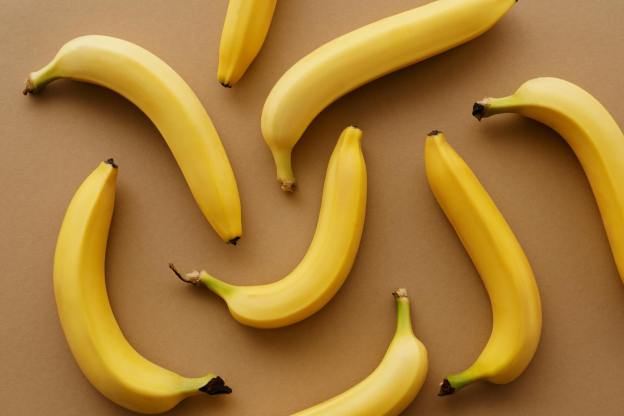
Could it be comforting that the Bible is basically bananas? Imagine if everything matched up nicely and could be distilled to a handful of logical statements. No need for 66 books full of words that paint God (and Her creation) in every light imaginable. Let’s have one painting of God, at dusk, when the light is most complimentary and the air is calm. Let’s keep this one painting in a vault and burn all other paintings, and the people who paint them.

But no, the Bible will not allow this. Its vivid portraits of God and humans are all bound together. For my part, I’m done pretending the Holy Spirit is going to match it all up for me. Bring on the paradoxes, contradictions, violence and patriarchy, and the portrait of a God whose love is so inclusive and profligate it’s ridiculous. Both/and.


Special thanks to Marla Taviano (@marlataviano, @whitegirllearning) for the phrase “the Bible is basically bananas.” Go preorder her newest book of passionately beautiful deconstruction poetry, titled whole. (And while you’re at it, order her other books of poetry, unbelieve and jaded.)


We Woke Up

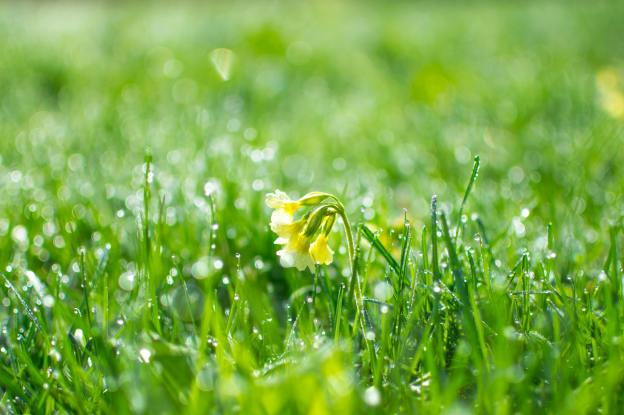
It’s not (technically) spring yet,
but the first warm days arrived this weekend,
and northerners weary with winter
woke up.

We trimmed shrubs and pulled weeds,
started lawn mowers and plunged trowels into the warming earth.
We went to parks all over town
with our kids and dogs and blankets and guitars,
and we sang and walked and let the sun massage vitamin D and peace into our faces.
We picked daffodils,
chose outdoor seating at coffee shops,
and skipped church.
Even the odd ones who don’t care for sunshine came stiffly out,
and antique cars shook off dust for the first drive of the year.

Love is in the air—turkeys strutting, people kissing, dogs sniffing, squirrels flirting.
The earth is pulsing alive and we feel the anticipation—
joy radiates from crocus blossoms and forsythia.
Hope again surprises us with its quiet turn from black-and-white to color—
paintbrush poised to anoint fields and forests and gardens with life.

As we bask in today
we take a collective deep breath; we’re okay.
The sun and soil are alive; all will be well.

Blessed or Lucky?

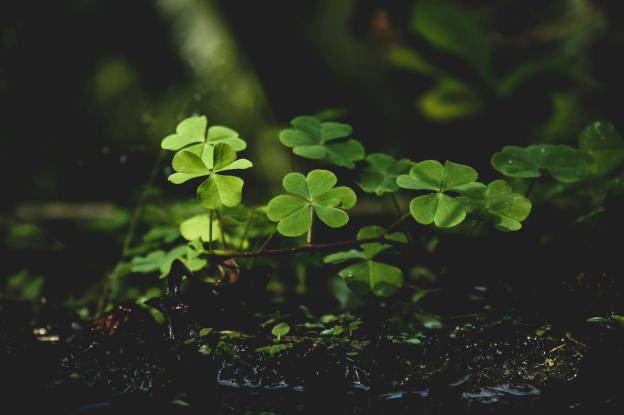
I possess the leisure of asking questions like, Am I blessed or lucky? This is a testament to my comfortable life, and my pedantic nature. It may also involve just a tiny bit of reputation management. I don’t want to say I’m lucky, as though I’ve left my destiny to a four-leafed clover. But I don’t want to say I’m blessed and be seen as a rare recipient of God’s favor.

I suppose I could dispense with both words and use something else altogether—maybe grateful. Still, there are connotations I don’t like. What if people think I’m grateful for ev-er-y-thing, or that I avoid talking about hard stuff because—you know—I’m just grateful. Why is it so damn hard to manage my reputation?

The church taught me not to say lucky—because luck’s got nothing to do with it. But as I near my 40th birthday, I’m fairly certain luck has everything to do with it. Luck means things happen to me because things happen. I can have bad luck or good luck, divorced from my character, my actions, and the circumstances preceding said luck.

In in a much less haphazard fashion, blessed seems to mean God is smiling down on me and providing extra special things, probably because of my good character. Or at least because I’m praying. You know the verse to that children’s song about the wise man and the foolish man—“the blessings come down as the prayers go up”? I take that to mean when I stop praying I’ll stop being blessed. Yes, the Lord makes the sun shine and the rain fall on the good and the evil (Matthew 5:45)… but surely draughts in California have something to do with legislation, and floods in Louisiana serve to tighten the Bible belt a notch or two.

The protestant work ethic suggests that accepting luck into my worldview will cause me to sit on my keister all day and wait for the garden to grow. As Mrs. Marcus complained in the comedy It’s a Mad Mad Mad Mad World, “This whole country is just full of people, who when these things happen they just say, ‘these things happen,’ and that’s why they happen!” This sentiment implies that if I worked harder I could be in control. Maybe if I prayed harder I’d have a more predictable life, good health until I die, financial security, children who stay “in the church,” and a permanent smile on my face. It’s laughable, really.

But isn’t every good gift from God? Is this a distribution problem? God’s blessings flow forth from Her heart of love, but the weather patterns dump them across the world haphazardly, piled up in some areas and entirely missing in others? In that case, blessed is really identical to lucky—I happened to be born in a wealthy country to parents who provided a stable home. I married a 22-year-old who happened to mature into an attentive and wise life partner. Like a video-game-player spawning into a game, I appeared here in a resource-rich environment. And I’m enjoying the benefits.

Everything I have is something a billion people don’t have—happy marriage, good health, both parents alive and still married, big house in a safe neighborhood, a comfortable wardrobe, not to mention the three meals I chew daily with well-cared-for teeth. It is tempting to wonder if God likes me better.

I’m not making much headway here. Thankfully, Elizabeth Gilbert leads me to the heart of the matter. In her book Eat, Pray, Love, she defines destiny as, “a play between divine grace and willful self-effort. Half of it you have no control over; half of it is absolutely in your hands, and your actions will show measurable consequence. Man is neither entirely a puppet of the gods, nor is he entirely the captain of his own destiny; he’s a little of both.”

There’s something underneath, a philosophy, a worldview. If I use the word luck to strip away all agency, lie down, and let life roll over me, I’ve become a puppet. If I use the word blessed to assign myself too much agency, I put God on puppet strings, and that can’t be good. But if I use either word to relax into the goodness of my life, the scales may tip from control to celebration. Celebration implies there is goodness worth noticing and lingering over, worth sharing with friends and family.

God blesses me.

Also, I’m just lucky.

Holy Parents

This morning the third- and fourth-grade class at Milton-Stateline Adventist School tried something new. We wrote a blessing together. They chose the topic and all the adjectives and I was the scribe. I hope you enjoy their poem!

Holy Parents

Blessed are You,
Lord our God,
King of the Universe,
for parents—
courageous but strict,
funny but embarrassing,
sweet but grumpy,
loving but self-absorbed,
fun but assigners of chores.

Blessed are You for these
hardworking, graceful, responsible,
generous, smart, sarcastic,
handsome and beautiful,
yelling, fighting, forgetting
parents.

Blessed are You,
Lord our God,
King of the Universe,
for being our Daddy God,
and for our parents
who remind us of You—
giving us hugs when we need them,
helping us when we’re sad or scared,
giving us courage to learn new things.

Gained in Translation

“Thanks to you I have the goal of being someone good in this world.” So concludes the final letter from Alejandro*, and his words stop me.

I’ve been told I have influence—or rather, warned that I have influence. Better use it for good, they say. Watch yourself. Or, as the church-school song goes, “Oh be careful little tongue what you say… for the Father up above is looking down in love…” And I have been careful, which mostly feels like fear, anxiety, and judgement.

I’ve been told I have influence—but Alejandro’s words shocked me. It hadn’t occurred to me that I could inspire anyone to want to be good, and certainly not someone I’d never met in person.


In 2009, I was a few years married and worked full time at the Christian college from which I had recently graduated. That spring the student association hosted a concert by the Christian rock band, Superchick. It took place in the big dome at a neighboring college. While true fans moshed it up, I wished for earplugs from my seat on the bleachers. Somewhere in the course of the evening, the band made an appeal for child sponsors, and in the post-concert din and jostling, we managed to buy a CD and sponsor a child—Alejandro, from Bolivia.

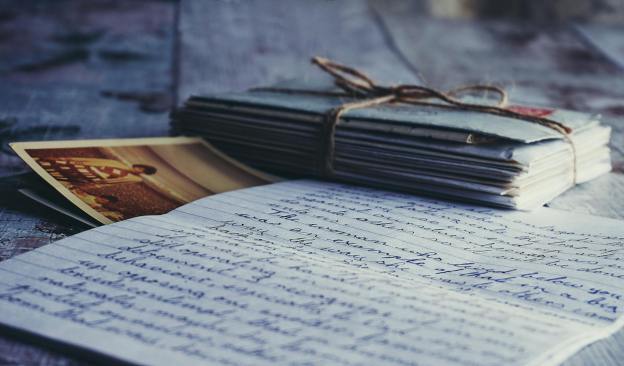
For 14 years we exchanged letters with Alejandro, as he grew from a preschooler to a working man and graduated from Compassion International’s child sponsorship program at age 20. Early letters were written by Alejandro’s brother or his tutor. A letter in 2011 included this endearing anecdote: “It was a happy week for my family too because my brother was born and my mom was delicate so we couldn’t do anything for her birthday. She is better now and we are going to buy a cake for her. Alejandro helps me to wash the dishes because my mom is still delicate.” -signed by older brother Emilio.

Over the years we prayed for each other and shared favorite foods and the antics of our pets. One letter informed us that Alejandro’s pet goose had laid five eggs and was taking good care of them, and included an update on turkeys that had hatched some months before: “My mom likes them very much, she feeds them every moment.” Occasionally we’d make an extra monetary gift through the Compassion project, and a few months later we’d receive a picture showing what Alejandro bought with the money—clothing and shoes, “rubber dinosaurs,” a dresser for his clothes.

At first our letters traveled snail-mail between Bolivia and Washington state. Later, online letter-writing became available, but still it was a slow correspondence. I worried about asking the same questions or sharing the same information because I forgot what we covered in previous letters. I probably did forget things and repeat myself, but Alejandro responded to every letter with only the kindest words, and patiently answered our questions.

In 2023, Alejandro aged out of Compassion International’s sponsorship program and we each wrote a letter of farewell. His letter begins, “My dear friends Michael, Tobi, Kyli and Kayt, let me greet you, I am so grateful for all the time you were my friends and I was blessed with your sponsorship. Truly God touched your lives and through you He touched mine and my family’s. I am so grateful. You were really an unconditional support for so long, words would not be enough to show you how much I love and appreciate you.”

I am immediately touched, and simultaneously aware that these kind words register on a grand scale almost foreign to my daily narrative—God reaching through me to touch another, the elusive desire of every God-lover. “Unconditional” is not a word I would use to describe myself, but there it is. I choose to receive it.

Alejandro goes on to describe how the Compassion project helped him and his family, concluding “but above all, I received the word of God in my life, I was able to know Jesus, and I was able to understand that my life was better if I held His hand.” One sentence, profound gospel. My life was better if I held His hand.

Alejandro requested our continued prayers for guidance and for his family, and promised to pray for us: “I will pray that God will always bless you, that God will grant you the desires of your heart, that God will guide you well in everything you do, that God will keep you from all evil, and that you will now be able to continue blessing more lives as you did with me during all this time.”

Then he concluded, “Now, with a happy heart, for having completed the Compassion program, but also a little sad because I will no longer be in touch with you, I really feel you as part of my family, I will always have you in my heart my dear friends. Thanks to you I have the goal of being someone good in this world. God bless you always, your friend forever, Alejandro.”

It has been said some things are lost in translation, but, if anything, I’d say translation lent this final letter a beautiful simplicity. Alejandro’s translated words rank among the best prose I’ve read. They are high praise yet totally devoid of flattery. His gentle and grateful heart reminds me who I am—a daughter of God who does’t have to worry or hustle. I am blessed and I am a blessing—this is the sum of my existence. Alejandro, thanks to you I have the goal of being someone good in this world. I want to live up to your estimation of me. God bless you always.


*Not his real name.

Spiritual Hair

Spiritual Hair

Blessed are You,
Lord our God,
King of the Universe,
for hair—
a rainbow of textures,
a wisp or a thicket,
growing on heads
and peeking from armpits
and ears and noses.

Blessed are You for hair,
proof that You make stuff for fun—
red, brown, black, blonde, white,
ideal for play—
ponytail it, spike it, color it, braid it,
grow it, dreadlock it, cut it, gel it,
clip it, curl it, shave it, twirl it.

Blessed are You
for hair that needs care—
these strands on my head must be tended,
a combination of work and play,
same as the strands of my spirit,
woven for beauty,
made to be silly and serious,
often in need of untangling,
but beautiful in the wild,
salty-beach-air-jumbled moments.

Julia, It’s either You or Me

Julia Cameron possesses the rare talent of crafting an instructional book that is a treat to read, an invitation to be seen, and a storehouse of insight and wisdom. But I’m not happy with her right now. With some friends, I’m going through her book, The Artist’s Way. And it’s fun—the reading, our group dynamic, the exercises. Under her tutelage I’m learning to date my inner artist, a practice designed to fill my creative well.

I’m not mad at Julia about these Artist Dates. Or about the fact that I seem to have less creative flow since starting The Artist’s Way coursework. It’s probably hormones or the time of year or the other things on my calendar. Or maybe I’m just too contented to write. I like most of what’s on my schedule, and since I don’t fight against myself all the time any more, the emotional atmosphere in my life is pretty calm. In any case, I can’t put Julia on the hook for my stagnant writing.

It’s Morning Pages I’m mad about—three pages of stream-of-consciousness writing every morning. Julia swears they will change your life. Morning Pages—along with Artist Dates—are Julia’s favorite tools for recovering creativity. They are “a loving witness to our growth process,” a form of meditation, a journey inside. “We find our own quiet center,” she writes, “the place where we hear the still, small voice that is at once our creator’s and our own.” I think I know exactly what she’s talking about. I’ve been journaling with God for decades. I found my quiet center. I love to sit with my Creator and a pen and see what happens, or to hash out on paper a nagging question, perplexing circumstance, or angry diatribe. On the page, in communion with the Spirit, I have found myself and have discovered with some surprise that I like myself.

Julia takes care to point out that many people have resistance to Morning Pages, but two months ago I just knew that would not be me. What could be better than starting the day with three pages of stream-of-consciousness writing? Well, after nearly two months of writing (almost) daily, I can think of at least three things: snuggling in bed with my warm husband a little longer, sitting with God and watching the sunrise, or spending time with whichever daughter awakens early.

As is often the case, the thing I thought would be hard (Artist Dates) slipped into my life like a new and delightful friend, and what I thought would be easy (Morning Pages) is causing considerable discomfort. I try to wrestle it into submission by reminding myself that it is a perfect fit for me. I totally look great in this outfit. But after weeks of early-morning writing in which I have discovered next to nothing about myself, except that I’m chafing at this requirement, I must admit Morning Pages are not a perfect fit. I don’t want to record random thoughts. I want to finish a thought. I don’t want to write fragments and ramblings. I don’t want to lose valuable insights in pages of jibber-jabber.

Besides, my “consciousness” seems to be a bit of a worrier. Following it around for three pages is more stressful than sitting in silence, practicing gratitude, or praying for friends. Perhaps those things are allowable for Morning Pages and I’m just getting this all wrong. But stream-of-conscious, to me, doesn’t sound like directed thoughts and meditations. And I’m not supposed to pause. Keep writing, bypass the left brain, or some crap like that.

I don’t like to admit it, but I don’t like being told what to do. The rule-follower in me really wants to cross every “t” and dot every “i,” so doing what I’m told can be excruciating. It takes a lot of energy to get things right. If you’re going to tell me what to do, you better know what you’re talking about and the payoff better be good, because I’m not self-actualized enough to put in a proper (balanced) amount of effort. And once I over-blow my efforts, I expect an equally overblown result. I’m not about to spend hours every week writing a bunch of gibberish because you, Julia, say it’s the best thing since sliced bread.

Take that.

I’m not very good at agency yet, so I make up for it by pushing back on everyone who wants something from me. I live in the tension of hoarding my time and emotions out of fear, and giving them too freely, also out of fear. This is not Julia’s fault. She has simply made a request and I can’t handle requests. Isn’t every request an obligation? And if it’s not—if this whole course is actually about helpful tools and creative recovery—then how do I know whether to force myself to do Morning Pages? Do I choose them because my resistance needs to be seen but not given charge? Or do I choose not to do them because I gave it an honest try and found I already have practices in place that work better for me? Is that prideful? Rebellious? Naive? How could I know more than Julia Cameron?

I’m stuck. And stuck makes me angry. And anger makes me want a “bad guy,” which in this case is either me or Julia. Who’s it gonna be?

Sigh.

There is no bad guy.

There is no right answer.

Morning Pages could be helpful today or next year or never. It could be unhelpful in winter or while I’m content in life, or forever. I hate that. How does ambiguity manage to be such heart-wrenching torture, and simultaneously an elegant freedom? I am free to choose. I can decide to write Morning Pages when I don’t feel like it. Or I can not write them at all. Or I can try one page, or evening pages, or weekend pages. Who decided to give me this much power?

Some say it’s God, the only One crazy enough to hand out freedom-of-choice like candy. The rest of us know that some amount of control is the only thing keeping us humans washing our hands before we eat, and stopping us from eating each other alive. But maybe I’ll go with God on this one. I don’t have to fight with Julia, or Morning Pages, or even with myself. I can decide. Then I can change my mind and try something else next week. There’s not much at stake here. Maybe the best part of Morning Pages is learning that life is not graded, but lived.

Holy What?

Holy What?

Blessed are You,
Lord our God,
King of the Universe:
flame—do You warm cold bodies
or burn “wrong” people?
wind—do You play with our hair
or destroy our homes?
rock—do You stand firm beneath us
or avalanche upon us?

Blessed are You
beyond understanding
yet close as my skin,
a mystery, infinite, expanding,
yet fully present in the nose on my face.

Blessed are You,
Lord our God,
King of the Universe:
light, but creator of night,
the kind of wild that is safe for a child,
loving fire, burning desire,
bread and oil, seed and soil,
lawmaker and lawbreaker,
water-fountain of life.
I wonder about all this
(God isn’t supposed to be chaotic),
wonder if I should be worried,
until I remember we are holding hands,
fingers laced together,
and You don’t mind
if I close my eyes
for the scary parts.