Tag Archives: parenting

Mixed Media Life

“In visual art, mixed media describes artwork in which more than one medium or material has been employed.” (en.wikipedia.org)

My friend Jessica and I are not responsible for each other, and I believe our friendship relies on this independence, this mutual exclusion from the logistics of each other’s lives. We share books and ideas and emotional burdens, stories of our inner and outer worlds, coffee and laughter. We need each other, I think, but in a loose way, accompanied by the kind of gratitude that arises from walking through a beautiful flower garden or enjoying a homey meal. This type of relationship makes sense to me. 

Not so with parents and children. I have two of each, and they confuse and contort me in ways I didn’t know were possible. It’s as if my parents signed the deed for my soul at birth and have never relinquished their claim. My sense of self is uncomfortably tethered to them simply because they are my parents.

And my children. Oh, my miraculous children. Try as I might, I cannot find a fitting analogy for the ways we are connected. Are we spilled cans of paint running together? Magnets, by turns attracted and repelled? Is our relationship symbiotic or parasitic? Are we growing together like two trees planted in the same spot, or growing apart like two trees fighting for sunlight, so near we continually reach away from each other?

There is nothing simple about a parent-child relationship. I think one culprit for this disarray is that a parent is both emotionally and logistically responsible for a child. This creates an inherent tension, as my kids often point out when I attempt to comfort them in their unhappiness over a logistical decision I made. Can I really have it both ways? Can I be the perpetrator and comfort the victim? Can I pack lunches and arrange medical appointments and manage bedtime and screen time and also be a relational ally?

I watch as my husband checks in with our daughters out of care and curiosity, and I check in with them to see if their chores are done or ask how long they’ve been on TV or what they’ve eaten today besides Fritos and chocolate chips. Is the difference between my spouse and I a matter of personality, or is it because managing the logistics of my children’s lives precludes me from curious, sincere connection? How does a person do both?

This tension shows up in other relationships, including with the Divine. If God is logistically in charge of the universe, can She also be relationally intimate with its inhabitants? Certainly a God who allows discomfort and disaster (or causes it, depending on your point of view) cannot also fill the role of companion and friend. Can God be the perpetrator and comfort the victim? This puts God in an awkward position, if not an outright abusive one. And I feel the tension—preachers pretend God makes sense, parents bend rules to maintain friendships with their children, children follow rules to hold on to belonging in their family.

This overlap of logistical and relational responsibility is nonlinear, a rat’s nest, perhaps even unethical. As a parent, am I responsible for my children’s wellbeing, or their happiness? If push comes to shove, what gives? Might the loss of our relationship at a future junction actually contribute to their wholeness?

And what about God? In what ways is He responsible for my life, and how does that affect our friendship? Is God a CEO, committed to specified outcomes? Is She a mother? Is He a brother? A friend? A father? The owner of a vineyard? If God must choose, will They care for me relationally or logistically? Will He cure the cancer, prevent the accident, stop the abuse? Or will She feel the pain, inhabit the difficult spaces, and entertain the questions with me? I guess both.

God does both. Parents do both. I am annoyed by this. I am disconcerted.

Perhaps the realm where I most frequently feel this clash is marriage. Here my spouse and I are each responsible for ourselves, but also for one another. We carry responsibilities that affect the well-being of the other. Who makes the money, rakes the leaves, puts gas in the car and food on the table? If either of us drops the ball, the other feels it hit the ground. And while this juggling match requires attention and energy to keep the balls in the air, we also engage in a completely different kind of symbiosis, a relational companionship, an emotional load-sharing, a physical embrace.

I’ve lost count of the number of times my husband has let me know I’ve sacrificed our friendship on the altar of life’s logistical demands. We teeter back and forth between duty and delight, often off balance. The silver lining, I suppose, is that this balancing act has taught me not to expect, but to cherish, those times when both our delight with each other and our daily tasks hum along in harmony. More often one or the other weighs in heavier. And a marriage can’t survive much of this weight imbalance.

A logistical heaven may be a relational hell. And a relational heaven may be a logistical hell. Each extreme spells death for its opposite. But neither is mediocrity the answer. Neutral will not keep this thing together—not marriage, not parenting, and certainly not God-ing. We must show up with our passion intact, and our natural bent toward one extreme or the other. Mediocrity is at least as dangerous as the extremes. Living demands a passionate balancing act.

Does God care equally whether I am dead physically or emotionally? How then will He decide whether to allow my death in order to avoid heartache, or preserve my life to the detriment of my heart? Am I lungs and a heartbeat, or soul and spirit? I suspect both.

It’s always both. It’s logistics and friendship. Mental and physical health. Emotions and chores. And a rare opportunity for beauty. Because when I embrace the mess, I begin to weave and grow and build something—a work of art that could never be made with only one material. To borrow a term from the world of art, life is mixed media. Some of this for structure. Some of that for color. Some of the other for texture. All for living.
Every Step of the Way

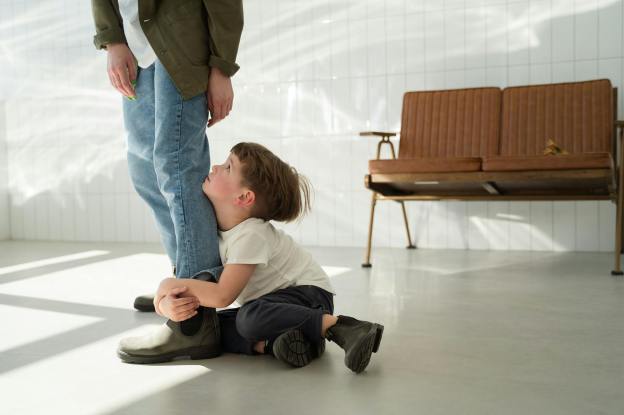
“Mama, are you gonna be with me every step of the way?” Her faced warped in sorrow, and in her teary eyes I saw she needed an answer, needed to know she would not be alone. 

Three months earlier, our family made an excursion to the locally-owned pet shop across town, where a hay-like smell and the sound of chirping birds accompanied us to the corner of the store where for-sale rodents ran on exercise wheels and nosed around in paper bedding. Kyli, eleven years old, wanted a hamster. Soon one of the employees was carefully scooping through a small aquarium nearly full of paper bedding, searching for the elusive, white dwarf hamster Kyli had selected. Kyli’s aquarium, identically full of bedding, sat nearby on the floor, ready to receive her pet. It seemed a long time before the rodent handler came up with a wiggling clump of bedding and transferred it to its new glass home.

Lucy, as Kyli named her, liked life buried in bedding. But we’d close the bedroom door, shove a blanket in the gap between the door and the floor, and scoop Lucy out to run around in a supervised corner and hide under our crossed legs. Kyli had incredible patience and insisted on gaining Lucy’s trust slow and gentle. One evening Lucy got into Kyli’s closet, which at that time contained an amorphous heap of items on the floor. Determined not to hurt or scare Lucy, Kyli waited patiently outside the closet for her pet, and asked me to stay with her. Lucy scooted into the folds of a Home Depot tote bag, then back out to disappear behind a crumpled sheet. We listened as she poked plastic toys with her nose and scrambled into a cardboard box. I mentally tapped my toe, Let’s get this hamster put away so I can brush my teeth and get in bed with a book.

Then Lucy came, with the barely perceptible tap of tiny claws on the floor, out to the open area. I held my breath as Kyli slowly extended a hand toward her; Lucy scurried back into the tote bag. I suggested we carefully start pulling things out of the closet. Kyli said no, that would scare her and might hurt her. I suggested clamping something down over her fast when she came out. Kyli said no. Lucy scampered out of the closet and almost crawled under Kyli’s dresser. Kyli shooed her away from the under-dresser “cave,” and I jumped in to scoop her up . . . she shot back in the closet.

I suggested blocking some of the open areas into the closet, so when she came out we could quickly block the rest and prevent her from going back in. We tried this, but Lucy easily eluded us. She must have come out in the open area a dozen times, as I sat on a pillow on the bedroom floor, making pointed suggestions about how to speed things along. Kyli talked me through being patient. “Mama, I don’t want her to be scared. We have to wait until she comes out. You’re gonna be okay.” 

“We could be here all night,” I grumbled. But eventually we corralled her and successfully lifted her back into her cage. Nearly an hour had elapsed.

Since Lucy had a way of scuttling into hard-to-reach hiding places in the bedroom, we took to sitting with her in the bathroom. With a blanket tucked into the gap under the door, she could run around without disappearing. Although not excited about being held, she warmed up to it, and seemed to enjoy exploring our hands and laps. 

One day, as she explored on and under the blanket by the door, she squeezed into the hallway. Before we knew what was happening, one of the cats seized her and carried her under sister’s bed. Papa dove under, scraping his back on the bed frame, frantically reaching for the cat, who dropped Lucy. Kyli screamed in fear throughout the ordeal, and although Lucy looked fine, her mannerisms over the next couple of days shed some doubt on her wellbeing. We monitored her, unsure what she needed, but she ate and drank and had no visible wound, so we were hopeful she would be okay—until the morning we found her lifeless in the cage.

On Thanksgiving Day we dressed in black and Papa dug a hole beside the shrubs along the back fence. Kyli settled Lucy in a sturdy wooden casket about six inches long, made by her wood-shop teacher, and added dried flowers, the toilet-paper roll Lucy loved to run through, and a smaller box containing her tiny body. We shared memories of Lucy and buried her. 

Kyli felt all the things common to loss. Frustration with herself. Disappointment in how things turned out. Anger at the cat. She blamed herself for not being a good enough mama to Lucy. She often felt sad in the evenings, and with tears in her eyes would say, “I want her to know how much I loved her. I don’t know if she knew. What if she didn’t know?”

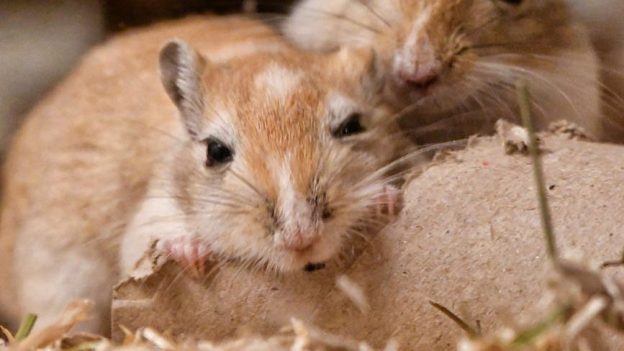
The grief softened over time, as grief often does. By January Kyli started talking about getting a new pet. In the meantime, her aquarium had served as home to a snake she and some classmates found in the schoolyard, and although they released it after a few weeks, it molted while in captivity, leaving Kyli a snakeskin souvenir. We washed and disinfected the aquarium. On the day of parent-teacher conferences, we once again traveled as a family to the pet store—only to find the cages in the rodent corner mostly empty. One contained an aging gerbil. Another, a white hamster that bit the pet-store lady assisting us, and drew blood. There were no dwarf hamsters, just Jumbo Biter. There was, however, one tan-and-white gerbil that seemed like an option. Kyli went into the back room with the pet-store lady to get a closer look, and before we knew it we were back on the highway home with Miss Gerbil in the aquarium. A bag of cat food balanced atop the cage to secure the screen lid.

Kyli named her new pet Tophee—Toph for short (like “trough” without the “r” sound)—and we stationed her in the dining room where we could see her often and get to know her. She was more active than Lucy had been, and more apt to scamper around on top of her bedding where we could see her. One day when Papa picked her up so Kyli could hold her, she shot off his hand to the floor, where she and we frantically scampered around until I grabbed her tight in my hand to lift her to safety. She did not appreciate this and bit me hard, leaving a bloody cut at the tip of my middle finger. Kyli again decided to take a gentle approach, reaching into her cage so Toph could get acquainted with her hand, talking softly to her and giving her treats, not taking her out of the cage to be held.

After a couple weeks, Kyli noticed Toph didn’t seem to want to open her eyes. Were they crusted shut? We couldn’t tell. Sometimes they were open, sometimes not. And she seemed to burrow less. We also questioned if she was drinking water. The hand-me-down water bottle she used sometimes required a bit of prodding to produce water. After some deliberation, and Kyli desperately wanting to take Toph to the vet, we took her to the pet store for an unofficial assessment. The pet-store lady who’d helped us purchase Toph, put on a long leather glove and reached in to hold and assess the little critter. She thought Toph might be dehydrated, asked about the warmth of our house, and suggested we try a new water bottle and watch to see if the eye situation worsened—if so, it could be a respiratory infection.

We moved Toph to a quiet corner of the living room, hoping she could rest more and get well. Over the next several days, she drank from her new water bottle, ate celery slices and Romaine lettuce, and seemed more active. Until she didn’t. Soon we realized we’d hardly seen her at all, as she seemed to be sleeping most of the time. We hauled a six-foot-long cardboard box from the basement to the dining room so we could hold and observe her outside of her cage. I scooped her up and placed her in the box. My heart sank as I watched her walk. She teetered to one side, getting in a few steady steps and then struggling again to maintain balance. Kyli watched tensely, and began to panic as I expressed my concern. We’d had rats who behaved that way, and they had to be put down for neurological problems.

I sat in the box with Toph; Kyli cried, “Why me? You had a hamster that lived for a long time, and you threw it against a wall! Why can’t I have a pet that doesn’t have all these problems?” I lifted Toph to my lap, sleeves pulled over my hands to protect against bites. She sat on my leg, barely moving, thin and lethargic. This was more than Kyli could bear and she paced around the living room crying, not wanting to look at Toph, feeling guilty for not being able to keep her healthy, desperate to do anything we could for her. As I sat in the box with Toph, Kyli approached me, tears on her cheeks, her face twisted in fear and sorrow. It was too much. Too much not-knowing. Too much angst at the thought of an innocent animal suffering. Too much powerlessness and insufficiency and fear. Kyli reached out her hand to me—“Mama, are you gonna be with me every step of the way?”

I, too, felt powerless, insufficient, and fearful. How could I be present to Kyli’s grief? How could I make a decision about taking a $30 rodent to a vet who would certainly charge more than $100? Kyli’s question handed me a lifeline. In asking me to be with her, she gave me something to hold onto. “Yes. Of course. I will.” I will be with you. I wouldn’t have it any other way. We will question together. We will cry together. We will make difficult choices together. You are not alone in your fear and grief. Together we will watch and worry and wait. Together we will make decisions. Together we will hold our insecurities and unanswerable questions. Together.

The next day I called the pet store for more advice. They wondered if Toph was warm enough, so we moved her in front of a heater vent, put a blanket over half her aquarium, and decided to offer her water on a spoon two or three times a day, buy new food, and give her some jarred baby food as well—pureed pumpkin. Toph again seemed to perk up, had an enormous appetite for sunflower seeds, and began rummaging around her cage more often.

But after a week, she returned to excessive sleeping and her sides still caved in a bit where she should be plump and round. We didn’t know what she needed. We consulted the internet, the pet store, and artificial intelligence. We didn’t know if she’d make it or not. I echoed Kyli’s sentiment—why can’t it just be simple? And I was grateful, knowing we would be together, every step of the way.

Exposed by Proximity

Children scare me. Even my own children. I do not like this, and admit it reluctantly. Children make noises at the wrong times, go where they shouldn’t in the blink of an eye, and express emotions with their bodies. In a word, they are unpredictable. 

The most likely culprit for my fear and discomfort is a desire to feel safe by being in control. This is also something I don’t want to admit. Isn’t it better to go with the flow? Not to mention that control is largely an illusion anyway. And Jesus not only loved children; He suggested we emulate them.

But that doesn’t help me with in-the-trenches moments with kids. I can’t ever find the one right answer I’m looking for. Should a kid have snacks or eat only at mealtimes? If I give someone else’s kid dessert, or put on a TV show, will that be the end of life as we know it? If two toddlers fight, and both hurt each other, do we call it even and move on, or should they be punished or lectured? How do I know in what moments to expect my children to toe the line, and in what moments to suspend expectations and get ice cream? And don’t even start on the pros and cons of vaccines. 

No matter the age of a child, my response to them could affect them for the rest of their lifetime. I am not okay with this. Will I be the one who offers grace or wisdom or a listening ear that gives permission for a child to like themselves? Or will I give advice at the wrong time, be lenient when the consequences are life threatening, or give peanut butter crackers to the kindergartner with a severe peanut allergy and get locked up for murder?

The stakes are too high. Somebody please lower them. Tell me I don’t have influence, I’m not culpable, my instincts can never go wrong. But no, once more I must make peace with uncertainty. I must receive the truth that I will both harm and help my children and other children. Sometimes I will hurt and another will heal. Sometimes I will heal what another has hurt. And some hurts won’t be healed. 

No matter the stakes, I am not superhuman. I will break what needs to be held together, and I will clamp down on what needs to be released. Damn, I hate that. 

Then again, maybe the children in my life are my greatest ally in accepting my humanness. I doubt the fear will go away. But maybe it could prompt a mantra: I am in this moment, with this child, and we are both getting to know ourselves. There’s something sacred under the scary feeling, a gift of mutual vulnerability that exists here where I am exposed.

Mothers Are Stalkers

Every mother is a stalker—stealthy as a fox, or loud and proud as a heckler. 

She may try on other hats—friend, playmate, shopping buddy, or cook. But she will always return to the well-worn stalker cap. 

No one knows exactly why. Perhaps all those years of sleep deprivation affected her brain. Or maybe her partner has become boring and she needs to trail someone interesting. Or her dream of being a paparazzo never panned out and she’s done repressing her hunger for juicy stories.

Could it be revenge—on her own mother, or on her child—for needing her when she didn’t want to be needed? Is it fear, masquerading as care? Control masquerading as curiosity? Perhaps sheer boredom is the culprit. 

Or it could be force of habit—one that began while watching an infant’s chest rise and fall, then following a toddler through play structures, teaching a child how to use a toothbrush, then how to handle a kitchen knife. A long stint as chauffeur cements the habit, and by the time a kid has wheels of their own, stalking is like a nervous mother-twitch that can’t be medicated.

Whatever the case, mothers are stalkers, and children are their prey. They follow, but never shoot. They scribble notes and report to their partner in bed at night. They buy new camo when the old is detected, and they keep on stalking even when the tap-tap of their walkers is a dead giveaway.

And, depending on your religious beliefs, upon death they have the best of all—that birds-eye view they always wanted, the ability to hover without being detected, and maybe even a direct line to put in a few suggestions to God about how their child’s life should go.

A Mother’s Mundane Conundrum

“You’re just making me do it!” my daughter says with a surprising amount of conviction. “You just decided I have to do it.” She’s not wrong. Nothing will happen if she doesn’t clean her room. No one cares about it except me. I feel called out as an unnecessarily controlling parent, just as I do each time one of my daughters confronts me with these sentiments.

It seems I have arbitrarily decided most of the content of their lives. I require showers, food other than fruit and juice, feeding pets, getting out of the house for school—with clothes, lunch, piano books, shoes appropriate for PE, and a sweater. Would anything dire happen if all those things were left undone? No. One or both daughters could go to school late, in PJ’s, without a lunch, wearing the wrong shoes, and sweaterless. In fact, she could probably do that for a week before anything interesting or significant took place in response to her choices.

I dislike this feeling that I am the only reason she does most of what she does. And I don’t like it when she confronts me about it. I don’t know what to say. I agree with her. Most expectations really are arbitrary—for adults as well as kids.

There are plenty of things I could say that I don’t want to say. I could say, “Someday you’ll have a job,” but that has no meaning whatsoever to a nine-year-old. Or, “You have to learn to do things now so I’m not still reminding you when you’re thirty,” but is there any real danger of that? Or, “I’ll be embarrassed if you go to school in pajamas,” but do I really want to teach my kids to make decisions based on my embarrassment? Or, “Nasty things will start growing in your room if you don’t clean it,” —okay, maybe a month from now, so is that really motivation to tidy it up today? Or, “I’m your mom and I get to decide what you need,” except that I don’t think anyone should decide another person’s needs for them. You get the idea.

So here I am with nothing to say, a truthful human being looking me in the face, questioning my demands—and why are they demands? Perhaps because requests and suggestions haven’t worked, or because my emotions are now fueling this high-octane—but nevertheless mundane—occurance.

“You’re right,” I say. “I can’t actually make your body and your arms and legs do anything. But I can remind you there will be no screen time until chores are done. And if you don’t do chores today I might give you an extra cleaning job tomorrow.” This comes out sounding a tad desperate, and something like a threat—not exactly what I was going for. But you do what you have to do.

Motherhood seems to be a mix of desperation and compassion, empathy and threats, logic and insanity. Is that what childhood feels like too?

She whimpers. She complains it’s not fair. But eventually she trudges to her room and starts picking up clothes off the floor. My heart rate returns to normal as I breathe a sigh of relief. With any luck, I’ll have at least five minutes before this conversation repeats itself with my other daughter. Meanwhile, I whimper and complain internally as I return to a pyramid of dirty dishes. I guess we’re not wholly different.

Two New Holes

Shortly after my May birthday last spring, I acquired two new holes in my body. I had my ears pierced.

One aspect of the conservative Christianity I grew up in is an aversion to body piercings. And tattoos, lipstick, and clothing that reveals feminine curves. When I left home as a I teen, I bought a padded bra, colored my hair with a box of dye from Walmart, and called it good for my rebellion. As a young adult I said I didn’t want to pierce my ears or get a tattoo because I have a low pain tolerance. Also, I faint for vaccinations, blood draws, and if I hit my knee or elbow too hard. (I fainted at the dentist once, and I fainted when I went to the college clinic to get a wart removed from my foot. The nurse sent me to Walmart to buy the kind of wart remover you paint on yourself.)

Why this sudden body piercing urge, you might ask, as I’m nearing the age of 40?

Last year, my nine-year-old daughter Kyli decided she wanted to get her ears pierced. “Why don’t you have your ears pierced, Mom?” she asked.

“I don’t know. I don’t like pain.”

“Well, if you really wanted them pierced you would do it,” she countered.

Point taken. So I thought about it. I hoped quiet reflection might reveal something profound, but my reasons were a grab-bag—it hurts, most of my friends don’t wear earrings, it feels weird to do it now that I’m middle-aged, it seems unnatural to poke a hole in my body (morality aside), my parents won’t like it, and so on. Like I said, random, blah, blah, blah.

So I decided to give it a shot, get my ears pierced with Kyli, and see if I like wearing earrings. Rather than take the lead because of lived experience—my usual role as mother—I had the same questions, concerns and curiosities as Kyli. We’d be figuring this one out together.

We waited for the school year to finish since the kids attend a Christian school that doesn’t allow earrings (or colored nail polish—go figure). Kyli wanted to get earrings the moment school let out, so we made appointments at Ulta Beauty for 1pm on May 31st—one hour after school dismissal on the last day of the school year. We snagged Kyli’s bestie, got a bite to eat, and drove to the salon. Inside, past the rows of creams and powders and scents, we found a plump young lady ready to pierce our ears.

I signed the thing they handed me—a waiver?—while Kyli picked out studs. Her bestie pinched her arm hard to show her how much it would hurt. The plump lady drew dots on Kyli’s earlobes, asked us to examine them and approve the placement, then inserted a stud in a white hand-gun. Punch!—right ear done. Kyli’s eyes were wide, a combination of curiosity and alarm, as she took in the experience and tried to categorize it. Painful? Scary? No big deal? Before she could settle an answer, punch!—left ear done.

For the next minute, Kyli’s hands hovered around her ears, her instinct to squeeze them through the discomfort, at odds with her determination not to touch. I watched, ready to comfort. But I wasn’t needed. Bestie dragged her around the store, applying makeup until Kyli’s face was caked with several shades of foundation and blush and her fears forgotten.

Meanwhile, I warned the employee holding the ear-piercing gun that I’m a fainter. Judging by her look of alarm, I guessed she didn’t have a lot of experience with people fainting—either that or she had a memorably bad experience. “I’ll know if I’m going to faint, and I’ll tell you,” I assured her. She proceeded to draw dots on my ears, punch, punch, voilà! Little silver hearts rested on my earlobes. During those thirty seconds, I felt the same wide-eyed, uncertain curiosity Kyli’s face had conveyed, but when it was all over, decided the pain wasn’t worth mentioning. We took pictures, documenting this mother-daughter experience trying something new together.

All summer we cleaned around our earrings, front and back—twice a day at first, then less often. We cleaned them after showers, after swimming, after getting dirty in the yard. We twisted them around in the holes as we had been instructed, and left them in 24/7.

At first, earrings were more unnerving than I expected. It felt wrong to intentionally punch a hole in my body and take special care of it to keep it that way. Usually when I cut through my skin and flesh, I tend it carefully to facilitate healing. This was different. Also, for the first month or two, I felt slightly anxious about having something attached to my body that I couldn’t take off. When I went to bed and took off my watch and glasses, I wanted to put the earrings on my nightstand too. I wanted to take them out so my body could be just my body. During the night, I tried different positions with my pillow to put the least pressure on my earlobes.

After the prescribed six weeks, I hesitated to remove my earrings since they still oozed or bled occasionally. Kyli, tired of waiting to wear a favorite pair of earrings, took out the original studs and sported cute, sparkly flowers for a day. This joyous occasion deteriorated when I couldn’t find the right hole to get the original studs back in her ear. I had erroneously thought a hole was a hole, but the tip of the earring took it’s own course through the fleshy part of Kyli’s earlobe and came out the back in a different place!

Blood, tears, and parental concern and confusion ensued. We survived this try-to-find-the-right-hole circus two or three times over the next week, and eventually Kyli’s left ear was so unhappy she let it heal shut. When school began again in August, she wore a tiny clear stud in her right ear—which still oozed and bled sometimes. She didn’t want to remove that one, but also refused to get her left ear pierced again. We were deadlocked in pirate mode.

The first pair of earrings I bought came from a rock-and-mineral shop in a falling-apart historic building we stumbled across during a bathroom break on a road trip. They’re tiger’s-eye stones. I nearly passed out when I first put them in, but after lying on the bathroom floor and breathing deeply for a minute—usually an effective method to maintain consciousness—I returned to normal.

At this point, I’ve probably had as much fun buying earrings as wearing them. For more than six months, I didn’t leave my earrings out any longer than an hour—the holes still appeared tenuous. Either the original studs or one of my half-dozen new pairs of earrings stayed in my ears at all times. At last, a month or two ago, I slept truly naked for the first time. It felt good as good as I imagined.

In a few months, it will be a year since we pierced our ears. During that time, Kyli’s right ear developed big scabs and pus came out when I cleaned it, over and over, so a few weeks ago she took out the clear stud. It’s healing now, and she’s done with earrings for the time being. Meanwhile, I’m growing into the fun of it. My sister gave me a beautiful pair of iridescent hummingbird earrings for Christmas. Michael gave me a pair of book earrings for Valentines Day—I’d been looking and found surprisingly few options, and these are adorable tiny blue books with real pages. I wore them to the library this week, and felt that same satisfaction I get when my bra and underwear match—a covert sense of matching.

So, friend, if you’re forty-ish and thinking about earrings, here’s what I’ve learned: It’s a small adventure, and hey, maybe that’s what makes it fun. These years lean low on adventure—outside of parenting. And come to think of it, this adventure was tangentially brought to me by parenting—two new holes, the result of a question from my daughter.

How about you—any new holes in your life? Or body?

In Five or Six Hours the House Will Be Quiet

I’m not okay. This is how I know it’s time to write.

I’m sitting in the kids’ room by the fire I lit for them—my attempt to dote on them since they stayed home from school today.

Sore throat again this morning—it has been almost daily for weeks with my younger daughter, Kyli. The older one, Kayt, said probably nothing is wrong with her but she doesn’t want to go to school. Middle school “friendship” has been sucking the life out of her. I can’t help but wonder if her chronic exhaustion and headaches are as much social as they are physical.

I shone a flashlight down two throats this morning. Kyli’s looked red, and Kayt’s had a weird white blob that dr. google says is a tonsil stone. Never heard of those before.

By the time I sit down to write, it’s midafternoon. Homework time downstairs has devolved. My stomach clenches in response to unharmonious sounds, insufficiently diminished by their travel up the stairs to my ears.

Now Kayt has come upstairs to whine and writhe. Technically she came up to say Kyli is bugging her and won’t stop. Since I made clear arrangements for Kyli to come upstairs if they weren’t enjoying sitting together, I feel a gallon of frustration and a drop of empathy. So I tell her to send Kyli upstairs, and that’s why she’s begging, moaning, and asking unanswerable questions in a nails-on-chalkboard tone of voice. She has a weird thing about not being alone.

At 7:15 this morning, when I usually would have been seeing the girls off to the bus, instead I set up appointments at the urgent care center. This change in schedule involved calling the bus driver and texting, let’s see,—their teacher, my yoga instructor, my husband, and several people I had plans with later in the day.

Did I mention the power outage? Just got yet another automated call from the power company. I have an outage that should be restored by 4:30pm, says the message. The power has already been back on for half an hour, and it’s currently 3:30. Not to mention just a few minutes ago I received an automated call informing me that the outage was caused by wildlife (read “squirrel”), and my power had been restored.

I think I’ve received five automated calls, including one that announced an outage had been reported in my area and a truck had been dispatched. Yes, I’m aware. I reported the outage when an explosive BANG and corresponding flash of light outside the dining room window resulted in all powered devices in our home going blank.

My husband is in Denver for work.

My sister is home with a sick kid as well.

My younger daughter made a “fun cutting station” on the floor in her room, where folks can experience the satisfaction of cutting various materials—like blue yarn (now in pieces all over the floor), tiny foam squares, a rubber armband (okay, that actually is super satisfying), and a plastic packing sleeve.

On the kitchen counter downstairs is a bowl of homemade slime that looks like a hot-pink pile of animal intestines. The dining table is covered with rubber stamps and paper, ink pads and embossing supplies, dirty dishes, purple slime, saltines, and homework.

Finally. I breathe. Here’s a moment of peace. Kyli is taking a break from homework, so I allow Kayt to study upstairs with me.

Kyli is quietly making a creature out of air-dry clay (a substance which already covers a significant portion of the bathroom counter due to a previous creative session this morning).

I don’t like the multiplying messes.

Sibling snarkyness nauseates me.

Most of my day has born no resemblance to the Wednesday I thought would unfold when I opened my eyes this morning.

But I ran on the treadmill and took a shower this morning, and in an unplanned burst of self-care I even dried and straightened my hair, and put in earrings. I’m sitting here by the fire, cat on the hearth, journaling. I did a marvelous breathing meditation from The Artist’s Rule, and I laughed with my girls.

After our visit to urgent care, we went to school and picked up homework (the current quarter ends in two days and there is a small state of panic about grades). Then we filled the car with gas for “real low cheap”* at the station near the school, stopped at Walmart for grocery pickup, and came home for the whole slime-making, lunch-eating, power-outage bonanza, followed by the Sibling Homework Crisis of 2024.

So I’m not okay.

But also I am.

Because it’s okay to not be okay.

And I’m grateful my kids don’t have strep, and … this just in: Kyli is cutting a stick of gum into pieces, holding the scissors above her mouth so each piece drops in … back to gratitude—for the fire warming my feet, for furry and purry kitties, for a relatively small pile of dishes in the kitchen sink. I haven’t yelled at my kids, and I have listened to them. I’m going out with girlfriends this evening.

And—bless Mother God—in five or six hours we’ll (fingers crossed) be tucked in bed and the house will. be. quiet.

*If you want to acquaint yourself with the phrase “real low cheap,” watch this.

Toothpaste

Toothpaste

Blessed are You,
Lord our God,
Queen of the Universe,
for chocolate chips
melted into a couch cushion,
bandaids on the shower wall,
and toothpaste. so. much. toothpaste—
crusted onto the tube,
smeared on the bathroom counter,
cemented to sinks and walls.

Blessed are You
for Cheerios on the kitchen floor
crushed into powder,
coat wet and dirty
from a night in the back yard,
sandal forever lost
in the mud of Anthony Lake,
chip crumbs in the bunk bed.

Blessed are You,
Lord our God,
Queen of the Universe,
for candle wax dripped
down the cupboard door,
Q-tips cut into pieces,
gum saved on the dining table “for later.”

Two young humans dwell here
who create often and live large.
May they always have
permission to be messy and alive,
and enough money for toothpaste.

“Sell Your Cleverness”

“Sell your cleverness and buy bewilderment.”

– Jalal ad-Din Rumi

I wish I’d had a good enough read on the market to sell my cleverness before it plummeted in value, which happened sometime after my second daughter was born. Cleverness worked like a charm when I was employed. Often I held the unnamed distinction, boss’s favorite. So I brought cleverness home when I quit work for full-time momming.

In retrospect, I should’ve sold cleverness the moment I stepped out of my office for the last time. But at that point bewilderment was nowhere on my radar. I didn’t know anyone who traded it, had never even heard of it.

Fast forward three years. Everything about my children was unpredictable—what they’d eat, when they’d sleep, which emotional roller coaster they’d ride next. Their chaotic reach extended far beyond the length of their dimpled arms, changing my relationships with friends and extended family, my calendar, the size of my purse, and my mental health.

Cleverness steadily dropped in value. Too exhausted to do anything about it, I felt relieved when my portfolio manager stepped in and started buying… wait, what? You’re buying bewilderment? How does one trade with a currency that by its definition means you don’t know what you’re doing?

Before I knew it, cleverness held only 5% of my total investment. Bewilderment dominated my portfolio. I didn’t like it one bit. But, over time its value increased.

I mourned cleverness far too long, pining over it and remembering its heyday. I wanted it back. I took some small amount of comfort in knowing that every parent before me learned to invest in bewilderment. But mostly I missed cleverness. I went to therapy. That helped. I deconstructed my faith. That helped. I got on medication. That helped. I dropped most of the balls I was juggling and concentrated on just a couple. That helped.

Reluctantly, at the growth speed of a bonsai tree, I grew into ownership of bewilderment. I kind of started to like bewilderment. It gave me permission to have no idea what I’m doing as a mom, to not know what God is up to, to let my marriage be messy, and my friendships be spontaneous.

Truth be told, had Rumi sat me down on my last day of work and advised me to sell cleverness and buy bewilderment, I would’ve told him cleverness had always served me well and motherhood would be no exception. I didn’t know what I didn’t know.

At the time of this writing, my daughters are 9 and 11 years old, and I’m settled quite nicely into bewilderment. But I have a suspicion that my portfolio manager is on the hunt for something, maybe a new investment that will climb in value during the kids’ teen years. I am definitely not okay with this, but I have a feeling I’m gonna have to run with it. I mean, it couldn’t be worse than selling cleverness to buy bewilderment. Could it?

Motherhood, My Invitation

Motherhood, My Invitation

Blessed are You,
Lord our God,
King of the Universe,
for motherhood—crucible,
mental health course—no way to opt out,
sleep—a mocking specter,
messes—everywhere, always;
but this too: my first real invitation to be kind
to the uglier parts of myself.

Blessed are You
for seeing me when I was unseen;
for holding my hand
when motherhood was a mirror.
I saw things I didn’t want to see,
didn’t want to be,
and became afraid of myself.

Blessed are You,
Lord our God,
King of the Universe,
for being my companion in the night,
a place to belong
when I didn’t belong in my own self.
You waited, waited for me to hear You,
hear You above the shame,
because You loving me when I hated myself
was the invitation to know my wholeness
and love myself, and in so doing,
to love my children, too.