
“Be still, my soul, the Lord is on thy side.”*
Unexpected but much-needed words at 2 a.m., when the house is quiet but my soul is loud.
“Be still, my soul, the Lord is on thy side.”
A thousand memories of my father, the hymn-playing classical guitarist whose practicing accompanied my sleep most nights for my first 18 years. A hundred more memories of concerts in a hundred churches, Daddy’s black suit with the guitar-fretboard tie, my mother presiding over a table of music for sale—books, CDs, tapes. And record albums in the early memories. My sister and I sang duets. We wore matching dresses sewn by my mother each year, made from fabric chosen by my father.
“Be still, my soul, the Lord is on thy side.”
The deepest stillness of my soul is always at God’s invitation.
“Be still, my soul, the Lord is on thy side.”
Knowing I can rage against God, blame God, say “fuck” to God—this, too, is an element of the stillness of my soul.
“Be still, my soul, the Lord is on thy side.”
Words I need to hear now, and in five minutes, and five minutes after that, because my soul has amnesia when it comes to stillness.
“Be still, my soul, the Lord is on thy side.”
Comfort for the parts of me that fret about who is not on my side, who doesn’t understand me, who wants ill for me. Be still. The One on my side will never change Her mind.
“Be still, my soul, the Lord is on thy side.”
As the psalmist wrote, “Be still, and know that I am God.” (Psalm 46:10) If He is God, I am not. Sometimes I need to remember this. Be still. Be.
“Be still, my soul, the Lord is on thy side.”
It is safe to be me. Right now. Before I do the next thing.
“Be still, my soul, the Lord is on thy side.”
I am not alone, even in my ugliest moments. God’s holy presence holds me with tenderness. I am invited to hold myself with tenderness, too.
“Be still, my soul, the Lord is on thy side.”
I pull out my hymnal, play the song one-handed on the piano, wonder if I might fall in love with the rest of the lyrics. I don’t. All I need is that one line.
“Be still, my soul, the Lord is on thy side.”
*This is the first line of the hymn, “Be Still, My Soul.” Words by Kathrina von Schlegel, translated into English by Jane Borthwick. Sung to the tune of “Finlandia,” by the Finnish composer Jean Sibelius.

I want to like Jesus because the grown-ups in my life told me He is good, and they were right.
I want to be innocently happy that God is good.
I want to go back to painting “JESUS FREAK” in huge letters on a baggy cotton T-shirt, soaking up Sabbath School lessons with gusto, back to the credibility God had when I was 14.
Simple Jesus—does He still exist? Or can He at least be mysteriously complex and Kindergarten-simple at the same time?
Is there a reality—no-strings-attached—in which Jesus just loves me and knows my name?
A few weeks ago I attended a spiritual retreat at Camp MiVoden, as a sponsor for the girls in the 7th/8th-grade class. During the worship services I remembered something, a feeling of belonging and certainty from my past. I knew some of the songs the praise band led, and I sang with my arms raised. No one expected anything—hardly anyone knew me—and the featured speaker said simple and good things, about who I am and who God is, and I cried, and I remembered a time when I belonged wholly, and sermons weren’t pocked with ideas that distract me from goodness and wholeness.
I want a plain friendship, one I don’t have to defend or explain, one in which I don’t need Jesus to make me look good, and Jesus doesn’t need me to make Him look good; Jesus with a reputation as simple as Mary who had a little lamb, not the notoriety of an activist.
I don’t need answers for all the questions and discrepancies. I’m looking for that place where they are absent, where I don’t have to explain why I don’t believe in a punitive gospel, or why I’m part of a faith tradition (Christianity) that has inspired violence for thousands of years. I don’t want to explain why I use feminine pronouns for God, or why I say Adventism is my community but not my religion. I don’t want anyone to raise their eyebrows at me, nor me at them. I want to be in love—inside love. I want to feel safe because I am safe.
Maybe what I really want to know is this: does a simple Jesus exist for adults too? Does He go for coffee with millennials—with me? Does He wear jeans and send 132 text messages every day? Does He understand carpools and playdates and a family calendar on the kitchen wall and how all the spoons are dirty if I miss one day running the dishwasher? Does He peruse my TBR shelf and ask me about my writing? Does He know I’m still a little girl inside, intimidated by the disciples who turn me away because I am small and simple?
Is Jesus here now, and does He remember me? Does He look through my photo albums and murmur memories? Has He been here for it all? Can we laugh together about singing “Sinnerman” and “We Are Soldiers”—the laugh of a shared memory—those lyrics humorous like the frizzy perms of the 80’s?* Is He still the cleft in the rock, the hiding place, the blessed assurance the hymns offered?
What if we’ve shared a life more than a belief system, and our love is built on mutual adventure and admiration?
Maybe He has never needed me to pull Him apart and stitch Him back together, to understand how He is a triune being, or even to put our companionship into words. Perhaps I was mistaken in thinking that farther, bigger, and deeper are better.
Jesus is here. In the essentials He hasn’t changed a bit. He’s still the great guy I knew in primary Sabbath School; the one who stood with me in the church baptistry, invisible yet deliciously simple; the father I wrote to in a dozen journals full of prayers; the soil from which I grow. Most of all, He’s still my friend.
*I sang these songs countless times. Although the lyrics of “Sinnerman” I sang were not as heinous as what I just found by googling it, I think it’s safe to say it’s inappropriate to mock sinners running from God (and what even is a “sinner”? Aren’t we all?). And don’t even get me started on “We Are Soldiers” and “I’m in the Lord’s Army.” Who decided it was a good idea for seven-year-olds to sing about blood-stained banners and artillery? So yes, I think Jesus and I can have a good laugh about it.
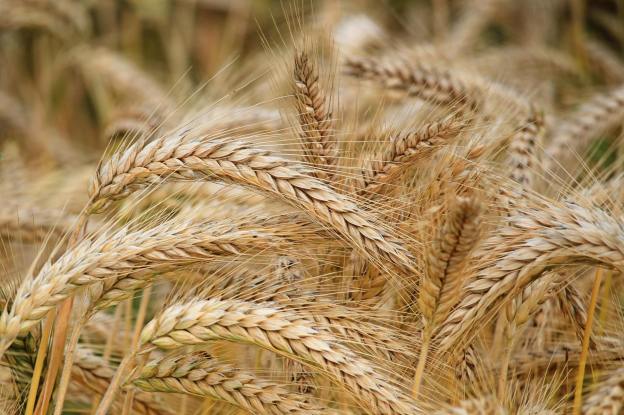
I take into my body every day a substance I know almost nothing about, a refined form of an ancient plant—maybe a grass? Today the bouquet on my table consists of a dozen stems I gathered from the roadside a mile from home, at city limits where the speed limit increases from 35 to 50. This bouquet is the raw material for foods I eat daily, but I have harvested it for beauty and not for appetite.
I’ve been learning about relationships since forever. As a teen I imbibed books by Joshua Harris and Elizabeth Elliot. I thrill a little every time I take a personality test. When my husband, Michael, and I went through pre-marital counseling together, we answered personality questions about ourselves and about each other, and our therapist came back with the results overlaid and a description of our relationship dynamics. I didn’t know that was possible! Unbounded delight and satisfaction.
As I hold a stem from the bouquet, I find it rose-like in that it is beautiful, but it will hurt me if I handle its sharp edges carelessly. I’m not sure how one prepares it for consumption, but I think a severe beating is involved, to separate its parts. If I’m not mistaken, animals were traditionally employed to help with this task. But even this violent unmasking of the plant doesn’t render it edible—at least not to the standard of most palates. Additional breakdown, with stones or blades, nudges it closer to consumption. Even then, it doesn’t appear on dinner plates or in snack trays. It waits in the cupboard for a kitchen chemist to combine it with oil, water, yeast, sugar, and any number of other ingredients. The resulting gooey blob is then baked, fried, boiled—cooked in some way. Once cooked, the food may be spongy (in a good way) or crunchy, and bears no resemblance to the stalk I hold in my hand.
I’m hungry to understand relationships, both because I’m intrigued, and because I do not want to leave my relationships to chance. Marriage tops the list of highly-scrutinized relationships, followed closely by the bonds I have with my kids, and with my parents. What’s happening when my husband gets super talkative? Does quietness mean completely different things for my two children? How have my mom and dad survived this long in the world with their seemingly brittle ideas about religion and diet, and not one single coffee date?
Although I don’t know how to plant, nurture, harvest, thresh or prepare grain, I do know that an established industry takes the plant through all those steps for me, and I ought not eat it otherwise. I owe this knowledge to my elementary school education, and the times my mother reprimanded me for eating raw flour—probably in the same era I sampled dry dog food.
I am convinced I will not get relationships right by chance, by intuition, organically. Research, knowledge, and choice are required. I have used this knowledge to understand and to be understood; to shame myself and my spouse; to prove I’m right; to try new patterns and to defend old habits. Most of all, I use it to dispel mystery, because the mystery of love is uncomfortable; the bread of love is finicky—too dense or not dense enough, sometimes rising only to fall, tantalizing when it’s warm, less palatable cold. Does my reading and analysis save me from this roller-coaster ride? I think not. But it does help me feel less alone.
As I drive from my small town to the next small town, I count fields of wheat. At least I think it’s wheat. Truth be told, I trust an industry I know little about, and a process I prefer not to attempt to replicate. On the baking aisle I can choose the brown bag or the blue-and-white one, non-GMO or organic, but I’m only pretending to understand. The way I know wheat best is on my tongue, in the form of bread, mixed with flavors like cheese and pickles, homemade raspberry jam, or peanut butter and applesauce. I don’t need to know all the details.
Could it be that the way I know relationship best is in the presence of a friend?—trying a new flavor of ice cream, laughing about how I only shaved one leg, crying about a pet passing heavenward. Maybe I don’t need to understand all the details in order to nourish and be nourished . . . in both food and friendship.

Twenty One Pilots’s song, “Stressed Out,” laments the insecurities of adulthood, noting that fear is still present, and we still care what people think. I turned 40 this month, and yes, I’m still insecure. It’s different than high school. And the same. I want you to like me. I want to be well-dressed and well-spoken, and most importantly, perceived well.
I’m a grown-up—have been for quite some time—and I can tell you what maturity doesn’t mean. Being grown up doesn’t involve control and confidence; it doesn’t mean growing out of awkward traits and social habits; it doesn’t include a clean house and well-kept yard, or a passel of perfect grown-up girlfriends.
I’m less sure what being a grownup does mean. But I’ve noticed I’m softer than I used to be—more flexible, a teensy bit less judgmental, and I know more about cooking and cleaning than I did 20 years ago.
I know less about God, love, and relationships. It’s been said that the more you know, the more you know you don’t know anything. I can confirm this.
There’s a real sense of loss, not landing in adulthood firmly in control and certainty, an expert in the kitchen, the workplace, the bedroom. I get tired of being wrong, confused, ineffective. If knowledge comes from experience, I am an expert in exhaustion, stress, and leaving my cell phone in obscure places.
I know I’m sounding a tad morose. But there is a happy ending. There’s something left after losing control, and the appearance of control, and pretending to have control. What’s left is eyes to see a different life entirely—a life of watching the cat lick his fur, thinking of my three favorite moments from the day just before I fall asleep, fighting less with my kids and husband, knowing there will not be a seismic event when my to-do list is left undone.
And I know myself better. I know I love writing and small groups. I know I like a clean house, but not enough to put in the work. I know I’m scared of the interminable wants and needs of my children. Being quiet and alone—especially in nature—returns me to myself. Banana splits and blended mochas almost always sound good. I try the hardest to be self-sufficient when I’m at my weakest. Animals make me happy. Getting called “a writer” makes me stand a little taller. Synchronicity feels like opening a birthday present.
My birthday, which this year fell on the first Sunday in May, played out like a dream Mother’s Day. My husband cleaned the kitchen, top to bottom. He and the kids cooked breakfast and dinner, and took me out for lunch. I sorted through a large tote, five bags, and an unconstrained pile of children’s clothing I hauled up from the basement, and found most of it could be passed on. I went to the park and watched goslings and ducklings, heard the smack-smack of their webbed feet in shallow water, and marveled at their fluffy bodies. I took a nap. With my parents and sister, I ate fresh-made blackberry pie with “40” cut into the top crust. Michael gave me a gift certificate to have the house professionally cleaned (when the dust settles from our six-month construction project). Like I said, a dream day.
It’s worth noting I couldn’t have planned such a day. All was gift—the generosity of my husband, my children, my sister. Many times I have planned a birthday party for myself, with friends and presents and homemade cake. But for forty, this un-forced birthday felt fitting. The people who love me gave what they wanted to give. And I received. I basked. I rested. And yes, I sorted children’s clothing—one of those things I never can find time to do.
Maybe I’m ready to accept this life I have. Whether I die tomorrow or in another 40 years, I will die complicated—a mix of peace and insecurity, frustration and gratitude, mundane and miraculous. And not at all grown up.

Lord, wash me not of my imperfections, but of the ways I try to hide them.
Four-days-unwashed hair.
Running late, always running, always late.
Hoping no one finds out how infrequently I launder the bedsheets.
I never before thought of blessing these things. Now I see them in need of blessing, of integration.
The voices of emotion.
The voice of smallness.
The voice of vulnerability.
The voice of longing.
Christine Valters Paintner writes, “Sometimes we need to welcome our ‘small selves’—the poor, meek, humble parts of ourselves—to allow our big radiant selves to be in service to them … Perhaps there is something even more profound than all of the amazing things we are doing in the world. It is this simple unadorned self that is blessed. The smaller selves are blessed.” (The Artist’s Rule, pg. 87)
The wisdom of these smaller selves is the wisdom of being human, of being malleable, of being unpolished and beautiful.
I want to make peace with my shadow side, my imperfections. I feel in conflict with myself, like half of me is inside a fortress, and half of me is huddled against the outside walls—like all of me is afraid.
Interior freedom feels like being present with myself, like saying “not today” to crappy thoughts. It feels literally spacious, permission to take up more room with my body and breath. Is there room to make mistakes? I feel small when I think about making mistakes.
In Celtic spirituality, “thin places” refers to locations or times where the veil between the physical and spiritual realms seems thin, where a closer connection to the divine arrives, perhaps unexpected. It is possible that no one else wants my small self, but God does. He meets me in the moments when I am aware of a limitation, a failing, a smallness. Maybe these moments are another “thin place.”
I notice that my sense of self is rigid, even brittle. Can I reimagine myself? Fleshy, muscular, vulnerable, more cottage than castle, more field than fortress.
I am meadow. No meadow has walls. No meadow tries to look the same every day. A meadow doesn’t look at its thin patches with embarrassment.
My whole heart longs for grace and mercy. I want to mete out mercy, because it is the right thing to do. But I’m not sure mercy can be “meted.” It is given out not so much in measure as in waves. It is oceanic, much bigger than I realize.
I am meadow, and in meadows deer graze, butterflies drink, shy rabbits and tiny mice feel at home. “Welcome home to myself,” I say.
My big self sets the table for my small self, and together we dine in the meadow.

This morning I wanted to pray for friends, but instead I circled unsettling questions—questions I’ve returned to many times.
Why would I ask God to do something She’s already doing (i.e. Please be with this suffering person)?
Why does the Bible say Jesus will do anything we ask in His name?
Why should I have a say in God’s agenda for today? Especially when I’m pretty sure God doesn’t even have an agenda.
I want to pray for my friends—the text messages of prayer requests are waiting—but every way I know feels like useless chatter. I know countless book have been written and sermons preached to “answer” these questions, but I don’t really want answers. I want to acknowledge the awkwardness of prayer.
Talking to God about my frustrations—like this frustration with prayer—feels natural. She’s not offended when I call Her a liar for saying I’ll receive anything I ask in Jesus’ name. But today I’m annoyed because I don’t know how to bridge the gap between sharing my inner world with God and talking/asking/supplicating/mentioning my friends and their lives.
Our two tiger-striped cats sit at the window, attending to squirrels and whatever else moves outside the glass.
The sky lights slowly, cool gray clouds warming to creamy white.
I think about God and I sitting on the couch in His house, an image I return to often, always an invitation to relax into the overlap between us—His breath, my body. And it occurs to me that I could invite my friends to this couch.
I scoot over and invite Anna to the open spot between us. Her mother is dying in another country and she doesn’t know if she’ll make it in time to say goodbye. As she sits between us, something flows from her body, releasing her, and the three of us witness it together.
Next I think of Jen and her heaviness, hovering just under the surface of her pleasant and positive demeanor. Sitting with her creates space for the heaviness to stay or to go.
Then the couch shapes into a large, comfortable circle to make room for the family of a young man who passed away suddenly. His wife and children, his brothers and their families, all squeeze in to witness the grief in silent togetherness. Who knew coziness and pain could hold hands like this?
So God and I stand witness (or rather, sit witness) to each of my friends and family who come to the couch. No words are exchanged, no requests made, no answers given. We honor God with our presence as She honors us with Hers. We remember we are not alone. We see the depravity of our circumstances and the beauty of love, together.
When I finish praying, I know I will do this again. And I am touched and awed by the ease with which God converses with me in Her living room, whether in words or silence—the ease with which He engages my frustration and discomfort, and invites me to forego awkward requests in favor of sitting together.
Thank You, Papa.
I am going to start living like a monk,
though I have no brown robe or penis.
What I have is a love of silence.
“Be still,” You say
and I am moved.
You have seen straight through me.
You have revealed my desire
and answered it with abundance.
It is enough to hold hands in the silence.
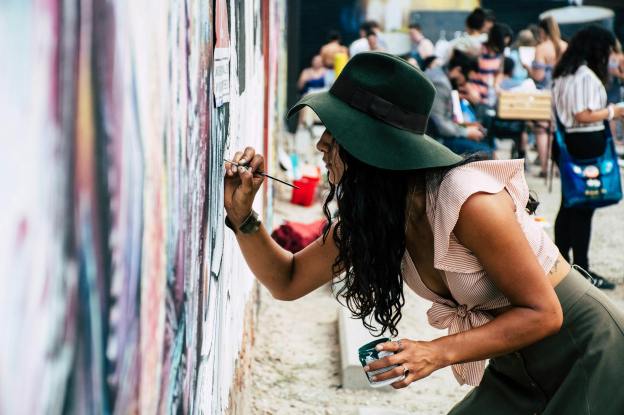
I am going to start living like an artist—
comfortable clothes,
maybe a paint smudge here and there.
I will print my soul on paper,
allow it to be read.
I will notice the way leaves grow
and petals fall,
and I will study the delicacy
of a spider’s web
and the beauty of a human hand.
And You will be nudging me and pointing,
for always there is more wonder.
I am going to start living like a mystic
disguised as a mom.
The paradox of my children’s sass
is the perfect—daily—invitation
to discard right answers.
As I haul a bag of right answers
to the trash bin by the garage,
I smell how clean the air is,
and I hope when I return to the kitchen
the kids will smell it too—
life-giving molecules
dancing all around us.
Thanks to Christine Valters Paintner for the writing prompt that set me to writing this poem—from her book The Artist’s Rule.
“Many unhealthy behaviors begin as necessary coping mechanisms.”
I hear various versions of this sentiment repeatedly from therapists and psychologists. What may be a harmful habit today, they say, served us well in a previous season of life. I get how this applies to people-pleasing, secret-keeping, anger-stuffing, and high-performing. I’m less sure how it applies to self-hatred which, at first, sounds universally useless to me.
But maybe it did begin somewhere useful. Maybe my self-hatred sprouted when I couldn’t stop big feelings during infancy and toddlerhood, feelings that overwhelmed both me and the people around me. Flooded with emotion and its unwieldy side effects, what could I do but show my disagreement with the outburst by hating myself?
I buried self-hatred under the more acceptable coping behaviors of performing and pleasing. But whenever I couldn’t perform and please—when I showed up in the world in a way I didn’t like—self-hatred jumped out of the trunk to take the steering wheel.
There were more scenarios than I realized, as self-hatred tried every position in the car, from back-seat driver to navigation system, snack hoarder to complainer. Further exploration reveals at least a dozen ways self-hatred has served me:
This all sounds so ridiculous.
And familiar.
All of a sudden, it sounds like a lazy way out, but it makes so much sense, and I feel sad, but grateful that I can see it, and profoundly grateful that other options are available to me. I don’t need to dislike myself to belong with people, and certainly not to belong with God. So maybe I can give it a break.
Go ahead, sit down and make your own list. It might be time to break up with one of your coping mechanisms.

Come, come, whoever you are.
-Rumi
Wanderer, worshipper, lover of leaving.
It doesn’t matter.
Ours is not a caravan of despair.
Come, even if you have broken your vow
a hundred times.
Come, yet again, come, come.
“Come … wanderer,” God invites.
In what ways have I wandered?
The wilderness of parenting.
The jungle of marriage.
The labyrinth of religion.
Is wandering about being lost?
Or is it about looking for something new? Something about which I can’t say, “Oh, I knew that.”
Wandering leaves me wondering if I fit in, if I am still invited in.
You invite me in. “Come,” You say, “come wanderer.”
Yes, I am invited. Yes, I belong. Yes, there is a place for me, even—maybe especially—when I don’t fit in to the containers I used to fit in—the labeled Tupperware, the organized totes.
Now the pieces of me are less organized, but still You say, “Come,” and all of me comes even though I thought maybe the pieces were too scattered.
They are not. All of them respond to Your voice.
It is not my job to organize myself. Or to stop wandering. Everywhere I go, You meet me there.
If wandering has taught me anything, it is that You are everywhere.
“Come,” You say, and I am surprised to find You are standing right next to me. You are not calling from a great distance. “Come,” You say, “let us wander together. Show me something you’ve found here. And I’ll show you some things too.”
Wandering and loneliness are intertwined, and You and I, we are familiar with both.
“Come,” You say, and I know that You know this place, that You are no stranger to wilderness or jungle or labyrinth. These are Your kitchen, your garden, your cathedral.
“Come,” You say, and I know that I have always been home. For You are home to wanderers.
 My Favorite Subject