Category Archives: Invitations to Rest and Stillness

Slugs

Slugs

Blessed are You,
Lord our God,
King of the Universe,
for spotted slugs,
fat and sticky,
slow and steady.

Blessed are You
for measured slither,
like slow-motion snakes,
leaving moisture on rocks,
strings of slime on sticks and leaves,
sensing with eyestalks—
reach forward, shrink back.

Blessed are You,
Lord our God,
King of the Universe,
for mantled slugs,
who live their adventures
one inch at a time,
knowing only what is
at the tips of their tiny tentacles—
a life of quiet trust.

Easter-Egg Life

As I practice both/and living, I learn to allow myself a mix of grace and hard work. Both/and living means, for me, a life that embraces paradox and nuance—different than black-and-white, either/or living.

It’s not unlike the Easter-egg hunt in our back yard last weekend. Several families gathered to spend a lazy afternoon enjoying haystacks (make-your-own taco salad), early spring sunshine, and Easter candy.

Our gathering was ripe with contrast:
Warm sun, cold wind
Hollow (plastic) eggs and solid (hard-boiled) eggs
Edible treasures and inedible treasures
Young and old (three generations of family)
Hiding and finding
Large eggs and small eggs
Textured eggs and smooth eggs
Relaxation and busyness
Eating and drinking (can’t do them at the same time)

Dozens of eggs peeked from grass clusters or perched in low branches. Most of them were easy to spot, but some hid deep in overgrown grass, or camouflaged with bushes and trees. Kids ran through the yard and collected the easy-to-find eggs, then dumped out the baskets to assess their treasures, popping candy into their mouths as they sorted the hollow, plastic eggs from the dyed, hard-boiled eggs. After they’d satisfactorily sorted their first take, they went out again, looking for the harder-to-find eggs. The second round yielded less results; nevertheless, each child’s collection of candy and coins, tiny animal toys and stickers, continued to grow.

My journey into paradox has involved opening the components of my life, like eggs collected in a basket, to find out they were filled with chocolate I couldn’t eat, money I couldn’t spend, and to-do lists I couldn’t finish. My basket stank. The hard-boiled eggs rotted, and the hollow eggs held no treasure. They were labeled—religion, self-help books, pulling myself up by my own bootstraps, always doing the right thing—but the contents disappointed. I thought I’d painstakingly collected resurrection power, or at least a lucky rabbit, but instead I had unearthed anxiety.

The hardest work in my life has been excavating the mountain between me and grace. My value has long been rooted in performance and productivity, and—far from what the church patriarchs predicted—it’s excruciating for me to be “lazy.” I have been incapable of resting my soul, unable to move in “the unforced rhythms of grace” (Matthew 11:29, MSG). A planned life and a protestant work ethic leave grace hanging to the side, like an awkward, unneeded appendage.

Late Easter afternoon, as we covered bowls of salsa and picked up trash, my daughter Kyli kept asking my help to find one more special egg. She knew it had $1 in it which would be hers to keep, along with the container—a beautiful, 3D-printed, shiny black egg that screwed open and shut, with mermaid-scale texture on the outside. I searched with her willingly at first, becoming more reluctant after each subsequent request. I had hidden the egg in question, but I couldn’t remember where, and I soon tired of looking.

It’s not that hard work or self-help books are inherently or predictably bad. It’s just that my basket lacked wholeness. I needed to collect eggs containing decadent chocolates meant to be eaten, money to spend, and lists of what I’d already done. I struggled to find those eggs. I saw them in other people’s baskets, but whenever I went collecting with my basket, I found more of the same eggs I’d already collected.

At length, one of Kyli’s uncles found the black egg under an apricot tree. Kyli squealed with joy, opened the egg to retrieve the dollar, then carefully added it to her egg collection. Soon she returned to our play-set, where the cousins were sending all manner of things down the slide—rocks, smaller cousins, broken plastic things. All was well in the world and she could focus on the fun at hand.

Like Kyli, I never did find the special “eggs” I was looking for. Someone else found them and handed them to me. Much to my surprise, the eggs I didn’t work for are some of my favorites. I used to think working hard mattered a lot, and productivity trumped enjoyment. I’m grateful to the authors, friends, and family who have lovingly placed “grace eggs” in my basket. I’ve learned to have fun.

It’s not that I won’t work hard; I do and I will. The difference is, as I putter and tumble and stride through my days, I like them. I like me. I like people and pets and all kinds of weather and books and food and friendship and I almost like it when my kids wake me up at night. At least, I’m pleased they trust me and know they don’t have to be alone when they’re scared or can’t go back to sleep. This, I think, is grace.

Julia, It’s either You or Me

Julia Cameron possesses the rare talent of crafting an instructional book that is a treat to read, an invitation to be seen, and a storehouse of insight and wisdom. But I’m not happy with her right now. With some friends, I’m going through her book, The Artist’s Way. And it’s fun—the reading, our group dynamic, the exercises. Under her tutelage I’m learning to date my inner artist, a practice designed to fill my creative well.

I’m not mad at Julia about these Artist Dates. Or about the fact that I seem to have less creative flow since starting The Artist’s Way coursework. It’s probably hormones or the time of year or the other things on my calendar. Or maybe I’m just too contented to write. I like most of what’s on my schedule, and since I don’t fight against myself all the time any more, the emotional atmosphere in my life is pretty calm. In any case, I can’t put Julia on the hook for my stagnant writing.

It’s Morning Pages I’m mad about—three pages of stream-of-consciousness writing every morning. Julia swears they will change your life. Morning Pages—along with Artist Dates—are Julia’s favorite tools for recovering creativity. They are “a loving witness to our growth process,” a form of meditation, a journey inside. “We find our own quiet center,” she writes, “the place where we hear the still, small voice that is at once our creator’s and our own.” I think I know exactly what she’s talking about. I’ve been journaling with God for decades. I found my quiet center. I love to sit with my Creator and a pen and see what happens, or to hash out on paper a nagging question, perplexing circumstance, or angry diatribe. On the page, in communion with the Spirit, I have found myself and have discovered with some surprise that I like myself.

Julia takes care to point out that many people have resistance to Morning Pages, but two months ago I just knew that would not be me. What could be better than starting the day with three pages of stream-of-consciousness writing? Well, after nearly two months of writing (almost) daily, I can think of at least three things: snuggling in bed with my warm husband a little longer, sitting with God and watching the sunrise, or spending time with whichever daughter awakens early.

As is often the case, the thing I thought would be hard (Artist Dates) slipped into my life like a new and delightful friend, and what I thought would be easy (Morning Pages) is causing considerable discomfort. I try to wrestle it into submission by reminding myself that it is a perfect fit for me. I totally look great in this outfit. But after weeks of early-morning writing in which I have discovered next to nothing about myself, except that I’m chafing at this requirement, I must admit Morning Pages are not a perfect fit. I don’t want to record random thoughts. I want to finish a thought. I don’t want to write fragments and ramblings. I don’t want to lose valuable insights in pages of jibber-jabber.

Besides, my “consciousness” seems to be a bit of a worrier. Following it around for three pages is more stressful than sitting in silence, practicing gratitude, or praying for friends. Perhaps those things are allowable for Morning Pages and I’m just getting this all wrong. But stream-of-conscious, to me, doesn’t sound like directed thoughts and meditations. And I’m not supposed to pause. Keep writing, bypass the left brain, or some crap like that.

I don’t like to admit it, but I don’t like being told what to do. The rule-follower in me really wants to cross every “t” and dot every “i,” so doing what I’m told can be excruciating. It takes a lot of energy to get things right. If you’re going to tell me what to do, you better know what you’re talking about and the payoff better be good, because I’m not self-actualized enough to put in a proper (balanced) amount of effort. And once I over-blow my efforts, I expect an equally overblown result. I’m not about to spend hours every week writing a bunch of gibberish because you, Julia, say it’s the best thing since sliced bread.

Take that.

I’m not very good at agency yet, so I make up for it by pushing back on everyone who wants something from me. I live in the tension of hoarding my time and emotions out of fear, and giving them too freely, also out of fear. This is not Julia’s fault. She has simply made a request and I can’t handle requests. Isn’t every request an obligation? And if it’s not—if this whole course is actually about helpful tools and creative recovery—then how do I know whether to force myself to do Morning Pages? Do I choose them because my resistance needs to be seen but not given charge? Or do I choose not to do them because I gave it an honest try and found I already have practices in place that work better for me? Is that prideful? Rebellious? Naive? How could I know more than Julia Cameron?

I’m stuck. And stuck makes me angry. And anger makes me want a “bad guy,” which in this case is either me or Julia. Who’s it gonna be?

Sigh.

There is no bad guy.

There is no right answer.

Morning Pages could be helpful today or next year or never. It could be unhelpful in winter or while I’m content in life, or forever. I hate that. How does ambiguity manage to be such heart-wrenching torture, and simultaneously an elegant freedom? I am free to choose. I can decide to write Morning Pages when I don’t feel like it. Or I can not write them at all. Or I can try one page, or evening pages, or weekend pages. Who decided to give me this much power?

Some say it’s God, the only One crazy enough to hand out freedom-of-choice like candy. The rest of us know that some amount of control is the only thing keeping us humans washing our hands before we eat, and stopping us from eating each other alive. But maybe I’ll go with God on this one. I don’t have to fight with Julia, or Morning Pages, or even with myself. I can decide. Then I can change my mind and try something else next week. There’s not much at stake here. Maybe the best part of Morning Pages is learning that life is not graded, but lived.

Holy What?

Holy What?

Blessed are You,
Lord our God,
King of the Universe:
flame—do You warm cold bodies
or burn “wrong” people?
wind—do You play with our hair
or destroy our homes?
rock—do You stand firm beneath us
or avalanche upon us?

Blessed are You
beyond understanding
yet close as my skin,
a mystery, infinite, expanding,
yet fully present in the nose on my face.

Blessed are You,
Lord our God,
King of the Universe:
light, but creator of night,
the kind of wild that is safe for a child,
loving fire, burning desire,
bread and oil, seed and soil,
lawmaker and lawbreaker,
water-fountain of life.
I wonder about all this
(God isn’t supposed to be chaotic),
wonder if I should be worried,
until I remember we are holding hands,
fingers laced together,
and You don’t mind
if I close my eyes
for the scary parts.

From Pink Leather to Diversity

I cannot imagine the “Urgent need for Bibles” depicted on my social media feed and in letters from charities. I don’t know the hunger for Scripture that thousands have felt in prison, in remote villages, in countries hostile to Christianity. I have more Bibles than I want, and only need visit a book store or sit in a church pew to access even more.

Over the years, I’ve accumulated seven or eight Bibles, including a small pink New Testament with Psalms, a Seminars Unlimited Edition KJV (free for everyone who attended a Revelation Seminar series—hallmark of the Seventh-Day-Adventist Church), and the bright, almost-holographic NIV children’s Bible I earned by memorizing the books of the Bible. I’m still proud that I can recite the minor prophets in order.

During my high school years I bought a metal-covered NLT Bible with a magnetic clasp, and a Spanish/English NIV. In Senior Bible class, each student chose a new-to-us style or version of the Bible. I picked the Serendipity Bible, designed with questions and study helps in the margins for group discussion. Lover of small groups that I am, I thought—and still think—it’s brilliant. But I’ve hardly used it.

The only Bible I truly loved came to me in its pink leather cover on my ninth birthday. As I wrote in last week’s post, I read it all the way through that year, and over the next ten years it became like a fifth appendage. When I flip through it now, I find a quarter-sheet of paper with notes for a worship talk to the student body at my high school, and another with multiple-choice options, showing a checkmark beside the statement, “I rededicate my life to Christ today.”

I still get a feeling of companionship when I turn the pages of my pink Bible, but it’s connected to life before I moved away from home. I must have taken that Bible to church during my college years, but memories are vague. Did I have morning “quiet time”? I can’t remember. By the time I graduated from college, the focus of my small groups had moved away from Bible study and toward facilitating safe spaces for personal growth. The women in my life wanted to be heard, and so did I.

Two years after I graduated from college—and fifteen years after my parents gave me the pink Bible—my college-boyfriend-turned-husband gave me a burgundy NKJV Remnant Study Bible with my married name embossed on the front, in silver. Pink Bible retired to the Bible shelf, safe in a pleather case. But I never really moved in to my new Bible. Only a handful of verses are highlighted or underlined and no papers are tucked between the thin pages.

I can’t help but wonder if I loved the Bible as a book in its own right, or if I only loved that Bible. The pink Bible meant purpose, connection, expertise. Perhaps it filled the role of a cup of coffee or alcohol—to buffer social spaces. During my 20’s, as the years filled with grown-up responsibilities, the Bible settled down along with the rest of my life. The excitement of spiritual leadership, learning to drive, falling in love, and working a dozen different student jobs during my late teens and early 20’s turned into the predictability of a dual-income home. I rose at 5:40am for quiet time, and prayed through Stormie Omartian’s The Power of a Praying Wife at least twice. I read the Bible and journaled and expected life to continue in much the same way. The Bible was habit—was that all?

By the time I turned thirty, we’d added two babies to the family. Prayer journaling ceased during the years of babies and young children, and at the same time my confidence in God and Scripture took a beating. As I fought for sleep and struggled to maintain a shred of self-worth, my youthful confidence gave in to confusion, anger—and curiosity. I wrestled with God and mostly left the Bible out of it. An aching emptiness took hold of me, and the Bible’s companionship didn’t comfort. I read other books and prayed and went to counseling. Half a dozen agonizing years later I emerged with a different confidence and a different companion. My confidence resembled the flowing water of a mountain stream more than the steadfast rocks at its bottom. My new companion emerged as a sense of spiritual belonging and safety with myself and with the divine.

My “faith,” or whatever you want to name the relationship I have with myself and with the divine, is safe, flexible, curious, gentle. I have little interest in church doctrine, and equally slight interest in church pews. The occasional sermon I’m obliged to hear tends to raise my hackles. But I may be closer than I’ve ever been to possessing something I want to share. And it’s not a Bible study.

These days I’m timid with the Bible. When I want to find a verse, it’s faster to google a key phrase than open my Strong’s Exhaustive Concordance of the Bible, or—if I know the reference—I type it in BibleGateway and select the version I like best. My burgundy Bible sits on my writing desk more as a prop than a friend, and my pink Bible remains in the bookshelf.

Rachel Held Evans, in her book Faith Unraveled, takes readers along with her on the journey promised in the subtitle: How a Girl Who Knew All the Answers Learned to Ask Questions. Her Bible, like mine, absorbed a nontrivial portion of her time and energy as a teen. Unlike me, she started to ask questions, and learned that all questions do not have clean, three-point answers. Over time she found a different way to approach the Bible:

“As much as I struggle with the things I don’t like about the Bible—the apparent contradictions, the competing interpretations, the troubling passages—I’m beginning to think that God allows these tensions to exist for a reason. Perhaps our love for the Bible should be measured not by how valiantly we fight to convince others of our interpretations but by how diligently we work to preserve a diversity of opinion.”

Faith Unraveled, pg. 194

Diversity of opinion sounds terribly healthy. Am I that healthy? How comfortable am I, listening to another person share—from the Bible—a theological view different from mine? Will I allow them the certainty that irks me? On the other hand, am I able to hear doubts and questions without offering a solution? Can I experience spiritual intimacy with the people I disagree with, or only with those who have the same interpretations and “aha” moments that I do?

I’ve avoided the Bible for years now because when I pick it up and begin to read, I’m often thrown back into black-and-white thinking. Scripture is not a place of curiosity for me, but a textbook with answers. It’s hard to come back to a text I poured my life into as a teen, with a different view of myself and the world. We don’t fit together like we used to. But Rachel Held Evans gives me permission to try a more nuanced, messy relationship with my Bible. I haven’t picked it up yet, but I might. When I do, I want to look for diversity and contradiction, and practice making friends with the parts that are uncomfortable. I would like the Bible to be an irritating friend—by turns funny, exasperating, wise, sometimes a gentle companion and other times giver of good advice I’d rather not hear. I want it to remind me there are more questions than answers, and that what we write about God is as oddly erratic as what we write about humans. Maybe, in a year or ten, I will again be friends with a Bible. I don’t know what color the cover will be, but the inside won’t be black and white. It will be grey and rainbow.

New Love, or Old?

Are babies new,
Or just recycled?
Does baptism make
A person new?
The Bible says
God’s mercies are
New every morning.
What is a
New mercy like?
How’s it different
From old mercy?
What is better—
New love, or
Old, wrinkled love?

Today, they say, begins
A new year.
It doesn’t feel
New to me.
My kids are older
And I’m older
And the world is older
And this feels
More like a “keep going” than
A “start fresh.”
But that’s okay.
I don’t need
To be a baby again.
With age comes
Wisdom, and it is the adding of
All my years
That tells me I can
Do this year.
I’ve done 38 years before,
And I know
I don’t need new resolutions
As much as
I need old love.

Now What?

In a few days, 2024 will unfurl. I’m curious what the year will be like, for one reason I never expected: joy. I’m happy, content, grateful. After years of feeling heavy, taking life seriously, and forming relationships around mutual brokenness, happy is a little scary. My inner child tells me cheerful is good, but not happy. Happy is too … emotional. Cheerful is a choice. Happy is a feeling. God forbid I feel anything.

Boldness rises. I will step away from the heavy hand of survival to the wide open spaces of abundance. I will feel joy. And I will enjoy that joy. I will laugh and smile and say I’m doing great. It will be scary, but worth it.

Scary, because I’ve primarily related to God as therapist for so long. What will we do together if we’re not bonding over my anger, fear, and dislike of myself and my life?

Scary, because I’ve thrived on connecting with friends through a shared journey of personal growth. When I don’t have a problem to employ as a means to vulnerability, how will I connect deeply?

Scary, because I’ve believed that happy is irritating and naive. If I love my life, what will people think of me? What will I write about?

Yes, I’m afraid.

I’m also excited, tantalized by the potential of a tea-sipping life—warm, slow, fragrant. I’ve been dodging bullets and putting out fires, sleeping to avoid the chaos in my mind. What will it be like to enjoy wakefulness?

Here’s to 2023 for being ripe with friendship and love, catalysts for joy.

And here’s to 2024 for its potential to be well-lived rather than well-controlled.

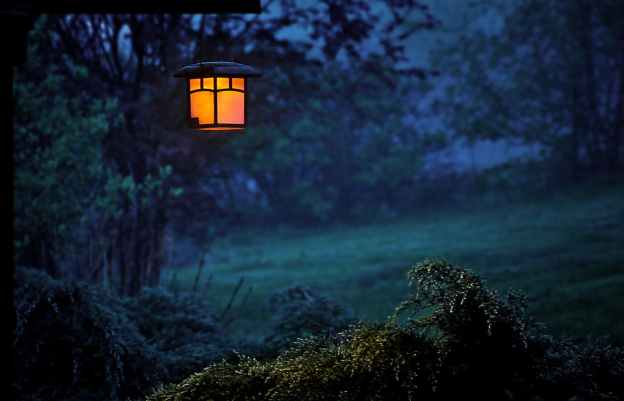
Twilight

Twilight

Blessed are You,
Lord our God,
King of the Universe,
for evening.
Trees slip into black pajamas
as color drains from the sky,
pooling at the edges,
vivid feather boas draping the sun.

Blessed are You
for slowness of twilight,
a dissolving that escapes notice
until I get distracted,
and looking back to the sky,
find it changed.

Blessed are You,
Lord our God,
King of the Universe,
for those things that spark alive
even as I dim.
Owls and mice open their eyes,
stars twinkle, dew forms,
and streams gurgle night music.
My ears attune as my eyes rest,
kissed to sleep by the softness of twilight.

Just Give Up

I thought the important people were doing away with daylight-saving time, but then I found out they argue about this all the time and nothing is changing. So, last weekend we set our clocks back. As I reveled in the productivity of an extra-long day, I thought back to DST the year our daughter, Kayt, made us a family of three.

Sleep is my drug of choice, so, naturally, I determined that my babies would sleep well. I may have been a wee bit obsessive. When Kayt was two months old, I began tracking her sleep in a spreadsheet. There must be a pattern to her nights and naps, but it wasn’t obvious. I hoped the visual aspect of a spreadsheet would help me find that pattern and answer some questions: How many hours does she sleep at night? Is her morning nap at 9:30 or 10:00? How long is she usually awake before she starts to get sleepy?

For nearly three months I kept notes as Kayt slept and woke, and diligently filled in the cells of the spreadsheet. It was color-coded, blue for night and pink for day. Total hours of sleep were tallied at the bottom. Cells highlighted in yellow indicated when Kayt was tucked in for sleep but was crying or otherwise not sleeping. Cells highlighted in red indicated the start time of any nap 1.5 hours or longer.

I still have that spreadsheet in my Google Docs account. It shows that at two months old, Kayt went to sleep for the night any time between 8:30pm to 1:30am. I’m not surprised my husband and I began “sleep training” with her.

In preparation for sleep training, I created a document to outline bedtime routine, nap-time routine, general schedule for nights and naps, and a description of the sleep environment: white noise, elevated mattress (suggested in a book on sleep), nightlight plugged in where it shed the least direct light on the crib. The document also contained a section titled “Other questions,” as follows:

- Is some of the soothing after swaddling? How much? Offer pacifier, or just forget it?
- What is the absolute longest we’re willing to let her cry without picking her up?
- Ok to check on her any time? Is facial expression important?
- Does one of us need to be on shift until she is asleep? If so, what does that entail? Do we need to be able to hear her just in case something goes wrong? Would it be a bad idea to sit in the room with her?
- If we are overwhelmed by the crying, what are the options? One stays while the other gets out of the house? Watch a movie? Are we concerned about having white noise cover her crying and then not being able to tell what’s going on in her room?
- Do we both do the bedtime routine with her whenever possible? Take turns?

Mercy.

Despite the mostly-unanswered questions, I felt warm and maternal that first night as I cuddled a clean, swaddled baby and gently placed her in the white wooden crib. I turned on lullabies and retired to the living room.

It worked! She fell asleep. For ninety minutes. Then the crying started. I turned up the lullabies so she could hear them above her squall. After five minutes of that, we switched to white noise. My warm maternal feelings deteriorated as I sat with my husband, watching the clock and listening to screams. No one slept until after midnight. The following weeks were not the easy three-night adjustment described in my reading.

On March 6, the week before “spring forward,” I stopped recording sleep in the spreadsheet. I had apparently been blessed with the one child in the U.S.A. who had no sleep pattern. Undaunted, I created another spreadsheet to prepare for daylight-saving time. I made a graduated two-week schedule to incrementally adjust bedtimes and slide right through DST without a hiccup. This was less than successful. I don’t remember the details, due to severe sleep deprivation at that time.

I feel weary as I look back. My own sleep was not rest, but a byproduct of exhaustion—a cold ration meant to keep me alive so I could keep a baby alive. The baby monitor woke me to listen, tense—would rustling sounds turn to cries? Hours in the rocking chair, purchased for looks and not comfort, gave me cricks everywhere.

I really wanted my kids to sleep well. I did not want tiny non-verbal people to trash my drug of choice and coo, unconcerned, while I suffered withdrawals. I read sleep books—the fat ones like Healthy Sleep Habits, Happy Child and the skinny ones like The 90-Minute Baby Sleep Program. I did what they said, to no effect. The Universe tried to teach me a lesson about control—something about not having it—but I wouldn’t listen. It must be possible to manage one tiny girl with white-blond hair and long fingers.

I’m a self-help junkie who consumes a pile of books each year filled with new and old philosophies on relationships and spirituality. Until I had children—our second daughter was born 21 months after Kayt—it was of little concern that the wisdom in those books typically had no lasting effect. As a mom, I needed those books to work. Instead, reading often left me feeling something was wrong with me or my children. I needed hugs more than solutions. But even I didn’t know that.

My girls, now 9 and 11 years old, still wake me up at night—they heard a noise, had a bad dream, sister is snoring too loud, thinking of scary things, too hot, too cold, worried they’ll be too tired in the morning because they’ve been lying awake. My years of laboring over their sleep left us all stressed. But, this year on “fall back” day, they slept in. When they woke they played quietly downstairs. I stayed in bed until 8am. It was glorious.

Days are easier now, and so are nights. I’m a much nicer person, too. Is it because eleven years of parenting improved my character? Or because I get to sleep at night and send my kids to school during the day? I’d like to think if a surprise baby joined our family I would take things in stride. Maybe I’d worry less and laugh more. Maybe I’d be more willing to receive the discomfort of not being in control.

Do sleep deprivation and stress bring out a person’s true character, or cause them to act out of character? Honestly, I don’t know. What I do know is that sometimes trying hard makes a problem worse. There are aspects of life that cannot be prevailed upon by hard work, and children are on the list. I doubt anything I did or didn’t do in those early years could have produced a sleep situation happy for all. What I truly needed was to be seen and affirmed, and I found that in friendship, not sleep books.

So, if I dare give advice to battle-worn heroes of the nursery, here it is: Take the books with a grain of salt, lean in to the friends who divulge their struggles, and just give up. Peace may be hidden under the fear of losing control.


P.S. If you’re wondering whether sleep training worked, I’m not sure. Kayt’s hours of sleep between 8pm and midnight increased significantly. Unlike the books promised, the crying didn’t happen at bedtime and result in a long night of uninterrupted sleep. It happened throughout the night, and at different times on different nights. It was an ongoing struggle that defied prediction. But by the time Kayt was one year old, I believe she was typically sleeping 12 uninterrupted hours a night. When our second daughter was born, that quickly ended. If I could start again with babies, would I do sleep training? Maybe. I hope I would follow my gut feeling and drink more coffee.

Damn Housework

I’m angry with housework. I know anger is a waste of energy, but still I seethe and sigh. The kitchen counters and bedroom floors lie to me. “Clean us,” they say. “Just 20 minutes a day and you’ll have a tidy, happy home.” So I clean them. Only to find the bread bag stuck to the shelf in the fridge where something spilled two months ago, and the kids’ latest glue-paper-glitter project all over the dining room table and floor. “You’ll never catch up,” hiss the fridge and dining room. “You thought you could have a clean house, but you could clean 20 hours a week and your house would still look like this.” This isn’t fair. I’m darned if I do, and darned if I don’t.

After two weeks of cleaning more than usual, I have escaped to a coffee shop this morning because I can no longer stand my dirty house. I feel more than a little silly. After 11 years of mothering and 18 years of wife-ing, how am I at square one in housekeeping? The kids are in school full time, and I don’t work full time. Surely this is the golden age of housekeeping, the time of life where I wash the dishes and tidy the kitchen after supper, put away a pair of shoes, and straighten couch pillows on my way upstairs to put the kids to bed. Maybe I wash the windows every season, and clean grout in the bathroom. An insane little laugh escapes. What a crock, that picture, that dream.

Life is a mess. I’m angry my house doesn’t get a special exemption. Why does it have to be messy too? May I please control this one thing? I beg the Universe. It responds with cracker crumbs on the couch and cat hair in the corners.

What do I hope to find here at the coffee shop? It’s a cold morning, temperates in the 30’s for the first time this fall. I’m seated in a red vinyl chair with my laptop, and I’m the only customer under 60 years old, other than a little girl, maybe three years old, here with her grandparents. She never stops moving. She’s up on her chair, then down, now playing with a stuffed animal, now taking her grandma by the hand to look for the stuffed animal, which she has hidden. “Where did he go? Let’s keep looking,” she speaks in a strong, sweet, toddler voice. “Can we go to the park on the way home?” she asks. “It’s too cold,” says Grandpa. Why are adults always so practical?

Grandma strokes little-girl curls while Grandpa dresses the stuffed animal. Now they are getting ready to leave and the sweet sentences turn in to squeaky No!’s as Grandpa scoops the little one and takes her outside. How does this couple who must be 70 years old have the energy and patience to play hide-and-seek in a coffee shop and listen to endless chatter? How do they find the desire to follow around this busy little girl? Is it because they are grandparents and this ball of energy comes one hour at time? Or have they learned something about life that I have yet to learn, something I could apply to housekeeping?

No answers float to me through coffee-scented air. My feet are cold and I wish I had worn warmer shoes. Two men at a table near my seat are planning the HVAC and electricity for a home. One of them has a southern accent. The other has a shaved head and carries a man-purse that matches his gray-green coat. Their conversation is friendly, and turns to dog-fur trimming.

Movement outside the window alerts me to the flight of a heron above the business strip. Its steady, quiet flight calms me. I pause and sip my hot mocha. Maybe everything is okay, even though everything is not okay. I will go back to my messy house and I will not have a solution. No schedule, no discipline, and no amount of bribing or shouting at my children will produce a clean house. We do live there, after all. No one lives here at the coffee shop. Most folks have come to visit with someone they like, love, or work with. It’s nice to visit in a clean place, with a ready-made hot drink.

But I don’t want to live here. I want to live at home, with my favorite, messy people. I want my girls to be creative, even if it means scissors all over the house and cut up cotton swabs on the bathroom counter. I want my family to eat well, even if it means dirty counters and sticky floors and an overstuffed fridge. I want to provide clean clothes, even if it means piles of unfolded laundry on the couch, mixed with popcorn remnants from movie night. I want to clean dried water spots off the wall beside the bathroom sink, even though no one will notice. I want to have two cats and a rabbit, even though the house would be easier to clean without them.

I want all this, but I’m scared. If this season of life is the ideal situation for keeping a clean house, and every room is a mess, does the dream have to die? I can’t blame this dirty house on full-time work, or full-time parenting. There’s nothing left. I just don’t keep a clean house. I have friends with social lives, kids, and clean houses. But that is not my lot. Some friends have spouses who like things clean and tidy, and participate in daily routines that promote cleanliness. Mine doesn’t.

I will kill this dream before it kills me. I cannot argue with it any more. I will not abide its mocking, and I will not let it speak to me from stained toilet bowls and dusty windowsills. I may curse when my slippers stick to the kitchen floor, but I will also chuckle. I will find my way to a healthy relationship with my messy house because I want this for myself and for my family.

The average customer age in the coffee shop has gone down. A handsome man maybe a decade older than me asks if he can sit in the red vinyl chair on the other side of the table from mine. Three casually dressed men in athletic shoes assemble at the counter to order, while another group of four young guys enters the shop. Now there are a dozen male patrons and only three of us ladies. I wonder, what is it like to be on the lookout for new relationships with men? Is this coffee shop a good place to strike up a conversation? Does a different type do it here than the type who do it at bars? It occurs to me this is one area in which I am content. My husband is a ten and I have no interest in hooking up with anyone else. In fact, although Michael isn’t bothered enough by our untidy home to do much cleaning, he has taken to making the bed in the morning, for me. I love that. I love him. And damn, how lucky I am to be stressed about my house and not my marriage.

I guess I have found something here at the coffee shop. I have recaptured a modicum of gratitude. I have remembered that I am not a victim. I have received the calm of the Great Blue Heron, and the pleasure of writing in a clean space that is not my responsibility.

Two women in their forties are at the counter now, and three ladies with coiffed hair come in behind them. Gender balance is restored in the coffee shop, and goodwill is restored in me.