Category Archives: Invitations to Rest and Stillness

A Finger to My Lips

What pulls at me today, daring to suggest my calm and holy center is not where I belong? Emotions roll like a ball in one of those handheld mazes, frozen in place as I s-l-o-w-l-y tip the maze, then a lightning-quick roll to the far corner before I can steady my hand.

So, what is pulling today?

Fear of disappointing my husband.

Heaviness from the impenetrable docket of housekeeping chores.

Despair over how my daughters have been treating each other.

Anxiety that I am a split second away from disappointing myself or someone else.

Terror because I am not in control of my inner world, or my outer world.

Is speeding up is the answer? More lists, more timekeeping, more discipline? No, because speed propels me out of my center, into the fears and despair.

The call is to slow down. Slowness requires trust—of myself, God, the people around me. Trust of time and the universe. What precedes trust? Willingness to accept a variety of outcomes, and to receive that I am well-loved in all of them.

Beginning at the end of myself, I find my way back to the beginning, receive the wideness of love, prevalent as air. As I breathe in love, I trust the intrinsic goodness of myself and others. I give up trust in outcomes and good behavior.

I choose slowness as an embodied reflection of my still and holy center. This is different than the stubborn slowness I use to distance myself from the needs of others, or the sullen slowness meant to display my tired and long-suffering soul.

With a playful but firm finger to my fretting lips, God intervenes. My churning heart stills once again in the embrace of grace and abundance. I am called to “unforced rhythms of grace,” where the daily cadence of faithfulness takes place within the finished song of grace.


~Scripture quote in the final paragraph is from Matthew 11:28-30 MSG: “Are you tired? Worn out? Burned out on religion? Come to me. Get away with me and you’ll recover your life. I’ll show you how to take a real rest. Walk with me and work with me—watch how I do it. Learn the unforced rhythms of grace. I won’t lay anything heavy or ill-fitting on you. Keep company with me and you’ll learn to live freely and lightly.”

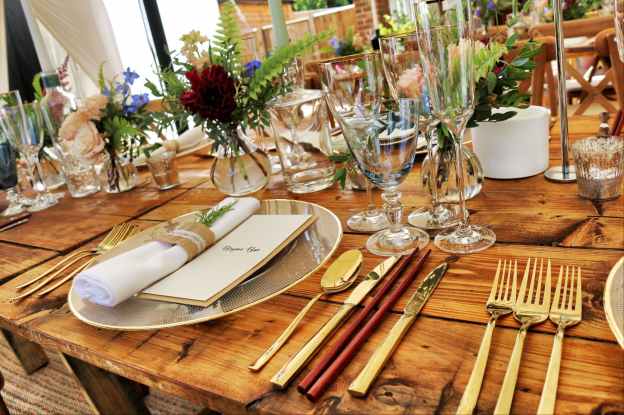
He Brought Me to His Banqueting Table

He Brought Me to His Banqueting Table

Blessed are You,
Lord our God,
King of the Universe,
for celebration—
a handshake
or handmade card,
a hatful of money
or armful of flowers.

Blessed are You
for birthday parties
and white elephant gifts,
balloon bouquets
and long-stemmed roses,
graduation caps
and dance recitals,
fireworks, hot dogs,
folks gathered together.

Blessed are You,
Lord our God,
King of the Universe,
for water drops on flower petals,
rainbows and radiant children.
Birdcalls announce morning,
crickets herald evening,
wordless celebration,
sun setting, moon rising,
Your banner over me is
love.

Love Is a Pain

I escaped the anxiety epidemic, I thought. Until this year.

I didn’t admit depression. Until last year. Only after taking antidepressants did I know the truth of my years of depression.

It’s late September, and anxiety adds itself to my truth. Anxiety feels different than depression, which for me exhibits as heaviness, intense overwhelm, and anger. Instead, a growing undercurrent of angst and tension in my thoughts and feelings came as a surprise—anxiety. I feel resentful about being “the only one who cleans around here,” nervous about irritating my friends, and more grouchy than usual because the kids “never listen to me”—anxiety.

I can’t blame a change in circumstances; life carries on as usual. I have to own an internal landscape of crankiness. In my journal I write, “I’m anxious but somehow I’m not letting it rise up. I’m not connecting well with myself or others. I don’t know what to do with this inner Rubik’s Cube of mental and emotional colors. There is no ‘lining up,’ just a lot of turning and twisting and muttering. I don’t feel depressed or exhausted, just a buzz of not-okay-ness, and fretting about what other people are thinking or doing.”

When my inner world gets uncomfortable, I settle for the companionship of fear. When I settle for fear, I choose to think instead of feeling. If I think rather than feel, I’ll have an an acceptable answer for most questions. If I think rather than feel, I tell myself, I reduce the risk of rejection; I avoid confronting what I don’t understand about myself; I cannot get stuck in feelings. If I think rather than feel, I will be dependable, and that, my friends, is very important.

I fear transience of warm feelings, and permanence of cold feelings.

I fear loss of control. Not measuring up. Disappointing someone. Sigh. Doesn’t that essentially mean I live afraid of life? No wonder I feel anxious. I can’t stop the world and get off.

Now that I know I’m anxious, what’s next? There are too many options: medication or meditation, solitary confinement (okay, that’s more of a wish than a real option), exercise, more coffee or less coffee, structure or flexibility.

I’ve been through this enough times to know fixing is not the loving response. But what is? Does love sit in the feelings? Maybe the loving response is reception—not the kind with cake and punch, but the kind that’s about welcome. Could receiving feelings be different than sitting in feelings? More like open hands and less like sackcloth and ashes?

When I think about setting the emotional tone in myself and in our home, I think of zen peacefulness—wouldn’t it be lovely if I were un-ruffleable?

But love is not only the ocean’s vast calm. It also knows the waves of anger, fear, and bitterness. Is it a ship? A lighthouse? A squawking seagull? What form does love take in the steady pounding of reality?

Perhaps love is the pain of not being in control.

I know well the pain of trying to control, and the aftermath of disconnection when I succeed in control. I am less familiar with the pain of releasing control. This pain is the pain of God’s very existence; the pain of having children who have a choice.

I want to control my children. I really, really want to control them. Also, I don’t want to control them. I know it’s not love, and desperately I want to love them.

I want to feel the raw pain of love rather than the grasping anxiety of control. I want my discomfort to be worthwhile. Let me trade in an obsession with control for the wildness of not being in control. Here my soul will meet with God, inside the terrifying invitation to feel. I will feel the risks of rejection, unknowing, and transience. They accompany my choice to love, and indicate that I have chosen to feel. God is here. Let control crash and burn. Loving is enough.

Also, I will medicate, and meditate, and drink more or less caffeine.


Morning Pages

Writing and prayer are, for me, inextricably linked. Pat Schneider said it well: “When I begin to write, I open myself and wait. And when I turn toward an inner spiritual awareness, I open myself and wait.”

In the course of living, I often disconnect from myself. I disconnect to stay operative, and it can be difficult to coax my spirit out of hiding. If I feel, will I still be able to function?

I’m reading two of Julia Cameron’s honest and encouraging books on the creative pursuit, and have been initiated to Morning Pages. Julia swears by them—three pages of longhand, stream-of-consciousness writing every morning, for the rest of your life. This practice puts you in touch with yourself, clears the racket in your head, lets you listen to the Spirit and to your own heart. “As we write,” Julia says, “we come know to ourselves, and increased tenderness to the self we are discovering is the reward.”

I’ve not made Morning Pages a daily habit, but when I do them, I find they deliver the promised effects.

My Morning Pages on June 2 were a ramble about ducklings and the kids’ last day of school. I wrote one page, then got scared: “How do I feel inside? Time to go shower …”

The next morning, it was time to come out of hiding.

June 3, 2023
I guess I’ll start today where I left off yesterday. With my heart. “Go ahead and come out, heart. This is a safe place.” Did some fear send my heart packing? When? How? It seems sudden that I have lost access to myself. But I know it can’t be. Am I running from heaviness? How does one keep a practical balance within one’s heart? Listen and feel, but not descend into the heaviness, never to rise? Maybe I’ve forgotten about my center. Is there really a still place in the middle of all this drama? A place to rest without shutting everything down or solving anything? “The present is safe,” Spirit says. My head is trying to protect my heart. My heart is trying to be small so I can get things done and look functional. But I am not lost in this stormy sea. The girls came downstairs so I moved upstairs. I sat down in my “prayer chair.” I turned my chair to look out a different window. I’m fantasizing about the marriage book I’m going to write. I’m listening to the ducklings and thinking they need their water refilled soon. I’m staring at nothing. I’m listening to the ceiling fan. I’m closing my eyes. I hear the mourning dove and think of the nest we had this spring. K is calling me from downstairs. Now she has come to ask if she can watch PJ Masks with her sister. She’s dressed only in underwear, and in their pretend game she has just hatched from an egg. She holds her hands under her chin in a chipmunk-like pose and speaks adorable gibberish, until I decipher “watch” and “PJ Masks.” It’s before 8am on a Saturday and I’d have to give special permission on Kayt’s iPad, so I say no. I’m starting to thaw here a little bit. I am safe with myself, my journal, God, Michael, and ultimately, with everyone and everything. K’s caterpillars are getting fat. I think God saved their lives. I guess (know) it’s safe to be me, and this day is very doable. Just show up, and then again.

Morning Pages are wonderful, rambling therapy. They are the healing experience of being seen. They are a permission slip to be human. Writing is a gentle and whimsical pathway to the inner self, which I once thought to access with a hammer and chisel, but which actually comes forward like a squirrel—shyly, with worried chirps and false starts. I must sit still. When the squirrel’s tiny paws rest on my fingertips, I feel a sense of wonder. I—brute that I am—receive the trust of another creature. So it is with my own spirit. I cannot use force to gain passage; I must sit quietly and observe with rapture that I am alive. And when I see myself alive, feel the pulse in my own fingertips, I know I will probably be okay.

~ Quotes are from Pat Schneider’s book, “How the Light Gets In,” and Julia Cameron’s book, “Write for Life.”

Today I Can Breathe

Today I can breathe deep because when tonight comes God will not love me any more or less than He does this morning.

“God loves people because of who God is, not because of who we are.”

-Philip Yancey, in his book “What’s So Amazing About Grace?”

Today I can breathe deep because God is in charge and I am not.

“He’s got the whole world in His hands. He’s got the whole world in His hands…”

-traditional American spiritual

Today I can breathe deep because God is bigger.

“When did I forget that you’ve always been the king of the world?
I try to take life back right out of the hands of the king of the world
How could I make you so small
When you’re the one who holds it all
When did I forget that you’ve always been the king of the world…”

-from the song “King of the World” sung by Natalie Grant

Today I can breathe deep because I am fully alive.

“The Spirit of God, who raised Jesus from the dead, lives in you. And just as God raised Christ Jesus from the dead, he will give life to your mortal bodies by this same Spirit living within you.”

-Romans 8:11, Holy Bible, New Living Translation

Today I can breathe deep because it’s not about me. Even if I get everything wrong today, I am loved and God is alive and well.

“The faithful love of the Lord never ends!
His mercies never cease.
Great is his faithfulness;
his mercies begin afresh each morning.
I say to myself, ‘The Lord is my inheritance;
therefore, I will hope in him!’”

-Lamentations 3:22-24, Holy Bible, New Living Translation

Today I can breathe deep because grace multiplies.

“God does not just offer us grace, but He offers us grace, grace, and more grace. His supply is bountiful; no matter how much we use there is always plenty more.”

Joyce Meyer, in her book ” If Not for the Grace of God”

Today I can breathe deep because I am enough.

“No matter how much I get done, or is left undone, at the end of the day I am enough.”

-Brené Brown

Today I can breathe deep because I will never at any moment be alone.

An Invitation to Mystery

An Invitation to Mystery

Blessed are You,
Lord our God,
King of the Universe,
for caterpillars,
who quietly eat their way
from size zero to plus-size.

When they grow up
they find a place to hang
from their last proleg,
upside down.
Do they know they will never
eat another leaf?
that their next meal
and every meal thereafter
will be liquid?
Do they know they will
keep only their six front legs?

We humans were like caterpillars
in the garden of Eden,
squishy and naked,
immersed in plenty.
But we didn’t trust the plenty,
didn’t trust ourselves,
didn’t trust God.
We left the mystery of plenty
for the certainty of scarcity.
Perhaps it would have been better for us
to surrender to love,
and to allow love
an element of mystery.

Instead we work
to stay the same size,
the same shape,
eat the same leaves.
We use what we know
to fight against God
and each other,
forgetting that mystery
has its own peace,
and not-knowing sometimes
makes butterflies.

I’m Breaking Up With This Advice

“We have all failed, not only because we have sinned,
but because we have thought it wise to keep tabs at all.”

-Danielle Shroyer, as quoted in “Attached to God” by Krispin Mayfield, p. 135

I’m breaking up with this advice: “Stop and think.”

I have stopped to think and here I remain, thinking. It’s time for me to go and not think. I have lived my whole life under a microscope, evaluating everything. This is exhausting, cold, dehumanizing. It’s like looking in one of those concave mirrors that magnifies skin pores, obsessing over the health of each one. No wonder I’m weary.

The alternative is to zoom out a bit and smile. Zoomed out I see a face, a person, a life. God is inviting me to stop. evaluating. everything.

And I feel the freedom. “It is for freedom that Christ has set [me] free” (Galatians 5:1a, NIV). Imagine an unevaluated life. Just a life. Safe and free and homey. And maybe a little daring and vulnerable. I want to model this to my kids: an unevaluated life; a different way than school and work and self-help books, where everything is examined, measured, and labeled. “Bad.” “Good.” “Better.” “Best.” What if nothing was labeled? Imagine the chaos, the freedom, the delight. Imagine the curiosity, the seeing, the open hands receiving.

My calm and whole center where I know I’m okay seems to be growing. One morning I moved to it from a very distracted and unruly mind, and the calm felt bigger than it used to. In this holy center I don’t need to prove my worth or earn my keep. I am truly, deeply okay. In a strange way I feel perfect. The tension between where I am and where I ought to be doesn’t exist here. Imagine—a place where evaluation and measuring are a foreign concept. Breathing, smiling—these things come more easily.

If I can be free from scrutiny, how about everyone else? I feel a growing desire to stop evaluating others. I want to invite them to live freely, to zoom out and smile. See something beautiful here. Stop thinking for a minute—it’s revolutionary.

When I Grow Up I Want to Be Roy Kent From Ted Lasso

When I Grow Up I Want to Be Roy Kent From Ted Lasso

Journal entry, March 2023

I don’t feel on top of things, but I also don’t feel run over by things. I feel alive, real, and less scared.

Feeling on top of things is always about ego. Feeling run over by things is also about ego, but it feels like depression and stress.

I’d like to be like Roy Kent in the TV show Ted Lasso—fully present, wise, honest, and not connected to people because I’m nice, but because we’re connected. I think that’s called “secure attachment.”

Papa God, thank You for inviting me to this place and waiting—for years—while I hesitated outside the door. Thank You for sitting there outside with me, and for keeping the door open. Thank You, Spirit, for intimacy.

Journal entry, May 2023

I feel lost again. Depressed, I guess. I notice myself trying harder in some areas, and not trying at all in others. My mental space feels foggy and disconnected. I want to stay present, but being present feels like one more thing I “should” do that I’m terrible at. As I showered this morning, my mind was sluggish, but restless, like a tired housefly. I told God I feel out of practice at being present, and I don’t know what to do.

God told me the present is safe. It’s safe to be with myself in this moment. The moment I’m in is exempt from evaluation. I don’t have to carry a ruler—dual purposes of measuring and punishing. Instead, I receive the “we’ve got this” look from my Father.


Until my shower-talk with God, I didn’t realize I live mentally in the past or the future because it feels safer than the present. The past is over; I can fret about it all I want, and my judgement and worry give me a sense of control. The future is coming; maybe if I plan it just right my life will be better.

If I’m thinking about what’s next I reduce the pain of knowing I’m not showing up how I want to right now.

The present is wobbly. It slips away like kite string, pulling, whimsical. It doesn’t behave, doesn’t let me nail it down. Qué será será? Not on my watch.

This awareness I’m afraid of the present, and God’s assurance it is safe to be present—these are my invitation to relax. Like a massage, the words “present is safe” loosen the tightness underneath and free me to move and breath. And who knows, maybe if I receive this moment and accept safety in being present, I’ll have less to fret about in the past and the future. Maybe it’s all okay, even when it’s not okay.

Like Roy Kent, I can be angry and pessimistic if that’s what I experience in the present, and I can also be generous, compassionate, and honest. All of these are safe experiences for me, and receiving them open-handed is what steadies me for the next moment. I don’t need to worry. It is both safe and brave to be present, and I have a growing appetite for safety and bravery. Now is where I belong.

From Jesus Freak to Evangelism Phobia, Part Two

In this post—as in last week’s post—I use words like “Evangelism,” “Witnessing,” “Christianity,” and “Religion.” Each reader will have a different understanding of these words, both in denotation and connotation. Personally, I’m in the murky depths, somewhere between a conservative upbringing and an emerging mystical faith, still feeling around for a vocabulary that doesn’t cause pain.

***

“Aren’t you the one with a blog talking about Jesus?” Khalid asked.

I was at the home of my friends, Khalid and Tiffaney. They’d been to a concert earlier that week, which I avoided because of the musician’s evangelistic bent. “I don’t like evangelism,” I said, which prompted Khalid’s question about my blog.

“I certainly hope people don’t think I’m evangelizing!” I deflected the question.

It had not occurred to me that my blog (and my social handle @jesusmyfavoritesubject) could be viewed as evangelism. I have written over 100 blog posts, with the premise that talking about Jesus is one of my favorite things to do. What is that, if it’s not evangelism? Suddenly, I needed to answer this question.

I asked my husband if what I’m doing is evangelism. In his typical style, he looked up the word on his phone and found half a dozen definitions, all of which involved the concept of convincing another person. A Google search tells me that to convince is: to bring (as by argument) to belief, consent, or a course of action; persuade; cause (someone) to believe firmly in the truth of something. Combine this with the gospel of Jesus Christ, and you have evangelism: teaching or preaching about Jesus with the aim to bring about belief or action. Is that what I’m doing? I don’t want to answer.

A gray Jeep with a “Jesus Loves You” bumper sticker kept showing up on B Street last week. I passed it on my way home from school pick-up, and it got me all up in arms. Rather than joy at the sweet reminder of how loved I am, my response was irritation. People have all different conceptions of Jesus; the person displaying the sticker has no idea how many painful ideas he or she is promoting along with the positive ones. “Jesus Loves You” doesn’t see people, it talks at them. It doesn’t have any idea what tragedies or triumphs are on the reader’s mind, and it cannot weep or rejoice with them. The sticker is evangelism. I don’t like that I don’t like it … but I don’t like it.

One Friday afternoon, while chatting with my friend Celina at her dining room table, I brought up the question of whether I’m evangelizing. She asked, “If you’re not trying to convince when you write, what are you trying to do? What do you hope will happen when people read your blog?”

“I want people to feel seen,” I said. “I want them to be able to take a deep breath. I want them to know they’re okay.”

If God is in the picture, I hope people will see God seeing them.

On the eve of my recent 38th birthday, I spent a couple hours making a mental list of 38 people who have influenced me. It included coworkers, authors, family, and friends. Every influence was gentle; not one produced an about-face change in my life. They were quiet but strong: my boss—Jerry Mason—who believed in me, gave me responsibilities I would never have pursued on my own, and whose confidence in me was a steady presence in my life for over eight years; the authors—Gregory Boyle, Barbara Brown Taylor, Anne Lamott—who gave me permission to breathe, to try life open-handed; our mom tribe—half a dozen ladies who see me and allow me to see them. This is the kind of influence I hope for in writing.

I suppose I’m inviting people to be at home in themselves, rather than reject themselves to be at home in Christ. Krispin Mayfield, in his book Attached to God, writes about the Christian experience of sinfulness, and compares it to the pain of disconnection described in attachment theory.

It struck me that the theology I’d been given and the attachment literature I was reading seemed to be describing the exact same thing but offering different explanations. The theology taught that this awful feeling of ‘inner deformity’ was because of things we’ve done—lying to our parents, disrespecting teachers, sneaking extra candy. The psychology suggested that the terrible feeling came from what has been done to us. … (pg. 169)

When we have an insecure attachment, we feel awful inside not because of our sin but because of our unmet needs. It is the feelings of distance and separation that create the intense pain of shame. … (pg. 170)

“We think that if we can get a little bit better, a little less sinful, we will feel better about ourselves. In reality, true connection heals shame. (pg. 173)

True connection. That I might be willing to shout from the rooftops. I want to offer the things I thought I had because I was a Christian, but slowly and devastatingly found out I didn’t have: hope, peace, love, joy. These are almost synonymous with Christianity, but they evaded me for decades. So as I’ve found them, I’ve also found different language. When I share hope, I talk about how it’s okay to not be okay. When I share peace, I talk about disentangling from perfectionism. When I share love, I talk about expansiveness. When I share joy, I talk about coffee and friends.

I guess I’ve always wanted people to know they’re loved, and for a long time I thought telling them about Jesus was the best way to do that. But I was “the blind, leading the blind.” Religion created a structure in which I could feel my way around while my eyes were closed. But at some point I started bumping into sharp corners, and I didn’t feel safe any more. God suggested I sit still and open my eyes. In that terrifying posture of stillness, I learned to hold hands with myself, let myself be loved, and let life be both brutal and beautiful—“brutiful,” as Glennon Doyle would say. The structure of religion was an external protection. The beauty of loving and being loved is an internal strength. I’m learning to be strong rather than safe, and that’s what I want share. Is that evangelism? I still wonder about that.

Ain’t No Love Got Time for That

I’m on the couch, 6:30 a.m., hungry for the re-membering presence of the Spirit. I feel anxious and sad and heavy. I also feel grateful and loved and okay. The kids were in my office so I came downstairs to journal. Phrank, our cat, is on the couch with me, his foot on mine. He meowed a very loud request to come inside, and I actually stood up and went to let him in.

I am not a high-energy person. In scientific terms, I have inertia. Once I sit down it’s hard to get back up. Once I get going on a project, it’s hard to stop. Everything is a project.

Sedentary pastimes are my go-to: crochet, reading, scrapbooking. I know how to do gardening and canning, but I don’t want to. Long days in the yard and kitchen sound overwhelming. These days my commitments are at a bare minimum. Other than taking my kids to school and participating in several small groups, my time is flexible. I am utterly spoiled, living in the extravagance of an unburdened schedule.

This state of unhurried flow is almost comical, given my upbringing and my high-energy plunge into teen and adult life. I always worked during high school—babysitting, custodial, cashier, fruit picking, door-to-door sales, school office, yearbook editor. I was never idle. My boyfriend in college, whom I married after my sophomore year, pushed me to work a little less and play a little more. Conversely, I pushed him to play a little less and work a little more. Marital conflict ensued. But, eventually I could watch a movie without crocheting at the same time to feel productive, and he could mow the lawn before it got out of control.

At age 27, after five years working full time, I quit work to stay home with our newborn daughter. That was the beginning of the end of having energy. I didn’t know sleep was my drug of choice until I could no longer reach for it at will. I became afraid, always afraid, of not having enough energy. I was too much of a purist to drink coffee, too independent to ask for help, and too naive to realize I was depressed.

Fast forward three years. I had a three-year-old and a one-year-old, who still often woke me at night. Exhaustion was so normal I couldn’t remember any other state. I was resentful and angry. I was too stubborn to consider working instead of staying home full time, too lonely in marriage to lean into my husband, and too resentful to take refuge in gratitude. At this point I became tired enough of myself that I started seeing a therapist. Her name was Beth. Together we turned directly into a swamp of pain that would take seven years to wade through.

It’s May 3, 2023. My babies are ages ten and eight years old. Tomorrow I will be 38. I like myself, more than half the time. I enjoy a hundred things—including hot showers (which I previously hated), my children (whom I previously resented), coffee (which I am no longer too much of a purist to drink), and friends (they’re not as scary as they used to be). I’m taking antidepressants, enjoying life-changing intimacy in my marriage, and practicing asking for help. I write poems of gratitude. I blog for fun. I rarely write a to-do list, and I’ve given up controlling my schedule and my loved ones (at least some of the time).

I am free in a dozen ways—fruit of the last five years spent dredging my murky depths. An ability to hold the stresses of life lightly is one of these freedoms. I could stress out when a friend stands me up on a lunch date, or I could enjoy the rare time alone and the gossipy conversation of sweet-smelling, wrinkled ladies at the next table. I could shame myself for not getting groceries until two days after the milk runs out, or I could enjoy making peanut butter and banana sandwiches for breakfast. I could be angry when a kid wakes up in the middle of the night, or I could be grateful I’m able to be there with them.

Please, please understand this is not about choice. I have very ugly, unresolved feelings toward whoever says we can choose to be happy. Maybe I’m an exceptionally difficult case, but I did not have access to the “power of choice” for many long years. The ability to choose love, grace, and the quirky flow of life—wow, it’s relief, like a warm bowl of soup after gardening in the rain.

I think God is having the last laugh when it comes to my anxiety about never having enough energy. After ten years (ten years!) it is apparent to me that stressing about everyone’s behavior (including inanimate things—watch out if the utensil drawer sticks when I try to close it) takes an incredible amount of energy. Possibly more energy than loving. I know, it’s a long shot. Finding my wholeness has given me courage to take long shots.

Here I thought God was asking me to do more, but actually He was inviting me to do less. My new mantra is: Don’t try so hard, don’t analyzing everything, just live. Love doesn’t have time to mull over every unmet expectation or frustrating inconvenience. It turns out open-handed receiving takes less energy than tight-fisted control.

I breathe, and my oxygen-starved heart says, “It took you long enough.” I smile, because I don’t have the energy to feel bad about ten years of struggle. Ain’t no love got time for that.