Category Archives: On Being Alive

Come Wanderer

Come, come, whoever you are.
Wanderer, worshipper, lover of leaving.
It doesn’t matter.
Ours is not a caravan of despair.
Come, even if you have broken your vow
a hundred times.
Come, yet again, come, come.

-Rumi

“Come … wanderer,” God invites.

In what ways have I wandered?

The wilderness of parenting.

The jungle of marriage.

The labyrinth of religion.

Is wandering about being lost?

Or is it about looking for something new? Something about which I can’t say, “Oh, I knew that.”

Wandering leaves me wondering if I fit in, if I am still invited in.

You invite me in. “Come,” You say, “come wanderer.”

Yes, I am invited. Yes, I belong. Yes, there is a place for me, even—maybe especially—when I don’t fit in to the containers I used to fit in—the labeled Tupperware, the organized totes.

Now the pieces of me are less organized, but still You say, “Come,” and all of me comes even though I thought maybe the pieces were too scattered.

They are not. All of them respond to Your voice.

It is not my job to organize myself. Or to stop wandering. Everywhere I go, You meet me there.

If wandering has taught me anything, it is that You are everywhere.

“Come,” You say, and I am surprised to find You are standing right next to me. You are not calling from a great distance. “Come,” You say, “let us wander together. Show me something you’ve found here. And I’ll show you some things too.”

Wandering and loneliness are intertwined, and You and I, we are familiar with both.

“Come,” You say, and I know that You know this place, that You are no stranger to wilderness or jungle or labyrinth. These are Your kitchen, your garden, your cathedral.

“Come,” You say, and I know that I have always been home. For You are home to wanderers.

A Small Circle

It’s a few minutes before 10 AM on July 3 when I pull up in front of a quiet, fenced, red-brick home in downtown Walla Walla. The smell of warm brownies has kept me company across town, and I lift the shallow box containing towel-wrapped goodies and an assortment of papers from the passenger seat. Karen Carmen, founder of Hope Street, meets me at the front door and invites me inside with her usual friendliness and practicality.

I don’t realize it yet, but today marks exactly one year since I began my inquiry into trauma-informed writing groups. This will be my first time leading a group, and I focus my attention on setting out snacks and organizing papers. I have one hour with the five women seated around the living room, where small talk centers on a dead-mouse smell that mysteriously snuck into the house that morning. No one can tell quite where it’s coming from.

Alicia, who works here at Hope Street, passes out notebooks and pens. Then we begin with a writing prompt that will serve as personal introductions. “Finish these three sentences,” I instruct, “and then we’ll go around the circle and read what we’ve written. First sentence: I am… Second sentence: Once I bought… Third sentence: I wish…”

After a minute or two, the sounds of writing stop and we take turns reading our answers. “Once I bought…” sentences bring a few chuckles, and “I wish…” statements are trailed by affirming mmm’s and hmmm’s. Then I introduce the writing prompt that will take most of our time—a reflection on a moment with someone important to us. I set a timer on my phone for 15 minutes.

When there are two minutes left, I invite everyone to bring their writing to a conclusion, and hastily do the same with mine. I unwrap the brownies and we’re drawn in by the smell. We hold the sugary chocolate squares—and healthy apple slices—on napkins, and fall into conversation.

After our break, it’s time to read aloud what we’ve written. The women urge me to read first, so I do—I wrote about my grandma, and how she looked sitting on the back-porch swing at her home in Texas. Alicia reads next, and most of the women read aloud. They live here together, so they know each other. I am the stranger in the room and I’m honored by their trust.

We give each other feedback as I have instructed: positive comments on what you like, what stays with you, what you remember. I am surprised and delighted by the quality of writing. Each writer has used wonderfully descriptive words, and—even better—conveyed emotion. I am also surprised that we finish reading aloud and commenting on each other’s writing a few minutes before 11:00, which feels like a stroke of luck rather than a credit to my time management (running late is my cardio).

Already I like these women, and I’m thrilled when they compliment my writing and leadership and respond positively to my offer to come again. I plop my stuff back in the box, and Alicia walks me to the front door. I didn’t expect this to be so smooth, so fun, so… easy. Energized and feeling slightly inflated, I drive home, high on the joy of connection, the excitement of future possibilities, and the smell of brownies, which lingers in the warm car.


Eight hours later, I arrive at a tall brick building on the other side of downtown Walla Walla. Powerhouse Theatre is hosting a Red Badge Project reading—nearly three hours of veterans reading aloud their stories of war and life and healing. As I drove here, it dawned on me that one year ago today I attended this same event. It’s what first inspired me to spread the healing power of trauma-informed writing. I feel a moment of completeness as I settle into a seat near the front of the theater. I have returned to the place where my dream began. One small circle is complete.


I imagine that coming years will add circle upon circle, ripples of words and connection and healing. In the meantime, I continue to open my schedule, my brain, my emotions to a wider understanding of what trauma-informed means, a broader experience in writing, and a growing network of personal connections. In addition to leading the group at Hope Street and attending the Red Badge Project event, favorite moments of learning and connection in July include:

  • Attending a Trauma-Informed Community of Practice meeting, hosted by Becky Turner
  • Chatting with Matt Lopez at FVC Gallery, and enjoying the art displays and exquisite coffee
  • Talking to my aunt Pam on the phone about writing, healing, kids, and all the things
  • Participating in Janelle Hardy’s five-day, online “Stories From the Body Writing Challenge”
  • Attending ITIC’s “Unlocking Human Connection: The Power of Person-Centered Thinking,” training event with Robert Peaden
  • Visiting with Mindy Salyers of Counseltation about the possibility of a writing group with some of her clients (she is a therapist for elementary schools and high schools)
  • Meeting Warren Etheredge after the Red Badge Project reading. Warren emceed the program both last year and this year. He is a founding faculty member and writing coach for Red Badge.

Life may not be a box of chocolates, but whatever it serves up deserves to be written down, perhaps in the safety of a living room, around a plate of brownies.

One of the women at Hope Street used the words “laughter” and “loneliness” together in her writing—a pleasant alliteration, but an unlikely pairing. I noted the way it stood out to me, paused me. And that evening at Powerhouse Theatre, as a slightly-bent older man read from the podium, the very same words came out of his mouth, one after the other: laughter and loneliness. These two words carry human experience, the feeling in our spirit of connection or estrangement, belonging or realizing we are untethered. This is why I want to write with people—so we can notice our laughter and loneliness, we can read it—speak it—aloud, we can know we are not alone.


Today’s blog post is also the most recent journal entry on my Writing Groups page. Scroll down the page to read more about what got me into this quest to form trauma-informed writing groups.

Toothpaste

Toothpaste

Blessed are You,
Lord our God,
Queen of the Universe,
for chocolate chips
melted into a couch cushion,
bandaids on the shower wall,
and toothpaste. so. much. toothpaste—
crusted onto the tube,
smeared on the bathroom counter,
cemented to sinks and walls.

Blessed are You
for Cheerios on the kitchen floor
crushed into powder,
coat wet and dirty
from a night in the back yard,
sandal forever lost
in the mud of Anthony Lake,
chip crumbs in the bunk bed.

Blessed are You,
Lord our God,
Queen of the Universe,
for candle wax dripped
down the cupboard door,
Q-tips cut into pieces,
gum saved on the dining table “for later.”

Two young humans dwell here
who create often and live large.
May they always have
permission to be messy and alive,
and enough money for toothpaste.

Prayer, Revised and Expanded

My journal takes me back in time. September 25, 2015. Thirty years old. Married ten years. Two daughters—Kyli two months past her first birthday, and Kayt a month shy of her third. That means on the day I wrote this prayer I had a one-year-old and a two-year-old. No surprise that “broken,” “scared,” “no match,” and “tired” feature in this heart-cry, penned during a rare stolen moment. My heart bled out through the ink of my pen. I turned to the page and to my heavenly parent, because together they were the safest place I knew.

April 17, 2024. Thirty-eight years old. Married 18 years. Kyli and Kayt are now 9 and 11. We’re deeply settled into the house we were in the process of purchasing in 2015. And I’m writing, which I now realize is not only a safe place for me, but also a creative passion.

Today I’ll respond to myself in this prayer. A spiritual journey is a both/and experience, dense with contrast and contradiction. And so today maybe I disagree with my thirty-year-old self, but my experience and beliefs then were as valid as my experience and beliefs now.

Truthfully, I haven’t been writing spiritual content much recently. I’m weary of cultural Christian ideas, the sin-and-salvation language, the beliefs that tied my hands behind my back. But set all that aside, and there is a friendship. Prayer is a celebration of friendship.


Good morning, Lord.

I am in a place I know You do not intend for me to be. I’m literally sick with worry. I can’t stop my head from spinning and my heart from panicking. Please speak truth to my heart and save me from myself.

You can be in this place. It’s okay to not be okay. You won’t feel this way forever. And yes, keep believing there are better things ahead. You are held.

I believe the solution is walking with You, but I can’t even do that. I am so broken, so scared, so selfish. Please do it for me, Lord. Take my heart, take my marriage, take my parenting, take my responsibilities at church and book group and other places, take the move to the new house, take meal planning and grocery shopping, take the lies that cripple me. Take my heart of stone and replace it with a heart of flesh.

What does it look like to “walk with God”? You are beautiful and your life is beautiful. You are worn out. Ask for help. Take medication. Drink coffee. Watch TV shows. Cry. Plan a day for yourself—that is not selfish. Your heart of flesh is already there. And this grieving might be just the thing to help you find it.

I confess my selfishness, my desire for control, my fears, my misbeliefs. They are sin and they do not honor You. Please take them from me. Please fight this fight for me. I am no match for sin, no match for the devil, no match for life.

Overwhelmed, flooded, depressed, alone, trapped. You feel these things deeply. You are stronger than you think, and not as strong as you think. You might have to let get of what you’re holding tight, and holder tighter to the things you’ve been letting go. Don’t know what that means? Don’t fret. God really does have your back, and She’s not the least bit disappointed.

I can do nothing … but isn’t that a good thing? For Your strength is made perfect in weakness [2 Corinthians 12:9]. Please hedge me behind and before and lay your hand upon me [Psalm 139:5]. Please take away my addiction to negative emotions. Teach me to rejoice in Your victory in my life, to give You the glory, to have a heart of thanksgiving.

These things you dream of will happen. You will learn to enjoy feeling happy, to like yourself, to feel gratitude and joy.

Lord, I am lonely. I am broken. I am too self-centered to see the beauty of You and the many good gifts You are showering on me daily. I surrender to You, Lord. Please save me from myself, Lord.

God will save you from yourself by introducing you to your true self. It’s okay to be lonely and broken. You are also brave and kind and capable.

I need time with You daily in prayer and in the Bible but I feel helpless to make that time. Please do it for me.

God loves to spend time with you. She hears you.

Thank You that You see me as I am and love me. I am so tired of myself. I am so grateful that You are not overwhelmed by my brokenness. Thank You that You use brokenness for Your glory. Give me a testimony that will draw others to You. Lord, if I need a mentor, please provide.

Keep speaking these truths. And when you’re too tired to speak them, the Spirit will speak them for you. You don’t need a testimony; you are a testimony. And you always will be.

I am terrified of the day ahead of me. Take this from me, Lord. Give me eyes of faith. Remind my heart to lay everything at Your feet and let You do the heavy lifting. I want to take Your yoke upon me and learn of You, and accept the rest You promise [Matthew 11:29]. I want to be Your servant and friend so that others will be drawn to You.

Oh dear one, these days are so long and so hard. I see you. You can do hard things. And God is teaching you to rest, even now.

Thank You for my brokenness, thank You for trials and difficult times. Thank You that You are enough and everything else is a cherry on top. I choose by the power of Your Spirit to abide in You. Please let me be a branch today. [John 15:4, 5]

Way to go! You are receiving with open hands. But you know, “everything else” is the stuff life is made of, and it’s okay to want it to feel lighter. You are a branch. You are a badass. Many good things are coming for you, and one day you will feel excited about what the day holds. In the meantime, go get some coffee.

On Deprivation

Absence makes the heart grow fonder.

Absence make the heart go wander.

Both, I suppose, are true.

I’m thinking about deprivation—absence—because I have been on a vegetable juice fast for over 48 hours and am deliriously hungry for something I can chew, something with texture and flavor, something buttered. My husband, Michael, has juice-fasted with me these past two days and we are preparing to break our fast. I peeled an assortment of white and orange sweet potatoes, cut them into rounds—cut their fat middles into half-rounds—put them in a casserole dish with plops of butter, and slid them into the oven while it was still preheating.

Years ago, when Michael and I hadn’t had sex for two months, we sought counseling. It wasn’t that we didn’t want to have sex, we just weren’t having it. It was too risky, to vulnerable, took too much energy. It was intimidating, easier left undone. I had a cognitive desire to partake in body-to-body intimacy, but my emotional and physical self was highjacked, under the control of an exhausted mommy-brain and a litany of fears that I would never be enough. The counselor’s advice? Abstinence. Set a period of time in which we would not allow ourselves sexual intimacy. See if our desire found space to rise up and write the story. I’m sorry to disappoint, but I don’t remember if it worked. One way or another we got back into a rhythm of intimacy.

After 20 minutes I returned to the kitchen to stir and fork the potatoes. The smell drew me in. I began almost to feel the potato on my tongue—the texture, the saltiness, the butter and warmth, even the way those sweet potatoes would feel in my stomach, a meal of substance. My fork couldn’t pierce the potato chunks. I set another timer and returned upstairs to my bed, where I lay devouring a book about writing.

I went to a MOPS meeting once and listened to a woman talk about having sex daily—or more—with her husband. It appeared to be an intentional stress-management technique: stop in the bedroom before a stressful meeting, and return there after the stressful meeting. Was this couple addicted to sex? Maybe. For better or worse, I have been more addicted to abstinence than indulgence. I am better at not relating, not watching, not eating, not sexing, not reading, not cleaning. The one exception, my most joyous indulgence, is sleep.

The second 20-minute timer on my phone made me jump. This time the fork sunk into the potatoes. I speared two chunks and returned the rest to the oven. With vigor I blew on the procured samples, fearful of burning my tongue in my excitement. I felt almost guilty eating those potatoes by myself in the kitchen—like candy Michael didn’t know about—first one piece, then the next. How quickly it became pedestrian, the tasting, the chewing, the swallowing—I have done it a million times. How rapidly I moved from fast to feast. Yes, absence made the heart grow fonder, but it wasn’t a new fondness; it was a remembrance, a desire to return to what nourished me. So if absence makes the heart go wander, is it because the thing that it left was not nourishing?

Motherhood subjected me, unwillingly, to sleep deprivation. Did my heart “grow fonder” or “go wander”? It got bitter. Seethingly bitter. Now that I sleep most nights uninterrupted, do I appreciate sleep with greater depth? Yes. But I also hold it more loosely, because I experienced the pain of losing it when I held it with passionate desire and commitment. Honestly? I wish I had let myself “go wander” during those years of little sleep—drink coffee, ask for help, eat chocolate, binge on a TV show. Loyalty can be a real drag.

I fetched Michael from his office with the promise of “real food.” He nearly leaped from his chair. A few minutes later we sat behind a white plate piled high with the entire contents of the baking pan, Michael’s arm around my shoulders, each with a fork in hand. We ate in satisfied silence, broken only by exaggerated mmmm’s, and an occasional thought from the day.

Motherhood also pried rigidity from my desperate, clinging hands. Unwillingly, I abstained from control. This was the worst kind of deprivation. Eventually I grew tired of dwelling on what I couldn’t have, so I wandered over to the “flexible” aisle and shopped there. Did I sometimes miss the old feeling of having control? Sure. Would I return to the way I was before? Hell no. These days I can be late, forget an item at the store, give a friend wrong information, leave the dishes in the sink and the laundry in the washing machine for days—and come back around to it when I have the time and capacity. Sometimes a forced absence is the only way to move forward.

At this moment, I am more grateful than usual for food. I am grateful for farmers and shippers, grateful for money to buy food, grateful for peeler and knife, oven and spices, and perhaps most of all, tastebuds—proof that pleasure is God’s idea, and food Her sensual offering.

Absence makes the heart grow fonder.

Absence makes the heart go wander.

Absence makes the heart glad it left behind what it didn’t need.

Try absence sometime. See which way your heart turns. Maybe you will become grateful for something plain. Maybe you will discover a new love. Maybe you will leave behind a person or habit you don’t need.

We Woke Up

It’s not (technically) spring yet,
but the first warm days arrived this weekend,
and northerners weary with winter
woke up.

We trimmed shrubs and pulled weeds,
started lawn mowers and plunged trowels into the warming earth.
We went to parks all over town
with our kids and dogs and blankets and guitars,
and we sang and walked and let the sun massage vitamin D and peace into our faces.
We picked daffodils,
chose outdoor seating at coffee shops,
and skipped church.
Even the odd ones who don’t care for sunshine came stiffly out,
and antique cars shook off dust for the first drive of the year.

Love is in the air—turkeys strutting, people kissing, dogs sniffing, squirrels flirting.
The earth is pulsing alive and we feel the anticipation—
joy radiates from crocus blossoms and forsythia.
Hope again surprises us with its quiet turn from black-and-white to color—
paintbrush poised to anoint fields and forests and gardens with life.

As we bask in today
we take a collective deep breath; we’re okay.
The sun and soil are alive; all will be well.

Holy Parents

This morning the third- and fourth-grade class at Milton-Stateline Adventist School tried something new. We wrote a blessing together. They chose the topic and all the adjectives and I was the scribe. I hope you enjoy their poem!

Holy Parents

Blessed are You,
Lord our God,
King of the Universe,
for parents—
courageous but strict,
funny but embarrassing,
sweet but grumpy,
loving but self-absorbed,
fun but assigners of chores.

Blessed are You for these
hardworking, graceful, responsible,
generous, smart, sarcastic,
handsome and beautiful,
yelling, fighting, forgetting
parents.

Blessed are You,
Lord our God,
King of the Universe,
for being our Daddy God,
and for our parents
who remind us of You—
giving us hugs when we need them,
helping us when we’re sad or scared,
giving us courage to learn new things.

Gained in Translation

“Thanks to you I have the goal of being someone good in this world.” So concludes the final letter from Alejandro*, and his words stop me.

I’ve been told I have influence—or rather, warned that I have influence. Better use it for good, they say. Watch yourself. Or, as the church-school song goes, “Oh be careful little tongue what you say… for the Father up above is looking down in love…” And I have been careful, which mostly feels like fear, anxiety, and judgement.

I’ve been told I have influence—but Alejandro’s words shocked me. It hadn’t occurred to me that I could inspire anyone to want to be good, and certainly not someone I’d never met in person.


In 2009, I was a few years married and worked full time at the Christian college from which I had recently graduated. That spring the student association hosted a concert by the Christian rock band, Superchick. It took place in the big dome at a neighboring college. While true fans moshed it up, I wished for earplugs from my seat on the bleachers. Somewhere in the course of the evening, the band made an appeal for child sponsors, and in the post-concert din and jostling, we managed to buy a CD and sponsor a child—Alejandro, from Bolivia.

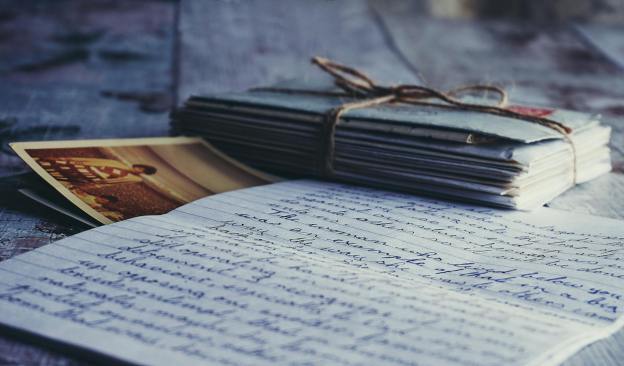
For 14 years we exchanged letters with Alejandro, as he grew from a preschooler to a working man and graduated from Compassion International’s child sponsorship program at age 20. Early letters were written by Alejandro’s brother or his tutor. A letter in 2011 included this endearing anecdote: “It was a happy week for my family too because my brother was born and my mom was delicate so we couldn’t do anything for her birthday. She is better now and we are going to buy a cake for her. Alejandro helps me to wash the dishes because my mom is still delicate.” -signed by older brother Emilio.

Over the years we prayed for each other and shared favorite foods and the antics of our pets. One letter informed us that Alejandro’s pet goose had laid five eggs and was taking good care of them, and included an update on turkeys that had hatched some months before: “My mom likes them very much, she feeds them every moment.” Occasionally we’d make an extra monetary gift through the Compassion project, and a few months later we’d receive a picture showing what Alejandro bought with the money—clothing and shoes, “rubber dinosaurs,” a dresser for his clothes.

At first our letters traveled snail-mail between Bolivia and Washington state. Later, online letter-writing became available, but still it was a slow correspondence. I worried about asking the same questions or sharing the same information because I forgot what we covered in previous letters. I probably did forget things and repeat myself, but Alejandro responded to every letter with only the kindest words, and patiently answered our questions.

In 2023, Alejandro aged out of Compassion International’s sponsorship program and we each wrote a letter of farewell. His letter begins, “My dear friends Michael, Tobi, Kyli and Kayt, let me greet you, I am so grateful for all the time you were my friends and I was blessed with your sponsorship. Truly God touched your lives and through you He touched mine and my family’s. I am so grateful. You were really an unconditional support for so long, words would not be enough to show you how much I love and appreciate you.”

I am immediately touched, and simultaneously aware that these kind words register on a grand scale almost foreign to my daily narrative—God reaching through me to touch another, the elusive desire of every God-lover. “Unconditional” is not a word I would use to describe myself, but there it is. I choose to receive it.

Alejandro goes on to describe how the Compassion project helped him and his family, concluding “but above all, I received the word of God in my life, I was able to know Jesus, and I was able to understand that my life was better if I held His hand.” One sentence, profound gospel. My life was better if I held His hand.

Alejandro requested our continued prayers for guidance and for his family, and promised to pray for us: “I will pray that God will always bless you, that God will grant you the desires of your heart, that God will guide you well in everything you do, that God will keep you from all evil, and that you will now be able to continue blessing more lives as you did with me during all this time.”

Then he concluded, “Now, with a happy heart, for having completed the Compassion program, but also a little sad because I will no longer be in touch with you, I really feel you as part of my family, I will always have you in my heart my dear friends. Thanks to you I have the goal of being someone good in this world. God bless you always, your friend forever, Alejandro.”

It has been said some things are lost in translation, but, if anything, I’d say translation lent this final letter a beautiful simplicity. Alejandro’s translated words rank among the best prose I’ve read. They are high praise yet totally devoid of flattery. His gentle and grateful heart reminds me who I am—a daughter of God who does’t have to worry or hustle. I am blessed and I am a blessing—this is the sum of my existence. Alejandro, thanks to you I have the goal of being someone good in this world. I want to live up to your estimation of me. God bless you always.


*Not his real name.

Spiritual Hair

Spiritual Hair

Blessed are You,
Lord our God,
King of the Universe,
for hair—
a rainbow of textures,
a wisp or a thicket,
growing on heads
and peeking from armpits
and ears and noses.

Blessed are You for hair,
proof that You make stuff for fun—
red, brown, black, blonde, white,
ideal for play—
ponytail it, spike it, color it, braid it,
grow it, dreadlock it, cut it, gel it,
clip it, curl it, shave it, twirl it.

Blessed are You
for hair that needs care—
these strands on my head must be tended,
a combination of work and play,
same as the strands of my spirit,
woven for beauty,
made to be silly and serious,
often in need of untangling,
but beautiful in the wild,
salty-beach-air-jumbled moments.

Everything Is Well but Not Okay

On Sunday morning I lay in bed with my back against my husband’s chest, and the cat propped against me with her hindquarters on the bed and the rest of her body relaxed against my belly. As she purred, Michael and I groggily checked in with each other about last night’s sleep and the coming day’s hopes. In that moment I knew I was the luckiest woman in the world.

Also, too many people I know are in agony. It’s the usual culprits—death, divorce, disease. Add to that a whole lot of problems that haven’t been named or categorized. I know people who are feeling the brokenness in their minds and bodies, whether it has a name or not.

We’re veeerrryy close to the beginning of a remodel project that will add a master bath to our home. I can’t wait for the first day of real work, when the contractor comes in and lays that heavy duty cardboard down to protect the floors, and they start demolishing walls. I’m giddy with excitement about the next few weeks of packing up my bookshelves and moving things around to accommodate the remodel. Don’t ask me to explain this joy, but by golly I’m going to revel in it whether I can explain it or not.

I’ve been crying more lately, which is oddly comforting. I haven’t cried much the last year and a half since I’ve been taking anti-depressants. Whatever curbs my depression and anger also curbs tears, and I’ve missed crying. Last night I cried at the end of the Disney movie, Elemental. I teared up recently during a dolphin show at Sea Life Park. And this morning I cried when I shared a heavy heart with friends and their response came back immediate and full of love.

Yesterday I met with the school counselor at our local alternative high school. I’m slowly making connections in the community with the goal of learning about trauma-informed education and someday facilitating writing groups that empower incarcerated and underprivileged people to tell their stories. I want to give them room to be seen and heard. Writing is one path toward wholeness, and wholeness matters. Two books near the top of my TBR pile will help me with this—Between the Listening and the Telling, by Mike Yaconelli, and Writing Alone and With Others, by Pat Schneider. Just looking at those books gives me a tiny burst of energy, and if I let myself imagine a future in which I write with others toward healing, I break into a smile. Hand me the tools and let me get started!

If someone is living a better life than me, I don’t know who it is. Of course it wouldn’t take long to write down a dozen things that could be improved—but why bother? Today is my day to live, as me. I have what I need. I am enough. God is big and bigger and biggest.

When I feel the tension, I often return to these quotes, best when read together:

“Everything is so not okay.” -Anne Lamott*

“All shall be well, and all shall be well, and all manner of things shall be well.” -Julian of Norwich

Yes.

*Okay, the truth is I’m pretty sure I read this in an Anne Lamott book, but I can’t find it again. If you know, send me the book title and page number.