Category Archives: Other Stuff

It’s Me! Run!

It’s Me! Run!

Reflections – week 2

Welcome to the second week of reflections inspired by my current small groups. Together with some of my favorite women, I’m exploring these books: Father’s House: The Path That Leads Home, and The Whole Language.

This is week two of eight. I’m finding joy here, and I’m pleased you’re with me on this journey.

The Paddle

When I was a child, a wooden spatula was the “paddle” at our house—used for spankings. I chuckle now, remembering the occasional days when my mother would carry the paddle in her back pocket. How well I know those kinds of days now that I have kids of my own.

I have two specific memories of spankings, one of which must have happened when I was quite young, I’m guessing preschool age. I don’t know what brought it on, but I had a meltdown of epic proportions, involving kicking, screaming, and the works. My parents put me on my bed to spank me, but I was kicking so violently they couldn’t paddle me. To solve this conundrum, one of them sat on my legs and the other spanked me.

As this memory accompanied my growth and development, it grew into a belief: the proper way to handle big feelings is to punish myself for them. Or better yet, try not to have them at all. I’m certain that’s not the lesson my parents intended. They probably figured they were enabling me to grow up and behave like an adult. (No one appreciates a 30-year-old who still throws epic tantrums.)

Fear of Self

Week two in Father’s House is about being lavishly loved. The authors write, “To live as a fully loved and accepted daughter in your Father’s House, He’s inviting you to let go of your former identity. You are no longer bound to your past, what anyone else has spoken over you or even what you say about yourself. As you journey Home, saturate yourself in who your Father says you are.”1 (emphasis added)

As I read and wrote through each day of the study last week, fear of myself emerged as a common theme. Starting as a young child I learned to fear myself, to fear my emotions and desires, my imperfections, my capacity to make mistakes. The religious community further intensified this fear by teaching me that I was sinful and needed constant spiritual supervision to avoid indulging the unforgivable person that I was. I became afraid of turning away from God. I figured He’s pretty nice—you know, amazing grace and all that—but if I intentionally, or unintentionally, turn my back on Him, He will be pissed off.

So there I was, internalizing my parents’ responses to me, into a belief that my emotional experiences are unacceptable; internalizing the religious community’s sin-message into the belief that I am a walking liability; and what did all that do? For twenty years, nothing. I was so good at being good that these fears lay dormant. It was unnecessary to face them when I managed myself exceptionally and performed well for every person in my life who expected something from me.

If you’re familiar with my story, you know when the upheaval began: stay-at-home momming. Suddenly, with loss of sleep and the demands of parenting, I was reacquainted with my emotional self in the most savage way. My best efforts to control and punish myself weren’t working. Anger, frustration, fear, and emptiness consumed me, and—given my beliefs about emotions and mistakes—it’s not surprising that a dark shame enveloped me.

Temper Tantrum

A few months ago when I went through Father’s House for the first time, during the activation exercise (meditative visualizing and listening), I had a (visualized) temper tantrum. It was just as I remember from childhood, heels hitting the floor so hard it hurt, as I lay on the ground screaming and sobbing out of control. Papa God lay beside me. I was so overwhelmed I couldn’t engage with Him. I could not receive comfort or accept reason or respond to reprimand. Mercifully, He didn’t expect anything from me. When the waves of emotion began to subside, I rolled into Papa’s arms. I was ready to receive comfort, and He was waiting to comfort me.

Papa God suggests there is no distance between Him and me. He is not cooled by the things that chill the people in my life: turning away, having needs, being impolite, tired, sick, stressed, confused, emotional, forgetful. God is warmly present with me when I am out of control. All of me and my experiences are folded right in, received without question or critique or hesitation. No part of me is a liability.

Holy Imagination

“Visualizing your future as a lavishly loved daughter is critical to your life,” I read in Father’s House. “In fact, it helps engage your heart with your head when you involve your divine imagination. Describe what that life would look like in as much detail as possible. What would you be doing, thinking, or feeling?”2 Here’s what comes to mind:

  • My insides will be still (not agitated). I will be at peace with myself, not warring against myself.
  • I will have energy to create and to love (not compulsion).
  • I will take more risks.
  • Forgiveness will come as naturally as breathing.
  • Suffering will fall into my embrace rather than being held at arms length. It may hurt like hell, but it won’t be fragmenting.
  • Pain, anxiety, depression, fear and anger will be experienced with God, rather than as separating or isolating experiences.
  • I will be whole, not fragmented, not always looking for parts that have been forgotten.

Not As Scary As I Thought

I assumed God was in on the idea that I cannot be trusted with myself. I am shocked to discover God trusts me with me. The shame is lifting. The fear is shrinking.

Lie: I am loved and accepted if I reject myself so I can be what I “ought” to be.

Truth: I couldn’t be better. I am loved entirely independent of my level of responsibility and emotional control. Papa received me first, to clear the way for me to receive myself. He invites me to love myself as He loves me. Now that’s crazy!

Gregory Boyle writes, “Ensuring, then, that we are never strangers to ourselves will give us access to our deepest longing.” I have been a stranger to myself, but I am learning to roll out the welcome mat, receive myself with open arms, and explore my deepest longings.

Endnotes:
1Father’s House, page 29
2Father’s House, page 34
3The Whole Language, page 18

Memories

This year I lost three people who are dear to me. I was not especially intimate with any of them, but each had an impact on my life, and I find myself thinking on that impact frequently in the weeks and months after their passing. In the stillness of their absence, there is something sweet about remembering how their lives intertwined with mine, and allowing them to become larger-than-life. I am grateful for each of them, and wish to honor them by remembering in writing a bit of the fullness they brought to my life. [Disclaimer: I do not believe my memory to be wholly accurate, and I am certain those people closer to these individuals will find errors in my recollections.]

My mom’s mom passed away in January. I always called her Grandma Sawyer, but when I had kids she suggested they call her “Grandma Caroline,” using her first name. She always lived in the same house, from before I was born almost until the end. I didn’t get to visit her in the care facility she was in at the end, so all my memories of her are in that house. She rented out rooms, so I remember having to be quiet when we were in the hallway next to those rooms, and we were not allowed to use the restroom the renters used. We were, however, invited to play in her back yard, which was full of the wonderful fruit trees that grow further south: lemons, oranges, mandarins, kumquats, avocados, and more. There were also a variety of flowers, and a shed that contained board games among other things. My sister and I played out in the yard, making concoctions of plant materials, and skipping about on the stepping stones. We made fresh orange juice in her kitchen, watched shows on her tiny television in the dining room, and always went home with avocados and mandarins to enjoy long after our visit.

Grandma always wore her hair the same way, and I imagine there must be a name for the style, but I don’t know what it is. Just that there was a large curl at the bottom, near chin level, and the rest was smooth but thick. My complete lack of fashion knowledge also makes it impossible to describe her wardrobe with any accuracy, but I remember she always wore the same style of flat comfy shoes, and she often wore blouses. She nearly always had a boyfriend, so when our family descended on her house, she would spend her nights at her boyfriend’s house. My sister and I slept in her room (where my sister got flea bites sleeping on the floor), and my parents would sleep in the family room. We took over the kitchen, making our own meals, as my grandma would not have cooked for us even if she had been there. She ate very simply and basically did not cook or wash dishes, a fact which my mother says was true even when she was raising five children. We often found spoiled food in her fridge, and more than once we found a can of orange juice concentrate in the freezer which had been partially used and left to turn a very dark brown shade of orange. One redeeming feature of her kitchen was the drawer containing dates and nuts. And she always had toasted wheat germ, which I thought was a treat.

Grandma Sawyer liked cats, and for many years she would have one or more cats, but they were usually scarce when we came to visit. I don’t remember her having any toys, but she she lived not far from the ocean, so between that and her back yard we had plenty of fun things to do. There was a bin on her coffee table with scissors and tape and other handy supplies, and her combined living/dining room also held her desk, and a book shelf full of interesting titles like “Eat Right For Your Type.” She was something of a health (read “supplements”) enthusiast, and I remember one drawer in her bathroom contained cups of pills portioned out for each day. I don’t think she was on any prescription, so those large handfuls of pills were all supplements resulting from her own research. She could swallow a whole dose at once, which I found very impressive. She enjoyed travel and learning, and I remember on one visit she told me about the country of Burkina Faso with it’s capitol city of Ouagadougou – I think the primary reason was the joy of those funny sounding words. She didn’t give a lot of gifts, but she did always send a birthday card with money, and I still have a mug she painted with my name on it. She was skilled at beautiful, delicate china painting. She also played the piano, but I don’t think I ever heard her play or saw her paint.

Her memorial was a picnic lunch at a park near the beach, and I think I knew more about her after the brief fifteen minutes of sharing among family members than I did in all my years of knowing her. I enjoyed the descriptions of other family members to round out my memories of grandma: able to converse on any topic; curious; positive, cheerful, joyous, and didn’t speak negatively (or positively) about anyone; loved all kinds of arts; always ended with a chuckle; a feminist; wonderful mother-in-law; original and witty; good mother who was proud of all her kids and grandkids; knew a lot about the natural world, including the names of many plants. I do remember her showing me a gingko tree once when we were on a walk. I think the reason it stuck in my memory is that she told me gingko trees had been around for millions of years, and being from a family of young-earth creationists, I remember thinking she was wrong but keeping silent on the subject. The thing I secretly wished to emulate about my grandma was her ability to dance. She loved to dance, and although I never got to see her dance in public, she did teach me a dance step once, and I’m proud to say I can still do it. She took time to do the things she loved, and although she had strong opinions, she always ended with a chuckle and a twinkle in her eye. I am grateful I got to be her granddaughter.

Not long after my grandma passed away, a neighbor from my childhood also passed away. Her name was Sandra Smith, but we called her Sandy. She and her husband Billy had a surprise daughter later in life who was about my age, named Suzanne. They lived a few miles up the hill from us, where there was no electricity or phone lines, and every so often we would hear their old diesel Mercedes pulling in our driveway so they could make phone calls (we were the last house on that road connected to the phone lines). As far back as I can remember they invited us over for Thanksgiving and/or Christmas dinner every year. Sandy made the entire meal on a wood burning cook stove, and everything was cooked to perfection and served hot. Since my health-conscious family made tofu quiche and vegan pies for holidays, Sandy’s table laden with real turkey, cranberry sauce, mashed potatoes (that undoubtedly had butter in them), pistachio salad, yams (which surely had sugar and butter on them), and every other dish you could wish for at a northwest holiday dinner was a highlight every year. After homemade hard ice cream, fresh whipped cream, and too many pies to sample, we would relocate to the living room where we played the old player piano for hours, talked about Billy’s countercultural ideas, and enjoyed the warmth of the wood stove.

The Smiths were a family living in older times. Billy logged and mined gold to make money off his extensive property. He was proud that he didn’t pay Social Security, held strong views about politics, had a moderate collection of firearms, and enjoyed quack medicine like pycnogenol and frequency-generating “zappers.” It was an odd friendship between our families, mainly consisting of those annual feasts together and their visits to use our phone. I think Sandy was the grounding presence in the family. She was practical, intelligent, calm, and her eyes often sparkled. She wore her gray hair pulled up in up a decorative leather piece with a wooden pin through it. She was always kind. When I moved away from home, she extended an invitation to make a turkey dinner for me when I visited home, even if it wasn’t at the holidays. Her generous offer surprised and touched me. I don’t think I ever took her up on it, but I did get to take my husband to dinner at her house at least once, and I’m grateful I was able to share that part of my childhood with him. Sandy passed away rather suddenly, and I miss her kind presence on this earth.

In an expected turn of events a person who had largely shaped my career (if you can call it that at my age) became ill and died, bringing him sharply back into my awareness. I quit work a month shy of seven years ago to become a stay-at-home mom, and soon after my boss, Jerry Mason, retired. We were both in our own new worlds, adjusting to life at home after the workplace, and didn’t keep in touch. But this parting of ways in no way lessens the impact Jerry had on my life during my college and post-college years.

I entered college with a job at the Grounds department, mostly because I got hired over the phone and it was an easy in. At that time the department was undergoing some changes, and Jerry had a vision for student leadership that was emerging at that time. I found myself co-managing the department with a few other students a month after I began working in Grounds. Jerry had a way of entrusting me with responsibility with so much confidence in me that I hardly had the chance to stop and think about whether I could do the job or not. His trust, mentoring, enthusiastic support, and hands-off style gave me the incredible opportunity of managing the Grounds department all four years of college (and being awarded the Washington State Student Employee of the Year award in 2007). By the middle of my sophomore year I was studying for a business degree with a concentration in management, so there was a happy marrying of what I was studying to what I was doing at work. I wrote handbooks, wrote interviews, hired, fired, created schedules, purchased equipment, conducted training, and did everything else the job required with the zest and energy only a college student has. All the while, Jerry proudly cheered on us student leaders, paid us a little more than made sense, stood in our defense when problems arose, challenged us when we were heading the wrong direction, and continued steadfastly in his confidence in my abilities.

After I graduated I worked one year in a clerical position, and then Jerry was standing there in front of my desk handing me a proposal regarding bringing the custodial function of the university back in house. In other words, creating and managing a new department that would be under his direction as Plant Services Manager. Again he was handing me much more than I was qualified for, just as confident as could be, eager to give me the opportunity. And as I took the job and went to work for him again he continued to support me in the same generous ways that he had when I was a student.

Jerry was private and shy and had a strong aversion to parties and most social events. He was a straight shooter and didn’t take excuses; short in stature but still slightly intimidating because after all he did have the power to end my employment. But never once was I worried about calling him or walking into his office. He was always kind, friendly, honest, and the best superior a person could ask for. Over the years, he went out of his way to recognize my work and support me – nominating me for student employee of the year, taking me and other managers out for dinner, providing cell phones when they were still relatively rare, procuring a set of two monitors for me to make desk work easier, encouraging and supporting me in attending Leadership Walla Walla, and no doubt instrumental in my recognition as Rising Staff Member of the Year in 2010. I always felt valued, and knew someone was standing behind me.

After I quit work I asked Jerry for a reference letter, as I knew I would be a stay-at-home mom for a while and I wanted to have something to use as a reference when it became time to return to the work force. He never wrote one, but he did give me his email address when he retired, and we conversed briefly about my desire for a reference letter. His reply in part said, “I am working outdoors a ton this summer. Have an old couple across the street I am keeping their yard up. Fun and it keeps me busy.” I was a little peeved that he couldn’t find the time to write one letter amidst all his yard work, but looking back it really was just like him. He always hated writing reference letters, and I also think he was just ready to be done with work. I chuckle over it now. And besides, he did give me a wonderful reference in the form of those two jobs that shaped my skill set, and the opportunity to work with many wonderful people (who would probably be happy to write me a reference letter).

I cannot think about my college experience or my career without thinking of Jerry. He was human, but the best sort of human you can find, and a person who so quietly had an incredibly large impact on my life. I am grateful for all the ways he believed in me.

As I think about these three people, what stands out is how simple their influence was. None of them gave me advice. None of them spent any great amount of time with me. They just gave to me in their own unassuming way. There is power in simply living your life – the moments you believe in someone else, or invite someone over for a meal, or impart curiosity and cheerfulness by living it out yourself – perhaps those are the moments that someone else will be recalling when you are called Home.


Fear of Parenting, Part 2

As I explored in my previous post – Fear of Parenting, Part 1 – parenting has undone me in many ways. The truth is, I was already selfish and overwhelmed and angry, I just didn’t see it until I became a parent. This wide revelation of my inner self often leaves me feeling naked and ashamed. Yet I am confident this is not where God intends me to remain, because He says things like “So now there is no condemnation for those who are in Christ Jesus.” (Romans 8:1)

When I state in plain words the things I am thinking and believing (the lies listed in my previous post), it gets really clear how far my head and heart are from the truth. This provides the opportunity to explore with the Holy Spirit what the truth is. As I have done that, these truths have emerged:

  • There is not one right answer. Perfect parenting is not the goal. It’s ok. Jesus is here with us.
  • God’s power to redeem is much greater than my power to destroy.
  • Enough faith to come to Jesus is enough faith to be healed by Jesus.
  • I CAN change. But where I’m going is God’s work in me. I am neither a slave to bad behavior or good behavior. I am free in grace.
  • The only thing that recommends me to Jesus is my great need.
  • Mistakes are not preventable. They are normal. They are evidence of showing up and living life.
  • The goal of parenting is to love my children (imperfectly) and model trusting Jesus (also imperfectly).
  • God gave me the full range of emotions. None of them are bad. He experiences them all too. I am made in His image.
  • I am exactly where I need to be. I can rest now (NOT after I become a “better” parent). Jesus’ fullness is the perfect match for my emptiness.
  • I don’t have to be ashamed. His mercies are new every morning. There is grace, grace, and more grace.
  • I can give myself permission to be calm and centered after a difficult day or experience (i.e. parenting fail). I don’t have to wallow in the bad (God has no desire to punish me). I can move on, grateful for grace and the newness of the moment.
  • There will always be problems and unresolved issues in parenting. I can welcome them, knowing 1) they are normal, 2) there is not one right answer, and 3) Jesus is walking me through them.
  • My children are not disrespecting me and acting like brainless wild creatures on purpose. They are weak, desiring my love and guidance.

Isn’t it nice that Jesus doesn’t think I’m acting like a brainless wild creature on purpose, but instead moves closer to me to love and guide me? Every now and then he reminds me not to take myself too seriously. Perfectionism has a way of turning every moment of life into an opportunity to be “right.” That much pressure is bound to make even the best of us into the worst versions of ourselves. When I feel overwhelmed, it helps to imagine my Savior smiling at me and reminding me, “Don’t take yourself too seriously.” No condemnation.

I still struggle with feeling that I am ruining my children. I joke that we have a therapy fund for the hours of therapy they will one day need in order to recover from growing up in our home. But somehow softening the edges of my struggle is the truth that it’s not about me, and it’s not about perfection. Someone Bigger is in charge, and He is God, which means I don’t have to be. He is Big and I am small. He is Creator, I am created. He is Redeemer, I am redeemed. He is Perfect, I am flawed. He is Potter, I am clay. And He is all this to my children as well. I cannot mess anything up so badly that He cannot redeem it. This is truth, this is freedom.


Fear of Parenting, Part 1

I find none of life’s daily challenges as terrifying as parenting. And I’m terrified of being terrified, knowing that as I white-knuckle my way through each day I am teaching my children white-knuckling instead of grace. As a parent I feel inadequate, exposed, undone. I have so many layers of guilt and shame I don’t know where to begin, so I stand helplessly and watch myself flailing in the discomfort of inadequacy. My decisions are often motivated by paralyzing fear, anger, and trying to control all the things that are making me uncomfortable: noises, messes, big emotions, sibling rivalry. I see my imperfections and find myself powerless to correct them as I fumble through each day blindly groping for something that will make me feel acceptable.

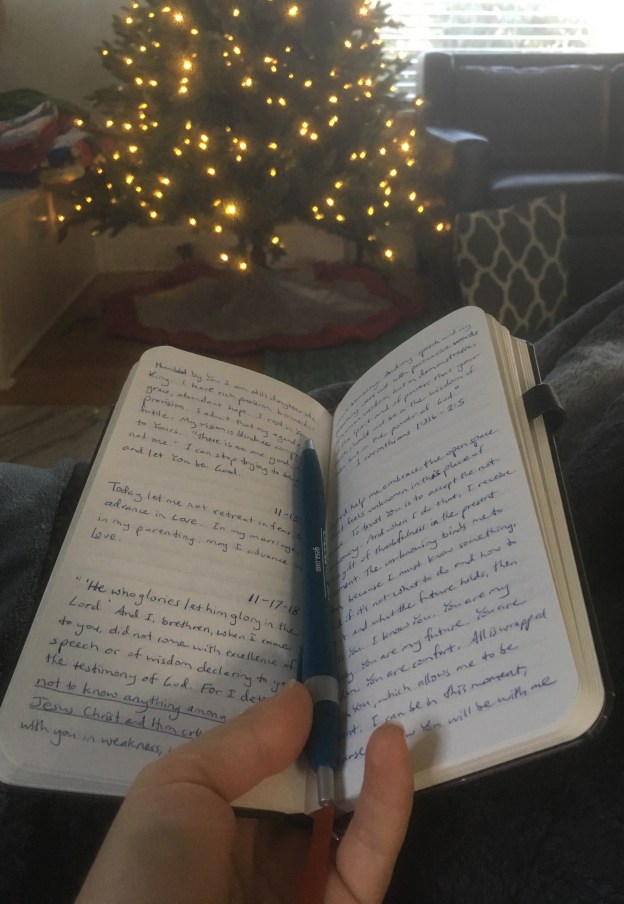
In February of this year I wrote in my prayer journal, “I really believe deep inside that I’m going to get it wrong most of the time and there’s nothing I can do about it; and I am extremely fearful and uncomfortable about that. I also think the truth is going to be just as depressing and difficult as the lies. I don’t have much hope to be set free.”

My older daughter will turn seven this fall. This discomfort with parenting has been developing for a significant portion of my life. It has brought about major changes in my spiritual journey and my marriage, and for the most part I view that positively. For some reason, I find it most difficult to face the changes it is precipitating in me personally. I grieve the successful, confident, accomplished person I believed myself to be before I had children. With Paul I say, “Oh, what a miserable person I am! Who will free me from this life that is dominated by sin and death?” (Romans 7:24)

Then Paul says, “Thank God! The answer is in Jesus Christ our Lord” (Romans 7:25a). Is it really that simple? Is Jesus really enough for this? After following Him my whole life, I have just expressed that I don’t have much hope to be set free from this parenting mess. I feel trapped: I fear the lies. I fear the truth. I am afraid of the mess that I am, and also afraid of Jesus.

My counselor says to identify what I am thinking. As uncomfortable as it is to wallow in my feelings, it is even more unnerving to enter into my thoughts. However, it is also very revealing, because in my thoughts I find the lies that are feeding my shame and fear. Over time and through a couple of different processes, I have identified over forty of my toxic thoughts about parenting.  They seem to fall into three categories: 


  • HOW THINGS SHOULD BE

  • Most – if not all – of my parenting interactions should be positive and turn out well.
  • Calm, clean and quiet are signs of a good home.
  • The goal of parenting – both in individual interactions and as a whole – is good behavior and happy outcomes.
  • Parenting is the most important thing in life to get right. It’s terrible not to be emotionally safe, empathetic, consistent, good at being present, a fun playmate, etc.
  • Crying is bad. Yelling is bad. Anger is bad.
  • I will have less problems if I get it “right.” There won’t be scary situations or loose ends. Someday I’ll have it all figured out.
  • It is important to feel bad, guilty, and ashamed when I make a mistake or when my kids behave in a way that reflects my unhealthy patterns.

  • I AM DOING IT WRONG

  • I have ruined the identity of my children by giving them so many wrong messages at a young age. I have done a lot of irreversible damage.
  • I get it wrong most of the time, and that is going to have long term (perhaps eternal) consequences.
  • I don’t have the emotional bandwidth to be there for my children.   
  • Interactions with my children are scary. I want to get them “right” but I don’t know how.
  • All the ways my children “misbehave” means something is wrong with me or them and I need to fix it.

  • I CAN’T CHANGE

  • I won’t ever be free or healthy. People don’t change. I’m trapped in bad parenting and its consequences.
  • My success is based on my own merit and abilities – the outlook is dim.
  • Outcomes are the most important thing, and they depend on my being a “good” parent, which I currently am not.

It is these thoughts that leave me feeling deflated, helpless, and less-than. If these are not true, then what is? Is there really hope in Jesus? Can I actually change, or is that just a carrot dangled by religious zealots who want me to follow their God? Is a God who allows me to ruin my children worth believing in?

I’m not sure I have the answers to all those questions, but I have two experiences to share in closing. First, on Mother’s Day this year, when someone told me I was a good mom I didn’t inwardly cringe. For the first time since my daughter was born, I was able to take the compliment, believing it to be true. This to me is evidence of the power of Jesus against all the lies. Second, through a month-long process of combatting lies with truths, I reached this conclusion, not just in my thoughts, but also – on most days – in my feelings: I am able to do this job God has given me. I don’t have to hide behind productivity and to-do lists. I don’t have to be ashamed or overwhelmed. I can give myself permission to be all in. There is something beautiful about having permission to be all in. And maybe if I keep giving myself permission to be all in, my children will learn to come out of hiding too.

[In “Fear of Parenting, Part 2” I’ll discuss some of the truths that are setting me free. To understand more of my journey regarding whether Jesus changes us, and whether hope in Him is well-founded, see pretty much all of my other blog posts! In a nutshell, He’s not really that worried about my good behavior, and the freedom He offers does not consist in me becoming a perfect parent.]

Indian Giver

“For better or worse,” I said

And pledged myself to one man.

Then I went about creating better

By making him follow my plan.


Placing all my hopes in prince charming

I suddenly felt all alone.

I was focused on him and me

And had removed God from His throne.


To be a wife is impossible;

I can’t change him – or me – enough.

To trust in each other is foolhardy;

So one day God called my bluff.


The Truth brings clarity,

And when I could finally see,

I gave my husband back to God,

And God gave him back to me.

My Favorite Subject

I think it’s only fair to begin by saying I am not a writer. I am a sinner saved by grace. Sometimes that grace overflows into my journal, and I feel the desire to share these moments of grace. If God’s gift of words to me can be a gift to you as well, it will bring a smile to my face.

At my MOPS (Mothers of Preschoolers) group a month or two ago, our table conversation included answering this question: what could you talk about for thirty minutes without preparation? My answer: my relationship with God. His work in my life rises above my other experiences, and I find myself excited to share who He is and how He engages with me. He is my favorite Subject.

[Grace] is the power of God available to meet all your needs. — Joyce Meyer