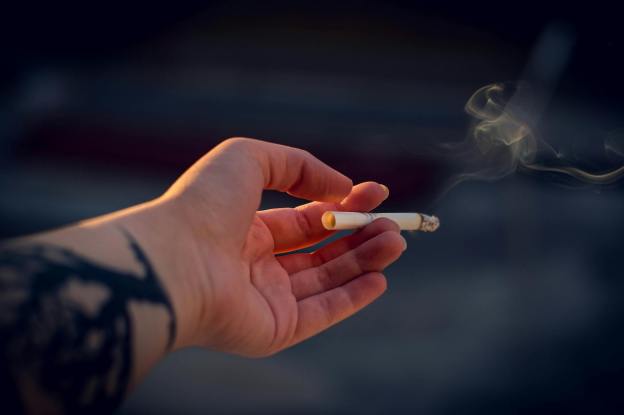
I know next to nothing about substance use. Other than tales of “the alcoholic” family members I never met, the “sinners” in the prodigal-returns books the church fed me, and the guy who beat the tar out of a piñata at his daughter’s birthday party, I live in a substance-use-free bubble. Although, I was offered a drink last week by two guys about my age who came upon me at a local park, where I had stationed myself to watch for beaver activity. I hoped to catch the crepuscular creatures near one end of their habitat, where they had recently felled a large tree.
It became apparent these two fellows had been drinking when they repeatedly complimented my purple outfit, introduced themselves, offered to move my chair for me, asked me to show them the beaver lodge, and kept up a constant stream of friendly banter. Sober people walk by silently and you’re lucky to get a nod.
“If you’re gonna take beer from a stranger, we’re the right people to take it from,” the talkative fellow offered. He went on to explain the virtues of the beer he had in the cooler bag over his shoulder, but it all went over my head. IPA and other alcohol-related terms are Greek to me.
As a child, I was taught to fear alcohol, with the admonition that because alcohol addiction runs in our family, I could become addicted with a single drink. Is there truth to that? I don’t know. Now that I’m an adult it seems beside the point.
Last November, I attended a community education event—“Hidden In Plain Sight,” or HIPS. This event multiplied my slight knowledge of substances by at least ten times. For example, I thought “doing pot” 40 years ago was essentially the same as “doing pot” today. I was wrong. But before I get to that … The whole experience hit me odd—attending a 1.5-hour community event in which I felt the main takeaway was “just say no” (although those words were not used). I thought people who didn’t rely on religious/moral reasons for abstinence just didn’t abstain. Or at the very least, didn’t tell others to abstain. But apparently, given data on brain development and facts about the effects of drugs and alcohol, a whole slough of people agree that—at least for kids and teens—“no” is the appropriate attitude toward substances. And this isn’t about illegal drugs; it’s about nicotine, marijuana, and alcohol.
When I talk to my kids about alcohol and drug use, I notice they are acutely—vehemently—aware that it is “bad”—so much so that it’s easy for them to assume a person who uses is not a “good” person. For that reason, my conversations with them, more often than not, focus on the aspect of numbing pain. I tell them people drink because it makes them feel better. It’s relief from anxiety, loneliness, trauma, and intense emotional pain. And isn’t every human being worthy of relief from pain?
I didn’t know what to expect going to the HIPS event—other than free pizza and a lesson on the paraphernalia of risky teen behavior. But when I left after the event I had a distinct feeling that something was missing—we didn’t talk about the pain these kids are trying to numb. Or the pain their parents are trying to numb. And parental influence means—like it or not—when we as parents use substances to numb our pain, it’s hard to tell our kids not to, and even harder for them to respect and respond to us.
In the state of Washington, where I live, it is legal for a parent to give alcohol to their child at any age, in their home1. And although it’s illegal to give tobacco or marijuana products to your own children, the data in our local community indicates that parents are supplying these items to their children in middle school and high school2—or at least turning a blind eye. Additionally, many websites that sell vapes and other nicotine products simply have a textbox to type in one’s age, making it easier to buy substances than it is to log into your bank account.
Products that were originally marketed as smoking cessation products, such as vapes,3 may deliver more nicotine to users than cigarettes, depending on the product and frequency of use. They’re also cheaper. A carton of cigarettes is $120, and the roughly-equivalent 7,000-puff rechargeable fume vape—which comes in more than a dozen flavors and fits easily in a closed hand—costs only $15. It also conveniently flies under the radar of the Clean Indoor Air Act, since the nicotine is delivered without a cloud of smoke. As you might imagine, these changes rewrite the landscape of nicotine use.
And alcohol is not exempt from the changing landscape. With a disposable water bottle, a wine cork, and a bike pump, a curious teen can vaporize alcohol, conveniently bypassing their digestive system and taking the full impact of a shot of hard liquor directly to their bloodstream.4
Now back to the changes around “doing pot”. Before the turn of the century, marijuana products delivered about 4% THC, or tetrahydrocannabinol, the psychoactive compound found in cannabis. In the 2010s, that number jumped to nearly 20% with the medicalization of marijuana. Today there are products containing up to 90% THC5. This ain’t your grandpa’s weed. Yet in Walla Walla County the Healthy Youth Survey in 2023 reported that 56% of 10th-grade respondents thought trying cannabis/marijuana held no risk or low risk, and 30% thought regular use had little or no risk.6 Are these students thinking of grandpa’s weed, or the expanding menu of available products? There’s rosin, crumble, distillate, bubble hash, dry sift, crystalline, and the list goes on.7
Youth who experiment with substance use are often unaware—now more than ever—of the actual amount of alcohol, nicotine, or THC they are taking in through various products or processes, resulting in an uptake of accidental overdoses.8 Parents seem to be checked out of their kids’ lives, and capitalism is taking advantage of the changing topography of products that deliver substances.
2023 Health Use Survey (askhys.net)
Walla Walla County data
20% of 10th graders reported using marijuana at least once in their life.
50.9% of 10th graders reported using alcohol at least once in their life.
16% of 8th graders had ridden, during the previous 30 days, in a vehicle driven by someone who had been drinking alcohol.
2.7% of 6th graders (my 12-year-old daughter’s grade) reported alcohol use in the past 30 days, as did 3.9% of 8th graders and 13.1% of 10th graders.
19.5% of 8th graders and 33.6% of 10th graders indicated it would be “sort of or very easy” to get marijuana.
In case you got lost in the grade numbers,
all of these statistics are for youth approximately 11-15 years of age.
Not long after attending the HIPS events, my husband Michael and I walked by a smoke shop as we were finishing a pizza-and-ice-cream date night. “Ooh,” I said spontaneously, “let’s go in!” Michael didn’t share my enthusiasm, but he followed me inside the shop. The young man behind the counter welcomed us in and asked if we were after anything particular. I volunteered that neither of us had ever had anything. “If there’s something you want to try, let me know,” he offered.
To the left, behind a long counter, packaged products lined the wall. To the right, blown-glass paraphernalia caught my eye. I didn’t know what any of it was called. “Pipe” and “bong” seemed like terms that probably applied to some of the stuff, but I wasn’t sure. It reminded me of visiting the glass-blowing shops in Oregon’s coastal towns. Rows of shelves showcased the beautiful colors and shapes, and at the back of the store two more large displays highlighted artful drug paraphernalia.
The shop also had knives, samurai swords, rings for body-piercings, incense, an impressive display of fancy cigars, sex paraphernalia, and—based on my newly-acquired knowledge—several items I assumed were for hiding drugs. Michael and I circled the store a few times, commenting quietly to each other. Wanting to be a good customer, I bought a small vaping device.
Just kidding. I bought a pair of cheap earrings.
“Drugs and alcohol” are not the static story I imagined. And my interpretations are one tiny perspective on an issue that is complex beyond any one person’s understanding. Advertising, social influences9, the complex science of the over-400 components of cannabis10, the biology of addiction, stigma, family structure, mental health, and countless other factors impact our youth and their decisions around substances.
Mental health professionals and others, including the renowned Brené Brown, say it isn’t possible to selectively numb emotion. If we numb pain, anxiety, and sadness, we also numb joy, contentment, and gratitude. How will a generation unable to feel things—let alone name those feelings—live whole lives, experience belonging, and effectively walk through the tragedy and triumph of life?
And how will they teach resilience to the next generation?
I am left with more questions than answers. Why did I know nothing of the breadth and depth of new and evolving products and packaging around substance use? Why did only about 20 people attend this HIPS event that was marketed across the Walla Walla Valley? Why does it seem like social workers and law enforcement are the only people looking at this data?
About 10% of 8th graders and 14% of 10th graders surveyed had considered suicide. Over a third indicated a struggle with depression.11 Why are our children in so much pain? And how are we offering relief?
Endnotes:
1 RCW 66.44.270, subsection (4), viewed here.
2 The Healthy Youth Survey fact sheet for Walla Walla County in 2023 reports that 29% of youth in 8th and 12th grades, and 27% of youth in 10th grade reported getting alcohol from home, with permission, in the past 30 days. Additionally, only 5% of youth drink alcohol if their parents think it’s wrong, while 28% drink if their parents don’t think it’s wrong. This data is from a fact sheet created here.
3 https://pmc.ncbi.nlm.nih.gov/articles/PMC10880776/
4 https://www.vumc.org/poison-control/toxicology-question-week/jan-29-2020-alcohol-vaping-friend-or-foe
3 https://medicine.yale.edu/news-article/not-your-grandmothers-marijuana-rising-thc-concentrations-in-cannabis-can-pose-devastating-health-risks/
6 This data is from a fact sheet created here.
7 https://vivosun.com/growing_guide/what-is-crumble-crystalline-sugar/
8 This was covered in the live presentation. I’m still looking for a data source to cite here.
9 https://www.cdc.gov/tobacco/e-cigarettes/why-youth-vape.html
10 https://pmc.ncbi.nlm.nih.gov/articles/PMC4188645/
11 This data is from a fact sheet created here.

 My Favorite Subject