Tag Archives: friendship

Simple Jesus

I want to like Jesus because the grown-ups in my life told me He is good, and they were right. 

I want to be innocently happy that God is good. 

I want to go back to painting “JESUS FREAK” in huge letters on a baggy cotton T-shirt, soaking up Sabbath School lessons with gusto, back to the credibility God had when I was 14.

Simple Jesus—does He still exist? Or can He at least be mysteriously complex and Kindergarten-simple at the same time? 

Is there a reality—no-strings-attached—in which Jesus just loves me and knows my name?

A few weeks ago I attended a spiritual retreat at Camp MiVoden, as a sponsor for the girls in the 7th/8th-grade class. During the worship services I remembered something, a feeling of belonging and certainty from my past. I knew some of the songs the praise band led, and I sang with my arms raised. No one expected anything—hardly anyone knew me—and the featured speaker said simple and good things, about who I am and who God is, and I cried, and I remembered a time when I belonged wholly, and sermons weren’t pocked with ideas that distract me from goodness and wholeness.

I want a plain friendship, one I don’t have to defend or explain, one in which I don’t need Jesus to make me look good, and Jesus doesn’t need me to make Him look good; Jesus with a reputation as simple as Mary who had a little lamb, not the notoriety of an activist. 

I don’t need answers for all the questions and discrepancies. I’m looking for that place where they are absent, where I don’t have to explain why I don’t believe in a punitive gospel, or why I’m part of a faith tradition (Christianity) that has inspired violence for thousands of years. I don’t want to explain why I use feminine pronouns for God, or why I say Adventism is my community but not my religion. I don’t want anyone to raise their eyebrows at me, nor me at them. I want to be in love—inside love. I want to feel safe because I am safe. 

Maybe what I really want to know is this: does a simple Jesus exist for adults too? Does He go for coffee with millennials—with me? Does He wear jeans and send 132 text messages every day? Does He understand carpools and playdates and a family calendar on the kitchen wall and how all the spoons are dirty if I miss one day running the dishwasher? Does He peruse my TBR shelf and ask me about my writing? Does He know I’m still a little girl inside, intimidated by the disciples who turn me away because I am small and simple?

Is Jesus here now, and does He remember me? Does He look through my photo albums and murmur memories? Has He been here for it all? Can we laugh together about singing “Sinnerman” and “We Are Soldiers”—the laugh of a shared memory—those lyrics humorous like the frizzy perms of the 80’s?* Is He still the cleft in the rock, the hiding place, the blessed assurance the hymns offered? 

What if we’ve shared a life more than a belief system, and our love is built on mutual adventure and admiration?

Maybe He has never needed me to pull Him apart and stitch Him back together, to understand how He is a triune being, or even to put our companionship into words. Perhaps I was mistaken in thinking that farther, bigger, and deeper are better. 

Jesus is here. In the essentials He hasn’t changed a bit. He’s still the great guy I knew in primary Sabbath School; the one who stood with me in the church baptistry, invisible yet deliciously simple; the father I wrote to in a dozen journals full of prayers; the soil from which I grow. Most of all, He’s still my friend.


*I sang these songs countless times. Although the lyrics of “Sinnerman” I sang were not as heinous as what I just found by googling it, I think it’s safe to say it’s inappropriate to mock sinners running from God (and what even is a “sinner”? Aren’t we all?). And don’t even get me started on “We Are Soldiers” and “I’m in the Lord’s Army.” Who decided it was a good idea for seven-year-olds to sing about blood-stained banners and artillery? So yes, I think Jesus and I can have a good laugh about it.
A Different Kind of Trust

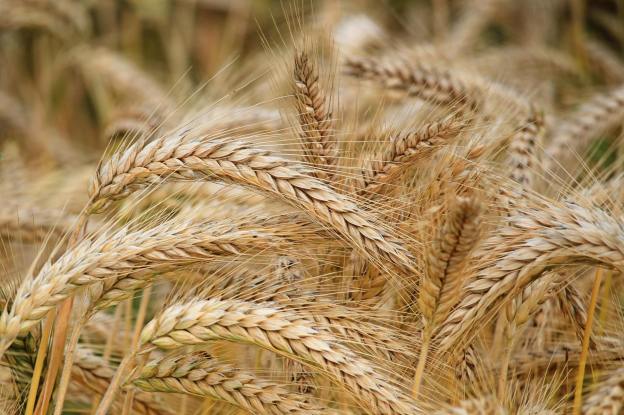
I take into my body every day a substance I know almost nothing about, a refined form of an ancient plant—maybe a grass? Today the bouquet on my table consists of a dozen stems I gathered from the roadside a mile from home, at city limits where the speed limit increases from 35 to 50. This bouquet is the raw material for foods I eat daily, but I have harvested it for beauty and not for appetite. 


I’ve been learning about relationships since forever. As a teen I imbibed books by Joshua Harris and Elizabeth Elliot. I thrill a little every time I take a personality test. When my husband, Michael, and I went through pre-marital counseling together, we answered personality questions about ourselves and about each other, and our therapist came back with the results overlaid and a description of our relationship dynamics. I didn’t know that was possible! Unbounded delight and satisfaction. 


As I hold a stem from the bouquet, I find it rose-like in that it is beautiful, but it will hurt me if I handle its sharp edges carelessly. I’m not sure how one prepares it for consumption, but I think a severe beating is involved, to separate its parts. If I’m not mistaken, animals were traditionally employed to help with this task. But even this violent unmasking of the plant doesn’t render it edible—at least not to the standard of most palates. Additional breakdown, with stones or blades, nudges it closer to consumption. Even then, it doesn’t appear on dinner plates or in snack trays. It waits in the cupboard for a kitchen chemist to combine it with oil, water, yeast, sugar, and any number of other ingredients. The resulting gooey blob is then baked, fried, boiled—cooked in some way. Once cooked, the food may be spongy (in a good way) or crunchy, and bears no resemblance to the stalk I hold in my hand. 


I’m hungry to understand relationships, both because I’m intrigued, and because I do not want to leave my relationships to chance. Marriage tops the list of highly-scrutinized relationships, followed closely by the bonds I have with my kids, and with my parents. What’s happening when my husband gets super talkative? Does quietness mean completely different things for my two children? How have my mom and dad survived this long in the world with their seemingly brittle ideas about religion and diet, and not one single coffee date?


Although I don’t know how to plant, nurture, harvest, thresh or prepare grain, I do know that an established industry takes the plant through all those steps for me, and I ought not eat it otherwise. I owe this knowledge to my elementary school education, and the times my mother reprimanded me for eating raw flour—probably in the same era I sampled dry dog food. 


I am convinced I will not get relationships right by chance, by intuition, organically. Research, knowledge, and choice are required. I have used this knowledge to understand and to be understood; to shame myself and my spouse; to prove I’m right; to try new patterns and to defend old habits. Most of all, I use it to dispel mystery, because the mystery of love is uncomfortable; the bread of love is finicky—too dense or not dense enough, sometimes rising only to fall, tantalizing when it’s warm, less palatable cold. Does my reading and analysis save me from this roller-coaster ride? I think not. But it does help me feel less alone. 


As I drive from my small town to the next small town, I count fields of wheat. At least I think it’s wheat. Truth be told, I trust an industry I know little about, and a process I prefer not to attempt to replicate. On the baking aisle I can choose the brown bag or the blue-and-white one, non-GMO or organic, but I’m only pretending to understand. The way I know wheat best is on my tongue, in the form of bread, mixed with flavors like cheese and pickles, homemade raspberry jam, or peanut butter and applesauce. I don’t need to know all the details.


Could it be that the way I know relationship best is in the presence of a friend?—trying a new flavor of ice cream, laughing about how I only shaved one leg, crying about a pet passing heavenward. Maybe I don’t need to understand all the details in order to nourish and be nourished . . . in both food and friendship.

What Is Kinship?

This morning I’m sitting in a favorite coffee shop as I write. Country music plays a little louder than I’d like from a speaker above, but quiet enough that I can overhear conversation. Two men in their seventies talk about therapy, travel plans, searching for a church that fits, and learning to support a recently-divorced family member. These men share themselves, hear each other, and speak encouragement. This, I think, is kinship.

I’m on a quest to learn about kinship. A google search provides this uninspiring two-word definition: blood relationship. But kinship can be so much bigger than that, a new way to see myself and others, a way that assumes value and connection. In kinship we are all on the same side of the line, rendering divides impotent. No “them,” only “us,” as Father Boyle would say. Only us.

Kinship has been slow-coming in my life. I grew up in a home where social time was considered a waste of time. If it wasn’t an event—like a birthday party or a hike to the lake—socializing didn’t happen. Although I’d like to blame my family and upbringing for my struggle to settle into friendship—I lived in a tiny community and was homeschooled through tenth grade—I’ve discovered my fears are not unique. Many women feel a lack of intimacy, and fear they don’t know how to participate in friendship. And, of course, each of us thinks other women have it figured out.

Every year I make a photo book commemorating our previous year. That may sound very organized, but it’s actually quite haphazard. Recently, I’ve been sorting through pictures from the last two years. As I put photos into categories and months—pets, school, March, November—a new category emerged: fun with girlfriends. These photo books will be the first to include a friendship photo spread—pictures of lunches out, movie nights, birthday coffee dates, pottery painting, and shopping fun. Looking at them, I feel connected, grateful, and not at all sure how it happened. I used to “do” friendship; now I enjoy friendship. I wish I could tell you five steps from lonely and anxious to connected and content, but, at least for me, it has been more mystical than methodical.

For most of my adult life I have compensated for lack of friendship by joining or creating small groups. A ladies group is my happy place. Crafts, Bible study, accountability, book-reading—it doesn’t matter. The structure provides a place for me to show up, participate in the mutual honoring of each other with our time, and complete the prescribed activity. Slowly I have ventured into one-on-one time with a handful of girlfriends, and casual activities together, like shopping. My circles of belonging widen.

The terror and the joy of intimacy with friends cannot be understated. Could one text or one misunderstanding upset it all and leave me in pain? Yes, it could. But in these relationships, do I feel seen, known, and safe? Do I invite these women into my home when I haven’t mopped the kitchen floor for three months, or done the dishes for three days? Yes, I do. Do I text them when I’m discouraged and take them coffee when I have a free morning? I do. Is it still scary, and do I have social anxiety? You bet.

Intimate relationships cannot be wrangled. It is a fools errand, seeking to avoid anxiety or relational fallout. Instead, I will allow anxiety and fear of intimacy to remind me that I am not impermeable. I am not above pain and misunderstanding. And this capacity for pain, this vulnerability, is what allows me life-giving connection, the joy of belonging, and the wonder of holding safe space for another person. This is the magic of being human.

Stories about men and women who stand in the gaps, go to the margins, hold hands with the desperate—these are my favorite. I want to be the hero in every story—the woman who taught homeless children, the man who endured exhausting legal battles to free wrongly-incarcerated men and women, the writer who teaches veterans to tell their stories, and the 22-year-old who adopted more than a dozen impoverished children.

At the same time, I don’t want to get anywhere near such unpredictable, messy situations. Can you imagine teaching at a homeless shelter, where traumatized children are in your classroom for 90 days or less? What about working long hours as a lawyer, toiling for years to see one ruling overturned, more years to find out it’s too late, the execution is scheduled. That may be charity, but it’s also insanity. How much could I handle?

There is tension between my relentless desire to love, and the ever-present awareness and fear of my limitations. I don’t know what’s coming for me in life, but I know I want to rise to the occasion and choose real love over false safety. I’m grateful for the thousands who have done this before me, proving it is possible and powerful. I watch the nonprofits in my hometown of Walla Walla, Washington, as they construct shelters for homeless, hold hands with the formerly incarcerated, provide dental services, food and clothing, love and dignity. I want to be part of that.

Children’s Home Society,* a local charity that works tirelessly to keep families together through in-home visits and a score of other services, has discovered the power of kinship—linking arms with the marginalized and misunderstood. Each year at their fundraising luncheon, one of their clients gives a keynote presentation, a story of their move from the thinness of broken family, addiction, and poverty, to a wholeness they didn’t know was possible. These people, unlike many of the donors in the room, haven’t been able to keep their lives “together” and show the polished side to society. But for that very reason, their stories are potent with hope. Every person in the room feels the energy of kinship. Hearts beat faster. Smiles appear. Applause is loud and long. Every one of us loves stories of redemption, and kinship is the catalyst for redemption.

Jesus born in a barn is kinship. He grew up to touch the untouchables, teach the stubborn, and include the rejected. He forever found beauty in ashes, wholeness in tragedy, and life in death. He defied categories, sweeping them into a circle and inviting them to hold hands, mix together like a delicious, forbidden stew. With a twinkle in His eye, He invites me into spaces where the ground is dry and barren. He invites me to bring kinship—the first drop of rain.


*Children’s Home Society is in the process of re-branding as Akin. I love this short-and-sweet name that includes the concept of kinship—the earth-shaking power of standing at the margins and holding hands.

For 18 Years

For 18 Years

Blessed are You
Lord our God
King of the Universe
for 18 years of marriage,
of love—
bitter / sweet
comforting / unsettling
lonely / intimate
full

Blessed are You,
for I have seen You
in Michael’s face
in his words
his steadfastness
forgiveness

Blessed are You
Lord our God
King of the Universe
for duck pond dates
pillow talk and pillow tears
Ted Lasso
role reversals
one-liners
friendship

Blessed are You
for we have loved and endured
each other
and each other’s families.
We have learned by participation
what hurts and what heals.
Seeing, seeing
seeing each other
and then again
forever

Naked, Sacred Spirits

Friendship drama. I feel it in my body. I watch my daughters ride the waves of acceptance and rejection in the classroom or at play dates. I listen to adult friends struggling with relational tension. I talk about my own social anxiety and parasitic desire to look good and be right. I try to help my children understand their own and others’ behaviors, to see with a heart of grace. But when there’s nothing left to do or say, tension lingers in my body. Why?

Relationships are tenuous and fragile. I don’t like that. The clock ticks, lies are believed, trust breaks, narratives are written into the brain, and suddenly I am aware that I still question my value, my belonging, my place. Maybe I was skating by on trusting that everyone, including myself, would behave maturely. Then a moment of triggering or misunderstanding cracks me open, revealing a child who is still asking if she belongs here. Is she worthy of love?

Seeing through the crack to another person’s inner child is as frightening and vulnerable as being seen through my own cracks. I don’t feel authorized to talk to another person’s inner child. I sense the import of this mutual seeing—my inner child gazing at hers through our cracks—and I freeze. The stakes are high. I know that even if she is gracious to me, I may hide in fear; and even if I reach a gentle hand toward her, she may perceive a monster, commissioned to hurt her or keep her in her place.

How will our spirits see and feel and hear each other? I have no control over this. Maybe our faces and our words will look like friendship, but our spirits will henceforth sleep with one eye open when the other person is in the room. Maybe our spirits will come out of hiding, hold hands.

Her naked spirit and my naked spirit are sacred. They live in the company of the Great Spirit, God who shaped and breathed and spoke them to life. The connections I make to prove myself, or break to save myself—God imparts holiness to each one.

The overused analogy about how we’re all God’s children may be useful here. We squabble. We finagle to divide God’s affections or allegiance, but He is unaffected. “You are my favorite,” He says. “You are my favorite,”—to a sibling who took the lion’s share of ice cream, or lied about what I did, or made a face at me when He wasn’t looking, or apologized in a sour tone. Ugh.

God is 100% on my side. God is 100% on her side. I will lean in to this challenge. I will say Namaste—the divine in me greets the divine in you.

Friendship Is Holding and Being Held

Friendship Is Holding and Being Held

Blessed are You,
Lord our God,
King of the Universe,
for fragrant, fragile friendship.
I hold it reverently
and breathe in deeply.

Blessed are You for the wonder
of holding the attention,
the presence,
the story
of a friend,
and for the miracle
that she is willing to hold
my attention,
my presence,
my story.

Blessed are You,
Lord our God,
King of the Universe,
for friendship—like a pier—
sturdy place to walk together,
look on vast and unpredictable waters,
and to savor a bit of You in
a faithful human companion,
close enough to hold hands.

Hope: Past or Future?

I lost a dear friend six years ago. Not to death, but to misunderstanding. I agreed with someone on a group text, not knowing that person was at odds with another friend on the same group text. It’s amazing how fast something that seems strong can dissolve. My friend’s perception was that I had taken sides against her, and her response was immediate and caustic. I went into an emotional tailspin.

What to do? I wanted to acknowledge the pain my friend was feeling, but I didn’t know how. I bought a potted flower, wrote “I love you” in a card, and bravely went to her front door. Her husband received the gift, and I cried all the way home. Choosing vulnerability has a way of opening the floodgates sometimes.

I had told her once that I deeply valued our friendship and would fight for it should the need arise. I meant it, yet I didn’t know what it meant. What does it look like to stand beside someone when they hurt you? How do you disentangle a misunderstanding when both parties are licking their wounds and yelping if anyone gets close?

My friend didn’t respond to the flowers and card, and I felt lost. I was hurting from her bitter text message and mostly I just lurched along with my emotions. One day I was angry and self-righteous. The next I was practicing gratitude for the years of friendship we did have. Sometimes I made excuses for her hurtful words and ensuing silence. Other times I rehearsed spiteful responses. I thought I wanted reconciliation, but I suppose what I really wanted was for her to apologize, magically leave the pain in the past, and move on. Instead I was left in the discomfort of unresolved conflict, and silence.

A year or two after the one-text-detonates-a-friendship-bomb scenario, I decided that with my therapist’s support I would seek to repair the friendship. I emailed my friend and asked if we could talk about something that was weighing on me. She suggested I see a counselor for anything I needed to work through, and said she would be available in four months if I wanted to talk about only light-hearted things. I had to hand it to her for having crystal clear boundaries!

I wasn’t interested in talking only about rainbows and unicorns—as one of my friends put it—so that was the end of that. I told her I appreciated her honesty and moved on… sort of. I continued to feel uneasy whenever I thought about us. She would text me occasionally about something innocuous, like a local event or the weather. I felt anxious every time she contacted me, and uncomfortable developing what felt like a completely fake “friendly” relationship.

Over the years I have continued “trying” to forgive, and have continued feeling hurt. When someone says they “forgave,” sounding utterly confident in forgiveness as a past event, I am puzzled. What have they figured out that I haven’t? Why is this failed relationship still hanging over my head? Every now and then I pray about it and journal some new angle to the whole mess. But I still feel captive to it. Until I read these words in Anne Lamott’s book Traveling Mercies: “…forgiveness is giving up all hope of having had a different past.”

These words begin to reframe how I think about the loss of safety in friendship. Forgiveness is giving up all hope of having had a different past. I can stop rehearsing what I could have done differently, said better, or not said at all. I can stop grieving mismanaged words and allow them to be what they were. Emotional pain is an acceptable human experience. Being misunderstood is an acceptable human experience.

Here’s the thing: forgiveness is not giving up all hope of having a different future. I can sit here, between the past that simply is, and the future that simply will be, and fret about neither. I can release hope for a different past, giving myself and my friend permission to have an unresolved misunderstanding; and I can maintain hope for the future—not because I can force healing, but because when I open my hands to receive the past for what it was, I simultaneously give myself permission to receive the future for whatever it will be.

Is forgiveness in this relationship done and in the past? No. It could be one day, but at this moment it’s still a work in progress. Perfectionism begs to take center stage and rehearse the un-done “right” past and the unlikely “right” future. And I fight back, learning to forgive myself and others, and live openhanded. I begin to think about this new definition of forgiveness—giving up all hope of having had a different past—as it relates to parenting. When the kids hit and scream, ignore me, make messes, dawdle: in those moments could I release the hope of a different past few minutes? Could I forgive them and myself this way? Could I embrace both friendship and parenting as the freedom to love in this moment, giving up all hope of the last moment being different?

I realize that I have invested much in hoping for a different past, grieving my behavior and the behavior of others. But I am not my behavior. This could change the way I look at the last six years and the last six minutes. I am not what people say or think about me, and I am not what my behavior says about me. I don’t have to revisit the choices I already made today—like when to get up, how many shows the kids can watch, looking at my phone before prayer time—and wonder if they are “right.” Or wonder what they say about who I am. I can release those moments and face forward. My hope is not in a different past, but in living this moment open-handed, loved by a wild and lavish God. Living now is lighter.