Tag Archives: hope

Raindrops

Raindrops

Blessed are You,
Lord our God,
King of the Universe,
for raindrops,
pesky on glasses,
risky on a white t-shirt,
frisky as they land with a splash
in roadside puddles.

Blessed are You
for the wideness of meaning
in a raindrop:
hope—the end of drought,
fear—a tropical storm,
irritation—picnic at the park,
boredom—long and rainy spring.

Blessed are You,
Lord our God,
King of the Universe,
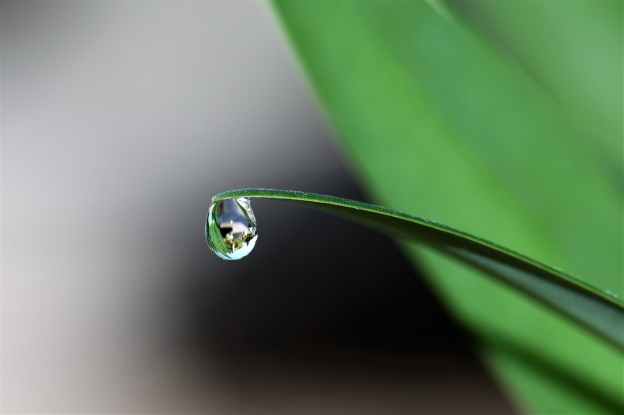
for the elegance of raindrops,
their tidy round wetness
highlighting beauty as they pause
on blades of grass, bluebird feathers,
rose petals, pine needles,
or dangle from the tiniest twig.
How do they hold on without fingers?

Hopeful Loyalty

God suggested that I love Her with loyalty, and it didn’t take long for fear of myself to surface. Offering my loyalty to God is essentially agreeing to fail. I will not be perfectly loyal. My loyalty will ebb and flow as it rides the waves of selfishness, embarrassment, and fear. Memories of rejection, and the possibility of future rejection, will poke holes in it. Rejection lends credence to my spectral but faithful companion, shame, who points a judging finger at me, and with her other hand beckons crowds to gawk at my failures, to know I am a fraud. Rejection turns her back on me, not to walk away, but to stay, as a reminder that a back is what I deserve. No face has time for me.

Perhaps loyalty to God involves agreeing there is a face with time for me. It involves looking at His face when I would rather serve time for my crime before I show my face.

Loyalty means I show up in our relationship even when my own divinity seems tarnished beyond the redemptive powers of a polishing cloth, or love.

Loyalty means I give up being the poster child for God so I can be the friend of God.

Loyalty means I will stick with the relationship when I fail, and when God appears to fail.

Loyalty means I will practice allowing myself to be seen, and I might stop to see God, stop when everyone else is running.

Yes, fear of loyalty is fear of myself. But it is fear of God, too. Fear that I will show up at our meeting place and She will not be there. Fear that He is easily distracted, easily frustrated. Fear of misunderstandings and loneliness. Fear that She is greedy and I will never be able to satisfy Her demands. Fear that He’ll like me better when I’m not the way I am right now.

Loyalty involves accepting these fears and allowing them to be in the story, to swirl around my divine center and say their piece. Loving God with loyalty is knowing that She is not the fears or the feelings, the knowing or the not-knowing, the intimacy or rejection. God is the floors and the walls and the roof. She is the foundation holding it all steady. She is the home where our story takes place. Her loyalty begets mine, because these walls see failure, ego, and embarrassment, and they remain standing. These walls also witness joy, inclusion, and peace. They are walls of hope.

And hope is fuel for the next moment of loyalty to God.

Tension

Tension

Blessed are You,
Lord our God,
King of the Universe,
for embracing tension:
snake in the garden,
Israelites in the Red Sea,
King in a feeding trough,
lose your life to save it.

Blessed are You
for a world redeemed
yet still in shambles,
where death produces life,
waiting accomplishes much,
silence speaks,
and Love dances with doubt.

Blessed are You,
Lord our God,
King of the Universe,
for showing us hope
and expectation
in the presence of oppression
and dysfunction;
for joy in darkness;
for comfort that holds
every broken piece
with tenderness.

Photo by Damon Hall: https://www.pexels.com/photo/aerial-photo-of-seashore-1319110/

Hope Full

I’m tired this morning. I want to crawl back in bed like my daughter and husband, who have colds. But I find myself feeling grateful for physical tiredness, preferring it to mental or emotional tiredness. Michael and I are enjoying a season of peace and joy in our marriage. I’m soaking up the wonder and belonging of friendship with other women. I’m underprepared for Christmas, yet taking it all in stride, doing one thing at a time. (Michael’s comment on this atypical flexibility: “You’re not the woman I married.”) For the first time in my life, I am spending more time present to what is in front of me, and less time captive to what is behind or beyond me.

Sometimes I feel guilty for enjoying my life (because others have less) or I worry the other shoe is about to drop (it has to someday). What a rash way to live, devaluing what is in front of me because I don’t know what is behind it, or because someone else doesn’t have it.

What a privilege to be wife to Michael and mom to Kayt and Kyli, to belong in a family where we enjoy each other. Books are stacked high on my nightstand, and firewood is stacked high for cozy evenings. I have every kind of music at my fingertips through our music subscriptions and home speakers. I have comfortable clothes and slippers, warm children’s cheeks to press against and a stubbly masculine face to kiss. I am rich, rich, rich.

I am surprised as I rise on this fountain of abundance, knowing that if I fall it will be so worth it. I am full, and this moment is here, not threatening to squeeze me empty, but to stuff me even fuller.

Life will empty me too, and that’s okay. Not being defined by how full or empty I am is precisely what allows me to enjoy fullness more than I ever have, and to know that being empty will also be acceptable—receivable. My unshakeable center is not good fortune, but my own worth. The lyrics of “Oh Holy Night” capture me.

O holy night, the stars are brightly shining,
It is the night of the dear Savior’s birth;
Long lay the world in sin and error pining,
‘Till He appeared and the soul felt its worth.
A thrill of hope the weary world rejoices,
For yonder breaks a new and glorious morn;
Fall on your knees, oh hear the angel voices!

The soul felt its worth. This hope that finds us in our weariness is a miracle—for all times, places, and people. I’m more willing than ever to fall on my knees and hear the angel voices singing—in my daughters’ eyes, the falling snow, hot water rinsing dirty dishes, warm clothes out of the dryer, text messages and songs, Christmas shopping and sleep. The angel voices are everywhere.

Untidy

We speak of heaven as a distant, perfect, glowing place. But if God feels all our feelings, then the pain of the world is present in heaven, just as a parent who is safe and free feels the suffering and bondage of their child a thousand miles away. There is anguish in heaven over every person who believes untruths about who they are. We all believe lies, for one reason or another: abandonment, abuse, rejection, holding secrets. If God’s Spirit is in us, and He is present to all the pain in the world, then there is sorrow in heaven.

But there is also hope in heaven—not for what will be, but what is done. Jesus experienced the identity-mangling human life (including being lied to by Satan, abused, and rejected) and followed it to its deadly end. In so doing, He gifted us a life without death. The hope in heaven is born of a freedom for God’s children that is already true. God feels our pain, but He also knows who we are. When we know whom we are and Whose we are, pain and sorrow find union with hope.

But what about everyone who doesn’t know? It’s easy to look at the world and believe God has let some fall by the wayside; He has done a lot, but He couldn’t save everyone; He has shone a light, but it is a pinprick in the darkness of starvation, war, neglect, and oppression.

In many ways I’d be more comfortable with a Savior who removes us from our circumstances instead of entering into them. How is He saving us by surrendering to the dark side and letting them kill Him? Where is the Savior who stops the rapes happening as I write this, the starvation toll steadily climbing? What good is a God who showed up long enough to be brutally murdered and then went back to heaven after He was resurrected? And if His angels are really here ministering to us, how do they choose whom to deliver and whom to walk by?

I don’t know what or where heaven is, or why earth is dark. I think it’s okay to wonder. Paradox and tension are permissible. Questions keep me curious. Doubts save me from Pharisee-like certainty. God is bigger, and I know this, even as I am asking if He is too small.

Jesus chose to climb into the filth with us, rather than stay safe on the mother ship and throw us a life ring. Jesus can embody love in an untidy world; perhaps I can too. My heart is untidy, my kitchen is untidy, my husband, my neighbor and my world are untidy. If Jesus is any indication, my job is not to tidy things up, but to bend down and love.

Hope: Past or Future?

I lost a dear friend six years ago. Not to death, but to misunderstanding. I agreed with someone on a group text, not knowing that person was at odds with another friend on the same group text. It’s amazing how fast something that seems strong can dissolve. My friend’s perception was that I had taken sides against her, and her response was immediate and caustic. I went into an emotional tailspin.

What to do? I wanted to acknowledge the pain my friend was feeling, but I didn’t know how. I bought a potted flower, wrote “I love you” in a card, and bravely went to her front door. Her husband received the gift, and I cried all the way home. Choosing vulnerability has a way of opening the floodgates sometimes.

I had told her once that I deeply valued our friendship and would fight for it should the need arise. I meant it, yet I didn’t know what it meant. What does it look like to stand beside someone when they hurt you? How do you disentangle a misunderstanding when both parties are licking their wounds and yelping if anyone gets close?

My friend didn’t respond to the flowers and card, and I felt lost. I was hurting from her bitter text message and mostly I just lurched along with my emotions. One day I was angry and self-righteous. The next I was practicing gratitude for the years of friendship we did have. Sometimes I made excuses for her hurtful words and ensuing silence. Other times I rehearsed spiteful responses. I thought I wanted reconciliation, but I suppose what I really wanted was for her to apologize, magically leave the pain in the past, and move on. Instead I was left in the discomfort of unresolved conflict, and silence.

A year or two after the one-text-detonates-a-friendship-bomb scenario, I decided that with my therapist’s support I would seek to repair the friendship. I emailed my friend and asked if we could talk about something that was weighing on me. She suggested I see a counselor for anything I needed to work through, and said she would be available in four months if I wanted to talk about only light-hearted things. I had to hand it to her for having crystal clear boundaries!

I wasn’t interested in talking only about rainbows and unicorns—as one of my friends put it—so that was the end of that. I told her I appreciated her honesty and moved on… sort of. I continued to feel uneasy whenever I thought about us. She would text me occasionally about something innocuous, like a local event or the weather. I felt anxious every time she contacted me, and uncomfortable developing what felt like a completely fake “friendly” relationship.

Over the years I have continued “trying” to forgive, and have continued feeling hurt. When someone says they “forgave,” sounding utterly confident in forgiveness as a past event, I am puzzled. What have they figured out that I haven’t? Why is this failed relationship still hanging over my head? Every now and then I pray about it and journal some new angle to the whole mess. But I still feel captive to it. Until I read these words in Anne Lamott’s book Traveling Mercies: “…forgiveness is giving up all hope of having had a different past.”

These words begin to reframe how I think about the loss of safety in friendship. Forgiveness is giving up all hope of having had a different past. I can stop rehearsing what I could have done differently, said better, or not said at all. I can stop grieving mismanaged words and allow them to be what they were. Emotional pain is an acceptable human experience. Being misunderstood is an acceptable human experience.

Here’s the thing: forgiveness is not giving up all hope of having a different future. I can sit here, between the past that simply is, and the future that simply will be, and fret about neither. I can release hope for a different past, giving myself and my friend permission to have an unresolved misunderstanding; and I can maintain hope for the future—not because I can force healing, but because when I open my hands to receive the past for what it was, I simultaneously give myself permission to receive the future for whatever it will be.

Is forgiveness in this relationship done and in the past? No. It could be one day, but at this moment it’s still a work in progress. Perfectionism begs to take center stage and rehearse the un-done “right” past and the unlikely “right” future. And I fight back, learning to forgive myself and others, and live openhanded. I begin to think about this new definition of forgiveness—giving up all hope of having had a different past—as it relates to parenting. When the kids hit and scream, ignore me, make messes, dawdle: in those moments could I release the hope of a different past few minutes? Could I forgive them and myself this way? Could I embrace both friendship and parenting as the freedom to love in this moment, giving up all hope of the last moment being different?

I realize that I have invested much in hoping for a different past, grieving my behavior and the behavior of others. But I am not my behavior. This could change the way I look at the last six years and the last six minutes. I am not what people say or think about me, and I am not what my behavior says about me. I don’t have to revisit the choices I already made today—like when to get up, how many shows the kids can watch, looking at my phone before prayer time—and wonder if they are “right.” Or wonder what they say about who I am. I can release those moments and face forward. My hope is not in a different past, but in living this moment open-handed, loved by a wild and lavish God. Living now is lighter.

That’s God

Last evening my sister, my husband, and I attended a screening of the documentary Since I Been Down, which follows the lives of young men and boys from the Hilltop neighborhood in Tacoma, Washington, to prison. For more info, visit https://www.sinceibeendown.com. There’s also an excellent synopsis of the storyline here: https://www.imdb.com/title/tt14519366/?ref_=fn_al_tt_1. What follows is my musing after seeing the film.

When someone who has a 777-year prison sentence lives with purpose and hope, that’s God.

When a mother, whose innocent son was shot and killed, forgives—that’s God.

When tattooed men in a prison classroom understand justice as listening to the person next to them, that’s God.

When men who are quarantined from society, for life, choose to give of themselves to the people around them, that’s God.

When men of different races, from opposing gangs, covered with tattoos that censure each other, sit at the same table and joke together, that’s God.

When an older gang member slips $5 to a middle school gang member because he knows that kids’ parents aren’t putting food on the table, that’s God.

When a man who has been shown that he is worth nothing, finds that he is worth something, that’s God.

When fear and self-protection give way to curiosity, and then to the intimacy of shared humanity, that’s God.

When a grandmother forgives the mom who beat her three-year-old granddaughter to death, that’s God.

When a woman stands with the oppressed, and she voices that we are all perpetrators and we are all victims, that’s God.

When a lifer feels free for the brief moments he stands in front of his peers in a prison classroom, that’s God.

God was the Life in this film, though His name was never mentioned.

For where there is courage, compassion, and creativity, that’s God.

Where there is forgiveness, faithfulness, and friendship, that’s God.

Where there is hope, humility, and humor, that’s God.

In the movie It’s a Wonderful Life, George Bailey visits the richest man in town—Mr. Potter—and begs for help when he is at the end of his rope. After grilling George about his assets, and finding the only monetary asset he has is a $500 life insurance policy, Mr. Potter tells him, “You’re worth more dead than alive.” George Bailey stumbles from Mr. Potter’s office and finds his way to a bridge, where he would have ended his life, were it not for a tattered angel who showed him his worth without reference to money.

Many men and women have been told by those of us with money that they are worth more dead than alive.

When beauty and passion arise in a place where men are left for dead, that’s God.

God, who was tried, tortured, and killed, emerged from a guarded tomb, alive. And He stands with those who are tried, sentenced, locked away, and guarded, and—through them—shows us what it looks like to be alive.

A Prayer

Lord, you are Creator. I am created. I am not worthy to be your child. But because you love me you chose to adopt me, at cost to yourself. I was behind enemy lines, and in your journey to rescue me, you perished. That was the one moment in history where hope seemed untenable. All we could see on the horizon was death. But to my astonishment, life returned to your body, and where you had passed through enemy fire there was now a path. The path was ablaze with life, in shuddering contrast to the darkness and death on either side, and you offered to walk across it with me. Others began to come, and as our numbers grew I noticed you could hold hands with not just two of us, but with all who came. Somehow each person who joined the walk had your hand to hold, and we passed from death to toward life, knowing we were walking on holy ground. And all the while as we walked I couldn’t stop thinking that you came to get me and you died on the way.

Photo by Gladson Xavier from Pexels

To My Fellow Recovering Perfectionists

I am a recovering perfectionist. Perfectionism sneaks up from behind, confronts me directly, whispers lies in my ear, preys on me when I don’t expect it, and offers to be my friend when I’m lonely. This voice coming from all directions is hard to silence. This suggestion that everything could be right and good, if only… (fill in the blank). It’s an addiction.

Into this mess comes God/Jesus/Spirit, with comfort and hope. And here I wonder if perhaps this longing for perfection is not entirely evil. God and His ways are perfect. Could the constant pulsing of my desire for perfection be a constant reminder that I desire God? And could I find contentment in letting Him be the perfect One?

I’m not alone and I don’t have to get everything right. I’m safe with You. Even when there’s pee on the bath mat an hour after I washed it, and I feel guilty for pushing my kids too hard, and hormones take my emotions on a ride, and I struggle to enjoy life. Even then.

I may be tired and emotional but I don’t have to blame. I don’t have to blame myself. I don’t have to blame others. You are my defender and deliverer in this battle of the mind.

Today is not about how good I am. But it might be about how good You are.

You don’t mind if I’m not productive this morning, or if I need to lean heavy on You.

There is peace in letting God be God, and letting me be human.

Today may I find contentment in being very small but having a very big and powerful Daddy.

There is perfection, but not in me or the world around me.

Our relationship will never be perfect on my side, but always perfect on Your side. I can’t trust myself in the way I can trust You. No matter how today goes, I can find joy in the fact that You are perfect. You are batting a thousand. You are getting everything right.

Here I am in my brokenness, and here You are in Your perfection, and here we commune in Your grace.