Tag Archives: life

Cat-Size Heart

I invented a new drink today—cofftea. I steeped a bag of decaf chai, added about a half inch of bottled Starbucks caramel macchiato coffee, and a splash of low-sugar, sweet-cream-flavored creamer. It was perfect. Tea, as Ted Lasso said, tastes like hot brown water. Coffee is too strong and too caffeinated. Cofftea is just right.

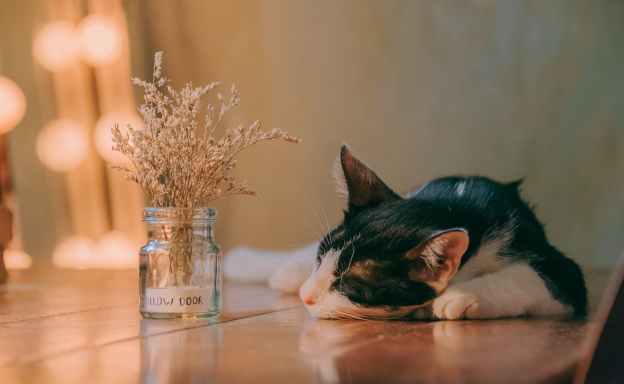
I’m writing in the living room recliner, cofftea beside me, snow outside, listening to the heater combat the 19-degree weather while frozen rain pelts the house’s metal siding. Michael comes downstairs for home-office pleasantries, and our cat Phiona follows. She tangles herself in a long piece of tinsel-like gold streamer. She chews it while twisting about on the floor, then gets up and saunters slowly to a different part of the room. The tinsel is wrapped around her tail and trails after her, setting off a round of wild contortions. She leaps to the couch, paws churning on the leather, propels herself across the side table and under a chair, where she pauses before rushing to the middle of the room for another tussle with the tinsel. Michael takes the gold-tinsel streamer and he and Phiona pad back upstairs where she will likely settle down on her pillow at the window beside his desk.

When I was a kid, we had a no-pets-in-the-house rule, observed without exception for dogs, and occasionally broken for a supervised half-can of cat food or bowl of warm milk on the kitchen floor for kitty. There was also an exception for summertime jars filled with tadpoles in mud-puddle water, and the hamster who occupied a small aquarium in my bedroom. Ladybug was her name, and I’m sorry to say I grew tired of her biting and pooping and messing up her aquarium, and felt relieved when she died.

As an adult, I’ve dabbled in fish and rodents, decided I don’t have patience for a dog (or children, but it’s too late to return them), and have settled on cats as my pet of choice. Last spring we lost our 18-year-old cat, Phred, to a traffic accident, leaving us with geriatric Phrank, who hasn’t yet used up his nine lives. A few months later, in midsummer, we adopted a kitten—a birthday gift for our daughter Kyli, who named her Phiona. She is unceasingly gentle and relationally devoted (as much as possible for a cat). She keeps her claws retracted during play, and if she bites, she gives an apologetic lick. She is very chatty and will often respond with trills and meows when spoken to. Our family of four is under the spell of her charming face, maniacal antics, and friendly conversations.

I don’t mean to be judgy, but I think people who choose not to have pets still think happiness is a clean house and no vet bills. Yesterday Phiona chewed the cord for Kyli’s headphones in three pieces—two large and a small. A couple weeks ago one of Phiona’s eyes clouded over and we took her to Animal Clinic of Walla Walla to get it checked out. (Nothing was wrong.) The bigger she gets the more she eats and the more she potties, which means increasing cat food and litter costs. She scratches the couch and the mattresses, makes herself at home on the dining table, and wakes me every night between midnight and 1am for no apparent reason.

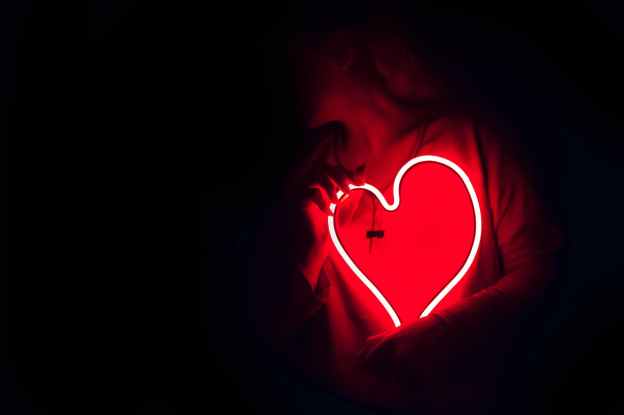
The petless people aren’t fools. I just think they have grinch-hearts that need to grow a few sizes (apologies to my petless parents and friends). I can only assume my own capacity to handle the inconvenience—and receive the love—of pets has room to grow, since I am not yet ready for the exuberance, mess, and affection of a dog. Maybe my heart is only mid-sized.

It’s no secret that introducing any living thing—plant or animal—into life carries a legal-pad list of complications. Plants need water and sun and god-knows-what-else, and they grow oddly out of proportion, drop leaves, forget to bloom, and either die under ideal conditions or thrive under heinous neglect. Yes, there are books on plant care, but there are also books on parenting, and we know how well that turns out. Oh, and my parents don’t go for indoor plants either—at least not living ones. I mean, who wants dirt in the house. Silk plants are a no-fuss, wash-in-the-bathtub-every-five-years type of happiness. Good luck finding any living foliage with that kind of low-maintenance guarantee.

Recently, I drove downtown via my usual route. Power poles and power lines compete with trees along the road. Why, I wondered, do we bring in a specialized truck to dig a hole and place a dead piece of wood in the ground to hold the lines, when strong, living trees are plentiful and perfectly located? Well, because trees are alive, and life is inconvenient. Trees grow taller and wider, swallow up wires, and attract wildlife. They’re unpredictable. And for power lines we need predictable.

Where am I on the continuum of power pole to dog-lover? How much life can I tolerate? I’d say a plant is less trouble than a cat, and a cat is less trouble than a spouse, and a spouse is (usually) less trouble than a child. Rules and stonewalling, tone of voice and expectations help corral my people into something I can perceive as manageable, but how much management is too much? How do I know when I’m opting for the less-alive version because it takes less maintenance, less money, less emotional involvement? As a wife, mother, and friend, do I optimize for dead traits, or living ones?

In 2023 I settled for a mid-size heart. Will 2024 be the year to grow another size? Don’t get any wild ideas—I’m not adopting a dog. But maybe I won’t assign chores when my kids get loud, and I’ll stop counting out the pieces of fruit each family member gets at breakfast. Maybe I’ll take bedtime noise and moldy lunchboxes in stride, and smile more when I get woken at night. I’m not going for superhuman here. Just a little more life, and a slightly bigger heart to pump blood so my extremities don’t go numb.

Pine Needles

Pine Needles

Blessed are You,
Lord our God,
King of the Universe,
for pine needles.
They begin soft, small,
bright green. New life
at the tips of aged branches,
pushing last year’s needles
from youth to middle age.

Blessed are You
for brown needles,
falling,
carpeting the forest floor,
muffling running hoofs,
holding moisture for growing things.

Indigenous peoples
form these thinnest of leaves
into baskets, mats, art.
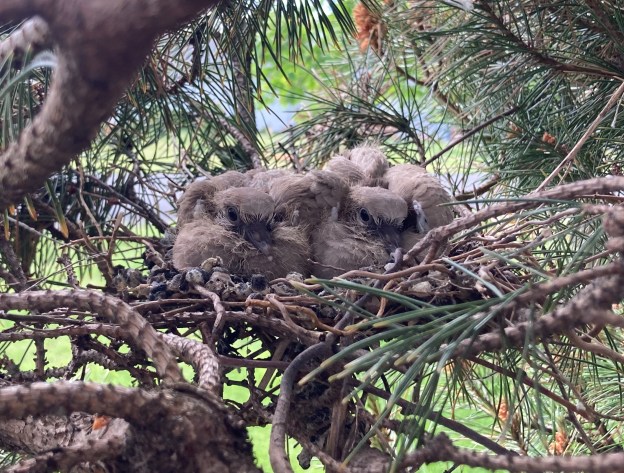
Mourning doves
pluck them from the ground
to balance them in bushes or trees,
making slipshod nests to hold eggs,
then baby birds—
dead needles witness new life.

Blessed are You,
Lord our God,
King of the Universe,
for the life of a tree needle,
and for its death.
It surrenders, not knowing
whether it will become dirt
on the forest floor
or something new
in the hands of a child
or the beak of a bird.

May I, too, trust death
to bring life,
and allow respect
to mingle with fear
of the unknown.

Brave Birds

Brave Birds

Blessed are You,
Lord our God,
King of the Universe,
for the dove nest
hidden in the evergreen
by our front door.
Two white eggs
in a thin, flat bed of pine needles.
That nest looked too fragile
to hold anything.

Babies hatched—tiny,
bulbous, ugly—
but I said they were cute
and I meant it.

Blessed are You
for faithful mother and father,
sitting and sitting and sitting,
then feeding and feeding and feeding.
Babies are motionless,
so much so I worry they are dead.
But they grow.
I see mama come;
babies eagerly reach into her beak,
swallowing regurgitated seeds.

Blessed are You,
Lord our God,
King of the Universe,
for this brave bird family,
risking life in a tenuous world.
In two months—egg to independence—
they do what took me 18 years.
Squabs are now so fat they fill the nest.
When my own two babies—ages 8 and 10—
begin summer vacation,
the doves will be sporting full feathers,
cooing loudly, and finding their own dinner.
Their bravery, my invitation to life.

When I think of baby birds, I think of robins: a sturdy, deep nest full of wide-open beaks, voraciously devouring worms and bugs. This spring I’ve learned that mourning doves are sloppy nest builders, and they feed their babies crop milk and partially digested seeds. There’s a nest right outside our front door, and this front-row seat has grown in me a new awareness of the hundreds of different birds and nests and babies, near and far, all busy participating in the circle of life this Spring.

Righteous Rest

Righteous Rest

Reflections – week 4

Welcome to the fourth week of reflections inspired by my current small groups. Together with some of my favorite women, I’m exploring these books: Father’s House, and The Whole Language. Gregory Boyle, author of The Whole Language, founded Homeboy Industries, the largest gang intervention and rehab program in the world. The Whole Language is his third book, and my favorite. Boyle frequently refers to “mysticism,” and if—like me—you’re not sure what that is, I invite you to just roll with it. Thank you for journeying with me.

Dead

I have a tenuous relationship with metaphors around the cross of Jesus—bridge, sacrifice, torn veil. I’m also unsure why we’re excited about a symbol of brutal, torturous death. We don’t wear miniature gold guillotines or electric chairs on delicate chains around our necks. But even if I can get past crucifixion pedantry, I still have questions. Did Jesus die as me or for me? Did He take punishment, or natural consequences, or did He simply enter into human suffering? Did He free all humanity, or only those who confess His name? Do I reap the reward of what He accomplished today, or only in the afterlife?

The authors of Father’s House believe that Jesus died as me, and while I don’t share their certainty, I love where they go from there: “The old you, the you that is still trying to measure up, died.”1 Now that is good news. Performing me is dead. Striving me is dead. Ashamed me is dead. The apostle Paul believed we were crucified with Christ, and exclaimed, “Could it be any clearer that our former identity is now and forever deprived of its power!”2 Having spent the last decade imprisoned by my own self, the possibility of leaving that behind is tremendously appealing.

The New Testament talks about the “old” and the “new” person. I like to think of them as a fake self and a real self. I was a facade. Now I am genuine. This moving into righteousness is not a move from bad to good, but a move from fragmented to whole, death to life. Behavior is always and only a side note. Good behavior centers me on shaky ground; bad behavior centers me on shaky ground. When I mess up, and when I have it all together, I need to be reminded that it’s not about behavior. “Righteous” is not a tally sheet, it’s a birth certificate.

Righteousness is Mysticism is Connectedness

Week #4 in Father’s House is all about righteousness, and the belief that “I am as righteous as Jesus Christ.”3 I want to short-circuit the voice in my heart and head that believes it’s all about behavior. I want to confuse, divert, or undermine my pesky inner parole officer. I have been imprisoned by my humanness, convinced I can only get out on good behavior, so each reminder in the Lesson Four video teaching is hope:

– Righteousness is not a verb, it’s a noun

– Righteousness is simply received, not achieved

– Righteousness is not dependent on my obedience

– Righteousness is about who I trust, not what I do

– Righteousness is received by faith, not by feeling

Righteousness ushers in a whole new way of seeing. Gregory Boyle writes, “The world will focus on outcomes or behavior or success. Mysticism glances just above what the world has in its sights. It puts judgment on check. It develops a warmth for everything that comes its way and rests in the center of it. When we are whole, that’s what we see in others.”4 Then we all warm up around the radiant heat of connectedness.

Boyle continues, “This culture of mystical tenderness holds every soul in high regard. …high performance is not the goal, but rather, a surrender to healing is. Then everyone finds this gentle road and practices, with each other, the pathway home.”5

Papa God is relentless in His passionate devotion to my wholeness and healing. When I soak in this—in the crazy truth that I am righteous—transformation is loosed, I live from a seat of rest, and I begin tapping into my heart’s desires instead of listening to my inner parole officer. I become confident in God’s presence to do the impossible with and through me, to invite everyone home.6

Righteous Conviction

In John 16:8, Jesus says the Spirit “will convict the world of sin, of righteousness, and of judgment” (NKJV). Day Two reading in Father’s House shocks me: “This [John 16:8] is the only time in the entire New Testament that there is mention of the Holy Spirit convicting of sin… and it is in response to those who do not believe in Him! As a believer, this says He wants to convict you of something completely different: your righteousness. Holy Spirit knows that reminding you of who you are, the righteousness of God in Christ, empowers you…”7

So the voice inside of me that points out how much I fall short is NOT the Holy Spirit, or any part of God? Why am I listening to it? Instead, I may hear a voice that convicts me of righteousness, a voice that notices all the beautiful things in me and says that is who I truly am. This voice looks for goodness and finds it. This voice spends its time bringing to light righteousness (not sin).

Embodied Healing

Another analogy I’m not fond of is the “robe of righteousness.” Robes are not attractive, they don’t keep my feet warm, and they are not all-day wear (except when it’s cold in the house and I wear my robe over my clothes). It’s quite possible royal robes were more common than bath robes in Jesus’ day, but having no experience with royal robes I’m not sure how to relate. Also, a robe can be taken on and off, and I’m not keen on transient righteousness. But, because I’m just a wee bit compelled to follow directions, I explored my thoughts about a robe of righteousness, as instructed in Father’s House. To my surprise, I found a thought that fits me.Skin is the largest organ of the human body. Clothing is intimate. It makes sense that God would draw near to me in a way that touches my skin. Touch keeps me present. It draws me out of my head and into my body, and God knows I need all the help I can get to stay present in my body.

Our bodies carry pain, and sometimes we divorce ourselves to get away from the pain. We do a thousand things to survive, many of which we don’t even realize we’re doing. It takes time to sort this out and let love into the picture. The folks Gregory Boyle connects with carry unimaginable amounts of pain and trauma. Extravagant tenderness creates space for that pain to be seen. “When you enter the program,” a homie said, “you need to bring your pain with you.”8 Connection and healing happen when we allow our wound to be seen, and then to be touched. Boyle suggests that “Healing takes a lifetime but surrender to this moment can carry you.”9 Love creates the space to surrender to this moment, to stay present to ourselves. “To be nurtured is to be reverent for what is happening to you.”10 Grace is reverence for pain.

Rest and Love

Striving to be “good” takes a boatload of energy. I remember when my oldest daughter began full-time schooling in first grade. She came home from school each day totally spent, and often spiraled into tantrums, tears, and yelling matches with me (I’m a superb yeller). She spent every ounce of her energy to behave well, learn well, and get along with others at school, and when she came home there was nothing left. I, too, have “melted down” over and over because I empty myself in my attempts to perform well, and to be “good.”

Papa God, Jesus, and Spirit are a whole new paradigm—a home where behavior is beside the point, a distraction from the real deal. Trying to become whole is a tiring pursuit. Knowing I’m already whole is energizing. Resting in righteousness creates a foundation for love. “The mystic’s quest is to be on the lookout for the hidden wholeness in everyone,”11 including me.

Endnotes:
1Father’s House, page 65
2Romans 6:6 TPT
3Father’s House, page 66
4The Whole Language, page 51
5The Whole Language, page 53
6Father’s House, Session Four video teaching and activation, pages 66-68
7Father’s House, page 71
8The Whole Language, page 54
9Father’s House, page 53
10Father’s House, page 50
11The Whole Language, page 55

Time Unmeasured

Time Unmeasured

Blessed are You,
Lord our God,
King of the Universe,
for the times when we forget time—
that endless measuring
of eggs boiling
and appointments approaching,
fevers and heartbeats,
days away from home.

Blessed are You
for sacred moments—
talking long into the night,
time interrupted by friendship;
for routines interrupted by joy,
or sorrow
or sudden awareness of a bird
on the windowsill.

Blessed are You
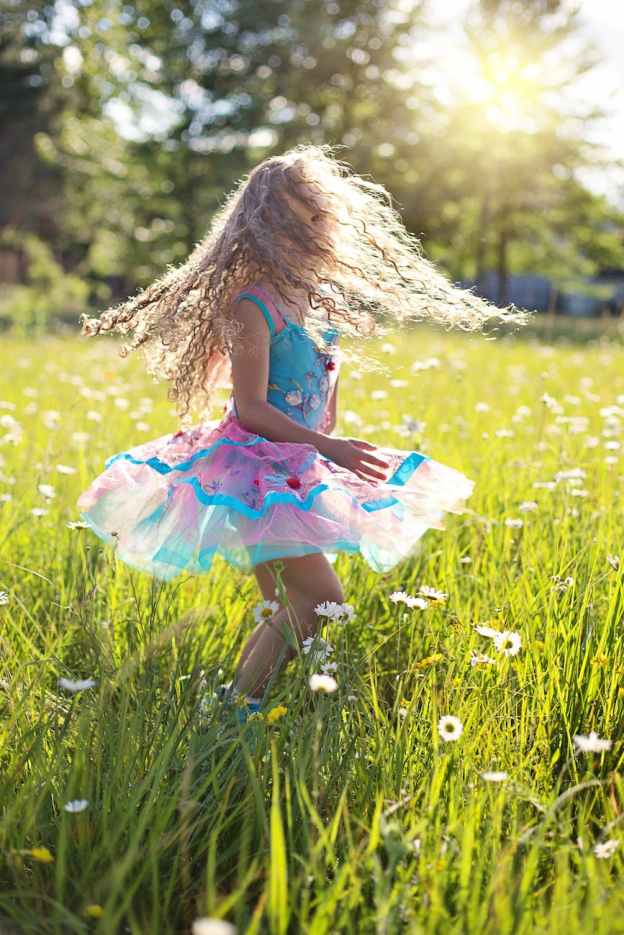
for the impromptu dance party
and the phone call
I didn’t have time for,
that slipped past
the measuring of time,
and became my favorite
moments of the day.

Blessed are You,
Lord our God,
King of the Universe,
for the smell of a freshly peeled orange,
giggles in the kids’ bedroom,
kisses,
which abruptly align me
with the moment I’m in—
evidence that being alive is timeless.

Risky, Radical, Radiant

“Quack if you’re buckled,” I said, as I neared the end of our driveway. Two “quacks” sounded from the back seat where my daughters situated their backpacks and coats, ready for another day at school. It was a Friday in early December, a half-day of school. As I glanced left before turning right out of our driveway, I noticed flashing lights on Wallula Road, a block and a half north of us. I wondered aloud if there was an accident.

Half an hour later, as I returned home from dropping the girls at school, I noticed there were still lights flashing down the street. In fact, there seemed to be emergency vehicles stretching along most of the block. Curious, I drove past my house and continued toward the flashing lights. When I got near, I saw a car bumper in the front lawn of the corner house. I pulled to the side of the road and stopped. Across the street was a power pole that had snapped like a toothpick. A giant “splinter” over ten feet tall stuck out to the side, and the base of the pole was a bouquet of splinters, looking like a bristly patch of tall grass. I could see one damaged vehicle—a red SUV. I didn’t want to impose too much so I turned around and drove home.

Four hours later, as the girls and I returned from school pick-up, we decided to drive down and see the accident, but found that all the roads had been blocked off a full block away from the intersection, where emergency lights still flashed. We parked at home and decided to walk down as a family, so the four of us set off on foot to investigate.

As we neared the flashing lights, we saw utility trucks at work, preparing to replace the broken power pole. One large truck held the broken pole with a giant gripper, presumably so its weight wasn’t continuing to hang on the wires. A man with a chain saw trimmed part of the broken pole, while other men in bucket trucks hovered nearby. The damaged red SUV was still there, and further down the road we saw what looked like a white car, totally mangled, loaded on a flatbed truck. A section of chain-link fence beyond the telephone pole was decimated. Emergency responders were still cleaning up pieces of wood, metal and glass from the collision. Our kids watched in wonder as two men moved a windshield—shattered, but still in tact.

Like us, other neighbors surveyed the scene and checked their phones for news articles. We discussed the likelihood of someone dying. My husband was optimistic about modern cars preserving life, while our older daughter concluded someone must have died. We watched for a while, then walked home for lunch.

At 2:41 that afternoon a friend texted: “Please pray for Rudy Scott and his family.” Attached was a link to a news article announcing that Martin Scott, age 73, had died at the scene of the crash that morning. Martin was a professor at Walla Walla University, where my husband and I both received our Bachelor’s degrees. Martin’s son, Rudy, hired my husband after college, giving him his first full time job as a software engineer. These were people we knew, who—although we weren’t close to them—were a strong thread in the weaving that is our community. To have that thread suddenly snapped sent a shock through the whole fabric, leaving it visibly weakened.

I thought of all the times I have made the same right-hand turn on Wallula that Martin was making when an oncoming car going way too fast crushed his vehicle and his life. I wonder what it is that compels me to take my life in my hands every day as I drive? What made it so important to humans to get places fast instead of walking, as our ancestors did for thousands of years? On the mornings following the accident, as I drive my kids to school, I look around at all the cars on the highway and think, Why do we do this?

Freshly aware of life’s fragility, I perused a CBS News article1 listing the 59 leading causes of death in the United States (data from the year 2017). Of the top twenty, 17 are health-related, including various cancers, heart disease, and Alzheimer’s. Only three are “accidental” in nature: number seven was accidental poisoning (which included drug overdoses), number 14 was motor vehicle accidents, and number 15 was accidental falls. As I continued down the list, cancer figured prominently among an ongoing list of other health issues, including pneumonia, birth defects, and obesity, to name a few. The outliers in the 21st-50th leading causes of death were suicide, homicide, and accidental suffocation.

It’s funny how my friends and I avoid risk by not swimming during thunderstorms, locking our doors, and killing spiders, but we keep driving, taking pharmaceutical drugs, and—apparently—falling. More often than we’d like to admit, we take sides around the unknowns of life, choosing opposite courses of action to avoid risk. Several of my friends signed up to volunteer for vaccination clinics so they would be among the first to receive the Covid vaccine, while an unvaccinated family member continued giving me newspaper clippings about the Covid vaccine causing death, even after I was vaccinated. As far as I could tell, both were going for the same outcome—avoiding risk.

I have always been low on the risk-taking scale. I rarely break rules, avoid risky social or health habits, and I married a stable and risk-averse man. Together we avoid risk by over-discussing every decision, keeping tight control on our time, money, and emotions—hoping somehow to keep our world spinning in the right direction. And we manage to keep enough control to sustain the illusion that we can avoid risk. Our carefulness seems to be working. This is a dangerous position to be in. Having not been overtaken by disease or loss of a loved one or financial hardship, we continue on our merry way, thinking we can manage our little world by making the “right” decisions.

I am sobered by Martin Scott’s death. My reading and wondering—rather than giving me comfort—resoundingly confirm that I have little control over when and how I die. Pain and suffering are also an unmapped course, appearing in my story at random, mostly unrelated to how I live my life. I realize that I spend time every day avoiding risk—from the amount of sleep I get and the things I eat, to how fast I drive and whether I remember my cell phone when I’m going out. But what am I gaining? How often do the benefits of risk-avoidance outweigh the heaviness of the fear and worry that drives so many of those behaviors?

I’m not the first to wonder if I’m avoiding living by trying to avoid dying. Risk-avoidance serves as a nice distraction from being gracious to myself, loving the person in front of me, petting the neighbor’s dog, or visiting a sick friend. When I leave a tool in the rain to rust, I am much more grieved by the ruin of the tool than by the cruel way in which I treat myself for this mistake. Somewhere inside I know that love is more important than stuff, but that synapse seems disconnected from the synapses making all my decisions. And what if love is even more important than life?

When Air Florida Flight 90 crashed into the Potomac River in January 1982, passenger Arland Williams—who was in the water with a handful of other initial survivors—handed the rescue line to others in the water rather than be rescued himself, and in the end disappeared under the water and lost his own life. Shortly after, Roger Roosenblatt wrote these words in an essay published in Time magazine: “So the man in the water had his own natural powers. He could not make ice storms, or freeze the water until it froze the blood. But he could hand life over to a stranger, and that is a power of nature too. The man in the water pitted himself against an implacable, impersonal enemy; he fought it with charity; and he held it to a standoff. He was the best we can do.”2

Would I, too, be willing to give up the fight against my own circumstances and take up the real fight for the life of the person next to me? Could I let go the distraction of apparent safety and hold fast to the only narrative that lasts—the living out of love and redemption?

As wild as this loving sounds, perhaps the hardest thing of all is not to love, but to be loved. I used to think being loved was easy. I like kind words and gifts and hugs—all the “love languages.” What’s not to love? But meeting a God who insists on love in the most unlikely spaces—adultery, death, arrogance—I am forced to consider receiving a love that leans into my most shameful moments, unforgivable selfishness, and spiteful diatribes. This is an uncomfortable love. It brings roses to war, and gives trophies to losers. It does things all wrong, and insists on being present at the most inconvenient times. I would like to receive Love in a pretty dress at the front door, but it insists that if we are going to be in relationship, the bathroom floor is also included (those nights you embrace the toilet bowl while the flu has it’s way with your digestive system). This Love is as fiercely present in a divorce courtroom as in a wedding ceremony, in an AIDS victim as in a marathon runner, and in a gun-holder as in the man bleeding on the ground.

This Love does not pick and choose, and I’m not at all sure I want to give it my allegiance. Yet I realize Love has wooed me sufficiently that I am already involved. I have moved into the risk zone. Several years ago I wrote, “How can I love my life and hate it at the same time?” I was miserable in my own self, yet it was obvious that I had an objectively good life—faithful husband, healthy children, flexible schedule, nice home, good friends, lots of family nearby. I guess that was the moment it became painfully clear that circumstances do not buy happiness. This realization was followed by a period of mourning, which included all the stages of grief: denial, anger, bargaining, depression, and acceptance. Those were some difficult times. A death necessary to precede new life.

I’m learning to love life—not just mine, but my husband’s life and my daughters’ lives, the life in trees and birds and rivers, the wonders entering my awareness all day through my five senses. I am daring to be alive, knowing it is more risky than being half dead, and choosing it just the same. As Superchick’s song, “Cross the Line,” says: “Play it safe, play by the rules / Or don’t play at all—what if you lose? / That’s not the secret, but I know what is: / Everybody dies but not everyone lives.”3

What does it look like for me to “cross the line” into living? It looks like sleeping in (that’s not productive!), drinking coffee (stimulants are bad for you!), writing when the sink is full of dishes (pleasure before work?!), accepting unexpected conversations, and weather, and sickness. It looks like spending a little more than I normally would, and planning Christmas without a spreadsheet. It looks like rearranging the living room furniture so it’s all facing the fireplace, and wrapping an unfinished Christmas gift without feeling guilty at all that the right time to finish it will be after Christmas. It looks like letting things fall in place every day, retiring the sledgehammer I previously employed to fit everything in the “right” place.

Another song from my high school years comes to mind, and I quietly sing: “Living might mean taking chances / But they’re worth taking. Loving might be a mistake / But it’s worth making … And if you get the choice / To sit it out or dance / I hope you dance.”4

God has been watching me sitting at the edge of the dance hall, hiding behind a glass of punch. He has sat beside me and listened to every excuse in the book: I’m tired. I’m afraid of what I’ll do or not do out there on the floor. When the song ends, I won’t know what to do next, and standing on the dance floor without a glass in my hands is too vulnerable. Everybody else knows what to do, and as long as I’m sitting here they may think I know what to do. But the moment I stand up, the thinking will be over, and the doing is too much. Being seen is terrifying.

God never stops sitting with me to dance, yet He never stops dancing to sit with me. He is always doing both. This gives me courage. I can move from sitting to dancing, without losing myself. Where He is, there I am also. This strengthens me to set my glass down and watch without hiding, to feel the desire to dance emerge from beneath the excuses.

Once I allow myself to want to dance, the want becomes an ache, a longing, until finally I stand, half-wistful, half-determined, and God and I take the floor together.

When the song ends, it is a little scary. I don’t know if anyone else could see God, so it may have looked like I was just dancing by myself. What do I do next?

My husband comes to me, takes my hand, and leads me further out on the dance floor. As the music carries us, I realize with astonishment that my husband is an excellent dancer. I am surprised. I didn’t know that either of us were dancers. But here I am, and I can dance too!

Now I’m getting excited. Maybe I could dance with my daughters, and with my friends. Maybe I’ll dance with beautiful skies and beautiful music, and with heartache and questions and strangers. Perhaps I was made to dance through life. Should the unthinkable happen, and the dance floor open over a swimming pool—as in the classic Christmas movie “It’s a Wonderful Life”—maybe I will keep dancing, wet and surprised and delightfully free.

Endnotes:
1 https://www.cbsnews.com/pictures/death-index-top-50-ways-americans-die/56/
2 https://en.wikipedia.org/wiki/Arland_D._Williams_Jr.
3 https://www.azlyrics.com/lyrics/superchick/crosstheline.html
4 https://www.youtube.com/watch?v=RV-Z1YwaOiw&ab_channel=LeeAnnWomackVEVO

On Being Dead (Part 3)

I remember a moment when I strongly identified with the phrase, “sinner saved by grace.” Yes, I thought, this is the most accurate description of me. I am a sinner. I am also saved by grace. Simultaneously.

Now I’m not so sure.

In the post-gospel New Testament (Acts-Revelation), the words “sinner” or “sinners” are found 13 times. The word “sin” appears 90 times. Perhaps sin is more of a condition than an identity. More of an act than an actuality.

Nearly half (43) of those 90 occurrences of the word “sin” are in Romans, and 39 are in chapters five through eight. The words “dead” or “death” occur 37 times in those same four chapters. Is there a correlation between sin and death? As I read and re-read, highlight, and scratch my head, I notice two distinct connections, one with which I am very familiar, and the other which I have noticed only recently.

The first connection I see between sin and death is that sin leads to, or results in, death. All four chapters (Romans 5-8) speak to this dynamic, including the well-known verse, “For the wages of sin is death …” (Romans 6:23a).

The second connection I notice between sin and death is that death disconnects a person from sin. Dying quite literally makes it impossible to sin. Chapter 6 most fully addresses this:

“How shall we who died to sin live any longer in it?” (v. 2)
“… our old man was crucified with Him, that the body of sin might be done away with …” (v. 6)
“For he who has died has been freed from sin.” (v. 7)
“For the death that He died, He died to sin once for all … Likewise you also, consider yourselves to be dead indeed to sin …” (v. 10, 11)
“For sin shall not have dominion over you …” (v. 14)
“And having been set free from sin, you became slaves of righteousness.” (v. 18)
“But now having been set free from sin …” (v. 22)

What I’m hearing is that Jesus died for me, but not in the traditional sense that he had to “pay.” Rather, death is the only way to conclude sin, and Jesus died to gift me that decisive, deadly conclusion.

I died. I can no longer sin. Therefore my identity is not “sinner.” I am not a sinner. I am dead to sin and free from sin. The only purpose of having an awareness of sin was that it showed me I was turning gray, showed me the morbid path I travelled. Jesus stepped in to my lifeless pallor and saw it through to its end, death. In receiving His death as a gift, I claim my identity of righteous daughter.

Paul suggests I am now a slave of righteousness. I’m not entirely comfortable with such strong language. But I am intrigued by the possibility that the power that sinful behavior previously had in my life has been replaced by the power righteousness now has in my life. I am free—to do what is loving and holy and true. I am free—to not do what is selfish and common, empty and false. I am empowered by the mind and spirit of Christ in me. Righteousness is my impulse, my instinct, the way I am compelled to act.

Christians have a great following with the “you are a sinner” gospel because it is true to human experience, to our flesh. But flesh is really just all the lies we have believed about who we are. Rather than giving life, this gospel affirms that I am what I feared—a broken person who can’t stop behaving hurtfully.

I never once wondered if I was going to heaven when I died, but I wondered every day what the hell was wrong with me. As a “sinner saved by grace,” heaven was the only good I could see coming out of the gospel. Not very many people—and especially not me—seemed truly alive.

Death was my promised certificate of achievement, the consummation of my life lived in lies. But God took my death certificate and tore it up. “Forget that,” He said, “in my house we deal in life. Here is your life certificate.” Beneath “Life Certificate,” written in a glowing script, the paper reads, This is to certify that Tobi Danielle Goff is 100% alive, and her state of being is characterized by abundance, growth, righteousness, and luminescence.

Paul says my lied-to mind was “enmity against God; for it [was] not subject to the law of God, nor indeed [could] be.” (Romans 8:7, emphasis added) I could not remain as I was and be fully alive. I was stuck, wondering how to die to self, not realizing it was already done. As Dan Mohler observed, “Preacher’ll say, ‘This’ll cost you everything.’ Everything you were never created to be! … Why not activate faith and let go of the lie and test out truth? You’ll be wondering why you didn’t die a long time ago, ‘cause living without that is like being dead already.”1

Paul wrote, “… if Christ is in you, the body is dead because of sin, but the Spirit is life because of righteousness.” (Romans 8:10) At this point I get a little confused. Am I dead or alive? Did I need to die, or was I already dead? Or was I already alive and I just didn’t know it? Take your pick. My process seems to have roughly happened this way: 1) I noticed my spirit and life were dead-ish, 2) I realized I was thinking and acting in ways that produce death, 3) I wanted to die but I didn’t know how, 4) God invited me into death and the quietness of the tomb with Him, 5) I realized I didn’t need to do or not do anything—life, death, and resurrection were already accomplished for me, 6) I agreed with God—and continue to agree, over and over— that I am His righteous daughter.

I’ve heard “dying to self” described as a continual, painful process. Maybe it is, but I find that wildly intimidating. Especially if I’m supposed to come up with the courage to die every day. But if, in Jesus, my death was already accomplished, then “dying daily” is simply agreeing with what is already done. It is acknowledgement of a new state of affairs. It is acceptance of a gift.

I often say, “God does the heavy lifting.” If I’m carrying a heavy load, chances are I misunderstand. If the burden isn’t light, chances are I’ve put on my work jeans and pulled the wheelbarrow out for some unnecessary hauling. As Matthew Pierce aptly noted, “Jesus and I can’t both pay the price for my mistakes.”2

“Living in the Spirit” is another way of saying I agree with God. When I agree with God my old view of me (broken, sinner) dies, and I get a new view: righteous daughter. I am meant to be alive in a greater sense than my physical aliveness, and there’s something about wholeness that’s invigorating. Something about finding my God-created spirit buried under lies, dusting it off, and rejoicing because I have found treasure. This treasure doesn’t sustain me from the outside, like money or sunshine or my favorite sweater; it sustains me from the inside, like being chosen first when I’m not the best, like holding hands, like finding out I belong.

Endnotes:
1 https://www.youtube.com/watch?v=ngfEH7_8FGY&ab_channel=CityCenterChurch
2 https://mpierce.substack.com/p/all-of-my-sins-are-because-of-elon

On Being Dead (Part 2)

June 20, 2022

God, I am so tired of thinking I am bigger than You, and my ability to mess things up is bigger than You. That is a lie and I am choking in its grip. Please show me how big You are. Please, uproot the lie. Show me how small I am. I cling to Your feet. I don’t need You to be what I think You are. Lord, please make me willing to be inhabited by Your Spirit and to release control. The story of Jacob’s wrestle in the night comes to mind. (see Genesis 32:24-30)

I’m asking for a miracle. I’m asking because I know that thinking I’m bigger than You is a fabrication. A sleight of hand. Please take me out from under the spell. Show me how the trick works so that I am no longer captured by it. Take me back to the garden, to the lie, and reverse the damage. You have crushed the serpent’s head, and along with it crushed the lie that You are holding out on me; that You have limited me and excluded me from Your fullness. “The kingdom of heaven is at hand,” You say.

I’m so sorry that we wanted “to know good and evil.” I am drawn to that tree, that struggle. You remind me of another tree, another struggle, “On a hill far away.” Lord, I receive Your death in me. I receive the silence of the tomb. It’s a long silence, really. The silence of a world in awe at what they have seen. A silence void of struggle, void of taunting, certainly void of trying. It is the moment of silence after a stunning victory before the crowd comes to life and erupts with noise and elation.

The tomb is a quiet place, a place of mystery, a place we respectfully allow darkness and silence. A place where stillness is not a practice, but the truest reality. I lie dead. I have gone from confused delirium to perfect, unruffled peace. Every muscle that was trying so hard to hold me together has now relaxed. Resurrection is not on my mind, because nothing is on my mind. That’s the beauty of being dead. The rushing is suddenly and decisively irrelevant. Not even snoring disturbs this silence. A dead person doesn’t sin, doesn’t worry, doesn’t know anything.

Lord here I am, passed out in the tomb with You, knowing nothing. I can do nothing. My senses have stopped signaling my brain. There is no input, no output. Only silence and stillness. Even breathing has ceased. I am in a holy place of waiting, a sleep of death that will feel the same whether it is one minute or one hundred years. This is the only way to wait without fretting—in death. Death is also where decay occurs—the return of life to the soil, from which new life will arise. Dust I am. This is how I know silence. Death silences the endless chatter, and it is God’s gift to me, though my heart still beats.

“I am crucified with Christ; therefore I no longer live.” (Galatians 2:20) It seems I have tried to be born again without dying. I have wanted to skip over death to resurrection, not realizing how I long for death. Quiet. No expectations. I might have known that in God’s hands even death is a gift. As I permit myself to engage with death, I find treasure: grace, humor, peace.

Nobody expects anything of a dead person. I am gloriously, peacefully dead. Dead people aren’t really good at anything, except maybe lying still. I suppose if their eyelids were open they could win any staring contest.

Also, the band name “Grateful Dead” has taken on a whole new meaning.

The nice thing about being the dead person is that there is no sense of loss. I cannot grieve, because I cannot do anything. I need not try to be still, nor try to move. I need not expect perfection, nor hope for predictability. I cannot hold onto life. It is behind me and beyond me and it animates me only when I am not in this passageway of death.

Trust. Humility. These things I have longed for are here in the tomb.

Perhaps Jesus called death “sleep” because He knew it was the only way for humans to Rest In Peace. Death is not a fitful slumber. It is the child who has fallen asleep in his mother’s arms in a waiting room, every muscle relaxed, dead to the passage of time and to the noise of a coffee machine and crying children and ringing phones.

Like Barbara Brown Tayler, I love the question, “What is saving you right now?” Death is saving me right now. Today I am in the grave. Neither crucifixion nor resurrection are on my mind. Maybe “grave circumstances” aren’t so bad. “Grave” and “grace” are closer than I thought. My tired heart has stopped beating and it lies still in the mystery of death.

Only Jesus. Always Jesus. Beautifully Jesus. Safely Jesus. I will Rest In Peace with You, the only one who can lay down Your life and take it up again.

On Being Dead (Part 1)

I’ve noticed there are people who catch on to what Jesus is up to more quickly and completely than me. They get the death-to-life thing, the rebirth, the salvation. They speak with confidence about their wholeness and joy, about Jesus and His ways, about life. Meanwhile, I mainly have a lot of questions, I don’t know what to tell my kids about God, and I’m still wondering what in heaven’s name brings about transformation and the fruit of the Spirit in a person’s life.

Over the last year, death has been a recurring theme in my journal. Not the stop-breathing kind of death, but the spiritual one. An awful lot of verses in the New Testament use death as an analogy for … well, I’m not sure what. Something spiritual. In the book of James, which I zealously underlined the entirety of as a teen, there’s this sin-leads-to-death verse: “But each one is tempted when he is drawn away by his own desires and enticed. Then, when desire has conceived, it gives birth to sin; and sin, when it is full-grown, brings forth death.” (James 1:14, 15) As I read this poetic life-cycle illustration—conception, birth, growth, death—I wondered, Do I have desires that “draw me away”? Two came to mind: my desire to appear without fault to everyone (including, and maybe especially, myself); and my desire for life to be happy (or at least predictable). Have these desires conceived and given birth to sin? Heck, it sure feels like giving birth. Conceiving is the easy part. Giving birth is brutal. But, once conception happens, birth is inevitable.

I have enjoyed too much time in bed with a lot of lies, allowing my desire to be without fault to lead me to conceive and birth a child who reminds me every day of my indiscretion. This child is Judgement, Idolatry, Pride (defensiveness), Angry Outbursts at those who inconvenience me, and, well … a bit of Death.

Late last summer I noticed I had a pallor of death. I was seduced by my desires, blind to the fact they fed the lies I tried to stamp out. I made an effort to imprison the lie that my (and everyone’s) value is in productivity and performance, all the while tossing bread crusts into the prison cell. I fought with the sin-child I had conceived—who was growing rapidly—while still getting back in bed with desire.

The thing about dying is that it’s painful and we’d rather not look directly into it. It’s hard to watch death claim anything or anyone—especially when you have carried that thing in your very center for nine months and given birth to it. But when death does take place, there is a sense of finality. When I realize my desires are dead and I have been in bed with a zombie, when I stop tossing bread crusts to the skeletons in the prison cell, then Life leaps to my side almost as if it had been waiting. Words like “spring” and “abundance” move from Biblical vocabulary into experience.

“There is therefore now no condemnation to those who are in Christ Jesus, who do not walk according to the flesh, but according to the Spirit. For the law of the Spirit of life in Christ Jesus has made me free from the law of sin and death.” Romans 8:1-2

My desire to be without fault has held me in constant condemnation. I have been in bondage to the “law of sin and death,” seeing myself as one giant aberration from righteousness. I have been living always in weakness, meditating continually on all the ways I fall short. I have made life-giving Jesus a sick joke. Hey, you know why Jesus died? Uh, for my sins? No, because God couldn’t legally kill you, so He killed His own Son. That is the voice of condemnation, of damning. Constant meditation on how I fall short siphons Life out of me, leaving me empty and dry. Jesus invites me to Love—a life unadulterated by the habit of constantly looking behind me, keeping tabs on my “progress” and the impression I leave behind.

Living with my mind preoccupied by circumstances—my physical and emotional experience (the desire for life to be smooth), worries about all my interactions with people (the desire to be without fault), and trying to get things right and be in control—is death. And when I say that, I don’t feel I have somehow been naughty for choosing death, but more a sense of relief at having a proper diagnosis. I have felt dead, going through days shackled and gray, a slave to my desires and impulses. I want to be alive.

One evening my husband, Michael, and I read together from Dr. Tim Kimmel’s book, Grace Based Parenting (pro tip: don’t read parenting books). The chapter was about the importance of secure love for children, and what secure love looks like. The next morning I wrote in my journal, “Not only am I a lot dead, I am also blind. I realize I let my kids get away with selfishness and meanness, but come down hard on them for normal kid (human) stuff like making messes or forgetting, because I am blind. If I saw clearly I would act differently.”

Every autumn we have an influx of flies in the house. They start out perky but gradually slow down until you can easily pick them up with your fingers. (I don’t recommend this. I picked one up thinking it was dead, and was scared half to death when it started buzzing in my fingers.) Often I’ll see flies lying upside down, randomly twitching. One morning as I sat praying, I noticed a fly on the windowsill, lying on its back, letting out a spastic buzzing every once in a while. And I thought, My life has been like this fly on the windowsill, alive … but not really. There is no shame in this; instead there is understanding, because that is exactly how I have felt. And just as I have authentically experienced being half-dead, I may authentically experience being fully alive. I was made for this.

“For those who live according to the flesh set their minds on the things of the flesh, but those who live according to the Spirit, the things of the Spirit. For to be fleshly minded is death, but to be spiritually minded is life und peace.” (Romans 8:5-6)

Alive

Blessed are You, Lord our God, King of the Universe, for breath,
the rise and fall of my chest,
bringing life to my body one moment at a time.
I cannot store up breath,
and breathing out is equally as important as breathing in.

Blessed are You for this gentle infusion of life,
without which I would die,
and yet of which I am hardly aware.
You would think, knowing if I stop breathing I’ll die, that I would obsess over it.
But I trust my mind and body to keep the rise and fall of my chest
and the beat of my heart
and to let me know if anything goes awry.

Perhaps Your Spirit in me is this way.
I don’t need to always be aware of it for it to be always there,
tending Life inside me,
centering me like a deep breath,
spreading life to the very edges of my body
every moment,
gently,
and so faithful that I need not give it a second thought,
except to pause in gratitude that I am inhabited by Life
and this is the Lord’s doing.

Blessed are You, Lord our God, King of the Universe,
for the reminder that I can work hard to hold on tight,
or I can remember that You are inhabiting me,
and rest.