Author Archives: Tobi Goff

Unknown's avatar

About Tobi Goff

I am a writer, impertinent Christian, and recovering perfectionist. I (mostly) enjoy life in the Pacific Northwest with my husband and two daughters. Sleep is my drug of choice, and I like books, hugs, and piña colada milkshakes.

Unsure

You cannot have a drivers license anymore.
I want to get a five-acre parcel—
I can’t just sit down and get inspired.
They can change on the fly,
It’s just more condensed.
His heart was already going another direction,
Texting me at 5am.
I slept all day yesterday.
I’ll come find you in your office after lunch.
I’m gonna have to get used to him first,
Which is really sad.
I’m good on the prose.

The Red Circle

A perfect dark-red, circular spot on the beige carpet. I reached down and touched it, first with a finger and then my thumb, pressing lightly. Sure enough, something wet and red thinly coated my fingers. It had to be blood. But where did it come from?

“There’s blood on the carpet,” I announced to my mother. We had just spent 40 minutes getting her from the dining table to the couch—a distance of about 12 feet. She was certain I couldn’t help her stand up, that my dad had to be there for her to move. My parents recently relocated, and dad was at the old house cleaning out the garage. They would sign closing documents that afternoon for the sale of the house. I came to be with my mother, whose mobility and cognitive ability had declined rapidly over the past few months.

Back at the dining table, I’d held out my arms to help her stand, but she made no attempt to respond. I moved the walker in front of her and held it steady so she could pull herself up, but still she didn’t move. Then she wanted to get down to the floor and crawl. She instructed me to bring some towels to soften the floor. I spread a thick blanket, doubled over, between her dining chair and the edge of the living room carpet. She leaned forward and tried to rest a hand on the floor, but lost her nerve. At her insistence, we called my dad. He said yes, I could move her. Again, I held out my arms—no response. I brought the walker over—she tried holding it in different ways but never got to the standing-up part. She tried again to get to the floor with similar results—her hesitant hand reached low.

I kept offering to help her stand, as that seemed to me the best option, but she said she didn’t want to hurt me. She is several inches taller than me, but only a few pounds heavier. I had helped her stand and walk many times before. Perhaps her reticence resulted from a recent fall, although I wasn’t there at the time of her fall. She asked who else could help her and named an acquaintance who had visited a couple days before. When she determined that I was, indeed, the only available person to move her, she asked for my dad again and cried. An hour earlier she had announced, “This afternoon I’m scheduled to have a nervous breakdown.” I was beginning to agree.

My mother insisted that she could not stand up with her feet on the smooth floor of the dining room, but only on the carpet. In response, I grabbed the front legs of the wooden chair she occupied and pulled it to the edge of the carpet. Now we had less than six feet to go. I held out my arms again, instructing her to hold onto my biceps as I held her elbows. I planted my knees against her right leg and pulled her up—sort of. She doesn’t straighten up all the way when she stands. I put my arm around her back to keep her from sinking back down, and pulled the walker in front of her.

A one-inch scooch, a six-inch step, a rapid little shuffle. She leaned forward on her toes, her center of gravity moving precariously in front of her as her heels came off the floor. I lifted her foot so she could move it forward. Then again the other foot. Then a step on her own. Then a one-inch scooch. Somehow she got her back turned to the couch and sank down onto the cushions. However, she wanted to lie, and would need to be closer to one end of the couch to make room for her legs to stretch out. Rather than attempt convincing her to stand again, I grabbed her blue jeans on each side of her hips and heaved her slowly across the couch. I lifted her feet onto the couch, then blue-jean-heaved her a little more until her hips rested perpendicular to the back of the couch. A large array of pillows served as a back rest. I spread a fluffy white blanket over her.

“I haven’t brushed my teeth in three days.” She seemed worried about looking well-kept for the house signing, although I had no idea how long it really had been since she last brushed. I poked around in the bathroom drawers and cupboards until I found floss, toothpaste, and toothbrush. She couldn’t floss. I tore off a piece of waxed floss, wound the ends around my fingers, and started with the teeth that were easiest to reach. After flossing most of her teeth, I handed her the toothbrush, which she had instructed me to wet, but not apply toothpaste. She proceeded with brushing on her own. When she finished, she asked me to take a picture of her shiny clean smile and text it to my dad.

It was at this point I noticed the red spot on the carpet. What could have produced a clean drop of blood? My mother suggested I check her knee, which I did—but given that she had jeans on, it couldn’t have dripped blood unless she had a gushing wound that soaked her pants in blood. We checked her elbows too—had she bumped into something and not realized it? No, no signs of blood on my mother. “I’m on my period,” I confessed, “but I don’t understand how I could have dripped blood on the floor like that.” As we discussed the possibilities, she concluded that my menstrual bleeding was the mostly likely culprit.

I wetted a paper towel in the kitchen and went to work on the red spot. Much to my relief, it came out of the carpet with minimal scrubbing. I had no interest in staining carpet at my parents’ house—the very same parents who kept cream-colored carpet in near-perfect condition for 20 years while farming and raising two kids. I knew better than to soil it.

As I turned, my mother noticed blood on my shorts. Another piece of the puzzle. I hastened to the restroom and found that indeed there was blood on my shorts. They were loose, pink-purple shorts made of sweat-pant material. As I cleaned them the best I could without actually taking them off and washing them, I realized what must have happened. When I sat on the edge of the couch to floss my mom’s teeth, I must have leaned into such a position that my underwear and pad weren’t fully in place. Hence, a few drops of blood had fallen onto my shorts, and from there one of them dripped to the carpet.

I have this idea that at 40 years of age, period “accidents” should be a thing of the past. It’s not like I’m new at this bleeding-out-of-my-vagina thing. But there I was, cleaning blood from various surfaces. My mother was unconcerned, a conversational ally as we pieced together what had happened. How strange that in the afternoon’s events, simply standing up would be infinitely more stressful than blood on the carpet.

Oddly, when it was all over, I primarily felt gratitude. It’s awkward to be a fully functional person around a not-fully-functional person. It feels weird that I can floss my teeth and walk where I want to, and my mother can’t. I’m never quite certain what to offer in terms of help, and since her mobility and cognitive ability are a little different each time I visit—sometimes more and sometimes less—it’s a moment-by-moment game. Not the kind of game I’m good at.

This blood on the floor was a gift. An opportunity for me to be vulnerable, to need help solving a problem, to have an awkward dysfunction of sorts. It allowed our roles to feel just a bit more “normal” for a few minutes—she the mother, I the child. I miss that.

Weird but Not Worried

Weird but Not Worried

Blessed are You
Lord Jesus,
King of the Universe,
for sending Your disciples to preach—
even Judas—
before they grasped
what You were all about.

Blessed are You
for letting thousands of people
get hungry on a hillside,
for letting demons
run a fortune of bacon
over a cliff to drown,
for letting a woman use her hair
as a washcloth, on You.

Blessed are You
Lord Jesus,
King of the Universe,
for never being much of one to worry
about Your next meal
or Your fickle followers
or that you sounded crazy
or preached too long.
You saw the person in front of You
like they’d never been seen before
and didn’t worry about the rest.

A Mother’s Mundane Conundrum

“You’re just making me do it!” my daughter says with a surprising amount of conviction. “You just decided I have to do it.” She’s not wrong. Nothing will happen if she doesn’t clean her room. No one cares about it except me. I feel called out as an unnecessarily controlling parent, just as I do each time one of my daughters confronts me with these sentiments.

It seems I have arbitrarily decided most of the content of their lives. I require showers, food other than fruit and juice, feeding pets, getting out of the house for school—with clothes, lunch, piano books, shoes appropriate for PE, and a sweater. Would anything dire happen if all those things were left undone? No. One or both daughters could go to school late, in PJ’s, without a lunch, wearing the wrong shoes, and sweaterless. In fact, she could probably do that for a week before anything interesting or significant took place in response to her choices.

I dislike this feeling that I am the only reason she does most of what she does. And I don’t like it when she confronts me about it. I don’t know what to say. I agree with her. Most expectations really are arbitrary—for adults as well as kids.

There are plenty of things I could say that I don’t want to say. I could say, “Someday you’ll have a job,” but that has no meaning whatsoever to a nine-year-old. Or, “You have to learn to do things now so I’m not still reminding you when you’re thirty,” but is there any real danger of that? Or, “I’ll be embarrassed if you go to school in pajamas,” but do I really want to teach my kids to make decisions based on my embarrassment? Or, “Nasty things will start growing in your room if you don’t clean it,” —okay, maybe a month from now, so is that really motivation to tidy it up today? Or, “I’m your mom and I get to decide what you need,” except that I don’t think anyone should decide another person’s needs for them. You get the idea.

So here I am with nothing to say, a truthful human being looking me in the face, questioning my demands—and why are they demands? Perhaps because requests and suggestions haven’t worked, or because my emotions are now fueling this high-octane—but nevertheless mundane—occurance.

“You’re right,” I say. “I can’t actually make your body and your arms and legs do anything. But I can remind you there will be no screen time until chores are done. And if you don’t do chores today I might give you an extra cleaning job tomorrow.” This comes out sounding a tad desperate, and something like a threat—not exactly what I was going for. But you do what you have to do.

Motherhood seems to be a mix of desperation and compassion, empathy and threats, logic and insanity. Is that what childhood feels like too?

She whimpers. She complains it’s not fair. But eventually she trudges to her room and starts picking up clothes off the floor. My heart rate returns to normal as I breathe a sigh of relief. With any luck, I’ll have at least five minutes before this conversation repeats itself with my other daughter. Meanwhile, I whimper and complain internally as I return to a pyramid of dirty dishes. I guess we’re not wholly different.

Damn Hospital Corridors and Mothers

I’m dabbling in fiction again, which of course is influenced by my actual life, wherein my mother’s health is failing. This piece came from a writing prompt to begin with, “The hospital corridor was dimly lit…”

The hospital corridor was dimly lit, but only because the fluorescent lights on one side of the ceiling emitted partial light, accompanied by a buzzing sound. I wished someone would turn the lights off. One o’clock a.m. was never meant to be lit at all. Sinking to the floor, I checked the exact time on my watch, 1:17.

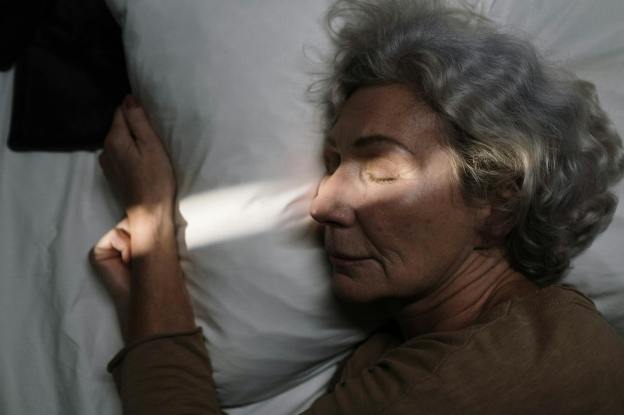
My mother slept. She’d been sleeping much of the day and night for some five years. Sleeping suited her phlegmatic personality and neurodegenerative disease. Sleeping was familiar.

But tonight, sleep could wander into death at any moment. And so we kept vigil—my brother and I—taking turns at her bedside, watching the face of each nurse who came in to check her vital signs. Did their expression show any hint of surprise or concern? Anything to indicate an imminent ending?

I’d never been this close to death before, and my feelings warred with my philosophies. It’s one thing to say death is natural, a passage as much as an ending, a new experience just like every other milestone in life. But there’s something heavy about a last milestone.

As I stared at the wall, unseeing, questions caught traction in my mind. This grief, is it about loss of the mother I have, or loss of the mother I wish I had? Or is it fear of what will happen to my brother and me when Mom isn’t here? Or am I feeling anger that I have to be here, to witness this, to hold it and see it and feel it and live it—that this dying person not only consumes my time when I’m at the hospital, but consumes my emotions and thoughts when I’m driving, eating, washing dishes? Who gave her permission to be woven into me in this way?

And what does the unweaving look like? Is it a severing, like a guillotine? Is it a careful unstitching, or an impassioned disassembly, tossing parts and pieces here and there? Or will my dead mother remain inside me, and will I like her better that way? What memories will make me smile? How much time will it take for me to internalize a narrative that holds us both gently?—a narrative that’s peaceful, not buzzing and half-lit like this damn hallway.

Forty and (In)secure

Twenty One Pilots’s song, “Stressed Out,” laments the insecurities of adulthood, noting that fear is still present, and we still care what people think. I turned 40 this month, and yes, I’m still insecure. It’s different than high school. And the same. I want you to like me. I want to be well-dressed and well-spoken, and most importantly, perceived well.

I’m a grown-up—have been for quite some time—and I can tell you what maturity doesn’t mean. Being grown up doesn’t involve control and confidence; it doesn’t mean growing out of awkward traits and social habits; it doesn’t include a clean house and well-kept yard, or a passel of perfect grown-up girlfriends.

I’m less sure what being a grownup does mean. But I’ve noticed I’m softer than I used to be—more flexible, a teensy bit less judgmental, and I know more about cooking and cleaning than I did 20 years ago.

I know less about God, love, and relationships. It’s been said that the more you know, the more you know you don’t know anything. I can confirm this.

There’s a real sense of loss, not landing in adulthood firmly in control and certainty, an expert in the kitchen, the workplace, the bedroom. I get tired of being wrong, confused, ineffective. If knowledge comes from experience, I am an expert in exhaustion, stress, and leaving my cell phone in obscure places.

I know I’m sounding a tad morose. But there is a happy ending. There’s something left after losing control, and the appearance of control, and pretending to have control. What’s left is eyes to see a different life entirely—a life of watching the cat lick his fur, thinking of my three favorite moments from the day just before I fall asleep, fighting less with my kids and husband, knowing there will not be a seismic event when my to-do list is left undone.

And I know myself better. I know I love writing and small groups. I know I like a clean house, but not enough to put in the work. I know I’m scared of the interminable wants and needs of my children. Being quiet and alone—especially in nature—returns me to myself. Banana splits and blended mochas almost always sound good. I try the hardest to be self-sufficient when I’m at my weakest. Animals make me happy. Getting called “a writer” makes me stand a little taller. Synchronicity feels like opening a birthday present.

My birthday, which this year fell on the first Sunday in May, played out like a dream Mother’s Day. My husband cleaned the kitchen, top to bottom. He and the kids cooked breakfast and dinner, and took me out for lunch. I sorted through a large tote, five bags, and an unconstrained pile of children’s clothing I hauled up from the basement, and found most of it could be passed on. I went to the park and watched goslings and ducklings, heard the smack-smack of their webbed feet in shallow water, and marveled at their fluffy bodies. I took a nap. With my parents and sister, I ate fresh-made blackberry pie with “40” cut into the top crust. Michael gave me a gift certificate to have the house professionally cleaned (when the dust settles from our six-month construction project). Like I said, a dream day.

It’s worth noting I couldn’t have planned such a day. All was gift—the generosity of my husband, my children, my sister. Many times I have planned a birthday party for myself, with friends and presents and homemade cake. But for forty, this un-forced birthday felt fitting. The people who love me gave what they wanted to give. And I received. I basked. I rested. And yes, I sorted children’s clothing—one of those things I never can find time to do.

Maybe I’m ready to accept this life I have. Whether I die tomorrow or in another 40 years, I will die complicated—a mix of peace and insecurity, frustration and gratitude, mundane and miraculous. And not at all grown up.

Don’t Touch

It’s wet paint
It’s an artifact at the science and history museum
It’s frosted birthday cupcakes

A piece of candy on the floor
A dead mouse
A hot pan

Rows of glass on the dishware shelf at Target
Electric fence
Sand art

Don’t touch that!

It’s a fight about money
It’s a friend’s anger at God
It’s a memory that twists my stomach

A mother’s embarrassment
A father’s shame
A hospital bill

God as feminine
Donald Trump
LGBTQIA+

Don’t touch that!

It’s a papery hornet nest
It’s a snake sunning on a rock
It’s a spiderweb

A cup overflowing
A polished concert grand piano
A fragile seedling

Perfect place setting, with folded-napkin swan
“Emergency Call” button in the elevator
Picnic leftover, buzzing flies

Don’t touch that!

It’s weight gain
It’s addiction
It’s a black eye

A cousin in jail
A protruding (pregnant?) belly
A brother-in-law in rehab, again

Extramarital affair
Ex-girlfriend
Was grandma “saved” or did she die an atheist?

Don’t touch.

Before the Meeting: A Story About Inner Voices

Once upon a time, in the midst of a large wood, there stood a smallish cluster of trees hiding a secret meeting place. From the outside, these trees appeared just as the rest of the forest. But underneath the canopy of intertwined branches that formed a roof over the meeting place, a mild summer climate prevailed. The temperature was always pleasantly warm, the leaves bright and shiny, the floor spongy and warm, but never damp. The light inside felt like sunlight, although it did not come from the sun and never changed with the seasons.

Near the center of this cozy clearing stood a tremendously broad tree stump, weathered and gray. There was enough room around the stump for seven or eight chairs, but the only seat was a large stone with a comfortable-looking, moss-lined depression, where Found Girl always sat. Although no one was ever quite certain if Found Girl really did sit, because it looked like she flowed, as if someone had plucked up a small section of a stream and fashioned it into something like a person. Her appendages were more suggestion than reality, and you could almost hear the gurgle of a creek when you came near. Despite her ambiguity of form, she had a most attractive face, with eyes that sparkled like sun glinting off stones in a mountain stream, and a mouth which gave order to her face and conveyed her gentle nature. The others came and went, but Found Girl always stayed on her stone chair, content and natural.

On this particular day, Levee and Bound arrived at the clearing together, though they didn’t look at all as if they belonged together. Levee, a thin, straight-lipped woman dressed like a schoolmarm, carried a ruler. Her hair was pulled back so tightly into a bun that her face looked just a bit stretched. No one can say I’m late, she pondered with pride, and with any luck, my exemplary responsibility will guilt the others into behaving themselves.

Bound was small in stature, the size of a boy ten or eleven, though clearly a grown man. He had short, black hair and wore brass knuckles on both hands. But one hardly noticed his appearance because he was always shouting, and all that uproarious noise was the main thing anyone remembered about him. He carried himself with the foreboding of a lit fuse nearing its explosive target, and a few strides into the clearing, he broke into a series of lunges and air-punches. Truth be told, the noise he generated on the outside was only a fraction of the roaring and explosions happening inside. Stupid. Unthinking. Can’t get their act together long enough to solve some problems, he thought, anticipating a tedious meeting. I can’t stand myself and I can’t stand them! Words stayed inside, as futility spilled out in growls.

Levee laid a legal pad and pencil on the stump and scrutinized the forest floor and canopy. Lost Boy circled the clearing, his large shoulders hunched over. No one had seen him arrive, and even he seemed a little unsure of his presence as he slunk in circles. I don’t think this is going to be okay. I can’t possibly speak in front of Levee and Bound. Nothing makes sense. What can I do. This was a statement, not a question, and his torso rocked forward and back with each repetition. What can I do. What can … What … His thoughts morphed into panic, disguised by his plodding feet.

A few moments passed as Found Girl flowed in her stone chair, Levee took stock with a critical eye, Bound threw punches, and Lost Boy bit his fingernails and wandered.

Fragrant—whom everyone called Fray—a woman of average stature with a fairy-like appearance and delightfully scented hair, entered through a cascade of willow branches on the east side of the clearing and stood beside Levee at the stump, where they waited for Broad. I’m lucky to belong here, thought Fray. This is a lovely group in a lovely place.

Broad soon arrived, looking especially round, his very large and expressive face—almost triangular in shape—resting directly on his shoulders. No one could say for sure if he had a neck, and no one wanted to get close enough to see, because Broad often broke into unrestrained displays of emotion, and his aura oozed despair in such a way that it seemed very likely to get all over whoever might come near. I’ll just stay here at the edge of the clearing. There’s too much energy at the stump, Broad decided. Too tired to stand, he melted onto a bed of thick moss near the base of a crooked evergreen.

The moment Broad arrived, Levee called the meeting to order with a few loud raps of her ruler on the stump. That is, she tried to call the meeting to order. This had no effect on Lost Boy, who continued his distracted circling, but it did throw Bound into a tizzy. “You two get over here!!” he shouted at Broad and Lost Boy. He kicked the stump as he repeated this command. Broad collapsed even further into a fat heap and cried.

At this point, Levee’s thin-lipped smile became so thin it almost disappeared. “We must stand around the stump and be quiet.” Her voice was coated with frustration and disdain, and she glared at Bound. Meanwhile, Fray fell in beside Lost Boy. “Come to the stump,” she invited in her always-pleasant voice. But Lost Boy didn’t reply, only continued in aimless circles, and Fray thought, Poor soul. If only he knew it’s okay to not be okay. She returned alone to the stump.

Levee, hell-bent on a productive meeting and desperate for order, strode over to Broad and dragged him toward the stump. This required no small amount of effort, and a few hairs popped out of her bun. After several exhausting moments, Broad was in a sad, fat heap, closer to the stump. Suddenly, Lost Boy noticed he was the only one still at large and would be Levee’s next target. Just as he moved to hide behind a tree at the edge of the clearing, Found Girl spoke.

This startled everyone, as they had forgotten she was there. Her voice, like her appearance, flowed, yet carried unmistakable strength. It drew Bound’s attention first; he immediately stopped kicking the stump and shouting. Before she finished a sentence, everyone in the clearing was focused on her, curiously enthralled by her flowing body and voice, their individual angst forgotten for a moment.

This is what she said. “Friends, each one of us belongs here. This is our clearing, our stump, our meeting. Levee may bring an agenda and take notes, but she is no more important—or in charge—than anyone else.” At this, Levee’s schoolmarm face relaxed somewhat, though her relief seemed tinged with doubt. I can’t imagine how Found Girl thinks she’s going to bring things to order.

Found Girl continued, “Lost Boy doesn’t have to speak his fears, and Bound doesn’t have to quiet his anger. Fray and Broad can attend to their own thoughts and feelings, which are their gifts in this meeting. We’re in this together. Look around at each other. Smell Fray’s fragrant hair. Admire Bound’s latest brass knuckles, and maybe look for Broad’s neck.” Everyone chuckled at this, except Lost Boy, who had commenced his circling.

Found Girl, having given everyone permission to be themselves, closed her captivating mouth and motioned to Levee. Then the meeting began.

Blessing My Small Self

Lord, wash me not of my imperfections, but of the ways I try to hide them.

Four-days-unwashed hair.

Running late, always running, always late.

Hoping no one finds out how infrequently I launder the bedsheets.

I never before thought of blessing these things. Now I see them in need of blessing, of integration.

The voices of emotion.

The voice of smallness.

The voice of vulnerability.

The voice of longing.

Christine Valters Paintner writes, “Sometimes we need to welcome our ‘small selves’—the poor, meek, humble parts of ourselves—to allow our big radiant selves to be in service to them … Perhaps there is something even more profound than all of the amazing things we are doing in the world. It is this simple unadorned self that is blessed. The smaller selves are blessed.” (The Artist’s Rule, pg. 87)

The wisdom of these smaller selves is the wisdom of being human, of being malleable, of being unpolished and beautiful.

I want to make peace with my shadow side, my imperfections. I feel in conflict with myself, like half of me is inside a fortress, and half of me is huddled against the outside walls—like all of me is afraid.

Interior freedom feels like being present with myself, like saying “not today” to crappy thoughts. It feels literally spacious, permission to take up more room with my body and breath. Is there room to make mistakes? I feel small when I think about making mistakes.

In Celtic spirituality, “thin places” refers to locations or times where the veil between the physical and spiritual realms seems thin, where a closer connection to the divine arrives, perhaps unexpected. It is possible that no one else wants my small self, but God does. He meets me in the moments when I am aware of a limitation, a failing, a smallness. Maybe these moments are another “thin place.”

I notice that my sense of self is rigid, even brittle. Can I reimagine myself? Fleshy, muscular, vulnerable, more cottage than castle, more field than fortress.

I am meadow. No meadow has walls. No meadow tries to look the same every day. A meadow doesn’t look at its thin patches with embarrassment.

My whole heart longs for grace and mercy. I want to mete out mercy, because it is the right thing to do. But I’m not sure mercy can be “meted.” It is given out not so much in measure as in waves. It is oceanic, much bigger than I realize.

I am meadow, and in meadows deer graze, butterflies drink, shy rabbits and tiny mice feel at home. “Welcome home to myself,” I say.

My big self sets the table for my small self, and together we dine in the meadow.

Dear God, I’m Annoyed

Dear God,

Do you receive enough letters every year to bury planet earth a mile deep in stamped and postmarked comments to the divine? Is there a team who helps you read them? Do you throw out letters that are too pious—or too irreverent? If a parcel comes to you “postage due”, do you pay the balance or return to sender? How many angels do you deploy every year in response to mail from earth? Do you keep statistics on what subjects are trending? Do letters from different parts of the earth have a distinct smell? Well, enough about that. I actually have a purpose for this letter.

I’m annoyed that using your name is so complicated. If I say I believe in you—whatever that means—I want to tell my story, not get coopted into someone else’s story. I’m scared of their assumptions and experiences. Does belief in God mean an agenda of fighting atheism? Evangelizing 3rd-world countries? Pro-life marches? Does belief in God mean you made the world, or that you died for our sins, or that you’re making some sort of “new heaven”?

Next time someone tells me they’re a Christian, does it mean they go to church but don’t pray? Or that they pray but don’t go to church? Does it mean they think you cause human pain, or relieve human pain, or both? Are you male or female? Do you live in humans or in heaven? How are you deciding when and how to make the earth new? Are you many, or one, or three-in-one? Is your love soft or hard? Do you ever feel afraid?

I guess my point is that, for my own comfort, I want you to be small. I don’t appreciate the need to explain what kind of Christian I am—if I say I’m a Christian—or that I have to explain what mysticism is if I say I’m a mystic, or that my swearing puts some people at ease and sets others on edge. And both responses to swearing feel somehow related to you—like we’re all basing our lives on you, whether we mean to or not, and we’re all uncomfortable with the fact that you remain shrouded in mystery. I’ve ceased to believe you have an agenda, but for some, an agenda is inherent in the word “Christian.”

Truthfully, I don’t want you to do anything about this. I just need to vent. Do you see how annoying the situation can be? The way you draw people together in a singular way and also divide folks violently? The way you bring us to peace with ourselves and offer us the most startling awareness of our love-less parts? Do you see how I experience you differently than the person next to me, and sometimes we admire each others’ representations of you, and sometimes despise them?

I find myself trying to assure some folks I’m not “that” right-wing Christian, and trying to assure other folks I’m not “that” far-left kind of Christian. I want people’s favor and I want yours and it’s all terribly messy and I blame you.

But, in conclusion, I admit it’s best for you to be slippery, mysterious, and surprising. Thank you for connecting with each of us in your own way without a thought of being consistent, following the rules, or managing outcomes. Your flagrant freedom in relationship to humans reminds me that I, too, have the freedom to look a little different to every person who knows me. Like you, we humans can be slippery, mysterious and surprising, and we need permission to embrace these traits in our relationships.

I’ll let you get back to that mountain of letters. And I don’t have the patience for snail-mail, so if you want to answer me, please send a text message.

Cordially,

Tobi