Category Archives: On Being Alive

What She Wants Most

Escape. This is what she wants most in the world. 

She has bumped into a cliché, that this is not the life she wanted. 

But also it is. The husband, the house, the backyard with towering trees and a play-set for her daughters.

She has decided she needs a week alone, preferably on an island far from here. Away from the husband who wants sex. Away from the house that is just a little too full of life and all that life implies. Away from the back yard where nothing bothers to ask before it grows another foot, and her young daughters still need supervision to be outdoors and help to go down the slide. Every fall the towering trees dump a million and one leaves, and in the prickly cold the family rakes and hauls and piles.

The worst thing of all is that when she reaches the ends of her fantasies—the deserted island, the silent retreat at a monastery, or even the house to herself for a week with no kids and no husband—yes, at the ends of the fantasies she is still weary, estranged from herself, married to her chosen life, nothing has changed. And that is the dagger to her heart. Past the hopeful fantasies lies the truth, that she doesn’t want another life, but neither does she want this one—the sleep-challenged nights, the rotting homemade play-doh, the almost-empty bin of cat food, dishes on repeat, never alone but often lonely, a dutiful, tired, empty well.


She is lying. About the escape. This is what she wants most in the world. 

She has explored her options and reached a conclusion. She wants to be at home with herself. She wants to feel relaxed in her own skin, perhaps even to like herself. She is aware of this possibility only dimly, and aware it will cost more than the option of escape. Escape is quick. Therapy is slow. But it becomes apparent that her own hostility toward herself is the culprit of her discontent. And this revelation is an invitation. To what, she’s not sure. Is this a battle? A puzzle? A zombie apocalypse?

Perhaps yes to all of the above. This is unsettling, though perhaps less unsettling than the lonely, empty well. This battle/puzzle/apocalypse promises change, momentum. She gets to keep the husband, the house, and the kids, and discard the shame and scarcity.

She doesn’t know it yet, but she will discover self-friendship. She will experience her own self as her most trustworthy ally, and she will learn to enjoy her own company. She will discover that friendship with herself is an expansive container, able to hold the pieces of her life, even those that seem incongruous. She is not a pantry, but a cathedral.

And when she has absorbed this truth, she might still take that week alone when she gets the chance, but rather than an escape, it will be a celebration.

Spring

What am I here for
But to watch buds fatten
On tips of branches in early spring
To notice the colors of the sky
How sun and clouds play with light
And wind plays in trees

Enormous branches wave and pitch
Every squirrel has sea legs
And every bird knows wind in its feathers
The way I know air in my lungs

Warty limbs offer footing for hawks and squirrels
Predator and prey on the same playground

Mourning doves build flimsy nests
Robins weave bowls sturdy and deep
Open-air homes, no walls, no roofs
Yet safe for fragile eggs and naked babies

I live fortified in walls and clothes and knowledge
Yet no more safe than birds and buds
“Look at the lilies of the field and how they grow
They don’t work or make their clothing
Yet Solomon in all his glory
Was not dressed as beautifully as they are”*

*Matthew 6:28b-29, NLT

Every Step of the Way

“Mama, are you gonna be with me every step of the way?” Her faced warped in sorrow, and in her teary eyes I saw she needed an answer, needed to know she would not be alone. 

Three months earlier, our family made an excursion to the locally-owned pet shop across town, where a hay-like smell and the sound of chirping birds accompanied us to the corner of the store where for-sale rodents ran on exercise wheels and nosed around in paper bedding. Kyli, eleven years old, wanted a hamster. Soon one of the employees was carefully scooping through a small aquarium nearly full of paper bedding, searching for the elusive, white dwarf hamster Kyli had selected. Kyli’s aquarium, identically full of bedding, sat nearby on the floor, ready to receive her pet. It seemed a long time before the rodent handler came up with a wiggling clump of bedding and transferred it to its new glass home.

Lucy, as Kyli named her, liked life buried in bedding. But we’d close the bedroom door, shove a blanket in the gap between the door and the floor, and scoop Lucy out to run around in a supervised corner and hide under our crossed legs. Kyli had incredible patience and insisted on gaining Lucy’s trust slow and gentle. One evening Lucy got into Kyli’s closet, which at that time contained an amorphous heap of items on the floor. Determined not to hurt or scare Lucy, Kyli waited patiently outside the closet for her pet, and asked me to stay with her. Lucy scooted into the folds of a Home Depot tote bag, then back out to disappear behind a crumpled sheet. We listened as she poked plastic toys with her nose and scrambled into a cardboard box. I mentally tapped my toe, Let’s get this hamster put away so I can brush my teeth and get in bed with a book.

Then Lucy came, with the barely perceptible tap of tiny claws on the floor, out to the open area. I held my breath as Kyli slowly extended a hand toward her; Lucy scurried back into the tote bag. I suggested we carefully start pulling things out of the closet. Kyli said no, that would scare her and might hurt her. I suggested clamping something down over her fast when she came out. Kyli said no. Lucy scampered out of the closet and almost crawled under Kyli’s dresser. Kyli shooed her away from the under-dresser “cave,” and I jumped in to scoop her up . . . she shot back in the closet.

I suggested blocking some of the open areas into the closet, so when she came out we could quickly block the rest and prevent her from going back in. We tried this, but Lucy easily eluded us. She must have come out in the open area a dozen times, as I sat on a pillow on the bedroom floor, making pointed suggestions about how to speed things along. Kyli talked me through being patient. “Mama, I don’t want her to be scared. We have to wait until she comes out. You’re gonna be okay.” 

“We could be here all night,” I grumbled. But eventually we corralled her and successfully lifted her back into her cage. Nearly an hour had elapsed.

Since Lucy had a way of scuttling into hard-to-reach hiding places in the bedroom, we took to sitting with her in the bathroom. With a blanket tucked into the gap under the door, she could run around without disappearing. Although not excited about being held, she warmed up to it, and seemed to enjoy exploring our hands and laps. 

One day, as she explored on and under the blanket by the door, she squeezed into the hallway. Before we knew what was happening, one of the cats seized her and carried her under sister’s bed. Papa dove under, scraping his back on the bed frame, frantically reaching for the cat, who dropped Lucy. Kyli screamed in fear throughout the ordeal, and although Lucy looked fine, her mannerisms over the next couple of days shed some doubt on her wellbeing. We monitored her, unsure what she needed, but she ate and drank and had no visible wound, so we were hopeful she would be okay—until the morning we found her lifeless in the cage.

On Thanksgiving Day we dressed in black and Papa dug a hole beside the shrubs along the back fence. Kyli settled Lucy in a sturdy wooden casket about six inches long, made by her wood-shop teacher, and added dried flowers, the toilet-paper roll Lucy loved to run through, and a smaller box containing her tiny body. We shared memories of Lucy and buried her. 

Kyli felt all the things common to loss. Frustration with herself. Disappointment in how things turned out. Anger at the cat. She blamed herself for not being a good enough mama to Lucy. She often felt sad in the evenings, and with tears in her eyes would say, “I want her to know how much I loved her. I don’t know if she knew. What if she didn’t know?”

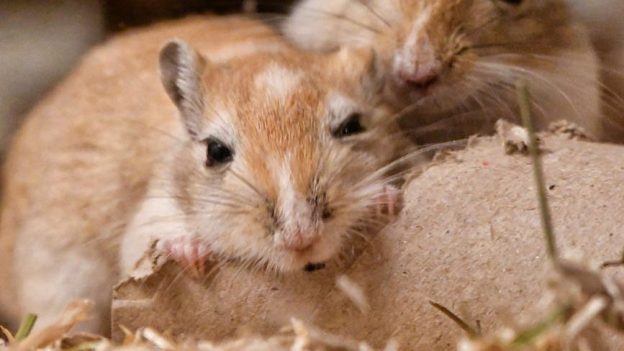
The grief softened over time, as grief often does. By January Kyli started talking about getting a new pet. In the meantime, her aquarium had served as home to a snake she and some classmates found in the schoolyard, and although they released it after a few weeks, it molted while in captivity, leaving Kyli a snakeskin souvenir. We washed and disinfected the aquarium. On the day of parent-teacher conferences, we once again traveled as a family to the pet store—only to find the cages in the rodent corner mostly empty. One contained an aging gerbil. Another, a white hamster that bit the pet-store lady assisting us, and drew blood. There were no dwarf hamsters, just Jumbo Biter. There was, however, one tan-and-white gerbil that seemed like an option. Kyli went into the back room with the pet-store lady to get a closer look, and before we knew it we were back on the highway home with Miss Gerbil in the aquarium. A bag of cat food balanced atop the cage to secure the screen lid.

Kyli named her new pet Tophee—Toph for short (like “trough” without the “r” sound)—and we stationed her in the dining room where we could see her often and get to know her. She was more active than Lucy had been, and more apt to scamper around on top of her bedding where we could see her. One day when Papa picked her up so Kyli could hold her, she shot off his hand to the floor, where she and we frantically scampered around until I grabbed her tight in my hand to lift her to safety. She did not appreciate this and bit me hard, leaving a bloody cut at the tip of my middle finger. Kyli again decided to take a gentle approach, reaching into her cage so Toph could get acquainted with her hand, talking softly to her and giving her treats, not taking her out of the cage to be held.

After a couple weeks, Kyli noticed Toph didn’t seem to want to open her eyes. Were they crusted shut? We couldn’t tell. Sometimes they were open, sometimes not. And she seemed to burrow less. We also questioned if she was drinking water. The hand-me-down water bottle she used sometimes required a bit of prodding to produce water. After some deliberation, and Kyli desperately wanting to take Toph to the vet, we took her to the pet store for an unofficial assessment. The pet-store lady who’d helped us purchase Toph, put on a long leather glove and reached in to hold and assess the little critter. She thought Toph might be dehydrated, asked about the warmth of our house, and suggested we try a new water bottle and watch to see if the eye situation worsened—if so, it could be a respiratory infection.

We moved Toph to a quiet corner of the living room, hoping she could rest more and get well. Over the next several days, she drank from her new water bottle, ate celery slices and Romaine lettuce, and seemed more active. Until she didn’t. Soon we realized we’d hardly seen her at all, as she seemed to be sleeping most of the time. We hauled a six-foot-long cardboard box from the basement to the dining room so we could hold and observe her outside of her cage. I scooped her up and placed her in the box. My heart sank as I watched her walk. She teetered to one side, getting in a few steady steps and then struggling again to maintain balance. Kyli watched tensely, and began to panic as I expressed my concern. We’d had rats who behaved that way, and they had to be put down for neurological problems.

I sat in the box with Toph; Kyli cried, “Why me? You had a hamster that lived for a long time, and you threw it against a wall! Why can’t I have a pet that doesn’t have all these problems?” I lifted Toph to my lap, sleeves pulled over my hands to protect against bites. She sat on my leg, barely moving, thin and lethargic. This was more than Kyli could bear and she paced around the living room crying, not wanting to look at Toph, feeling guilty for not being able to keep her healthy, desperate to do anything we could for her. As I sat in the box with Toph, Kyli approached me, tears on her cheeks, her face twisted in fear and sorrow. It was too much. Too much not-knowing. Too much angst at the thought of an innocent animal suffering. Too much powerlessness and insufficiency and fear. Kyli reached out her hand to me—“Mama, are you gonna be with me every step of the way?”

I, too, felt powerless, insufficient, and fearful. How could I be present to Kyli’s grief? How could I make a decision about taking a $30 rodent to a vet who would certainly charge more than $100? Kyli’s question handed me a lifeline. In asking me to be with her, she gave me something to hold onto. “Yes. Of course. I will.” I will be with you. I wouldn’t have it any other way. We will question together. We will cry together. We will make difficult choices together. You are not alone in your fear and grief. Together we will watch and worry and wait. Together we will make decisions. Together we will hold our insecurities and unanswerable questions. Together.

The next day I called the pet store for more advice. They wondered if Toph was warm enough, so we moved her in front of a heater vent, put a blanket over half her aquarium, and decided to offer her water on a spoon two or three times a day, buy new food, and give her some jarred baby food as well—pureed pumpkin. Toph again seemed to perk up, had an enormous appetite for sunflower seeds, and began rummaging around her cage more often.

But after a week, she returned to excessive sleeping and her sides still caved in a bit where she should be plump and round. We didn’t know what she needed. We consulted the internet, the pet store, and artificial intelligence. We didn’t know if she’d make it or not. I echoed Kyli’s sentiment—why can’t it just be simple? And I was grateful, knowing we would be together, every step of the way.
Beach morning

Clouds spread high and even, exposed quilt-batting pinned above the landscape.

Great Blue Heron perches afront a high cliff, dark against tawny, bare earth.
Suddenly, silently, he extends broad wings. Legs momentarily dangle long before he points his toes straight behind and glides north along the shoreline.

Hummingbirds cavort, pausing occasionally in the bushes below our deck. One zooms into my personal space, then speeds away, so quick I register its presence only when it’s gone.

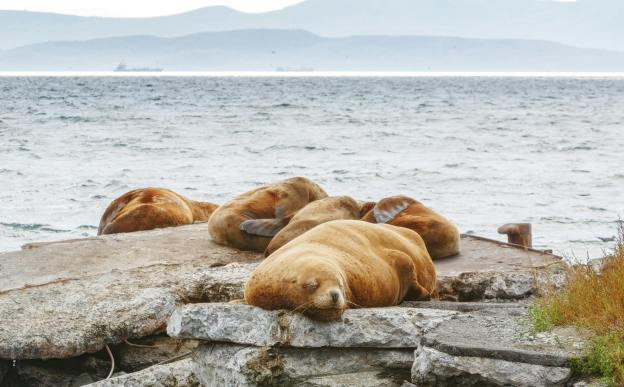
Two piles of sea lions lie strewn on behemoth, exposed rocks in the frothy tide far below, where yesterday we found wide swaths of sea anemones packed together like dinner rolls, and a Dungeness crab picking its way through submerged, holly-green sea plants.

The air is calm and balmy, the sound of waves steady.

Assorted seabirds pass overhead, wings beating duck-like.
An osprey circles once, twice, a third time. Its feet drop slightly as it releases a sizable white poo that disappears as soon as I spot it.

Blue clouds on the horizon hold my gaze—color of blue sky, but fluffy like whipped frosting. 

caw-caw rides air from the beach to my ears. Sea lions are on the move.
They wiggle their way toward the surf, descending the sloping rock like otters with no legs, bodies gallumping in a wavelike motion, ungraceful.
A raggedy row of them moves like an uncomfortable caterpillar. A dozen submerge and swim away; the “caterpillar” comes to an awkward halt, twitching a few times at the tail end, then settling, as if an invisible being has hit snooze. Nine more minutes of sleep. 

A long, low island of rocks emerges, left of the tall sea-cliff island that is nearly always visible.
A wave crashes, snapping my attention back to shore and sleeping sea lions. One twitches its hind flipper like a cat’s tail.

A flash of blue catches my eye. Stellar Jay lands on the porch railing, hops down, picks up the beef jerky that fell yesterday when we fed seagulls. Effortlessly, she ascends again to the railing. She pins the jerky against it, reaching between her toes to rip pieces off, her scruffy morning hairdo dark against the sky. Before I have drunk my fill of her beauty, she hops away. Holding the last bite of jerky, she springs grasshopper-like in short bounds along the railing until she disappears beyond weathered shingles.

I think about binoculars, so I can see what kind of birds cluster on the rocks far from shore. But fog has moved in, curtain call on this beach morning.

Be Still, My Soul

“Be still, my soul, the Lord is on thy side.”*
Unexpected but much-needed words at 2 a.m., when the house is quiet but my soul is loud.

“Be still, my soul, the Lord is on thy side.”
A thousand memories of my father, the hymn-playing classical guitarist whose practicing accompanied my sleep most nights for my first 18 years. A hundred more memories of concerts in a hundred churches, Daddy’s black suit with the guitar-fretboard tie, my mother presiding over a table of music for sale—books, CDs, tapes. And record albums in the early memories. My sister and I sang duets. We wore matching dresses sewn by my mother each year, made from fabric chosen by my father.

“Be still, my soul, the Lord is on thy side.”
The deepest stillness of my soul is always at God’s invitation.

“Be still, my soul, the Lord is on thy side.”
Knowing I can rage against God, blame God, say “fuck” to God—this, too, is an element of the stillness of my soul.

“Be still, my soul, the Lord is on thy side.”
Words I need to hear now, and in five minutes, and five minutes after that, because my soul has amnesia when it comes to stillness.

“Be still, my soul, the Lord is on thy side.”
Comfort for the parts of me that fret about who is not on my side, who doesn’t understand me, who wants ill for me. Be still. The One on my side will never change Her mind.

“Be still, my soul, the Lord is on thy side.”
As the psalmist wrote, “Be still, and know that I am God.” (Psalm 46:10) If He is God, I am not. Sometimes I need to remember this. Be still. Be.

“Be still, my soul, the Lord is on thy side.”
It is safe to be me. Right now. Before I do the next thing.

“Be still, my soul, the Lord is on thy side.”
I am not alone, even in my ugliest moments. God’s holy presence holds me with tenderness. I am invited to hold myself with tenderness, too.

“Be still, my soul, the Lord is on thy side.”

I pull out my hymnal, play the song one-handed on the piano, wonder if I might fall in love with the rest of the lyrics. I don’t. All I need is that one line.

“Be still, my soul, the Lord is on thy side.”


*This is the first line of the hymn, “Be Still, My Soul.” Words by Kathrina von Schlegel, translated into English by Jane Borthwick. Sung to the tune of “Finlandia,” by the Finnish composer Jean Sibelius.

Death Is Beautiful

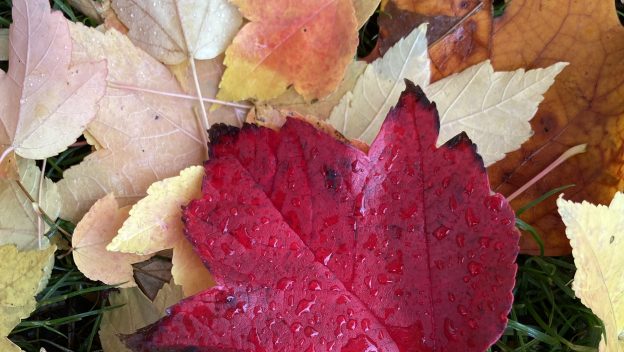
Death is beautiful. City streets and sidewalks are papered in it. Trees shout it with blazing reds and yellows—a rare season when the glow of sunset settles onto every country road and city block. And the individual deaths are as beautiful as the collective. If I dare use the worn-out snowflake analogy, each leaf is one-of-a-kind—the blend of colors, the shape and length of the stem, edges pointy or rounded, symmetry perfect or lopsided. Even the way it rides air currents to the ground is singular.

In the Celtic spiritual tradition, the phrase “thin places” describes those times when the veil thins between the now and the eternal, the ordinary and the extraordinary, and we see what is usually hidden. Death is one of those thin places.

Months before autumn, I walked a fog-covered beach on the Pacific Ocean, and death everywhere arrested me, stunned me, captivated me with its patterns and beauty. The oval-shaped outside of a small chiton shell—previously home to a creature that might have been the child of a limpet and a sea slug—was mossy green. But inside, surrounded by a wrinkly cream-colored girdle, an almost-neon aqua blue lit up the connected shell plates, and I stared in wonder. The shell of an urchin, now spineless, was covered with perfect rows of raised dots in muted tones of pink and green. The purple inside of a crab shell had patterns like light shining through water. Round jellyfish, symmetric from their thin edges to the white motif near their fat centers, lay stranded on the sand. A dead dragonfly, wings spread as if on display, had the bluest body, a peaceful gray-blue, but nothing dull about it.

My daughter picked up a crab shell which had been home to a couple dozen barnacles, and I imagined it in its heyday, scuttling through tide pools, unknowingly feeding the barnacles on its back, as well as itself. Uprooted seaweed formed circles and figure-eights. My daughters and I stomped on the seaweed air floats, trying to outdo each other with satisfying pops. One already-cracked float looked like Pac-Man, and another like a pelican’s head and neck. Shells, once symmetric, had broken into fragments and been polished smooth by the sand—pinks mottled like granite, colored ovals reminiscent of planetary rings, layered blues, and swaths of pearly iridescence. An art museum at my fingertips. 

As I contemplate the beauty of death, I can’t help but wonder what it will be like when someone I love dies. Will I feel the thinness between earth and heaven? Will there be beauty? Or will it be clinical, disturbing, exhausting, or—worst of all—sudden and too soon? I’ve never been with a person at death. I am curious—will there be a glimpse of what I have not seen before?

There is room for magic in morbidity. Although the leaves will turn brown, rot in the rain, and return to the soil, their week of splendor remains undiminished. Although every empty crab shell represents a death, and the waves and crunching feet will not leave them whole, they are no less exquisite. Although I will die, my passage from this life will squeeze the mortal and the immortal together for just a moment, creating a beautiful, painful, thin place.

Simple Jesus

I want to like Jesus because the grown-ups in my life told me He is good, and they were right. 

I want to be innocently happy that God is good. 

I want to go back to painting “JESUS FREAK” in huge letters on a baggy cotton T-shirt, soaking up Sabbath School lessons with gusto, back to the credibility God had when I was 14.

Simple Jesus—does He still exist? Or can He at least be mysteriously complex and Kindergarten-simple at the same time? 

Is there a reality—no-strings-attached—in which Jesus just loves me and knows my name?

A few weeks ago I attended a spiritual retreat at Camp MiVoden, as a sponsor for the girls in the 7th/8th-grade class. During the worship services I remembered something, a feeling of belonging and certainty from my past. I knew some of the songs the praise band led, and I sang with my arms raised. No one expected anything—hardly anyone knew me—and the featured speaker said simple and good things, about who I am and who God is, and I cried, and I remembered a time when I belonged wholly, and sermons weren’t pocked with ideas that distract me from goodness and wholeness.

I want a plain friendship, one I don’t have to defend or explain, one in which I don’t need Jesus to make me look good, and Jesus doesn’t need me to make Him look good; Jesus with a reputation as simple as Mary who had a little lamb, not the notoriety of an activist. 

I don’t need answers for all the questions and discrepancies. I’m looking for that place where they are absent, where I don’t have to explain why I don’t believe in a punitive gospel, or why I’m part of a faith tradition (Christianity) that has inspired violence for thousands of years. I don’t want to explain why I use feminine pronouns for God, or why I say Adventism is my community but not my religion. I don’t want anyone to raise their eyebrows at me, nor me at them. I want to be in love—inside love. I want to feel safe because I am safe. 

Maybe what I really want to know is this: does a simple Jesus exist for adults too? Does He go for coffee with millennials—with me? Does He wear jeans and send 132 text messages every day? Does He understand carpools and playdates and a family calendar on the kitchen wall and how all the spoons are dirty if I miss one day running the dishwasher? Does He peruse my TBR shelf and ask me about my writing? Does He know I’m still a little girl inside, intimidated by the disciples who turn me away because I am small and simple?

Is Jesus here now, and does He remember me? Does He look through my photo albums and murmur memories? Has He been here for it all? Can we laugh together about singing “Sinnerman” and “We Are Soldiers”—the laugh of a shared memory—those lyrics humorous like the frizzy perms of the 80’s?* Is He still the cleft in the rock, the hiding place, the blessed assurance the hymns offered? 

What if we’ve shared a life more than a belief system, and our love is built on mutual adventure and admiration?

Maybe He has never needed me to pull Him apart and stitch Him back together, to understand how He is a triune being, or even to put our companionship into words. Perhaps I was mistaken in thinking that farther, bigger, and deeper are better. 

Jesus is here. In the essentials He hasn’t changed a bit. He’s still the great guy I knew in primary Sabbath School; the one who stood with me in the church baptistry, invisible yet deliciously simple; the father I wrote to in a dozen journals full of prayers; the soil from which I grow. Most of all, He’s still my friend.


*I sang these songs countless times. Although the lyrics of “Sinnerman” I sang were not as heinous as what I just found by googling it, I think it’s safe to say it’s inappropriate to mock sinners running from God (and what even is a “sinner”? Aren’t we all?). And don’t even get me started on “We Are Soldiers” and “I’m in the Lord’s Army.” Who decided it was a good idea for seven-year-olds to sing about blood-stained banners and artillery? So yes, I think Jesus and I can have a good laugh about it.

Ocean Infection

Tiny puff of sea spray
Between surf and horizon
A huge mammal exhales
“There’s a whale!”

Kayt drops her book
Michael appears from the kitchen
Wide window in the dining nook, our portal

We point and words punctuate—
“Whale right!” “Tail! Tail over there!”

But Kyli sees whale-less waters
Her disappointment thick and raw, until
The silhouette of a tail
Appears clear—magic.

She nearly levitates
Shouting with joy
Infecting us all—
Her cousin jumps wildly with her
We clap our hands
Voices high-pitched with excitement
Wonder sparking between us
As our eyes return to the blue
Searching for another breath in the water.

A Different Kind of Trust

I take into my body every day a substance I know almost nothing about, a refined form of an ancient plant—maybe a grass? Today the bouquet on my table consists of a dozen stems I gathered from the roadside a mile from home, at city limits where the speed limit increases from 35 to 50. This bouquet is the raw material for foods I eat daily, but I have harvested it for beauty and not for appetite. 


I’ve been learning about relationships since forever. As a teen I imbibed books by Joshua Harris and Elizabeth Elliot. I thrill a little every time I take a personality test. When my husband, Michael, and I went through pre-marital counseling together, we answered personality questions about ourselves and about each other, and our therapist came back with the results overlaid and a description of our relationship dynamics. I didn’t know that was possible! Unbounded delight and satisfaction. 


As I hold a stem from the bouquet, I find it rose-like in that it is beautiful, but it will hurt me if I handle its sharp edges carelessly. I’m not sure how one prepares it for consumption, but I think a severe beating is involved, to separate its parts. If I’m not mistaken, animals were traditionally employed to help with this task. But even this violent unmasking of the plant doesn’t render it edible—at least not to the standard of most palates. Additional breakdown, with stones or blades, nudges it closer to consumption. Even then, it doesn’t appear on dinner plates or in snack trays. It waits in the cupboard for a kitchen chemist to combine it with oil, water, yeast, sugar, and any number of other ingredients. The resulting gooey blob is then baked, fried, boiled—cooked in some way. Once cooked, the food may be spongy (in a good way) or crunchy, and bears no resemblance to the stalk I hold in my hand. 


I’m hungry to understand relationships, both because I’m intrigued, and because I do not want to leave my relationships to chance. Marriage tops the list of highly-scrutinized relationships, followed closely by the bonds I have with my kids, and with my parents. What’s happening when my husband gets super talkative? Does quietness mean completely different things for my two children? How have my mom and dad survived this long in the world with their seemingly brittle ideas about religion and diet, and not one single coffee date?


Although I don’t know how to plant, nurture, harvest, thresh or prepare grain, I do know that an established industry takes the plant through all those steps for me, and I ought not eat it otherwise. I owe this knowledge to my elementary school education, and the times my mother reprimanded me for eating raw flour—probably in the same era I sampled dry dog food. 


I am convinced I will not get relationships right by chance, by intuition, organically. Research, knowledge, and choice are required. I have used this knowledge to understand and to be understood; to shame myself and my spouse; to prove I’m right; to try new patterns and to defend old habits. Most of all, I use it to dispel mystery, because the mystery of love is uncomfortable; the bread of love is finicky—too dense or not dense enough, sometimes rising only to fall, tantalizing when it’s warm, less palatable cold. Does my reading and analysis save me from this roller-coaster ride? I think not. But it does help me feel less alone. 


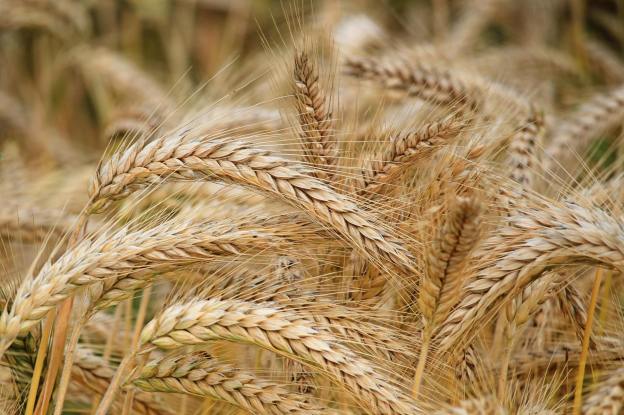
As I drive from my small town to the next small town, I count fields of wheat. At least I think it’s wheat. Truth be told, I trust an industry I know little about, and a process I prefer not to attempt to replicate. On the baking aisle I can choose the brown bag or the blue-and-white one, non-GMO or organic, but I’m only pretending to understand. The way I know wheat best is on my tongue, in the form of bread, mixed with flavors like cheese and pickles, homemade raspberry jam, or peanut butter and applesauce. I don’t need to know all the details.


Could it be that the way I know relationship best is in the presence of a friend?—trying a new flavor of ice cream, laughing about how I only shaved one leg, crying about a pet passing heavenward. Maybe I don’t need to understand all the details in order to nourish and be nourished . . . in both food and friendship.

Run-on Marriage

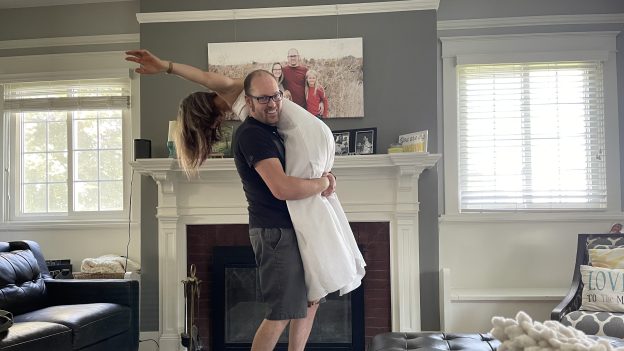
Last week Michael and I celebrated 20 years of marriage. The run-on sentence below illustrates our run-on marriage. (And yes, we’re still crazy about each other, in addition to driving each other crazy.)

I cannot get in bed when the bedcovers are frumpy, drifting off the end of the bed, sideways, knowing that if I do lie down and tug on them I will get too much sheet, too little blanket, and the wrong corner of the comforter; but I do not make my bed in the morning—I make it right before I climb in bed at night, tugging with exaggerated exclamations as I dislodge cats, and my poor husband too, because there’s a tiny possibility that I idolize sleep and this bed is my altar and before I sacrifice my body the altar must be prepared as if for a temperamental god of linens, and I like to remind my husband that before I met him my sheets would stay tucked in and straight for months at a time, but since his feet hang over the end of the bed and he tosses and turns at night, I have to straighten the covers every single day, and I accomplish this with more violent energy and bitter comments than necessary, although one would think after 20 whole years I would have adjusted and calmed down about it—but he huffs and makes less-than-charitable remarks every time he drives, and he has been driving for twenty-five years, so I guess we are both going to have our snide remarks and adult tantrums and all shall be well. 

P.S. I usually use stock photos, but the photo for this post is of my husband and I earlier this month. I barely squeezed into my wedding dress, which I attempt every September as our anniversary rolls around.