Category Archives: Other Stuff

Damn Hospital Corridors and Mothers

I’m dabbling in fiction again, which of course is influenced by my actual life, wherein my mother’s health is failing. This piece came from a writing prompt to begin with, “The hospital corridor was dimly lit…”

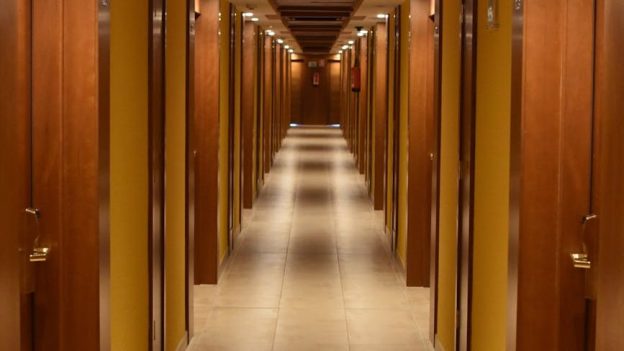
The hospital corridor was dimly lit, but only because the fluorescent lights on one side of the ceiling emitted partial light, accompanied by a buzzing sound. I wished someone would turn the lights off. One o’clock a.m. was never meant to be lit at all. Sinking to the floor, I checked the exact time on my watch, 1:17.

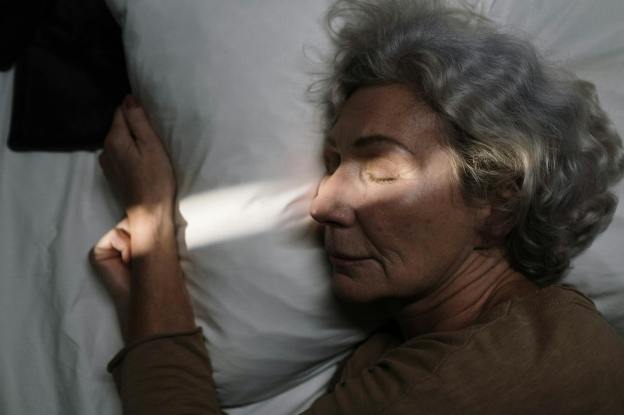
My mother slept. She’d been sleeping much of the day and night for some five years. Sleeping suited her phlegmatic personality and neurodegenerative disease. Sleeping was familiar.

But tonight, sleep could wander into death at any moment. And so we kept vigil—my brother and I—taking turns at her bedside, watching the face of each nurse who came in to check her vital signs. Did their expression show any hint of surprise or concern? Anything to indicate an imminent ending?

I’d never been this close to death before, and my feelings warred with my philosophies. It’s one thing to say death is natural, a passage as much as an ending, a new experience just like every other milestone in life. But there’s something heavy about a last milestone.

As I stared at the wall, unseeing, questions caught traction in my mind. This grief, is it about loss of the mother I have, or loss of the mother I wish I had? Or is it fear of what will happen to my brother and me when Mom isn’t here? Or am I feeling anger that I have to be here, to witness this, to hold it and see it and feel it and live it—that this dying person not only consumes my time when I’m at the hospital, but consumes my emotions and thoughts when I’m driving, eating, washing dishes? Who gave her permission to be woven into me in this way?

And what does the unweaving look like? Is it a severing, like a guillotine? Is it a careful unstitching, or an impassioned disassembly, tossing parts and pieces here and there? Or will my dead mother remain inside me, and will I like her better that way? What memories will make me smile? How much time will it take for me to internalize a narrative that holds us both gently?—a narrative that’s peaceful, not buzzing and half-lit like this damn hallway.

Forty and (In)secure

Twenty One Pilots’s song, “Stressed Out,” laments the insecurities of adulthood, noting that fear is still present, and we still care what people think. I turned 40 this month, and yes, I’m still insecure. It’s different than high school. And the same. I want you to like me. I want to be well-dressed and well-spoken, and most importantly, perceived well.

I’m a grown-up—have been for quite some time—and I can tell you what maturity doesn’t mean. Being grown up doesn’t involve control and confidence; it doesn’t mean growing out of awkward traits and social habits; it doesn’t include a clean house and well-kept yard, or a passel of perfect grown-up girlfriends.

I’m less sure what being a grownup does mean. But I’ve noticed I’m softer than I used to be—more flexible, a teensy bit less judgmental, and I know more about cooking and cleaning than I did 20 years ago.

I know less about God, love, and relationships. It’s been said that the more you know, the more you know you don’t know anything. I can confirm this.

There’s a real sense of loss, not landing in adulthood firmly in control and certainty, an expert in the kitchen, the workplace, the bedroom. I get tired of being wrong, confused, ineffective. If knowledge comes from experience, I am an expert in exhaustion, stress, and leaving my cell phone in obscure places.

I know I’m sounding a tad morose. But there is a happy ending. There’s something left after losing control, and the appearance of control, and pretending to have control. What’s left is eyes to see a different life entirely—a life of watching the cat lick his fur, thinking of my three favorite moments from the day just before I fall asleep, fighting less with my kids and husband, knowing there will not be a seismic event when my to-do list is left undone.

And I know myself better. I know I love writing and small groups. I know I like a clean house, but not enough to put in the work. I know I’m scared of the interminable wants and needs of my children. Being quiet and alone—especially in nature—returns me to myself. Banana splits and blended mochas almost always sound good. I try the hardest to be self-sufficient when I’m at my weakest. Animals make me happy. Getting called “a writer” makes me stand a little taller. Synchronicity feels like opening a birthday present.

My birthday, which this year fell on the first Sunday in May, played out like a dream Mother’s Day. My husband cleaned the kitchen, top to bottom. He and the kids cooked breakfast and dinner, and took me out for lunch. I sorted through a large tote, five bags, and an unconstrained pile of children’s clothing I hauled up from the basement, and found most of it could be passed on. I went to the park and watched goslings and ducklings, heard the smack-smack of their webbed feet in shallow water, and marveled at their fluffy bodies. I took a nap. With my parents and sister, I ate fresh-made blackberry pie with “40” cut into the top crust. Michael gave me a gift certificate to have the house professionally cleaned (when the dust settles from our six-month construction project). Like I said, a dream day.

It’s worth noting I couldn’t have planned such a day. All was gift—the generosity of my husband, my children, my sister. Many times I have planned a birthday party for myself, with friends and presents and homemade cake. But for forty, this un-forced birthday felt fitting. The people who love me gave what they wanted to give. And I received. I basked. I rested. And yes, I sorted children’s clothing—one of those things I never can find time to do.

Maybe I’m ready to accept this life I have. Whether I die tomorrow or in another 40 years, I will die complicated—a mix of peace and insecurity, frustration and gratitude, mundane and miraculous. And not at all grown up.

Don’t Touch

It’s wet paint
It’s an artifact at the science and history museum
It’s frosted birthday cupcakes

A piece of candy on the floor
A dead mouse
A hot pan

Rows of glass on the dishware shelf at Target
Electric fence
Sand art

Don’t touch that!

It’s a fight about money
It’s a friend’s anger at God
It’s a memory that twists my stomach

A mother’s embarrassment
A father’s shame
A hospital bill

God as feminine
Donald Trump
LGBTQIA+

Don’t touch that!

It’s a papery hornet nest
It’s a snake sunning on a rock
It’s a spiderweb

A cup overflowing
A polished concert grand piano
A fragile seedling

Perfect place setting, with folded-napkin swan
“Emergency Call” button in the elevator
Picnic leftover, buzzing flies

Don’t touch that!

It’s weight gain
It’s addiction
It’s a black eye

A cousin in jail
A protruding (pregnant?) belly
A brother-in-law in rehab, again

Extramarital affair
Ex-girlfriend
Was grandma “saved” or did she die an atheist?

Don’t touch.

Before the Meeting: A Story About Inner Voices

Once upon a time, in the midst of a large wood, there stood a smallish cluster of trees hiding a secret meeting place. From the outside, these trees appeared just as the rest of the forest. But underneath the canopy of intertwined branches that formed a roof over the meeting place, a mild summer climate prevailed. The temperature was always pleasantly warm, the leaves bright and shiny, the floor spongy and warm, but never damp. The light inside felt like sunlight, although it did not come from the sun and never changed with the seasons.

Near the center of this cozy clearing stood a tremendously broad tree stump, weathered and gray. There was enough room around the stump for seven or eight chairs, but the only seat was a large stone with a comfortable-looking, moss-lined depression, where Found Girl always sat. Although no one was ever quite certain if Found Girl really did sit, because it looked like she flowed, as if someone had plucked up a small section of a stream and fashioned it into something like a person. Her appendages were more suggestion than reality, and you could almost hear the gurgle of a creek when you came near. Despite her ambiguity of form, she had a most attractive face, with eyes that sparkled like sun glinting off stones in a mountain stream, and a mouth which gave order to her face and conveyed her gentle nature. The others came and went, but Found Girl always stayed on her stone chair, content and natural.

On this particular day, Levee and Bound arrived at the clearing together, though they didn’t look at all as if they belonged together. Levee, a thin, straight-lipped woman dressed like a schoolmarm, carried a ruler. Her hair was pulled back so tightly into a bun that her face looked just a bit stretched. No one can say I’m late, she pondered with pride, and with any luck, my exemplary responsibility will guilt the others into behaving themselves.

Bound was small in stature, the size of a boy ten or eleven, though clearly a grown man. He had short, black hair and wore brass knuckles on both hands. But one hardly noticed his appearance because he was always shouting, and all that uproarious noise was the main thing anyone remembered about him. He carried himself with the foreboding of a lit fuse nearing its explosive target, and a few strides into the clearing, he broke into a series of lunges and air-punches. Truth be told, the noise he generated on the outside was only a fraction of the roaring and explosions happening inside. Stupid. Unthinking. Can’t get their act together long enough to solve some problems, he thought, anticipating a tedious meeting. I can’t stand myself and I can’t stand them! Words stayed inside, as futility spilled out in growls.

Levee laid a legal pad and pencil on the stump and scrutinized the forest floor and canopy. Lost Boy circled the clearing, his large shoulders hunched over. No one had seen him arrive, and even he seemed a little unsure of his presence as he slunk in circles. I don’t think this is going to be okay. I can’t possibly speak in front of Levee and Bound. Nothing makes sense. What can I do. This was a statement, not a question, and his torso rocked forward and back with each repetition. What can I do. What can … What … His thoughts morphed into panic, disguised by his plodding feet.

A few moments passed as Found Girl flowed in her stone chair, Levee took stock with a critical eye, Bound threw punches, and Lost Boy bit his fingernails and wandered.

Fragrant—whom everyone called Fray—a woman of average stature with a fairy-like appearance and delightfully scented hair, entered through a cascade of willow branches on the east side of the clearing and stood beside Levee at the stump, where they waited for Broad. I’m lucky to belong here, thought Fray. This is a lovely group in a lovely place.

Broad soon arrived, looking especially round, his very large and expressive face—almost triangular in shape—resting directly on his shoulders. No one could say for sure if he had a neck, and no one wanted to get close enough to see, because Broad often broke into unrestrained displays of emotion, and his aura oozed despair in such a way that it seemed very likely to get all over whoever might come near. I’ll just stay here at the edge of the clearing. There’s too much energy at the stump, Broad decided. Too tired to stand, he melted onto a bed of thick moss near the base of a crooked evergreen.

The moment Broad arrived, Levee called the meeting to order with a few loud raps of her ruler on the stump. That is, she tried to call the meeting to order. This had no effect on Lost Boy, who continued his distracted circling, but it did throw Bound into a tizzy. “You two get over here!!” he shouted at Broad and Lost Boy. He kicked the stump as he repeated this command. Broad collapsed even further into a fat heap and cried.

At this point, Levee’s thin-lipped smile became so thin it almost disappeared. “We must stand around the stump and be quiet.” Her voice was coated with frustration and disdain, and she glared at Bound. Meanwhile, Fray fell in beside Lost Boy. “Come to the stump,” she invited in her always-pleasant voice. But Lost Boy didn’t reply, only continued in aimless circles, and Fray thought, Poor soul. If only he knew it’s okay to not be okay. She returned alone to the stump.

Levee, hell-bent on a productive meeting and desperate for order, strode over to Broad and dragged him toward the stump. This required no small amount of effort, and a few hairs popped out of her bun. After several exhausting moments, Broad was in a sad, fat heap, closer to the stump. Suddenly, Lost Boy noticed he was the only one still at large and would be Levee’s next target. Just as he moved to hide behind a tree at the edge of the clearing, Found Girl spoke.

This startled everyone, as they had forgotten she was there. Her voice, like her appearance, flowed, yet carried unmistakable strength. It drew Bound’s attention first; he immediately stopped kicking the stump and shouting. Before she finished a sentence, everyone in the clearing was focused on her, curiously enthralled by her flowing body and voice, their individual angst forgotten for a moment.

This is what she said. “Friends, each one of us belongs here. This is our clearing, our stump, our meeting. Levee may bring an agenda and take notes, but she is no more important—or in charge—than anyone else.” At this, Levee’s schoolmarm face relaxed somewhat, though her relief seemed tinged with doubt. I can’t imagine how Found Girl thinks she’s going to bring things to order.

Found Girl continued, “Lost Boy doesn’t have to speak his fears, and Bound doesn’t have to quiet his anger. Fray and Broad can attend to their own thoughts and feelings, which are their gifts in this meeting. We’re in this together. Look around at each other. Smell Fray’s fragrant hair. Admire Bound’s latest brass knuckles, and maybe look for Broad’s neck.” Everyone chuckled at this, except Lost Boy, who had commenced his circling.

Found Girl, having given everyone permission to be themselves, closed her captivating mouth and motioned to Levee. Then the meeting began.

Blessing My Small Self

Lord, wash me not of my imperfections, but of the ways I try to hide them.

Four-days-unwashed hair.

Running late, always running, always late.

Hoping no one finds out how infrequently I launder the bedsheets.

I never before thought of blessing these things. Now I see them in need of blessing, of integration.

The voices of emotion.

The voice of smallness.

The voice of vulnerability.

The voice of longing.

Christine Valters Paintner writes, “Sometimes we need to welcome our ‘small selves’—the poor, meek, humble parts of ourselves—to allow our big radiant selves to be in service to them … Perhaps there is something even more profound than all of the amazing things we are doing in the world. It is this simple unadorned self that is blessed. The smaller selves are blessed.” (The Artist’s Rule, pg. 87)

The wisdom of these smaller selves is the wisdom of being human, of being malleable, of being unpolished and beautiful.

I want to make peace with my shadow side, my imperfections. I feel in conflict with myself, like half of me is inside a fortress, and half of me is huddled against the outside walls—like all of me is afraid.

Interior freedom feels like being present with myself, like saying “not today” to crappy thoughts. It feels literally spacious, permission to take up more room with my body and breath. Is there room to make mistakes? I feel small when I think about making mistakes.

In Celtic spirituality, “thin places” refers to locations or times where the veil between the physical and spiritual realms seems thin, where a closer connection to the divine arrives, perhaps unexpected. It is possible that no one else wants my small self, but God does. He meets me in the moments when I am aware of a limitation, a failing, a smallness. Maybe these moments are another “thin place.”

I notice that my sense of self is rigid, even brittle. Can I reimagine myself? Fleshy, muscular, vulnerable, more cottage than castle, more field than fortress.

I am meadow. No meadow has walls. No meadow tries to look the same every day. A meadow doesn’t look at its thin patches with embarrassment.

My whole heart longs for grace and mercy. I want to mete out mercy, because it is the right thing to do. But I’m not sure mercy can be “meted.” It is given out not so much in measure as in waves. It is oceanic, much bigger than I realize.

I am meadow, and in meadows deer graze, butterflies drink, shy rabbits and tiny mice feel at home. “Welcome home to myself,” I say.

My big self sets the table for my small self, and together we dine in the meadow.

Dear God, I’m Annoyed

Dear God,

Do you receive enough letters every year to bury planet earth a mile deep in stamped and postmarked comments to the divine? Is there a team who helps you read them? Do you throw out letters that are too pious—or too irreverent? If a parcel comes to you “postage due”, do you pay the balance or return to sender? How many angels do you deploy every year in response to mail from earth? Do you keep statistics on what subjects are trending? Do letters from different parts of the earth have a distinct smell? Well, enough about that. I actually have a purpose for this letter.

I’m annoyed that using your name is so complicated. If I say I believe in you—whatever that means—I want to tell my story, not get coopted into someone else’s story. I’m scared of their assumptions and experiences. Does belief in God mean an agenda of fighting atheism? Evangelizing 3rd-world countries? Pro-life marches? Does belief in God mean you made the world, or that you died for our sins, or that you’re making some sort of “new heaven”?

Next time someone tells me they’re a Christian, does it mean they go to church but don’t pray? Or that they pray but don’t go to church? Does it mean they think you cause human pain, or relieve human pain, or both? Are you male or female? Do you live in humans or in heaven? How are you deciding when and how to make the earth new? Are you many, or one, or three-in-one? Is your love soft or hard? Do you ever feel afraid?

I guess my point is that, for my own comfort, I want you to be small. I don’t appreciate the need to explain what kind of Christian I am—if I say I’m a Christian—or that I have to explain what mysticism is if I say I’m a mystic, or that my swearing puts some people at ease and sets others on edge. And both responses to swearing feel somehow related to you—like we’re all basing our lives on you, whether we mean to or not, and we’re all uncomfortable with the fact that you remain shrouded in mystery. I’ve ceased to believe you have an agenda, but for some, an agenda is inherent in the word “Christian.”

Truthfully, I don’t want you to do anything about this. I just need to vent. Do you see how annoying the situation can be? The way you draw people together in a singular way and also divide folks violently? The way you bring us to peace with ourselves and offer us the most startling awareness of our love-less parts? Do you see how I experience you differently than the person next to me, and sometimes we admire each others’ representations of you, and sometimes despise them?

I find myself trying to assure some folks I’m not “that” right-wing Christian, and trying to assure other folks I’m not “that” far-left kind of Christian. I want people’s favor and I want yours and it’s all terribly messy and I blame you.

But, in conclusion, I admit it’s best for you to be slippery, mysterious, and surprising. Thank you for connecting with each of us in your own way without a thought of being consistent, following the rules, or managing outcomes. Your flagrant freedom in relationship to humans reminds me that I, too, have the freedom to look a little different to every person who knows me. Like you, we humans can be slippery, mysterious and surprising, and we need permission to embrace these traits in our relationships.

I’ll let you get back to that mountain of letters. And I don’t have the patience for snail-mail, so if you want to answer me, please send a text message.

Cordially,

Tobi

How to Be a Mother

Breathe. And not just
during the contractions.
You must be well-oxygenated
to care for another human being.

Give up. And not just
once. Keep at it.
You must release your grasp
before your muscles cramp.

Laugh. And not just
when it’s funny.
You must include sadness and shock
and exhaustion in your mirth.

Tell the truth. And not just
to yourself.
You must tell the other moms,
and listen to their tellings.

Accept your new self. And not just
the nurturing and brave parts.
You must accept the anger,
the desperation, the invisibility.

And remember to breathe.

Substance Use or Pain?

I know next to nothing about substance use. Other than tales of “the alcoholic” family members I never met, the “sinners” in the prodigal-returns books the church fed me, and the guy who beat the tar out of a piñata at his daughter’s birthday party, I live in a substance-use-free bubble. Although, I was offered a drink last week by two guys about my age who came upon me at a local park, where I had stationed myself to watch for beaver activity. I hoped to catch the crepuscular creatures near one end of their habitat, where they had recently felled a large tree.

It became apparent these two fellows had been drinking when they repeatedly complimented my purple outfit, introduced themselves, offered to move my chair for me, asked me to show them the beaver lodge, and kept up a constant stream of friendly banter. Sober people walk by silently and you’re lucky to get a nod.

“If you’re gonna take beer from a stranger, we’re the right people to take it from,” the talkative fellow offered. He went on to explain the virtues of the beer he had in the cooler bag over his shoulder, but it all went over my head. IPA and other alcohol-related terms are Greek to me.

As a child, I was taught to fear alcohol, with the admonition that because alcohol addiction runs in our family, I could become addicted with a single drink. Is there truth to that? I don’t know. Now that I’m an adult it seems beside the point.

Last November, I attended a community education event—“Hidden In Plain Sight,” or HIPS. This event multiplied my slight knowledge of substances by at least ten times. For example, I thought “doing pot” 40 years ago was essentially the same as “doing pot” today. I was wrong. But before I get to that … The whole experience hit me odd—attending a 1.5-hour community event in which I felt the main takeaway was “just say no” (although those words were not used). I thought people who didn’t rely on religious/moral reasons for abstinence just didn’t abstain. Or at the very least, didn’t tell others to abstain. But apparently, given data on brain development and facts about the effects of drugs and alcohol, a whole slough of people agree that—at least for kids and teens—“no” is the appropriate attitude toward substances. And this isn’t about illegal drugs; it’s about nicotine, marijuana, and alcohol.

When I talk to my kids about alcohol and drug use, I notice they are acutely—vehemently—aware that it is “bad”—so much so that it’s easy for them to assume a person who uses is not a “good” person. For that reason, my conversations with them, more often than not, focus on the aspect of numbing pain. I tell them people drink because it makes them feel better. It’s relief from anxiety, loneliness, trauma, and intense emotional pain. And isn’t every human being worthy of relief from pain?

I didn’t know what to expect going to the HIPS event—other than free pizza and a lesson on the paraphernalia of risky teen behavior. But when I left after the event I had a distinct feeling that something was missing—we didn’t talk about the pain these kids are trying to numb. Or the pain their parents are trying to numb. And parental influence means—like it or not—when we as parents use substances to numb our pain, it’s hard to tell our kids not to, and even harder for them to respect and respond to us.

In the state of Washington, where I live, it is legal for a parent to give alcohol to their child at any age, in their home1. And although it’s illegal to give tobacco or marijuana products to your own children, the data in our local community indicates that parents are supplying these items to their children in middle school and high school2—or at least turning a blind eye. Additionally, many websites that sell vapes and other nicotine products simply have a textbox to type in one’s age, making it easier to buy substances than it is to log into your bank account.

Products that were originally marketed as smoking cessation products, such as vapes,3 may deliver more nicotine to users than cigarettes, depending on the product and frequency of use. They’re also cheaper. A carton of cigarettes is $120, and the roughly-equivalent 7,000-puff rechargeable fume vape—which comes in more than a dozen flavors and fits easily in a closed hand—costs only $15. It also conveniently flies under the radar of the Clean Indoor Air Act, since the nicotine is delivered without a cloud of smoke. As you might imagine, these changes rewrite the landscape of nicotine use.

And alcohol is not exempt from the changing landscape. With a disposable water bottle, a wine cork, and a bike pump, a curious teen can vaporize alcohol, conveniently bypassing their digestive system and taking the full impact of a shot of hard liquor directly to their bloodstream.4

Now back to the changes around “doing pot”. Before the turn of the century, marijuana products delivered about 4% THC, or tetrahydrocannabinol, the psychoactive compound found in cannabis. In the 2010s, that number jumped to nearly 20% with the medicalization of marijuana. Today there are products containing up to 90% THC5. This ain’t your grandpa’s weed. Yet in Walla Walla County the Healthy Youth Survey in 2023 reported that 56% of 10th-grade respondents thought trying cannabis/marijuana held no risk or low risk, and 30% thought regular use had little or no risk.6 Are these students thinking of grandpa’s weed, or the expanding menu of available products? There’s rosin, crumble, distillate, bubble hash, dry sift, crystalline, and the list goes on.7

Youth who experiment with substance use are often unaware—now more than ever—of the actual amount of alcohol, nicotine, or THC they are taking in through various products or processes, resulting in an uptake of accidental overdoses.8 Parents seem to be checked out of their kids’ lives, and capitalism is taking advantage of the changing topography of products that deliver substances.

2023 Health Use Survey (askhys.net)
Walla Walla County data

20% of 10th graders reported using marijuana at least once in their life.

50.9% of 10th graders reported using alcohol at least once in their life.

16% of 8th graders had ridden, during the previous 30 days, in a vehicle driven by someone who had been drinking alcohol.

2.7% of 6th graders (my 12-year-old daughter’s grade) reported alcohol use in the past 30 days, as did 3.9% of 8th graders and 13.1% of 10th graders.

19.5% of 8th graders and 33.6% of 10th graders indicated it would be “sort of or very easy” to get marijuana.

In case you got lost in the grade numbers,
all of these statistics are for youth approximately 11-15 years of age.

Not long after attending the HIPS events, my husband Michael and I walked by a smoke shop as we were finishing a pizza-and-ice-cream date night. “Ooh,” I said spontaneously, “let’s go in!” Michael didn’t share my enthusiasm, but he followed me inside the shop. The young man behind the counter welcomed us in and asked if we were after anything particular. I volunteered that neither of us had ever had anything. “If there’s something you want to try, let me know,” he offered.

To the left, behind a long counter, packaged products lined the wall. To the right, blown-glass paraphernalia caught my eye. I didn’t know what any of it was called. “Pipe” and “bong” seemed like terms that probably applied to some of the stuff, but I wasn’t sure. It reminded me of visiting the glass-blowing shops in Oregon’s coastal towns. Rows of shelves showcased the beautiful colors and shapes, and at the back of the store two more large displays highlighted artful drug paraphernalia.

The shop also had knives, samurai swords, rings for body-piercings, incense, an impressive display of fancy cigars, sex paraphernalia, and—based on my newly-acquired knowledge—several items I assumed were for hiding drugs. Michael and I circled the store a few times, commenting quietly to each other. Wanting to be a good customer, I bought a small vaping device.

Just kidding. I bought a pair of cheap earrings.

“Drugs and alcohol” are not the static story I imagined. And my interpretations are one tiny perspective on an issue that is complex beyond any one person’s understanding. Advertising, social influences9, the complex science of the over-400 components of cannabis10, the biology of addiction, stigma, family structure, mental health, and countless other factors impact our youth and their decisions around substances.

Mental health professionals and others, including the renowned Brené Brown, say it isn’t possible to selectively numb emotion. If we numb pain, anxiety, and sadness, we also numb joy, contentment, and gratitude. How will a generation unable to feel things—let alone name those feelings—live whole lives, experience belonging, and effectively walk through the tragedy and triumph of life?

And how will they teach resilience to the next generation?

I am left with more questions than answers. Why did I know nothing of the breadth and depth of new and evolving products and packaging around substance use? Why did only about 20 people attend this HIPS event that was marketed across the Walla Walla Valley? Why does it seem like social workers and law enforcement are the only people looking at this data?

About 10% of 8th graders and 14% of 10th graders surveyed had considered suicide. Over a third indicated a struggle with depression.11 Why are our children in so much pain? And how are we offering relief?


Endnotes:
1 RCW 66.44.270, subsection (4), viewed here.
2 The Healthy Youth Survey fact sheet for Walla Walla County in 2023 reports that 29% of youth in 8th and 12th grades, and 27% of youth in 10th grade reported getting alcohol from home, with permission, in the past 30 days. Additionally, only 5% of youth drink alcohol if their parents think it’s wrong, while 28% drink if their parents don’t think it’s wrong. This data is from a fact sheet created here.
3 https://pmc.ncbi.nlm.nih.gov/articles/PMC10880776/
4 https://www.vumc.org/poison-control/toxicology-question-week/jan-29-2020-alcohol-vaping-friend-or-foe
3 https://medicine.yale.edu/news-article/not-your-grandmothers-marijuana-rising-thc-concentrations-in-cannabis-can-pose-devastating-health-risks/
6 This data is from a fact sheet created here.
7 https://vivosun.com/growing_guide/what-is-crumble-crystalline-sugar/
8 This was covered in the live presentation. I’m still looking for a data source to cite here.
9 https://www.cdc.gov/tobacco/e-cigarettes/why-youth-vape.html
10 https://pmc.ncbi.nlm.nih.gov/articles/PMC4188645/
11 This data is from a fact sheet created here.

Two New Holes

Shortly after my May birthday last spring, I acquired two new holes in my body. I had my ears pierced.

One aspect of the conservative Christianity I grew up in is an aversion to body piercings. And tattoos, lipstick, and clothing that reveals feminine curves. When I left home as a I teen, I bought a padded bra, colored my hair with a box of dye from Walmart, and called it good for my rebellion. As a young adult I said I didn’t want to pierce my ears or get a tattoo because I have a low pain tolerance. Also, I faint for vaccinations, blood draws, and if I hit my knee or elbow too hard. (I fainted at the dentist once, and I fainted when I went to the college clinic to get a wart removed from my foot. The nurse sent me to Walmart to buy the kind of wart remover you paint on yourself.)

Why this sudden body piercing urge, you might ask, as I’m nearing the age of 40?

Last year, my nine-year-old daughter Kyli decided she wanted to get her ears pierced. “Why don’t you have your ears pierced, Mom?” she asked.

“I don’t know. I don’t like pain.”

“Well, if you really wanted them pierced you would do it,” she countered.

Point taken. So I thought about it. I hoped quiet reflection might reveal something profound, but my reasons were a grab-bag—it hurts, most of my friends don’t wear earrings, it feels weird to do it now that I’m middle-aged, it seems unnatural to poke a hole in my body (morality aside), my parents won’t like it, and so on. Like I said, random, blah, blah, blah.

So I decided to give it a shot, get my ears pierced with Kyli, and see if I like wearing earrings. Rather than take the lead because of lived experience—my usual role as mother—I had the same questions, concerns and curiosities as Kyli. We’d be figuring this one out together.

We waited for the school year to finish since the kids attend a Christian school that doesn’t allow earrings (or colored nail polish—go figure). Kyli wanted to get earrings the moment school let out, so we made appointments at Ulta Beauty for 1pm on May 31st—one hour after school dismissal on the last day of the school year. We snagged Kyli’s bestie, got a bite to eat, and drove to the salon. Inside, past the rows of creams and powders and scents, we found a plump young lady ready to pierce our ears.

I signed the thing they handed me—a waiver?—while Kyli picked out studs. Her bestie pinched her arm hard to show her how much it would hurt. The plump lady drew dots on Kyli’s earlobes, asked us to examine them and approve the placement, then inserted a stud in a white hand-gun. Punch!—right ear done. Kyli’s eyes were wide, a combination of curiosity and alarm, as she took in the experience and tried to categorize it. Painful? Scary? No big deal? Before she could settle an answer, punch!—left ear done.

For the next minute, Kyli’s hands hovered around her ears, her instinct to squeeze them through the discomfort, at odds with her determination not to touch. I watched, ready to comfort. But I wasn’t needed. Bestie dragged her around the store, applying makeup until Kyli’s face was caked with several shades of foundation and blush and her fears forgotten.

Meanwhile, I warned the employee holding the ear-piercing gun that I’m a fainter. Judging by her look of alarm, I guessed she didn’t have a lot of experience with people fainting—either that or she had a memorably bad experience. “I’ll know if I’m going to faint, and I’ll tell you,” I assured her. She proceeded to draw dots on my ears, punch, punch, voilà! Little silver hearts rested on my earlobes. During those thirty seconds, I felt the same wide-eyed, uncertain curiosity Kyli’s face had conveyed, but when it was all over, decided the pain wasn’t worth mentioning. We took pictures, documenting this mother-daughter experience trying something new together.

All summer we cleaned around our earrings, front and back—twice a day at first, then less often. We cleaned them after showers, after swimming, after getting dirty in the yard. We twisted them around in the holes as we had been instructed, and left them in 24/7.

At first, earrings were more unnerving than I expected. It felt wrong to intentionally punch a hole in my body and take special care of it to keep it that way. Usually when I cut through my skin and flesh, I tend it carefully to facilitate healing. This was different. Also, for the first month or two, I felt slightly anxious about having something attached to my body that I couldn’t take off. When I went to bed and took off my watch and glasses, I wanted to put the earrings on my nightstand too. I wanted to take them out so my body could be just my body. During the night, I tried different positions with my pillow to put the least pressure on my earlobes.

After the prescribed six weeks, I hesitated to remove my earrings since they still oozed or bled occasionally. Kyli, tired of waiting to wear a favorite pair of earrings, took out the original studs and sported cute, sparkly flowers for a day. This joyous occasion deteriorated when I couldn’t find the right hole to get the original studs back in her ear. I had erroneously thought a hole was a hole, but the tip of the earring took it’s own course through the fleshy part of Kyli’s earlobe and came out the back in a different place!

Blood, tears, and parental concern and confusion ensued. We survived this try-to-find-the-right-hole circus two or three times over the next week, and eventually Kyli’s left ear was so unhappy she let it heal shut. When school began again in August, she wore a tiny clear stud in her right ear—which still oozed and bled sometimes. She didn’t want to remove that one, but also refused to get her left ear pierced again. We were deadlocked in pirate mode.

The first pair of earrings I bought came from a rock-and-mineral shop in a falling-apart historic building we stumbled across during a bathroom break on a road trip. They’re tiger’s-eye stones. I nearly passed out when I first put them in, but after lying on the bathroom floor and breathing deeply for a minute—usually an effective method to maintain consciousness—I returned to normal.

At this point, I’ve probably had as much fun buying earrings as wearing them. For more than six months, I didn’t leave my earrings out any longer than an hour—the holes still appeared tenuous. Either the original studs or one of my half-dozen new pairs of earrings stayed in my ears at all times. At last, a month or two ago, I slept truly naked for the first time. It felt good as good as I imagined.

In a few months, it will be a year since we pierced our ears. During that time, Kyli’s right ear developed big scabs and pus came out when I cleaned it, over and over, so a few weeks ago she took out the clear stud. It’s healing now, and she’s done with earrings for the time being. Meanwhile, I’m growing into the fun of it. My sister gave me a beautiful pair of iridescent hummingbird earrings for Christmas. Michael gave me a pair of book earrings for Valentines Day—I’d been looking and found surprisingly few options, and these are adorable tiny blue books with real pages. I wore them to the library this week, and felt that same satisfaction I get when my bra and underwear match—a covert sense of matching.

So, friend, if you’re forty-ish and thinking about earrings, here’s what I’ve learned: It’s a small adventure, and hey, maybe that’s what makes it fun. These years lean low on adventure—outside of parenting. And come to think of it, this adventure was tangentially brought to me by parenting—two new holes, the result of a question from my daughter.

How about you—any new holes in your life? Or body?

Books I Read In 2024

I read 26 books last year. Let’s look at the boring category first: SELF HELP. (I won’t tell if you skip down the page)

Two of these books were suggested by friends, who read them with me. I’ve copied a favorite quote from each book.

“People who don’t know what they find satisfying generally struggle to know who they really are. Our identity and our passions are intimately connected.” (page 168)
The 4 Habits of Joy-Filled People, Marcus Warner and Chris M. Coursey, 179

“… if we are to stay connected with our soul, we will need to have the capacity to sometimes be dreadful, objectionable, or offensive.” (pages 64-65)
The Vital Spark: Reclaim Your Outlaw Energies and Find Your Feminine Fire, Lisa Marchiano, LCSW, 249

“Other people’s frustrations won’t kill you. Their opinions can’t take you out. You can indeed choose a new yes, or a continued yes. You can keep at the thing you love, even if it isn’t producing results yet. You can say yes to what you want to say yes to. … Are you just into it? That is reason enough.” (page 129)
Fierce, Free, and Full of Fire: The Guide to Being Glorious You, Jen Hatmaker, 221

“There is a season between deliverance and dominion that is called dependence.” (page 193)
She Is Free: Learning the Truth About the Lies That Hold You Captive, Andi Andrew, 203


FICTION. In 2023 I read only one work of fiction—I edited it for a friend. I determined to read more fiction in 2024, and I did! I enjoyed, but didn’t love, these reads. Maybe 2025 will be the year I find a fiction book to love.

The Innocents at Home: Children of the 1940’s, Mary Stone, 241

Facing the Dawn, Cynthia Ruchti, 310

Love, Jacaranda, Alex Flinn, 356

All Other Nights, Dara Horn, 363

One Corpse Too Many, Ellis Peters, 275

The Minister’s Restoration, George MacDonald, edited by Michael R. Phillips, 207


POETRY. I had the privilege of joining the book launch team for Marla Taviano’s book whole: poems on reclaiming the pieces of ourselves and creating something new (268 pp.). It’s a quick, fun read, and Marla’s authenticity creates space for a whole range of questions and “questionable thoughts” about Christianity/religion.

Made of Rivers by Emory Hall (68 pp.) is fabulous. It was recently re-released with thirty additional poems. Go buy it.

OR, if you can only buy one book of poetry today, you might consider All Along You Were Blooming: Thoughts for Boundless Living, by Morgan Harper Nichols (182 pp.). My dream as a writer is to create spaces with my words that allow folks to breathe, allow their souls to sit down in peace. This collection of poems did those exact things for me. It’s a wonderful read for a quiet hour on the weekend, or a way to rest your spirit when you climb in bed at night.


CREATIVITY AND WRITING. I’ve read some pretty amazing books by writers, about writing. Lots of people write about things they know about, and the books are good, but reading the words of a skilled writer is always more fun. Maybe I’m biased, but I think the best how-to books are about writing, because writers wrote them. Am I making any sense?

Julia Cameron’s book, The Artist’s Way: A Spiritual Path to Higher Creativity (235 pp.), would fall in the category of excellent-book-about-writing, written by an excellent writer. And if you like The Artist’s Way, she has perhaps a dozen more books with related content. Take a deep dive.

The Artist’s Rule: Nurturing Your Creative Soul With Monastic Wisdom, by Christine Valters Paintner (162 pp.), is an invitation to embrace the intersection of the spiritual and the creative—or, in her words, your inner monk and inner artist. I loved every page, had a lot of fun with the writing prompts, and tried some new things, like wabi-sabi photography.

Mark Yaconelli’s book, Between the Listening and the Telling: How Stories Can Save Us (183 pp.), is a compelling showcase for the power of story. It reignited my passion for storytelling and story-listening as community activities.


STORIES. All good. Of course the one about Gregory Boyle (G-dog) was a favorite, along with What My Bones Know. My daughter picked up The Invisible Thread at a used book fair. It’s the memoir of a young second-generation Japanese American who lived in a U.S. concentration camp during World War II. I read it because I knew nothing about the experience of Japanese Americans during the war, and to see if it was appropriate for an 11-year-old to read (in my opinion, it is).

G-Dog and the Homeboys: Father Greg Boyle and the Gangs of East Los Angeles, Celeste Fremon, 314

Happy Trails: The Story of Roy Rogers and Dale Evans, with Carlton Stowers, 207

I Know Why the Caged Bird Sings, Maya Angelou, 289

Surviving the White Gaze: A Memoir, Rebecca Carroll, 318

A Beautiful Mind: The Life of Mathematical Genius and Nobel Laureate John Nash, Sylvia Nasar, 390

What My Bones Know: A Memoir of Healing from Complex Trauma, Stephanie Foo, 321

The Invisible Thread, Yoshiko Uchida, 133


SOUL FOOD, my favorite! The books in the CREATIVITY AND WRITING category would fit here as well.

Eat, Pray, Love, by Elizabeth Gilbert (331 pp.)—it’s popular for a reason. The blend of delectable writing with deep insight and the permission to be human made it a special occasion each time I sat down to read. I celebrated these good feelings by taking the book to a coffee shop a few times, to revel in the experience.

Here’s a favorite passage from Somehow: Thoughts on Love, by Anne Lamott (191 pp.). I don’t know how I got by with reading only one Lamott book in 2024, and I plan to partake of at least a few this year.
“When we screw up … it is never the final word. The fact that this happens to all of us allows us to have a tenderness about the broken places. … hope is believing this one thing, that love is bigger than any grim, bleak shit anyone can throw at us. And I believe. Also, my experience is that grace bats last.” (pages 85-86)

And, without planning it, the first book I read in 2024 is last on the list: Running to the Mountain: A Midlife Adventure, by Jon Katz (242 pp). Here’s a quote.
“Spirituality is usually presented in terms of the Big Payoff—Merton finds faith sitting in a church one day. I’d expected something similarly dramatic. It took me weeks to grasp that this was going to be painstaking and meticulous work, hand-to-hand combat of the most intensely personal sort—with myself. Day by day, chore by chore, I’d know more in six months or a year—if I were lucky—than I did now.” (page 83)

And that concludes my reading for last year.