I’m not okay. This is how I know it’s time to write.
I’m sitting in the kids’ room by the fire I lit for them—my attempt to dote on them since they stayed home from school today.
Sore throat again this morning—it has been almost daily for weeks with my younger daughter, Kyli. The older one, Kayt, said probably nothing is wrong with her but she doesn’t want to go to school. Middle school “friendship” has been sucking the life out of her. I can’t help but wonder if her chronic exhaustion and headaches are as much social as they are physical.
I shone a flashlight down two throats this morning. Kyli’s looked red, and Kayt’s had a weird white blob that dr. google says is a tonsil stone. Never heard of those before.
By the time I sit down to write, it’s midafternoon. Homework time downstairs has devolved. My stomach clenches in response to unharmonious sounds, insufficiently diminished by their travel up the stairs to my ears.
Now Kayt has come upstairs to whine and writhe. Technically she came up to say Kyli is bugging her and won’t stop. Since I made clear arrangements for Kyli to come upstairs if they weren’t enjoying sitting together, I feel a gallon of frustration and a drop of empathy. So I tell her to send Kyli upstairs, and that’s why she’s begging, moaning, and asking unanswerable questions in a nails-on-chalkboard tone of voice. She has a weird thing about not being alone.
At 7:15 this morning, when I usually would have been seeing the girls off to the bus, instead I set up appointments at the urgent care center. This change in schedule involved calling the bus driver and texting, let’s see,—their teacher, my yoga instructor, my husband, and several people I had plans with later in the day.
Did I mention the power outage? Just got yet another automated call from the power company. I have an outage that should be restored by 4:30pm, says the message. The power has already been back on for half an hour, and it’s currently 3:30. Not to mention just a few minutes ago I received an automated call informing me that the outage was caused by wildlife (read “squirrel”), and my power had been restored.
I think I’ve received five automated calls, including one that announced an outage had been reported in my area and a truck had been dispatched. Yes, I’m aware. I reported the outage when an explosive BANG and corresponding flash of light outside the dining room window resulted in all powered devices in our home going blank.
My husband is in Denver for work.
My sister is home with a sick kid as well.
My younger daughter made a “fun cutting station” on the floor in her room, where folks can experience the satisfaction of cutting various materials—like blue yarn (now in pieces all over the floor), tiny foam squares, a rubber armband (okay, that actually is super satisfying), and a plastic packing sleeve.
On the kitchen counter downstairs is a bowl of homemade slime that looks like a hot-pink pile of animal intestines. The dining table is covered with rubber stamps and paper, ink pads and embossing supplies, dirty dishes, purple slime, saltines, and homework.
Finally. I breathe. Here’s a moment of peace. Kyli is taking a break from homework, so I allow Kayt to study upstairs with me.
Kyli is quietly making a creature out of air-dry clay (a substance which already covers a significant portion of the bathroom counter due to a previous creative session this morning).
I don’t like the multiplying messes.
Sibling snarkyness nauseates me.
Most of my day has born no resemblance to the Wednesday I thought would unfold when I opened my eyes this morning.
But I ran on the treadmill and took a shower this morning, and in an unplanned burst of self-care I even dried and straightened my hair, and put in earrings. I’m sitting here by the fire, cat on the hearth, journaling. I did a marvelous breathing meditation from The Artist’s Rule, and I laughed with my girls.
After our visit to urgent care, we went to school and picked up homework (the current quarter ends in two days and there is a small state of panic about grades). Then we filled the car with gas for “real low cheap”* at the station near the school, stopped at Walmart for grocery pickup, and came home for the whole slime-making, lunch-eating, power-outage bonanza, followed by the Sibling Homework Crisis of 2024.
So I’m not okay.
But also I am.
Because it’s okay to not be okay.
And I’m grateful my kids don’t have strep, and … this just in: Kyli is cutting a stick of gum into pieces, holding the scissors above her mouth so each piece drops in … back to gratitude—for the fire warming my feet, for furry and purry kitties, for a relatively small pile of dishes in the kitchen sink. I haven’t yelled at my kids, and I have listened to them. I’m going out with girlfriends this evening.
And—bless Mother God—in five or six hours we’ll (fingers crossed) be tucked in bed and the house will. be. quiet.
*If you want to acquaint yourself with the phrase “real low cheap,” watch this.
I am going to start living like a monk, though I have no brown robe or penis. What I have is a love of silence. “Be still,” You say and I am moved. You have seen straight through me. You have revealed my desire and answered it with abundance. It is enough to hold hands in the silence.
I am going to start living like an artist— comfortable clothes, maybe a paint smudge here and there. I will print my soul on paper, allow it to be read. I will notice the way leaves grow and petals fall, and I will study the delicacy of a spider’s web and the beauty of a human hand. And You will be nudging me and pointing, for always there is more wonder.
I am going to start living like a mystic disguised as a mom. The paradox of my children’s sass is the perfect—daily—invitation to discard right answers. As I haul a bag of right answers to the trash bin by the garage, I smell how clean the air is, and I hope when I return to the kitchen the kids will smell it too— life-giving molecules dancing all around us.
Thanks to Christine Valters Paintner for the writing prompt that set me to writing this poem—from her book The Artist’s Rule.
“Many unhealthy behaviors begin as necessary coping mechanisms.”
I hear various versions of this sentiment repeatedly from therapists and psychologists. What may be a harmful habit today, they say, served us well in a previous season of life. I get how this applies to people-pleasing, secret-keeping, anger-stuffing, and high-performing. I’m less sure how it applies to self-hatred which, at first, sounds universally useless to me.
But maybe it did begin somewhere useful. Maybe my self-hatred sprouted when I couldn’t stop big feelings during infancy and toddlerhood, feelings that overwhelmed both me and the people around me. Flooded with emotion and its unwieldy side effects, what could I do but show my disagreement with the outburst by hating myself?
I buried self-hatred under the more acceptable coping behaviors of performing and pleasing. But whenever I couldn’t perform and please—when I showed up in the world in a way I didn’t like—self-hatred jumped out of the trunk to take the steering wheel.
There were more scenarios than I realized, as self-hatred tried every position in the car, from back-seat driver to navigation system, snack hoarder to complainer. Further exploration reveals at least a dozen ways self-hatred has served me:
It keeps me small, and being small keeps me from being seen, because being seen is risky.
It beats “them” to it. If I can make myself feel bad sooner and more than you can make me feel bad, I’m not vulnerable to you.
An excuse to be sad. When I don’t know why I feel depressed, loathing myself makes it seem legitimate … OR maybe I’m sad because I hate myself. Either way, it’s a handy excuse.
A layer of protection between you and my pain, and between myself and my pain. During the years of parenting my preschool daughters, hating that I was exhausted, angry, and shut down seemed easier than admitting I felt lonely, empty, scared, and inadequate.
A way to belong. When my mom got frustrated with herself, she often said, “I’m such an idiot.” I could fit in at home by thinking and speaking poorly of myself. And the church taught me not to toot my own horn. Apparently it’s not spiritually sound to think well of myself (leave that to God, I guess?), so self-hatred is also a way to fit in spiritually.
Keeps me from being perceived as naive as Pollyanna.
Protects me from trying to do things I’ll fail at.
A way of responding to failure—it spares me the time and energy of taking responsibility. (ouch)
A shortcut. It’s faster to process, “I did that because I’m bad,” than it is to process, “I did that because I’m human and humans get depleted and defeated sometimes, and what is depleting or defeating me right now?”
A form of power. When I had infants, I “couldn’t” be angry with them. In order to feel some control (power) over my anger, I directed it toward myself.
A way to remain in “relationship” with the unwanted parts of myself, even though the relationship is toxic.
It proves my loyalty to certain ideals. It allows me to act outside of my standards without confusing myself or anyone else by condoning the behavior. So self-hatred proves I have morals (even if I don’t live them out).
This all sounds so ridiculous.
And familiar.
All of a sudden, it sounds like a lazy way out, but it makes so much sense, and I feel sad, but grateful that I can see it, and profoundly grateful that other options are available to me. I don’t need to dislike myself to belong with people, and certainly not to belong with God. So maybe I can give it a break.
Go ahead, sit down and make your own list. It might be time to break up with one of your coping mechanisms.
Come, come, whoever you are. Wanderer, worshipper, lover of leaving. It doesn’t matter. Ours is not a caravan of despair. Come, even if you have broken your vow a hundred times. Come, yet again, come, come.
-Rumi
“Come … wanderer,” God invites.
In what ways have I wandered?
The wilderness of parenting.
The jungle of marriage.
The labyrinth of religion.
Is wandering about being lost?
Or is it about looking for something new? Something about which I can’t say, “Oh, I knew that.”
Wandering leaves me wondering if I fit in, if I am still invited in.
You invite me in. “Come,” You say, “come wanderer.”
Yes, I am invited. Yes, I belong. Yes, there is a place for me, even—maybe especially—when I don’t fit in to the containers I used to fit in—the labeled Tupperware, the organized totes.
Now the pieces of me are less organized, but still You say, “Come,” and all of me comes even though I thought maybe the pieces were too scattered.
They are not. All of them respond to Your voice.
It is not my job to organize myself. Or to stop wandering. Everywhere I go, You meet me there.
If wandering has taught me anything, it is that You are everywhere.
“Come,” You say, and I am surprised to find You are standing right next to me. You are not calling from a great distance. “Come,” You say, “let us wander together. Show me something you’ve found here. And I’ll show you some things too.”
Wandering and loneliness are intertwined, and You and I, we are familiar with both.
“Come,” You say, and I know that You know this place, that You are no stranger to wilderness or jungle or labyrinth. These are Your kitchen, your garden, your cathedral.
“Come,” You say, and I know that I have always been home. For You are home to wanderers.
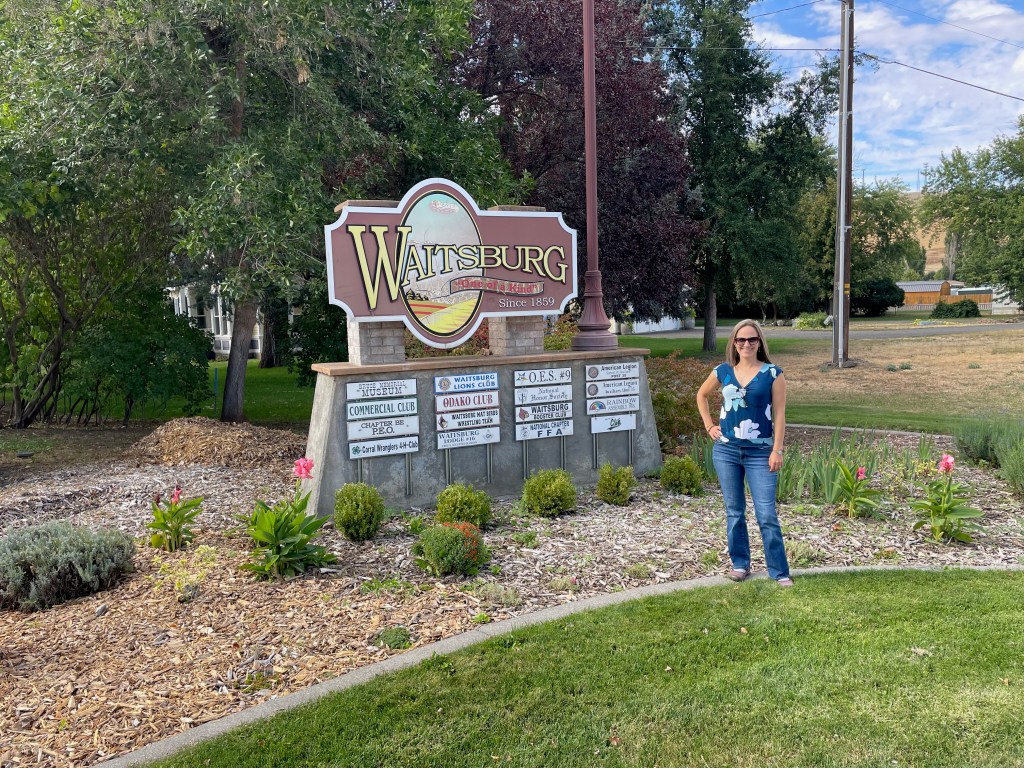
Last weekend Michael and I celebrated 19 years of marriage, with a getaway to Waitsburg, WA. For those who aren’t from around here, Waitsburg is a 25-minute drive from our home in Walla Walla, and it boasts a population of about 1,200. Despite its small size (or maybe because of it), Waitsburg treated us like royalty.
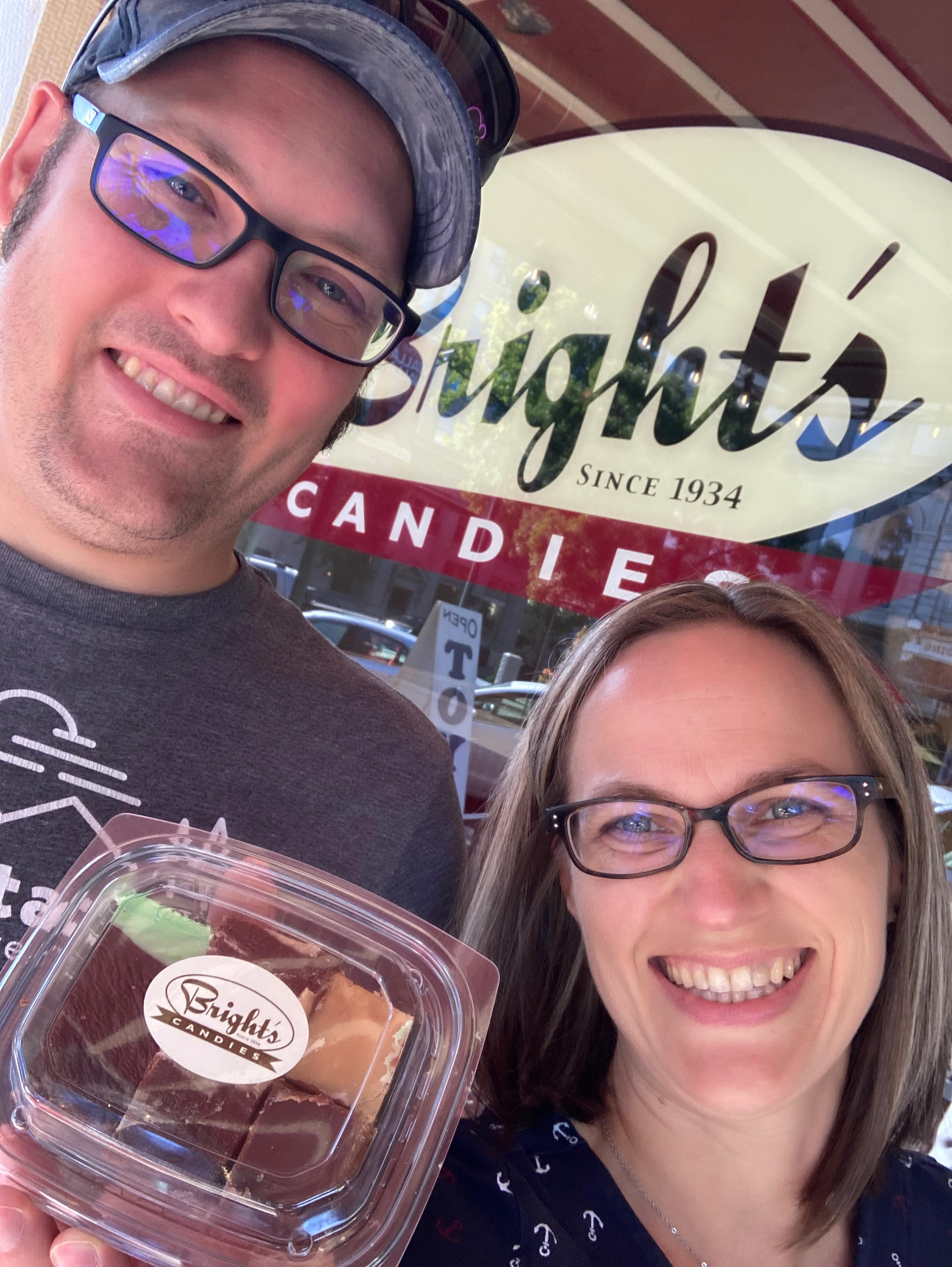
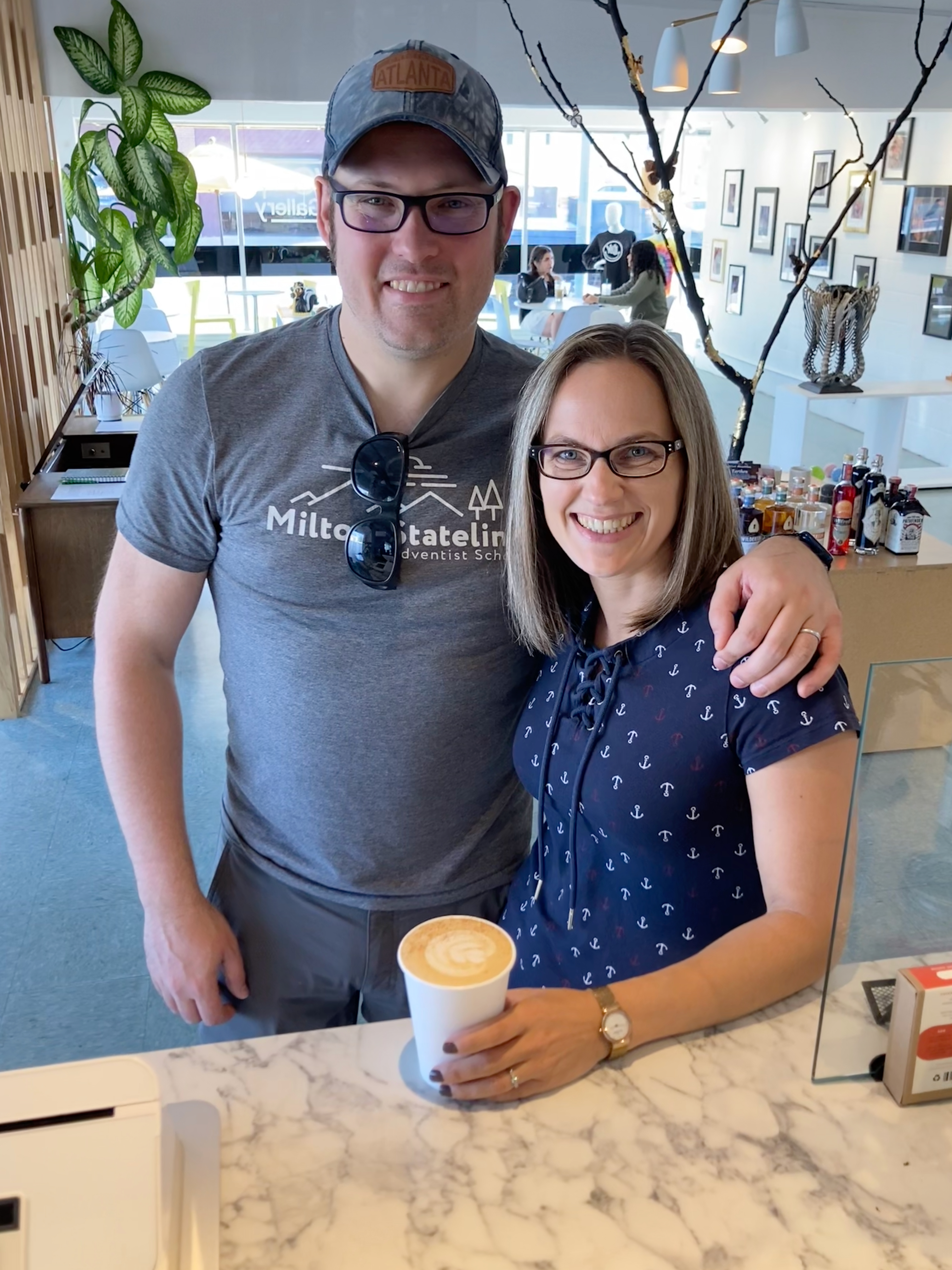
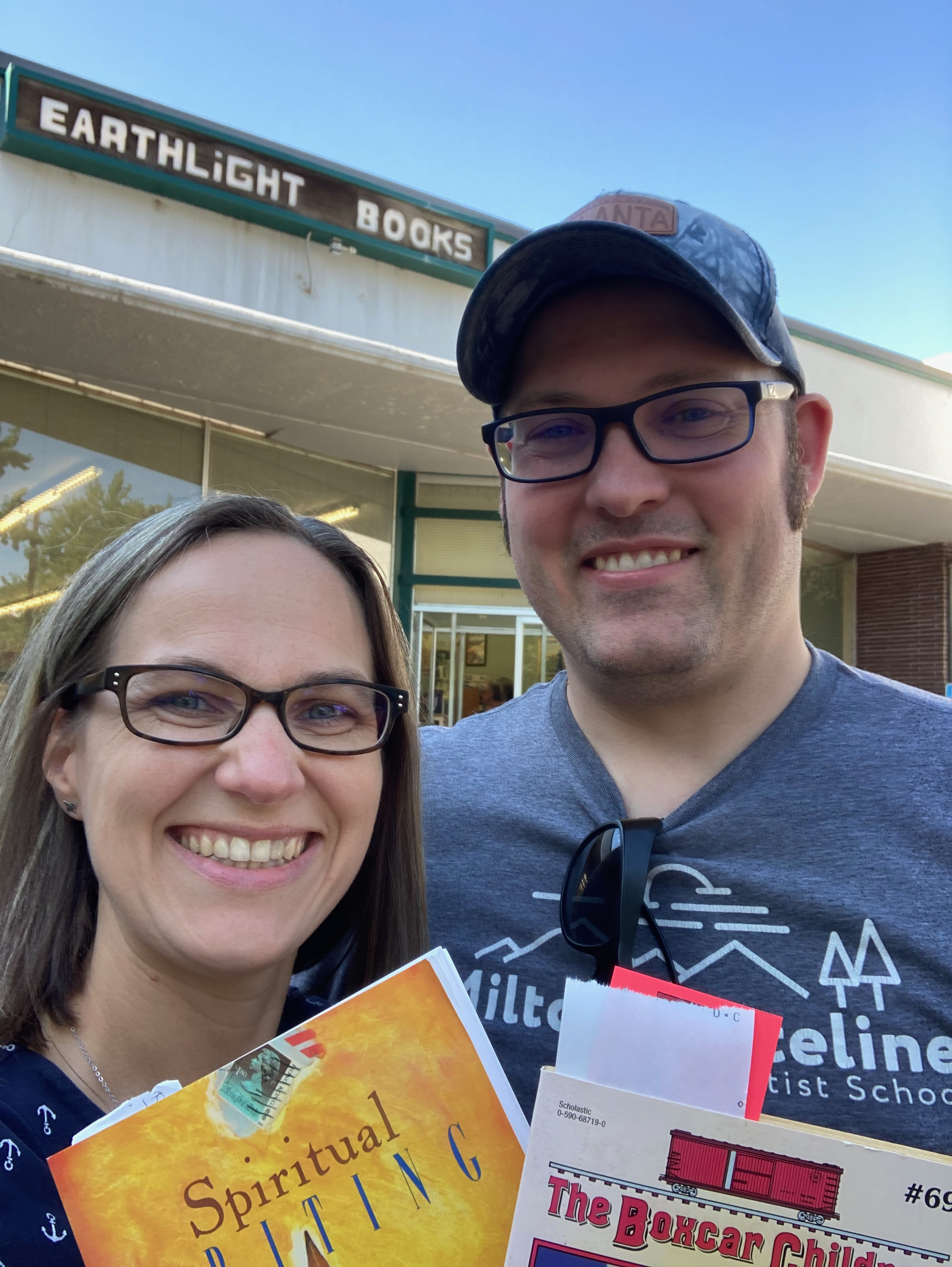
We dropped the kids at their great-grandma’s house Friday afternoon, and since it would be a couple of hours before we could check in to our hotel, we bummed around Walla Walla for a while. We stopped at FVC Gallery to try their new pumpkin chai. Then we poked around the stacks and shelves at Earthlight Books. After that, a walk to Bright’s Candies in the warm afternoon sun brought us close to our check-in time and we drove to Waitsburg. The farmland and sky showed off as we passed the time talking about serious stuff like other people’s relationships.
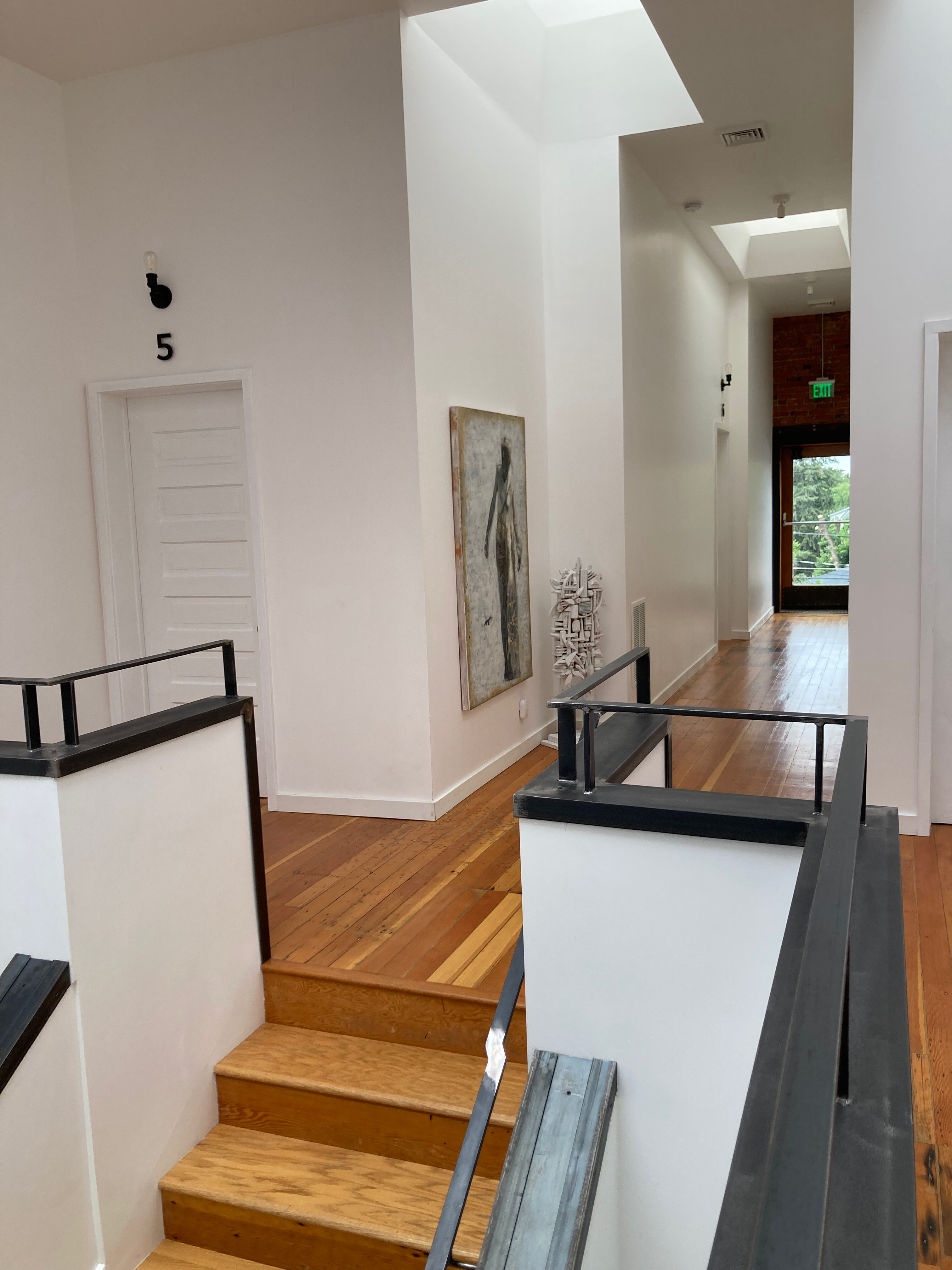
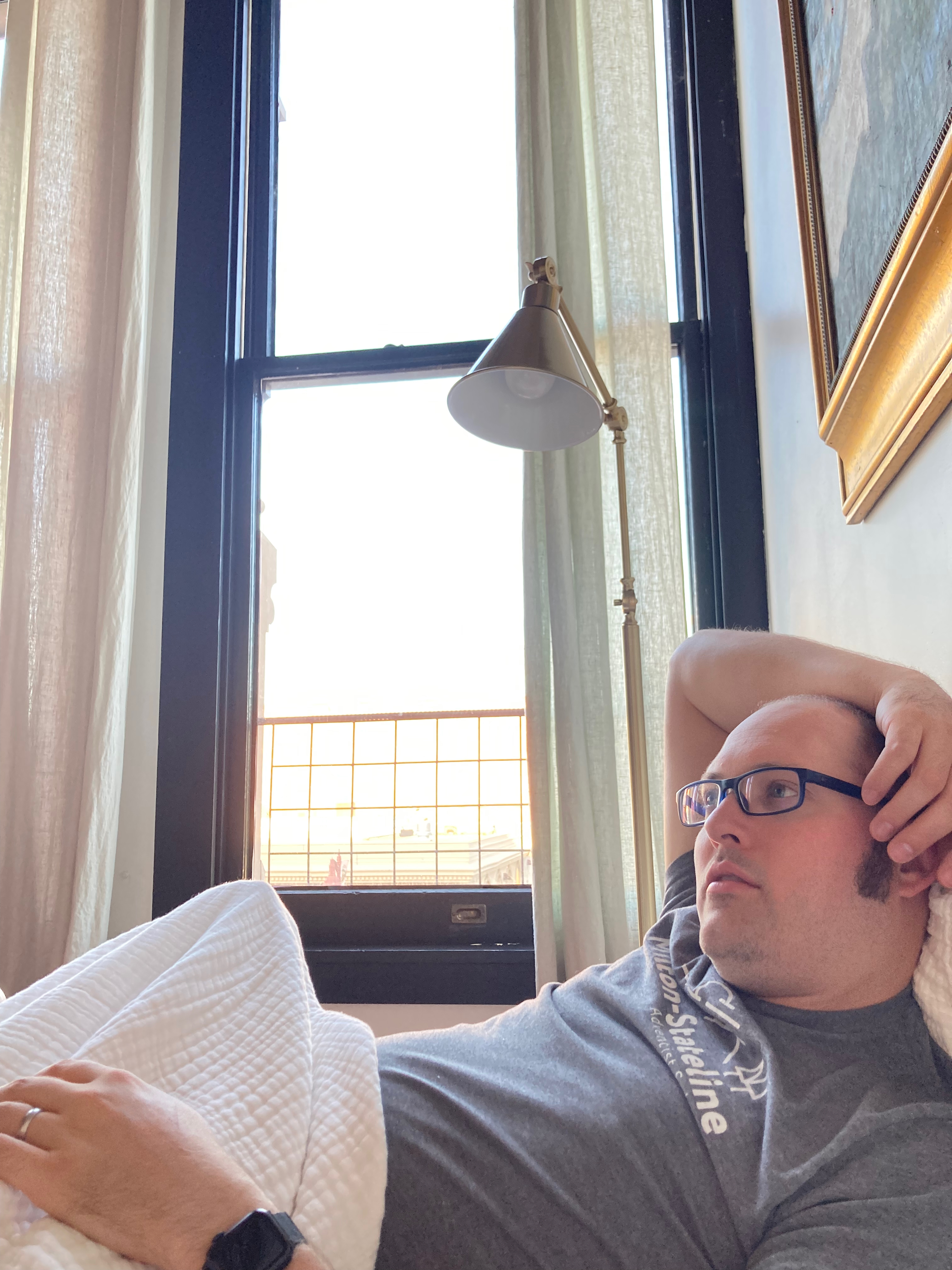
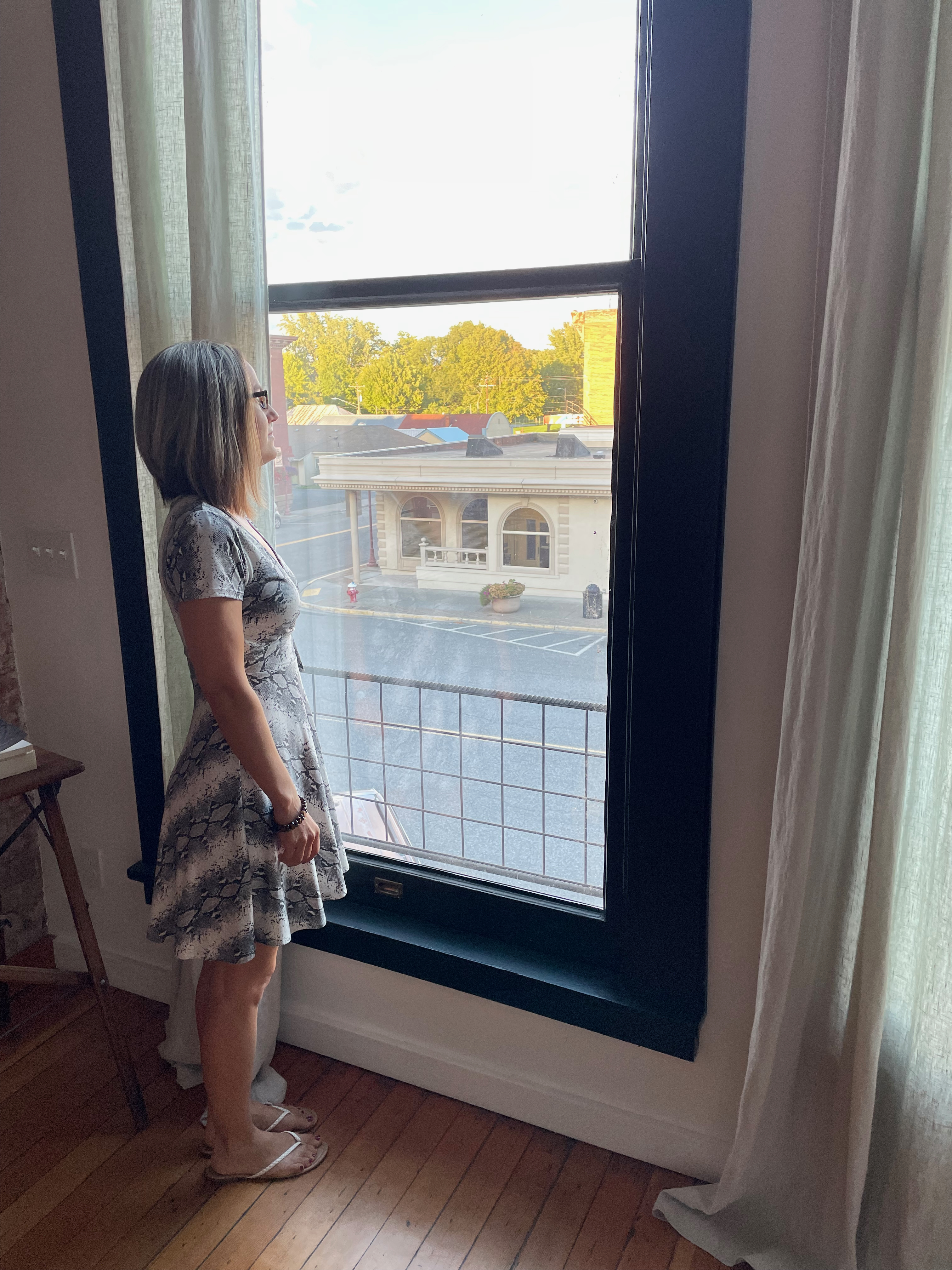
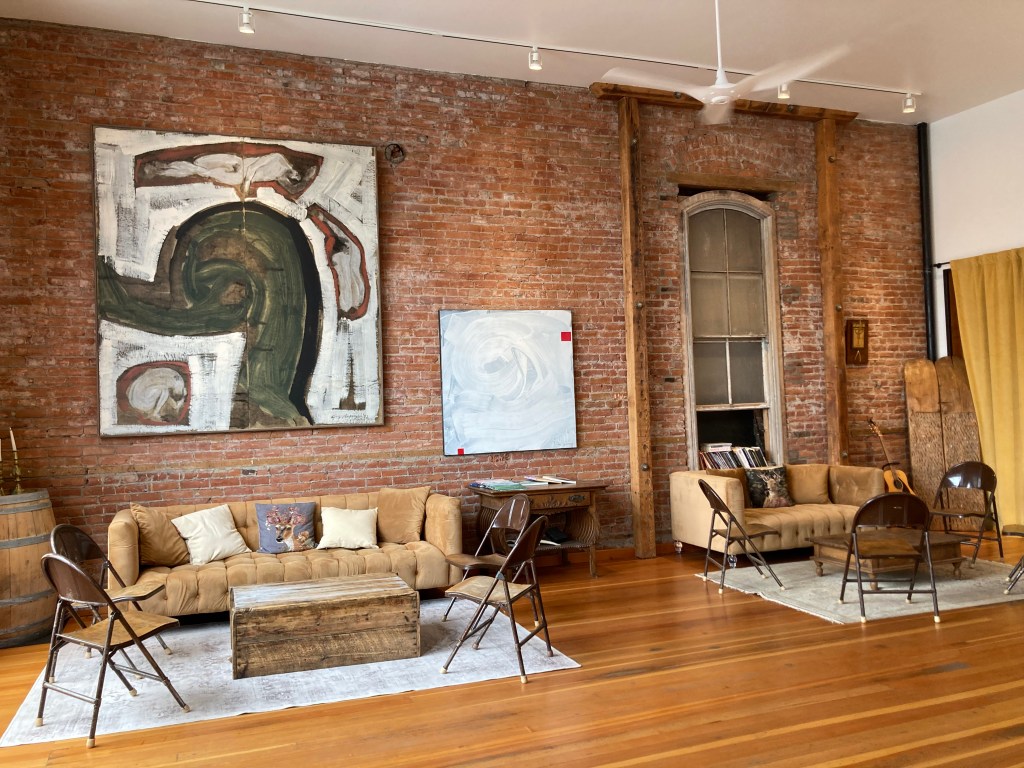
Our room in the the Royal Block had tall ceilings, and gorgeous windows facing Main Street. The king bed occupied a loft over the large custom shower.
We lounged in our room, then checked out the local grocery store and convenience store (there’s one of each). Although we didn’t find the plant-based meat we were looking for to go with our croissant sandwiches, I found pineapple juice concentrate. (That may not sound exciting, but the two grocery stores I shop at weekly have been out for months. I like to keep it around for smoothies (especially piña colada smoothies), so we made plans to come back and buy some later.)
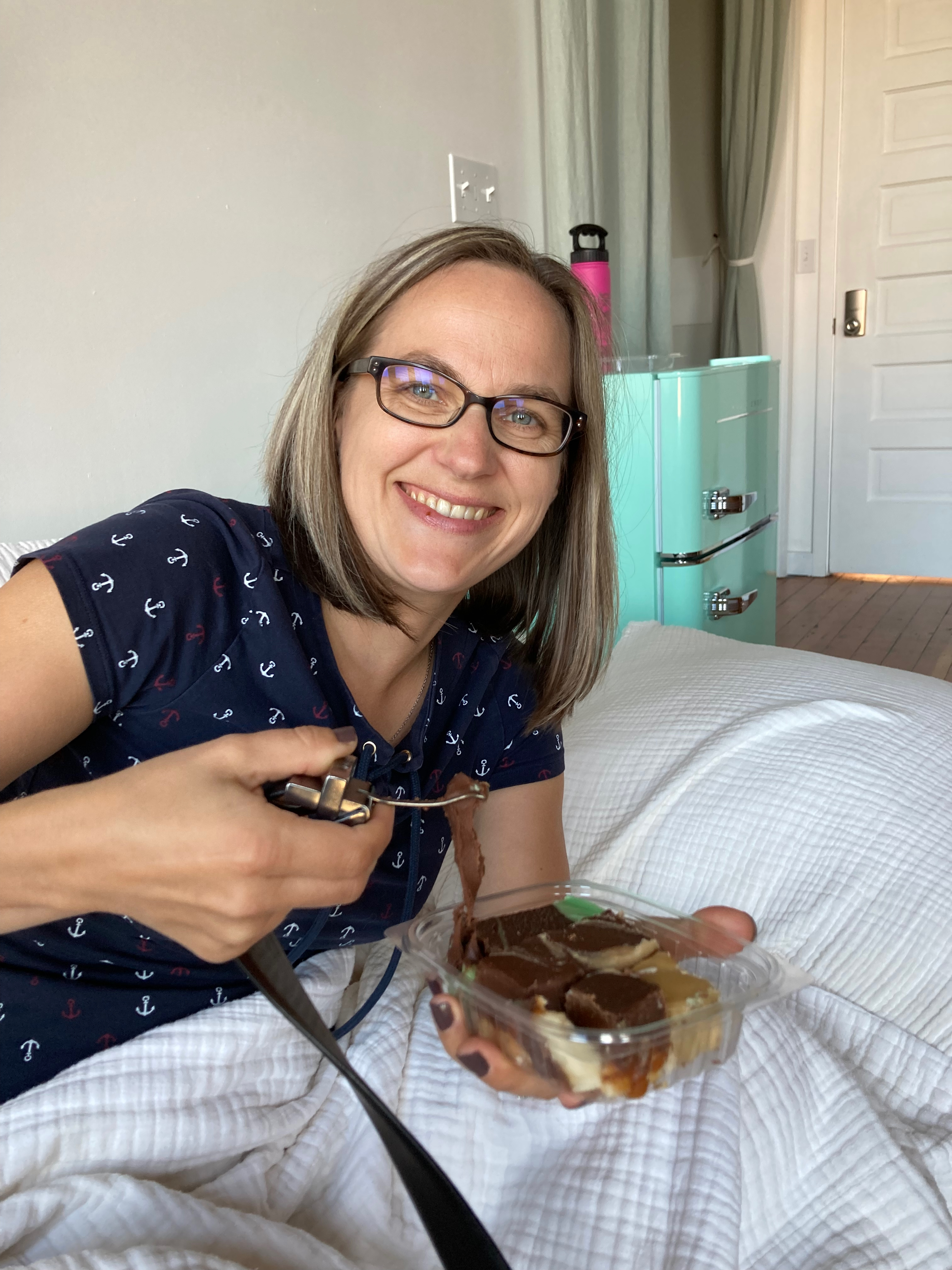
After dinner we opened the fudge from Bright’s Candies. We had no utensils, plastic or otherwise, so we used the prong on Michael’s belt buckle to slice our fudge. Yum.
In the evening, we wandered down to the bar that occupies a portion of the Royal Block’s first floor, and ended up deep in conversation with the owners, Joe and Tiina. Tiina made us a cup of tea and kept our water glasses full, while Joe regaled us with stories of the owls that lived in the building when they first bought it, and how they lived in a tent because of how much water dripped down inside any time it rained. They’re passionate about community and beauty, and are delightful conversationalists. We must have talked for an hour before turning in for the night.
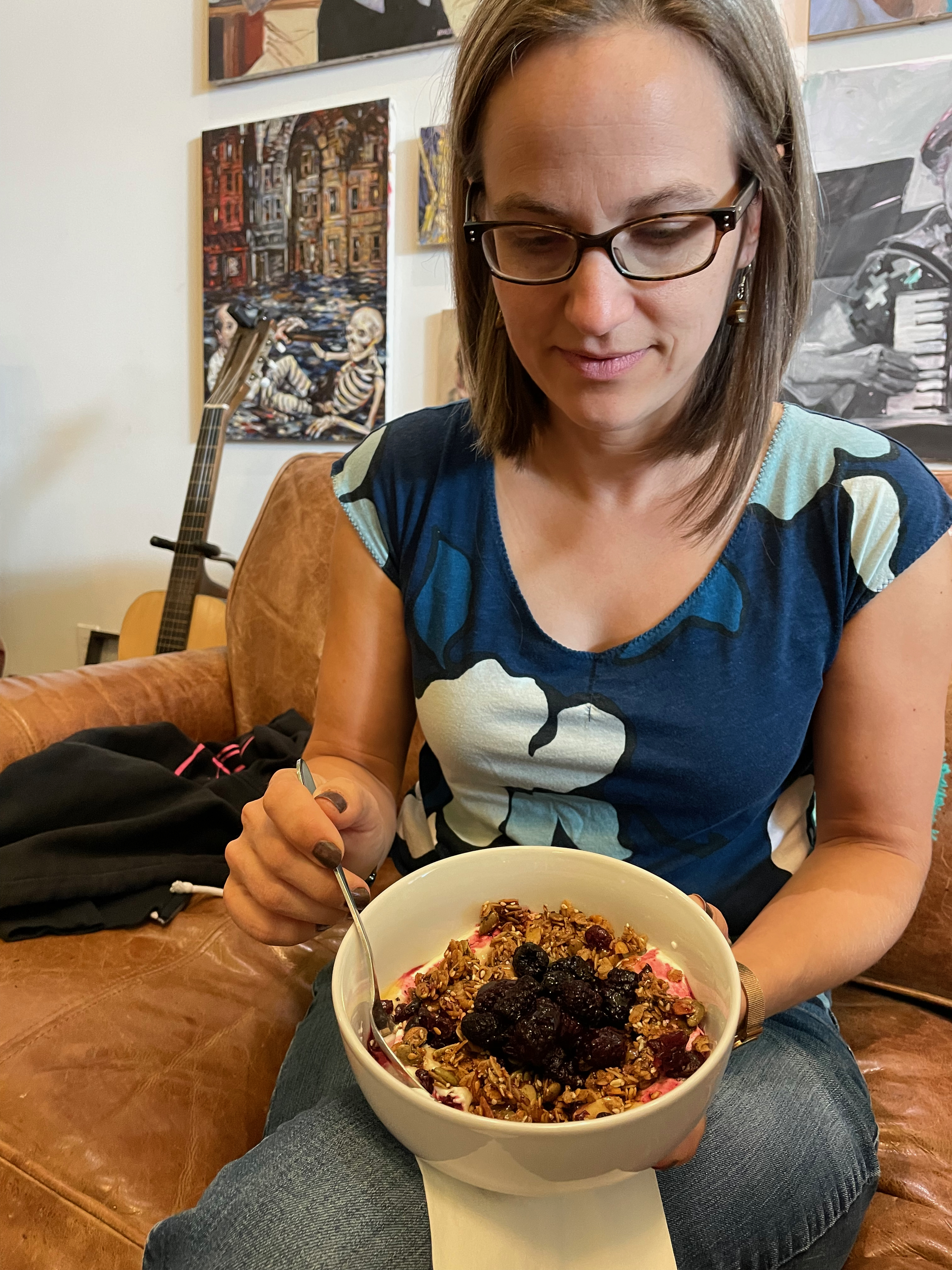
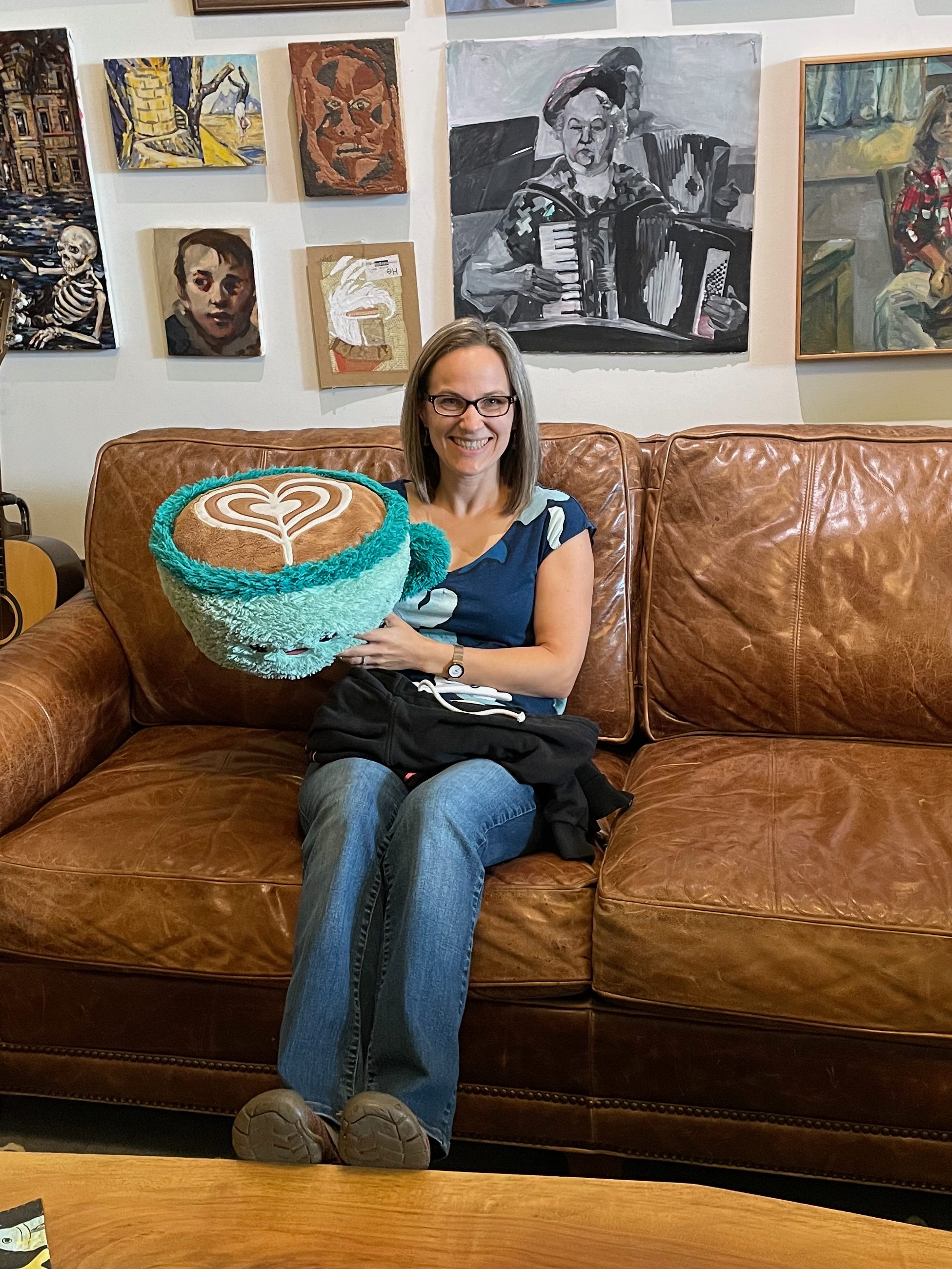
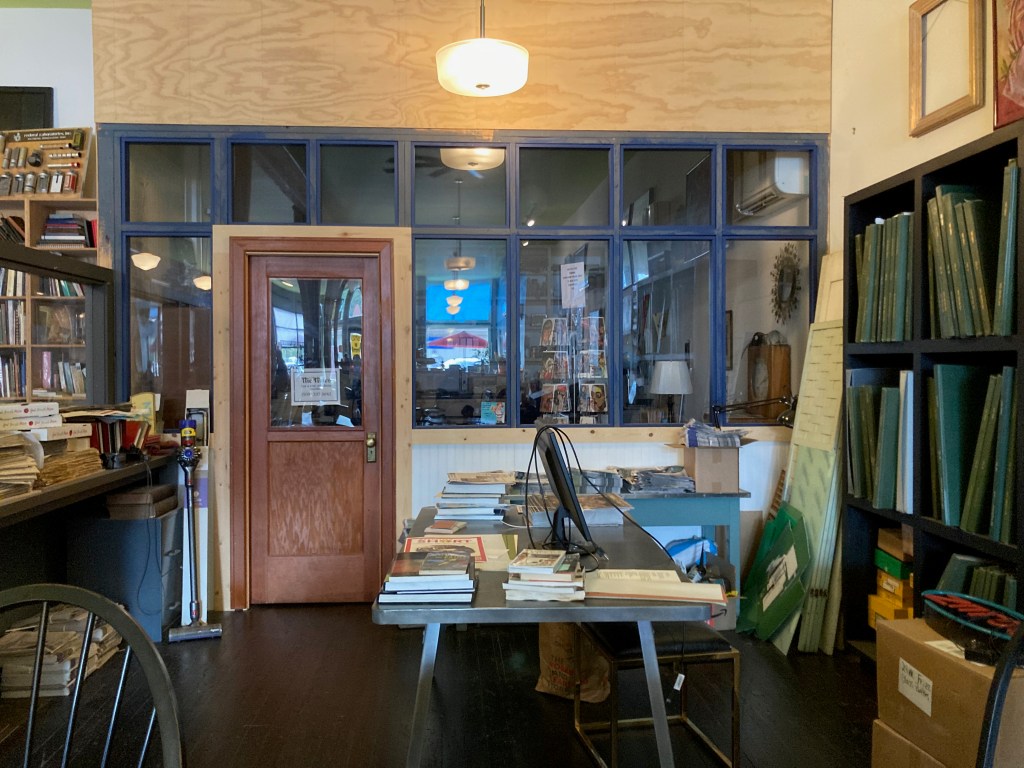
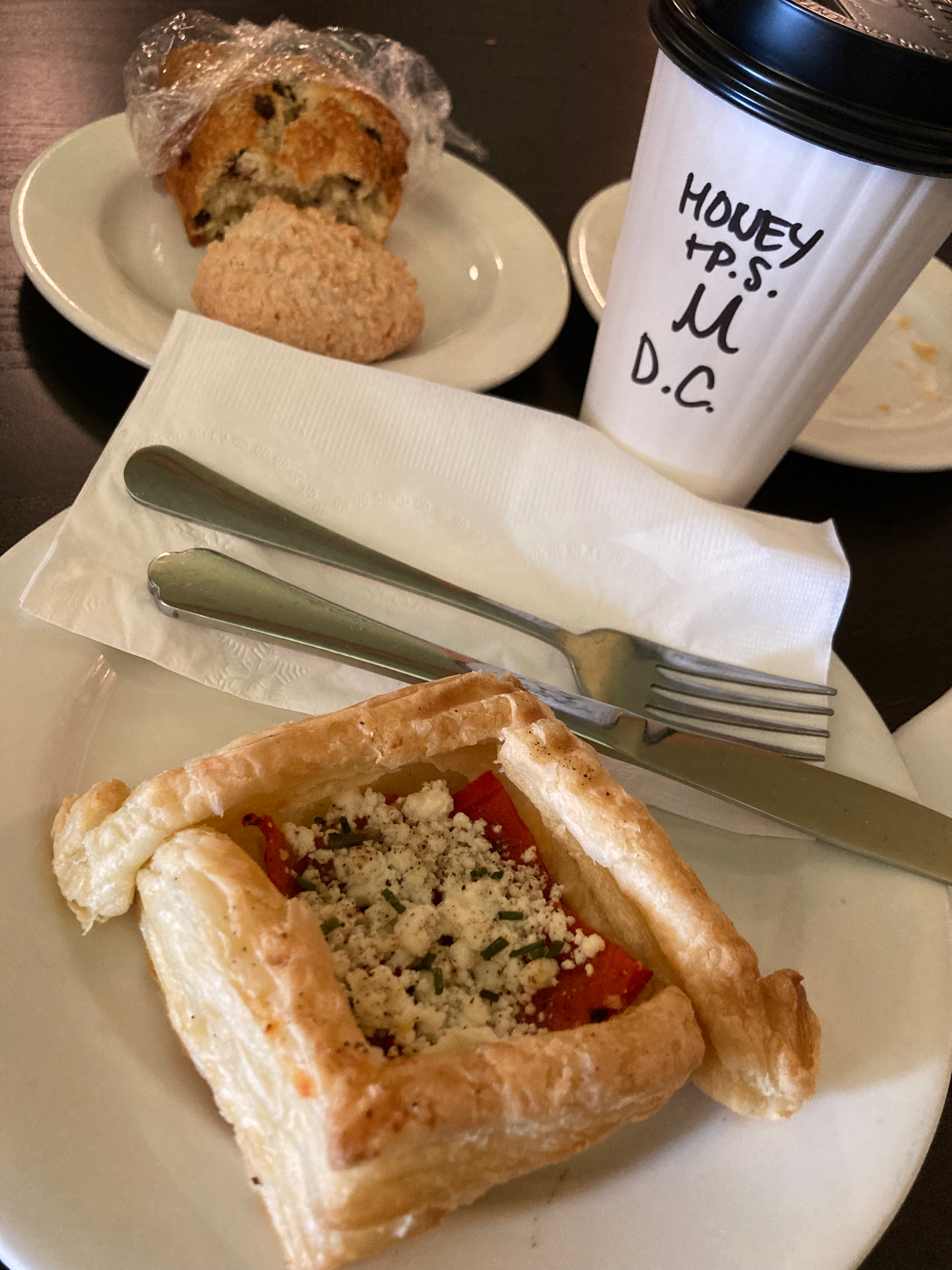
Saturday morning we quietly exited the Royal Block and walked next door to Ten Ton Coffee, where eclectic art, comfortable seating, and good food occupied us. Michael read “King Jack and the Dragon” to me while we waited for our food. (The story was new to us, and I highly recommend it for preschoolers and their parents.)
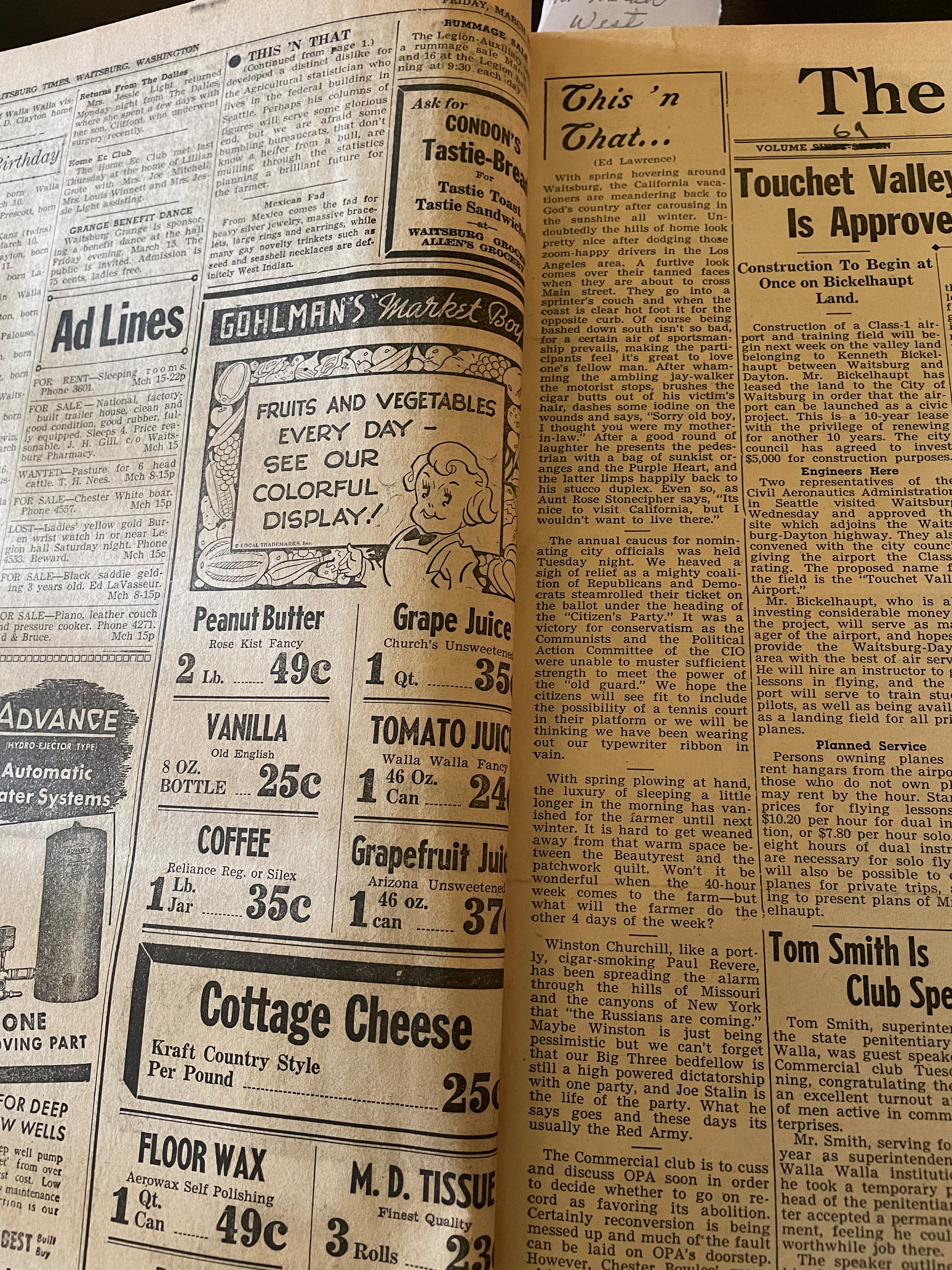
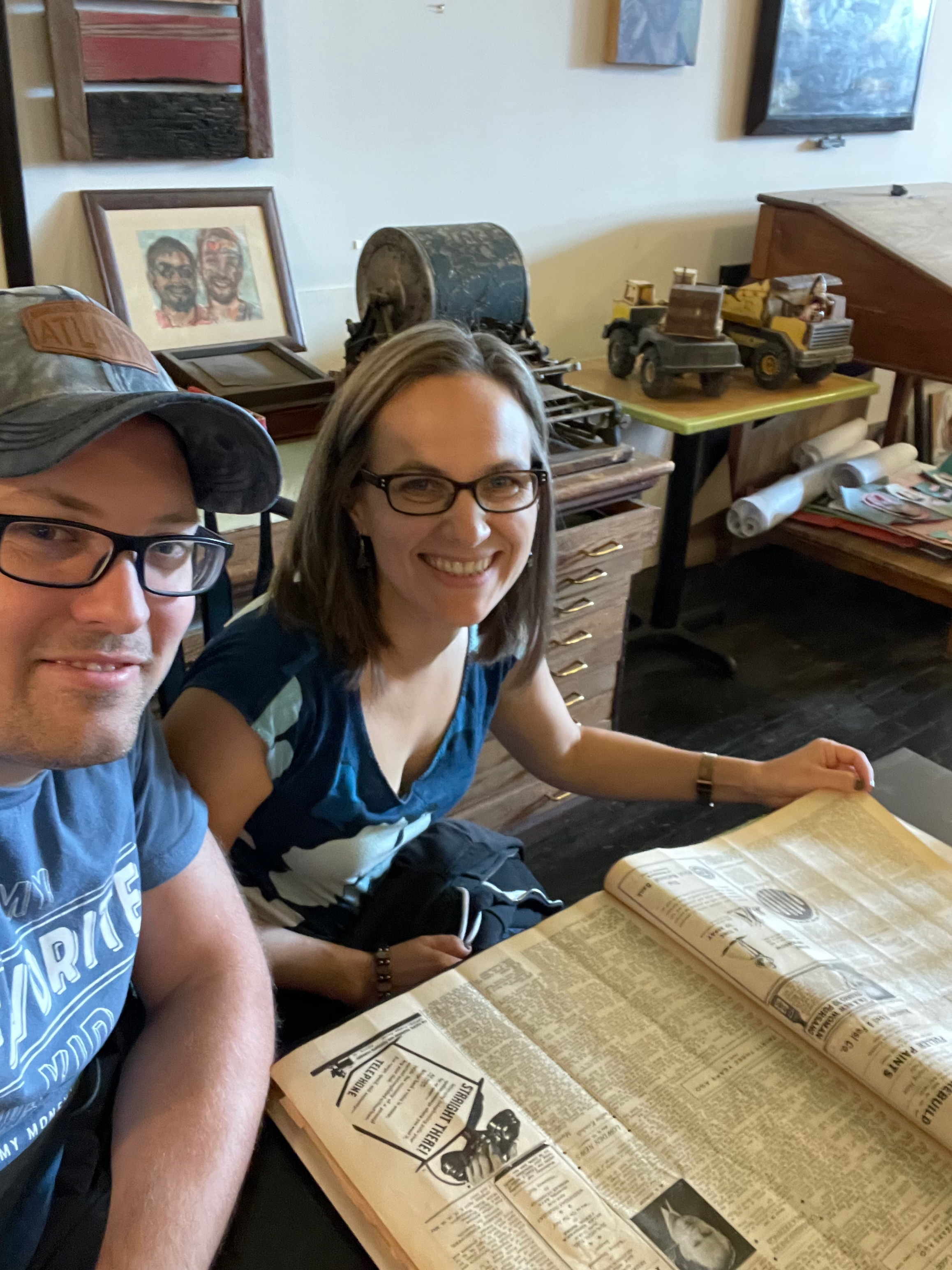
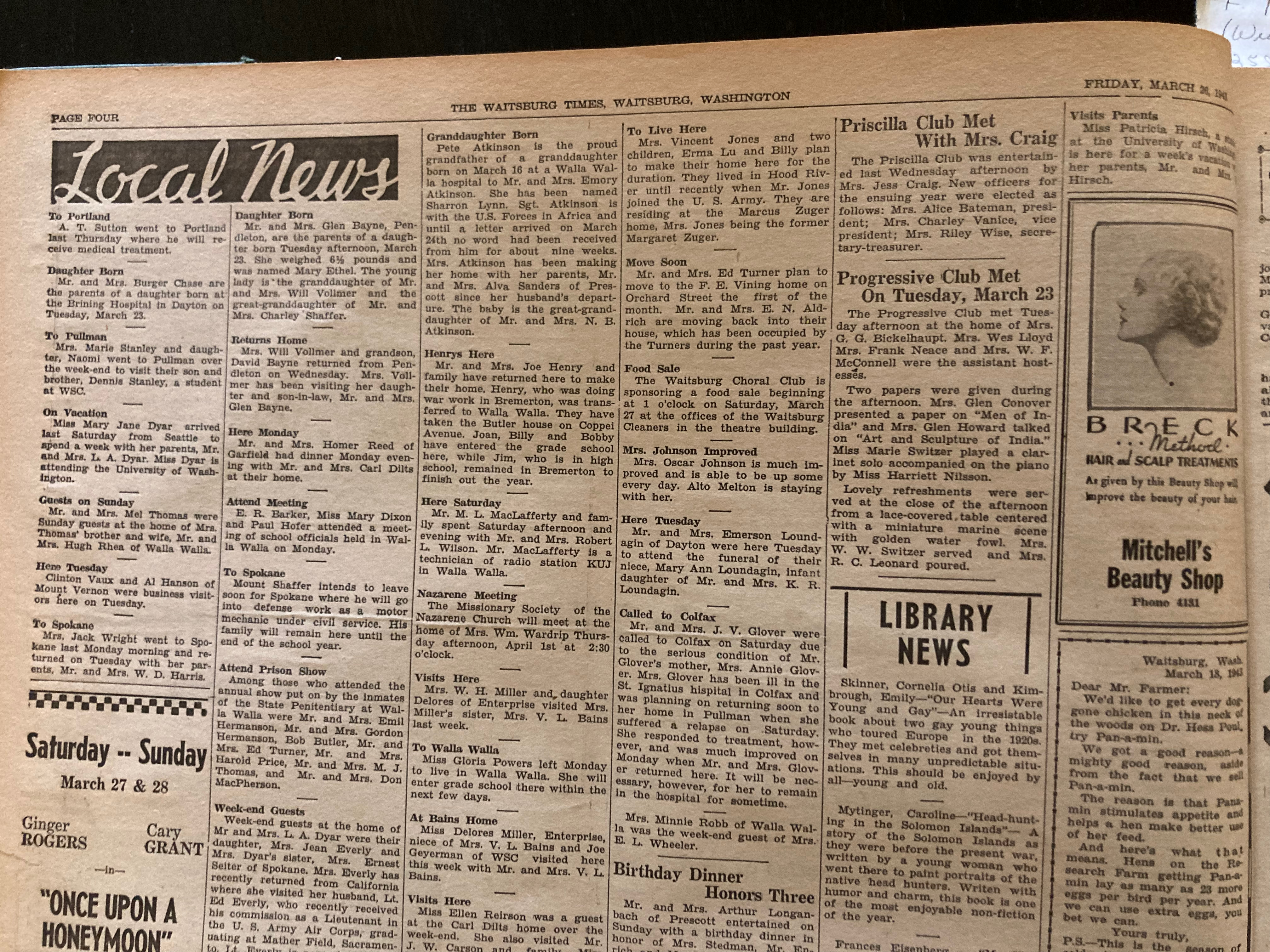
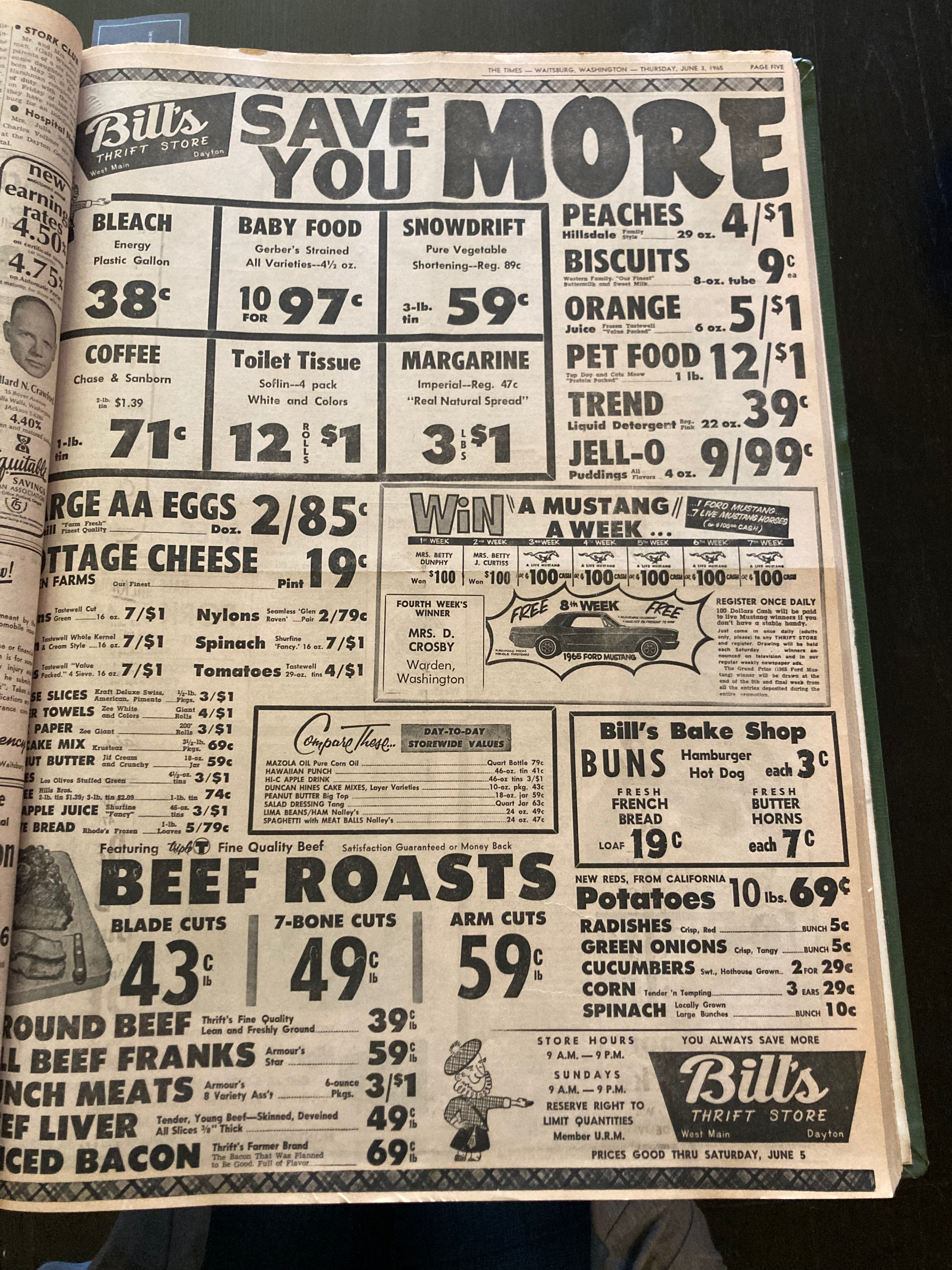
After eating, we checked out The Times office in the back of the coffee shop. The woman who currently owns the paper struck up a conversation. We talked about coffee, art, the local white supremacists, and The Times, which has been in print nearly 150 years – since 1878. She invited us to peruse the archives, housed in large volumes with green covers, shown on the right in the picture below.
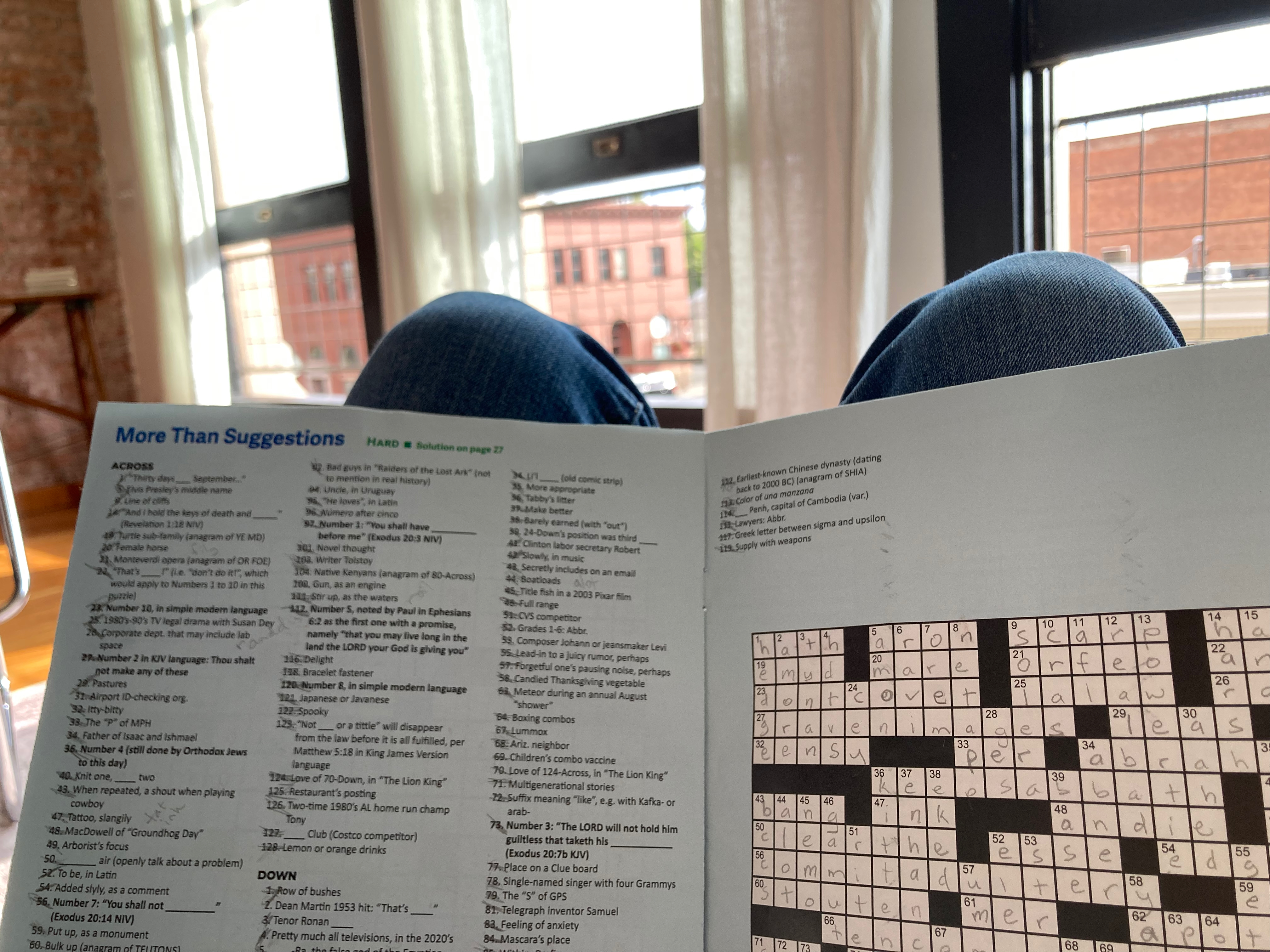
Having no plans for the day turned out to be great fun. We read newspapers from the 40’s and 60’s, and when we tired of that we went back to our room and did a crossword puzzle.
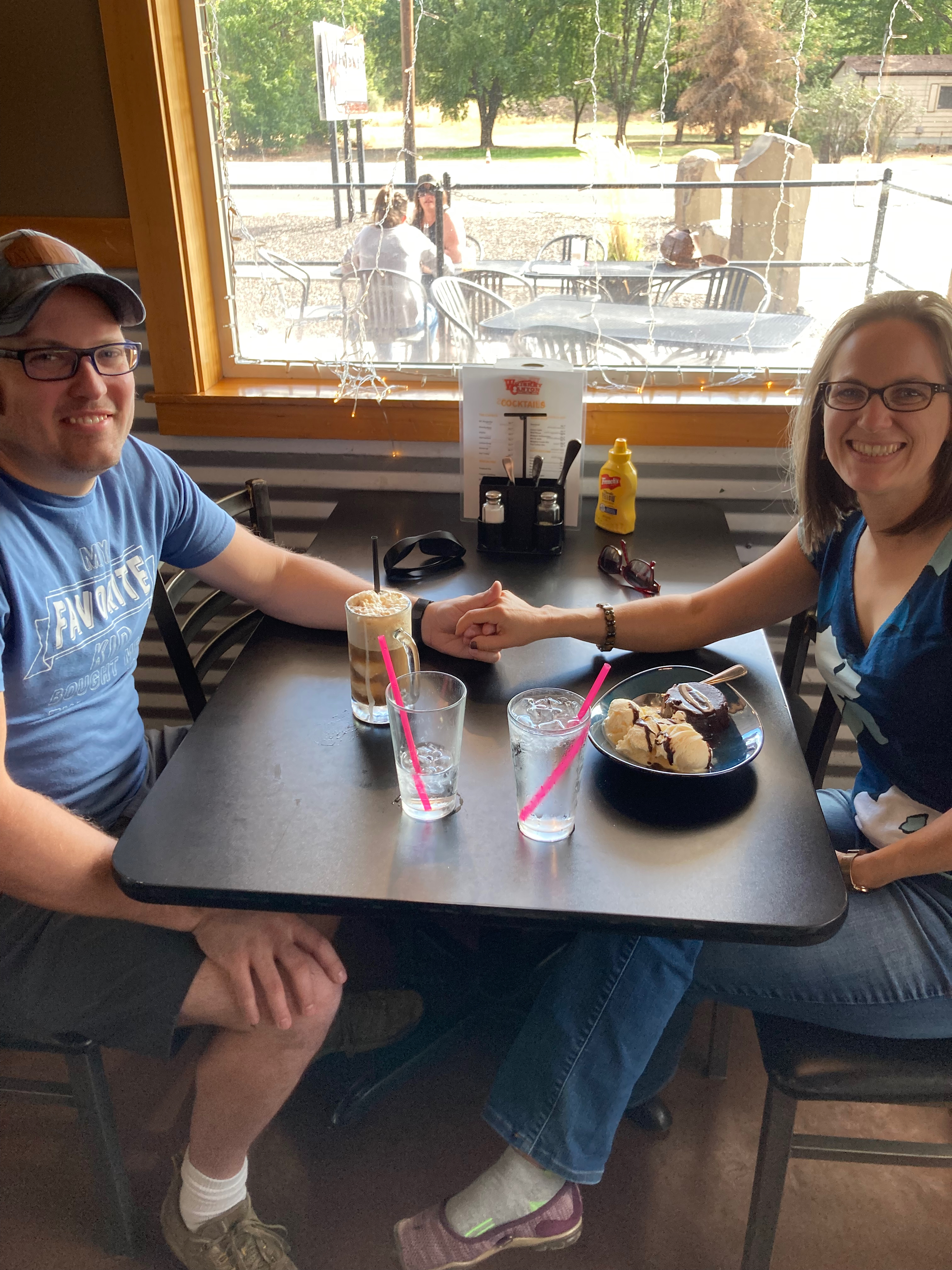
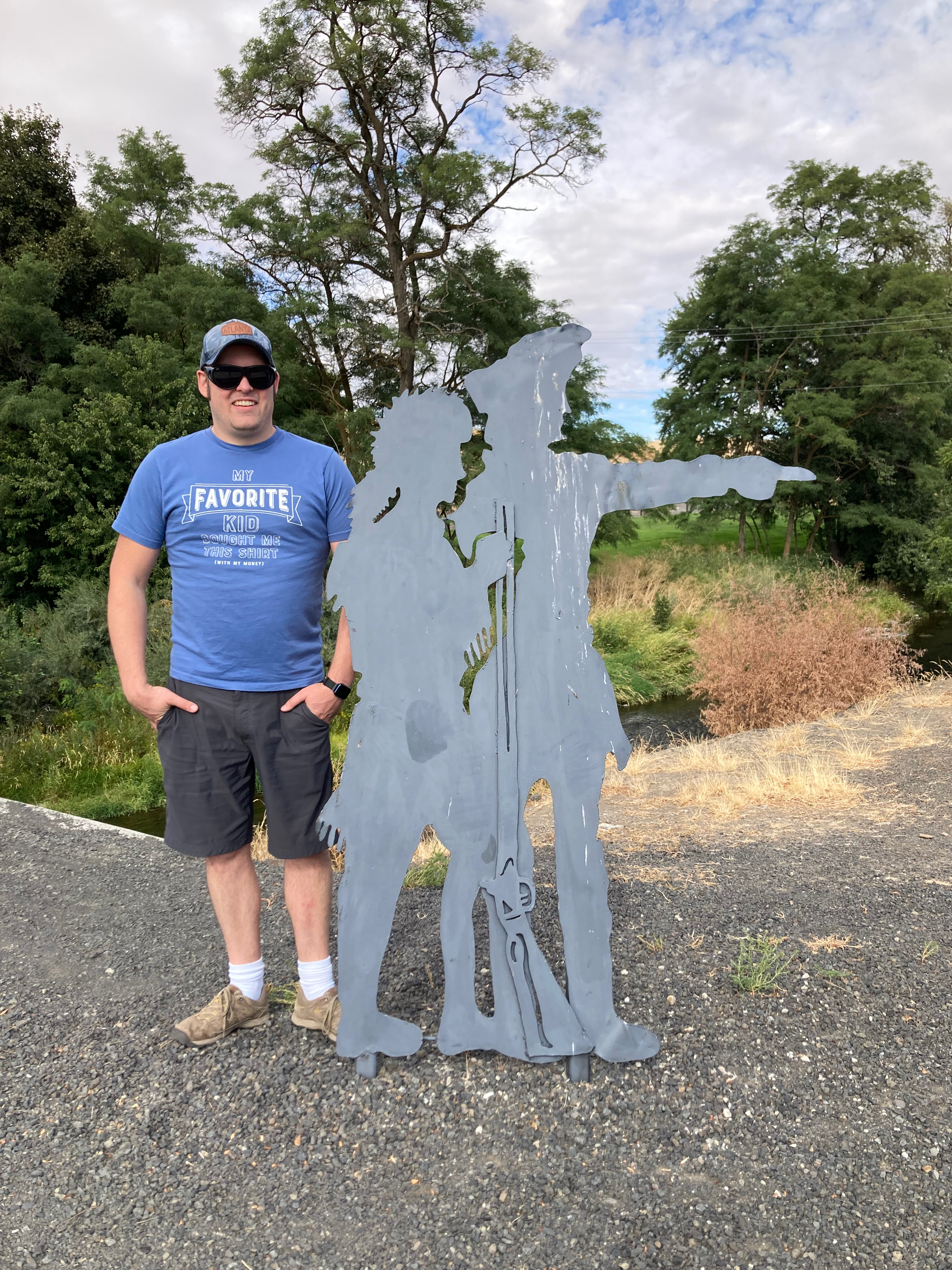
Lunchtime found us at Whiskey Canyon, a half-mile walk to the other end of town. The food was good, but a healthy population of house flies detracted from the ambience. We took the long way back to our hotel, stopping to see the sights and take too many pictures.
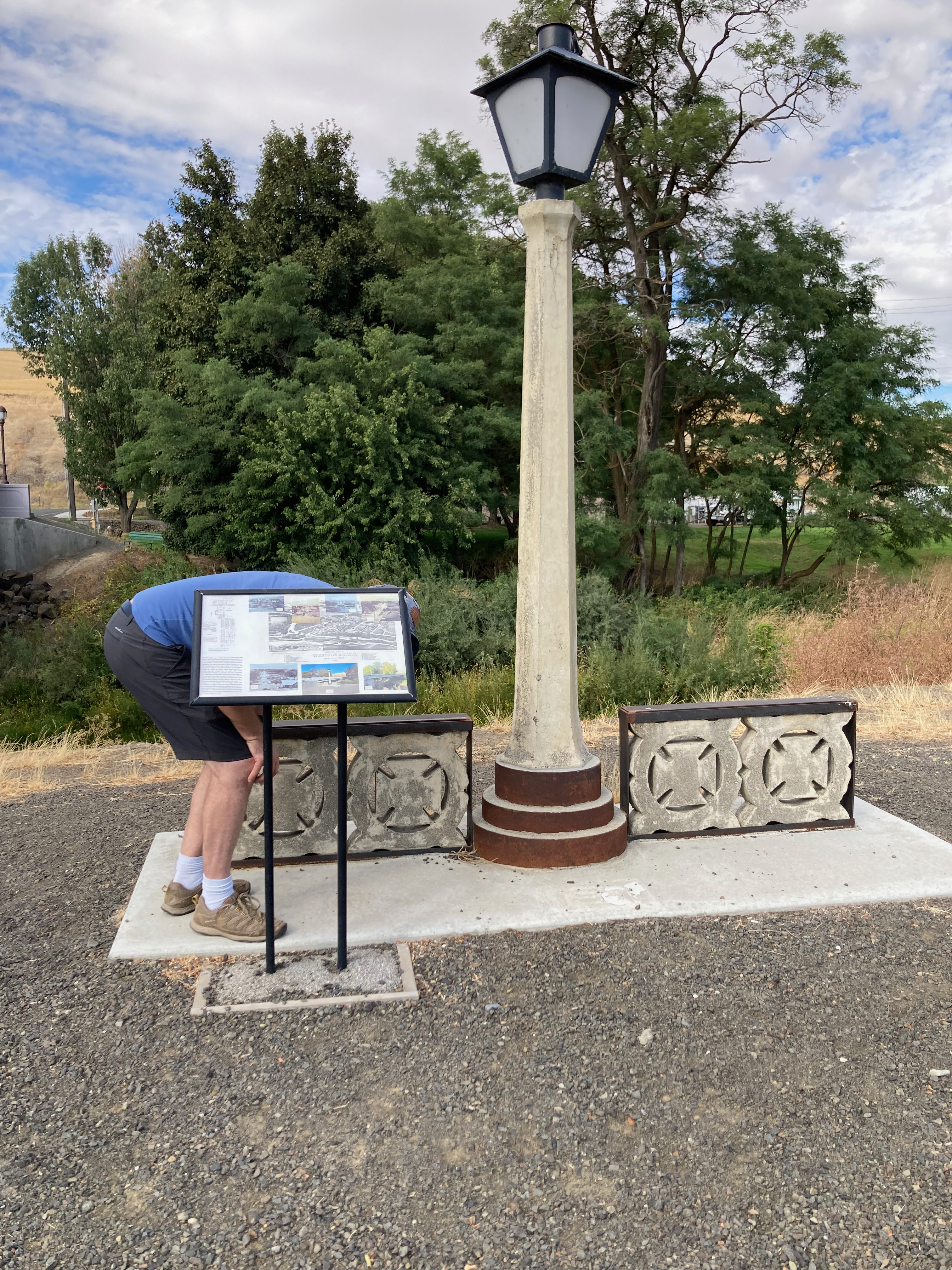
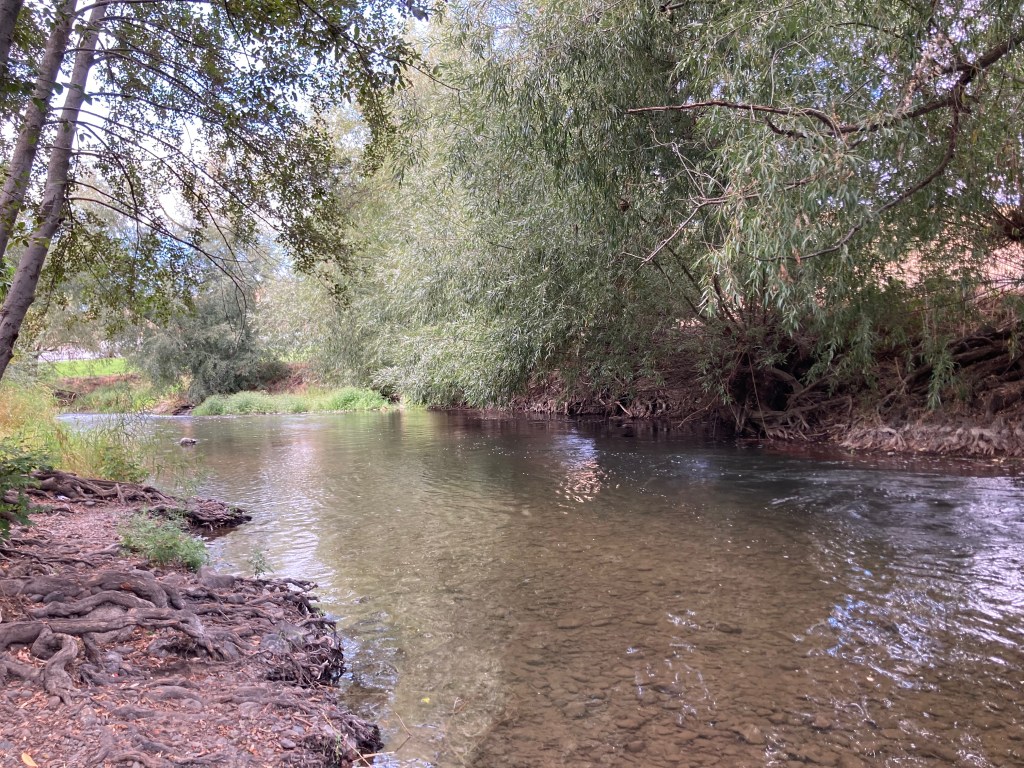
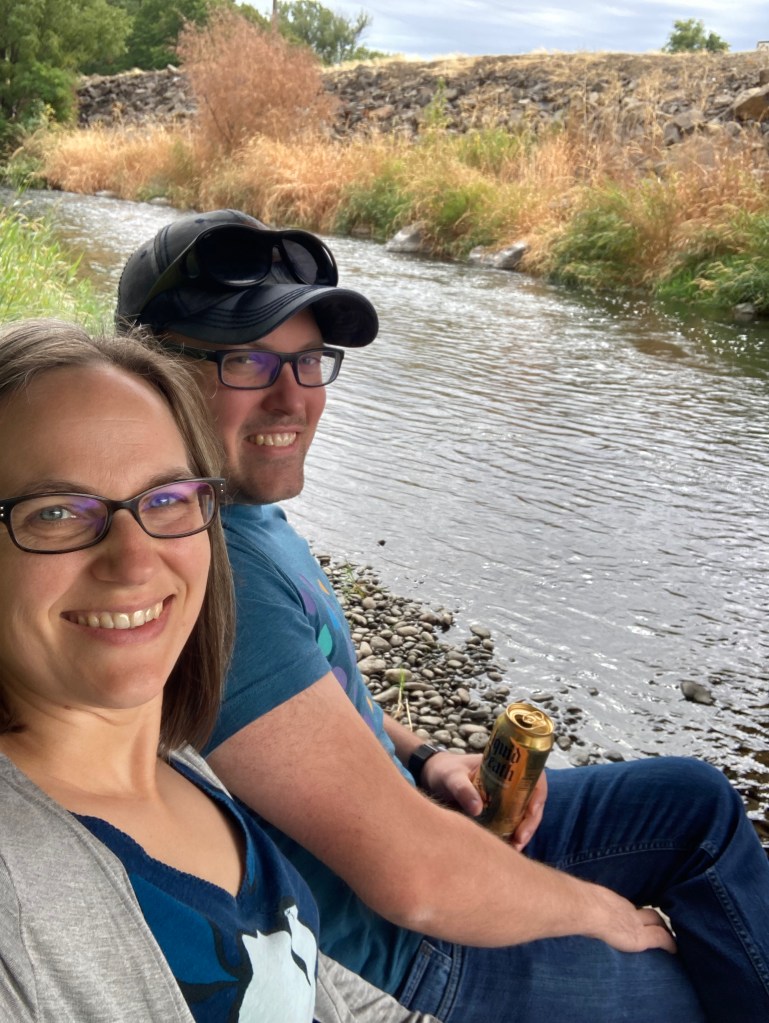
The city park in Waitsburg borders the Touchet River, and if you’re willing to scramble down a short dirt embankment, you can stand at the water’s edge and listen to the peaceful sounds of water flowing and branches swaying.
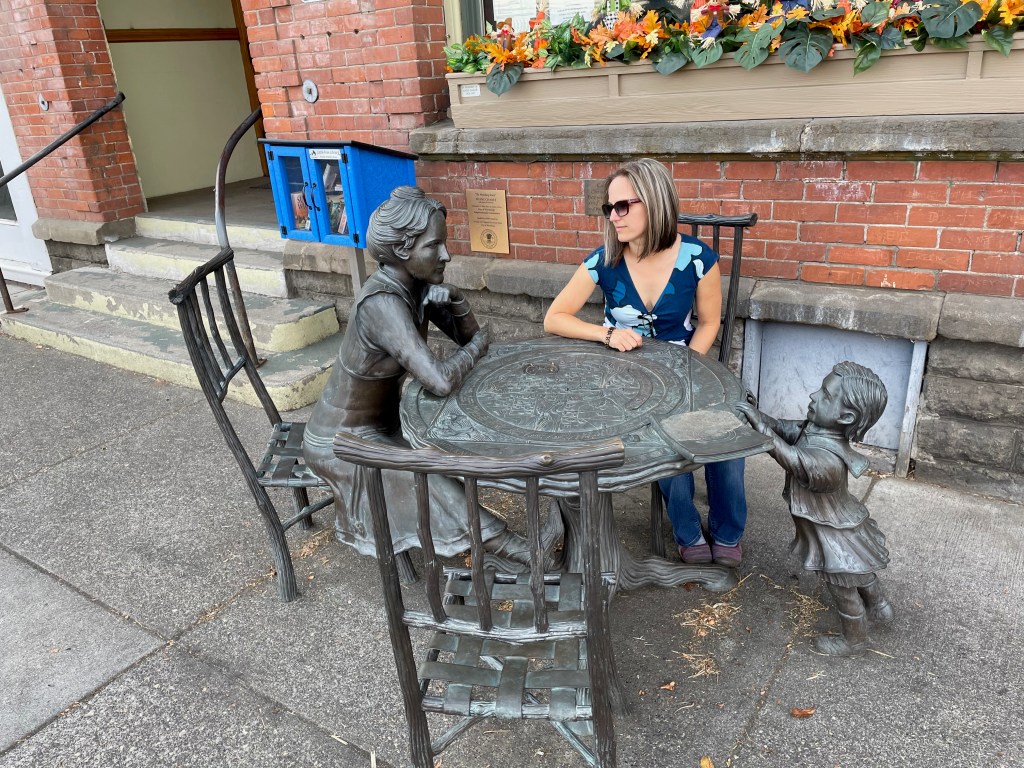
While I took a picture of the library, Michael snapped one of the former City Hall (the portion of the building with darker brick), which is currently for sale. Both Joe and Tiina at the Royal Block, and the woman who owns The Times, suggested that we buy the place (we brainstormed possible business plans over lunch because, why not?). We snuck in the building to admire the beautiful old architecture, complete with a dripping sink in a dilapidated bathroom, and office doors painted with signage for the lawyers who used to occupy them.
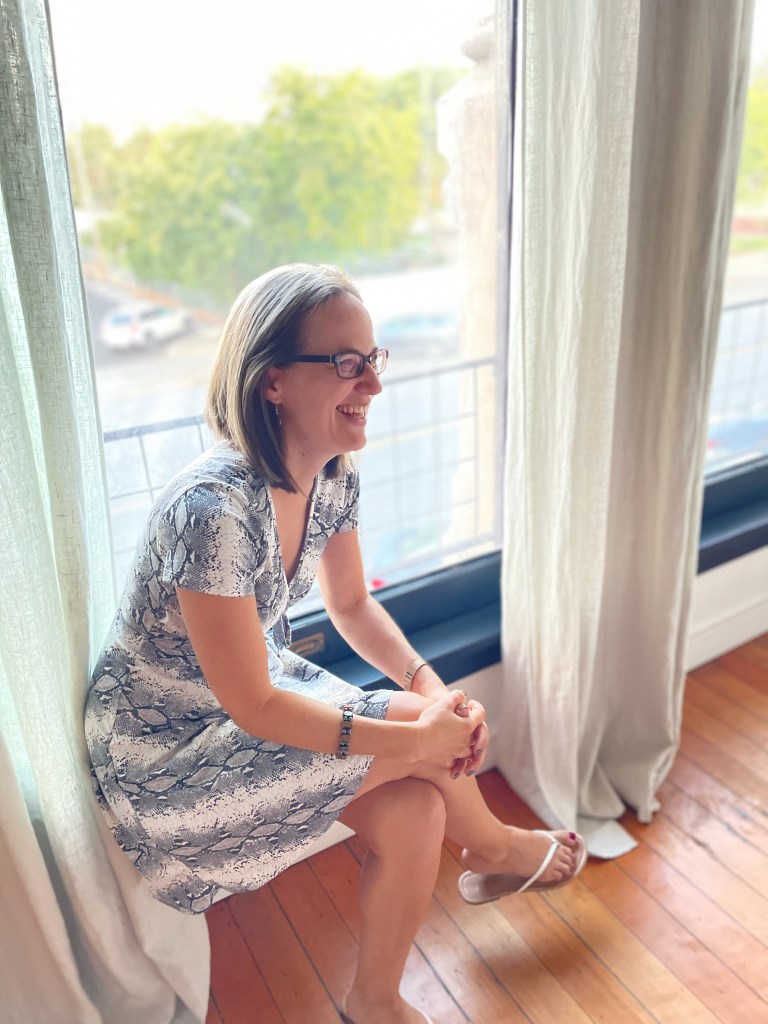
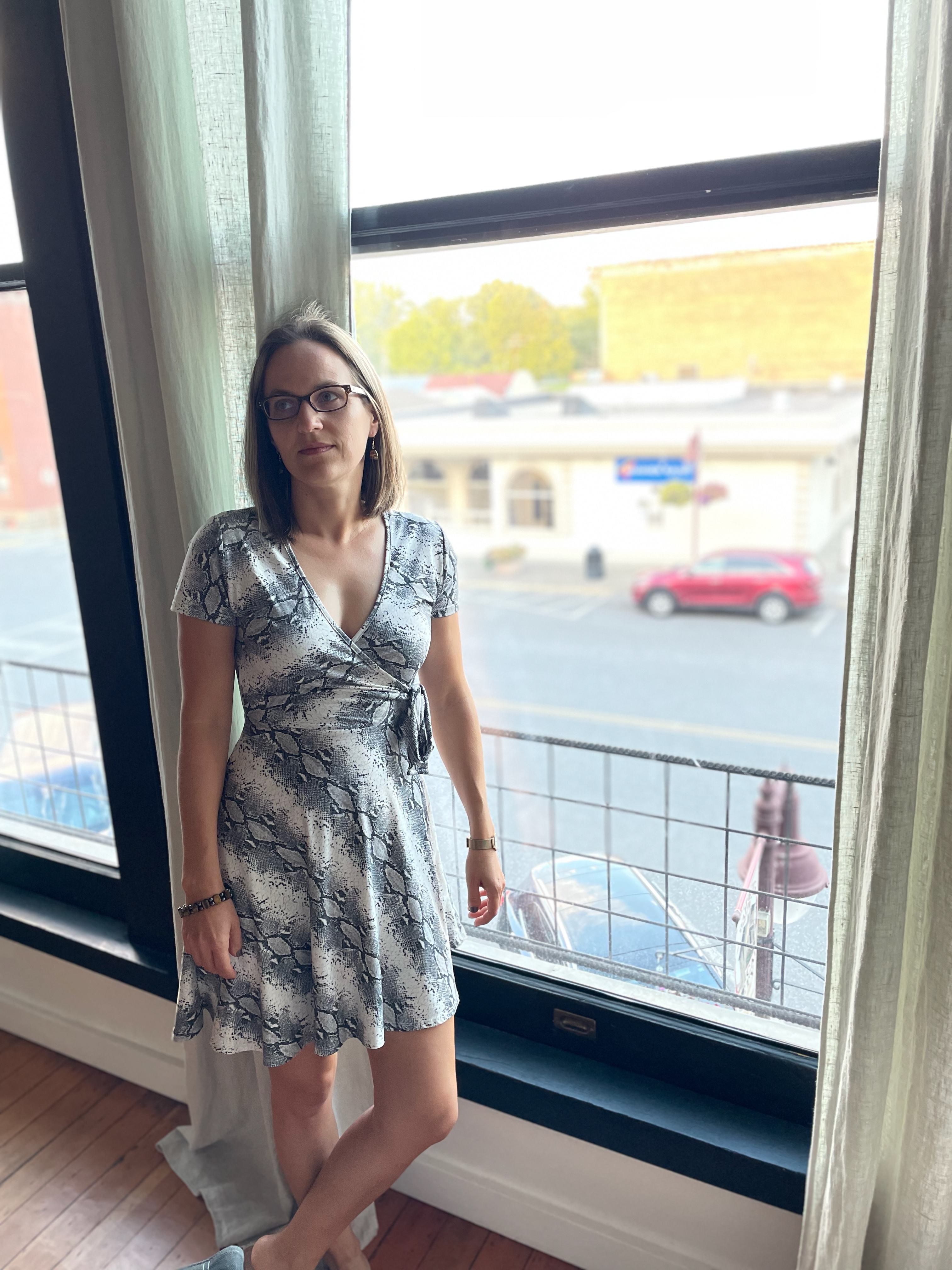
We dressed up for dinner and I asked Michael to take pictures of me in front of the lovely windows. We laughed over my awkward poses and the bank sign outside that clearly added to the romance.
Our flip-flops (yes, flip-flops can be dress-up clothes) smacked loudly on the wood stairs as we walked down to the main floor, where Tongue and Groove, a local band, played live. Joe and Tiina took orders and chatted with customers. We’d been told that Joe bakes on Saturday, so we ordered bread, an adorable baby loaf that came with housemade dipping sauce – oil and vinegar, herbs, and fresh sliced garlic.
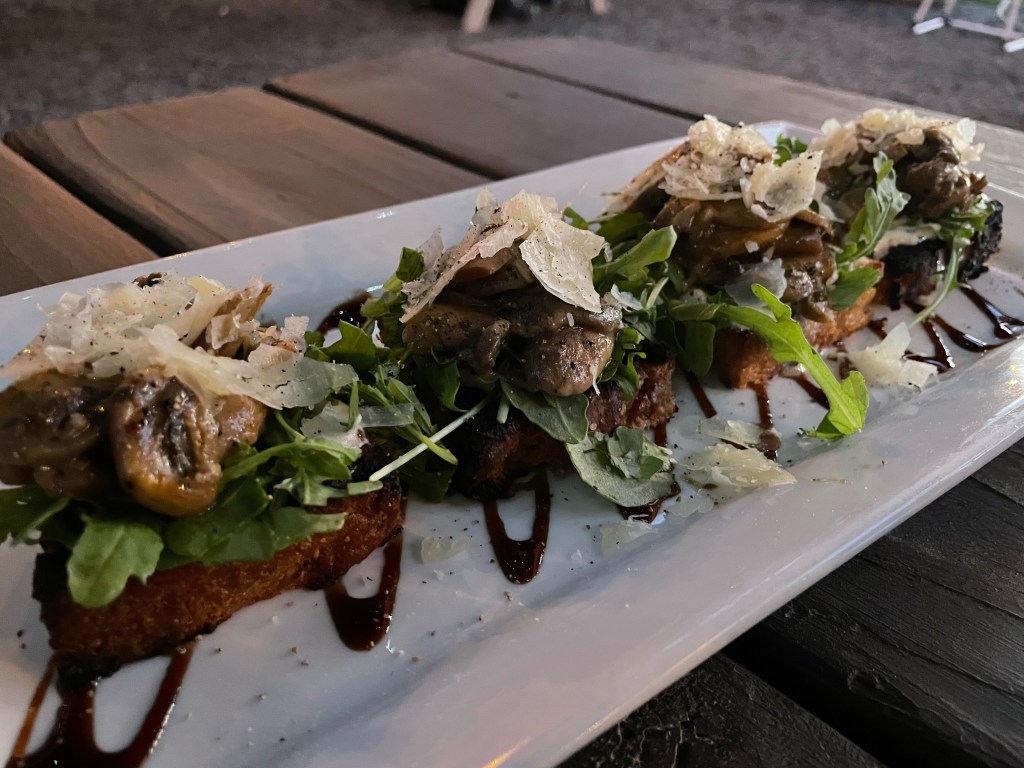
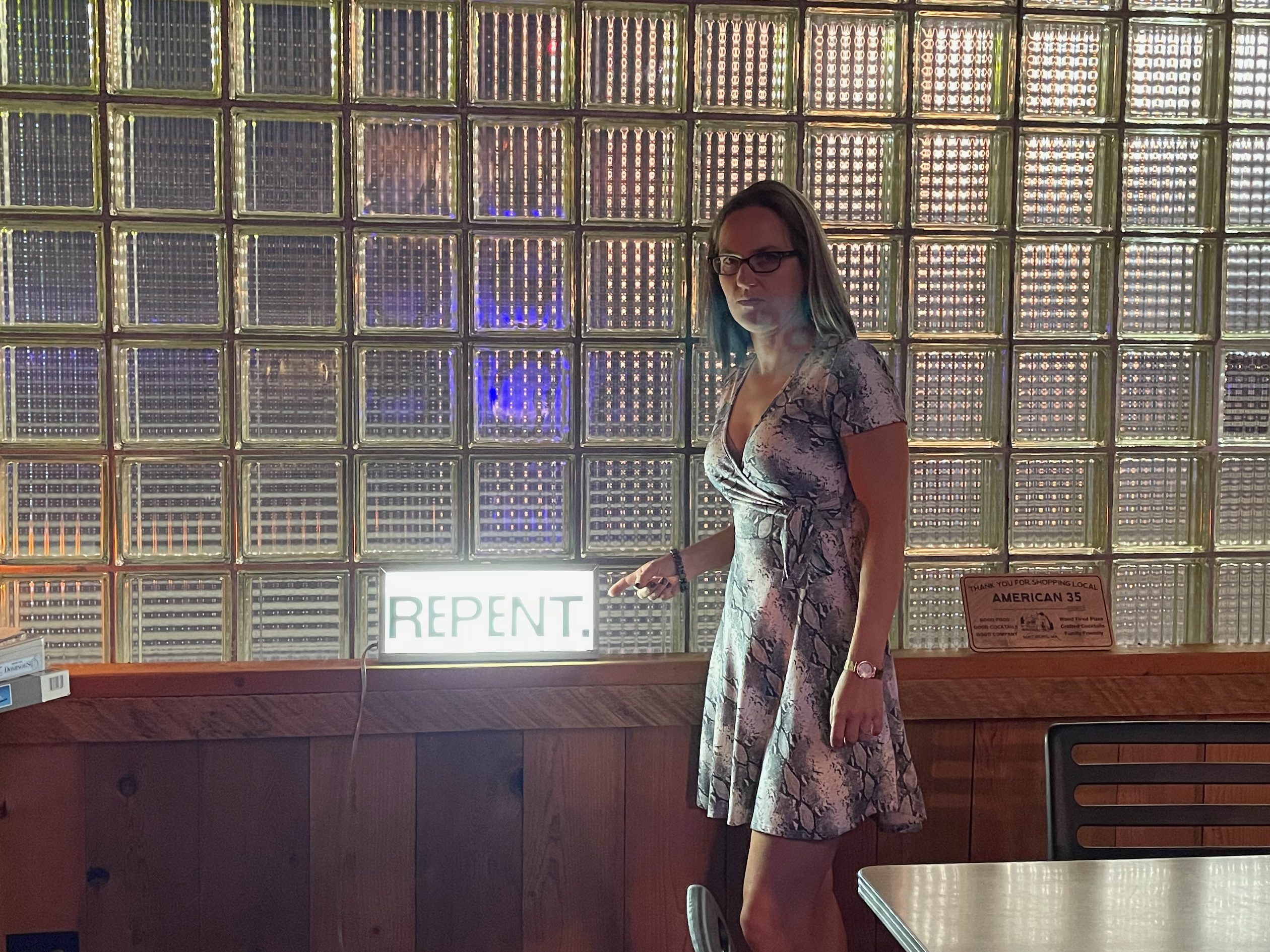
As the sun sank low and the air cooled, we walked down the block to American 35, where we enjoyed dinner outdoors under a lighted umbrella, and tried to make friends with two wary cats. We finished up with a corn-hole game, then took a picture inside by the “Repent” sign.
Sunday morning we repeated the performance at Ten Ton Coffee, complete with newspaper readings like this 80-year-old entry in the “Local News” section:
To Pullman. Mrs. Marie Stanley and daughter, Naomi went to Pullman over the week-end to visit their son and brother, Dennis Stanley, a student at WSC.
Before leaving town we snapped a picture of the lobby in the Royal Block, sat beside the river, and bought pineapple juice concentrate.
Final thoughts on Waitsburg: go visit. We talked for more than thirty minutes each with three different business owners. That’s a first. In addition to the businesses I already mentioned, also take time to stop by Simply Sawdust, where I forgot to take pictures.
Final thoughts on marriage: we’re enjoying a peaceful season – an overnight success, 19 years in the making, you might say. We’ve grown both tougher and more tender. We’ve made it through the sleepless years of parenting. We’ve settled into ourselves and into each other. It feels good. Quiet. Homey. Like a small town.
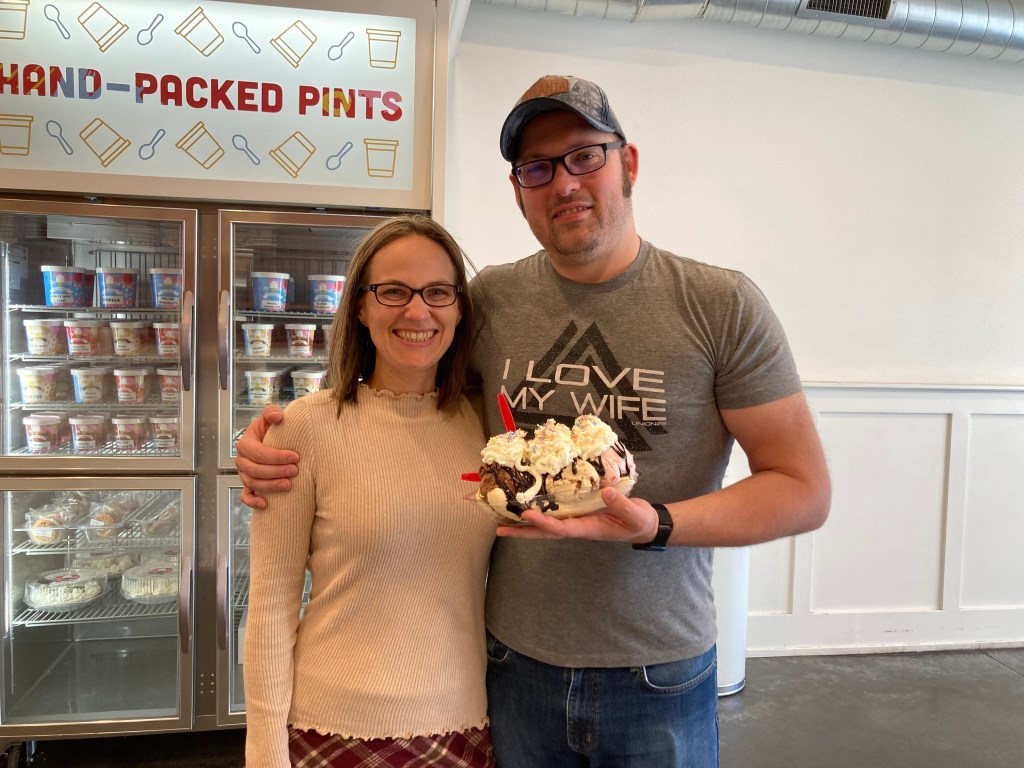
Bonus Picture: Michael and I at Pine Cone Creamery yesterday, celebrating on the actual day of our anniversary.
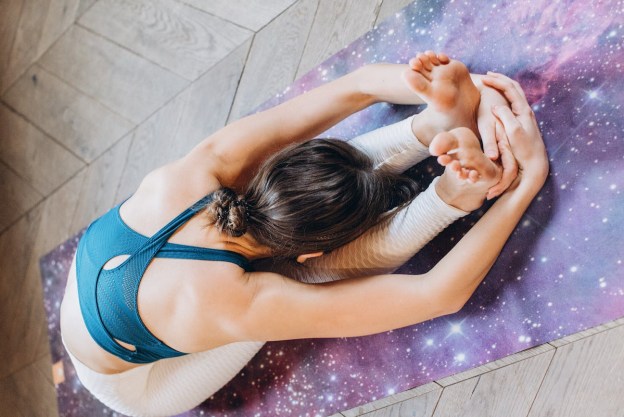
I sat on a yoga mat with the soles of my feet together in front of me, knees out to the sides. A feeling of connection and calm came over me. I had done this stretch many times and was surprised by the whole-body comfort. Rather than fighting against my body to force more flexibility, yoga taught me to work with my body. My bare feet pressed against each other, the stretch invited me to feel the muscles deep in my legs, and my spirit rested. I felt that I belonged to myself.
My exposure to yoga began in childhood, when my conservative Christian parents—who nevertheless had a habit of blazing their own way—bought a Bikram Choudhury yoga book. I loved watching my dad grunt his way into different poses—Eagle Pose, Tree Pose, Standing Bow Pulling Pose. My older sister and I would show off our youthful elasticity, easily getting into positions that our parents forced and contorted themselves into.
The Bikram’s Beginning Yoga Class book had funny cartoon illustrations, along with actual photographs of Bikram and his students—mostly leotard-clad, flat-bellied women. Bikram wore exceptionally small speedo-swimsuit-style briefs that left little to the imagination. The photos, taken during one of his Hatha Yoga classes in Beverly Hills in the 70’s, often show him steadying one of the willowy women, his face expressionless, a hand on her arm or leg.
In the 90’s, Christians—if I may generalize—spoke spitefully (or was it fearfully?) of “New Age” thinking. I’m not sure at what level I was aware that yoga made the naughty-new-age list, but the grunting and body-folding in our living room felt pretty safe to me. Any misgivings I may have had about yoga and its gateway-drug-to-eastern-religion qualities vanished sometime in my 20’s, and I accepted yoga as a healthy and legitimate practice. But until this year, I had never tried it as an adult. My time on a yoga mat typically involved sweating through lunges, burpees, and sit-ups, and those workouts were rare.
Last year, my friend Tiffaney started a yoga class with another young woman, in the fellowship room of a local church. It’s not called yoga class, because yoga is still associated with Eastern meditation, which allows evil spirits to inhabit you … or something. My sister, who is generally underwhelmed by the threat of evil spirits, has been doing yoga for years. She attended Tiffaney’s class, and around the time she mentioned it to me, Tiffaney invited me again.
So I came on a Thursday morning, late, and joined half a dozen barefoot women on yoga mats in the church basement. It didn’t take long to settle in to the quiet music and Tiffaney’s gentle voice, guiding me to breathe and stretch and count, hold and release. My body awakened, something like the expanding I feel when I step outside and take a deep breath after a rainy downpour. I felt invited to notice myself. I felt pleasure in the strength of my body, and deep release as I stretched muscle groups from head to toe. By the time I wiped down my mat at the end of class, I knew I’d be back.
Not long after my first yoga class, the group adjourned for summer. Around that time, I got a call from the local senior center, thanking me for a recent donation, and inviting me to join their yoga class. I arrived with some trepidation, expecting to be at least three decades younger than all the participants, but—in addition to the women in their 70’s and 80’s—a little girl probably three decades younger than me also attended.
“Hi,” I smiled. “I thought I was gonna be the youngest person here.” She smiled back politely but looked at me like I was about as easy to relate to as all the other strange old ladies. I laid my yoga mat down next to hers in the corner of the small, carpeted room, and a short, plump woman in her seventies began rolling her shoulders and inviting us to do the same—seven times forward, seven times back. As class progressed, I watched with respect as the circle of participants made their way through the stretches. Some were more flexible than me. Others adapted as needed for stiff joints or chronic pain. The little girl flailed and flopped in boredom, and I guessed she would have preferred her grandma took her somewhere other than yoga class.
Over the summer, I returned to the senior center whenever I had the time for Monday morning yoga. The teacher talked about opening my heart chakra, getting my synovial (joint) fluids moving, and keeping my arms against my head like ear muffs while stretching side to side. Rather than ending class with a Bible verse, she read a “thought of the day,” put her hands in prayer position, and said, “Namaste.” Five years ago that might have freaked me out, but after reading a couple of books on mysticism, and learning that “Namaste” is usually interpreted as, “the divine in me greets the divine in you,” I heartily embrace it.
There’s a wholeness to expansion and contraction. Rather than using my muscles only to hold body weight, dumbbells, or weird positions, I am invited to breathe deep and allow them to relax into the release of breath. There is safety in the guidance of a gentle voice. I don’t have to make decisions, or brace against a fitness pep talk. Rather, the teacher leads me in getting to know my body, feel my strength and my heaviness, and notice my capacity to loosen and lighten. This safety and wholeness is akin to what I feel with God, and I am delighted that it is built into my breath and my body.
Before I tried yoga, I thought it consisted of fancy stretching. Now yoga ranks among my top five bodily experiences. As I drove home from class at the senior center a couple weeks ago, I noticed that I sat taller, my muscles working together to hold me in a healthy posture. At the same time, I felt completely relaxed. Before yoga, I believed muscle tension and relaxation were mutually exclusive, but I have discovered they can coexist, and that opens a whole world of possibilities. Could a similar tension and relaxation also coexist in my spirit?
Since I’ve done yoga and remain uninhabited by evil spirits, next I’m planning to try meditation. Perhaps meditation is where the tension and peace in my spirit become friendly with each other. I aim to find out.
It’s a few minutes before 10 AM on July 3 when I pull up in front of a quiet, fenced, red-brick home in downtown Walla Walla. The smell of warm brownies has kept me company across town, and I lift the shallow box containing towel-wrapped goodies and an assortment of papers from the passenger seat. Karen Carmen, founder of Hope Street, meets me at the front door and invites me inside with her usual friendliness and practicality.
I don’t realize it yet, but today marks exactly one year since I began my inquiry into trauma-informed writing groups. This will be my first time leading a group, and I focus my attention on setting out snacks and organizing papers. I have one hour with the five women seated around the living room, where small talk centers on a dead-mouse smell that mysteriously snuck into the house that morning. No one can tell quite where it’s coming from.
Alicia, who works here at Hope Street, passes out notebooks and pens. Then we begin with a writing prompt that will serve as personal introductions. “Finish these three sentences,” I instruct, “and then we’ll go around the circle and read what we’ve written. First sentence: I am… Second sentence: Once I bought… Third sentence: I wish…”
After a minute or two, the sounds of writing stop and we take turns reading our answers. “Once I bought…” sentences bring a few chuckles, and “I wish…” statements are trailed by affirming mmm’s and hmmm’s. Then I introduce the writing prompt that will take most of our time—a reflection on a moment with someone important to us. I set a timer on my phone for 15 minutes.
When there are two minutes left, I invite everyone to bring their writing to a conclusion, and hastily do the same with mine. I unwrap the brownies and we’re drawn in by the smell. We hold the sugary chocolate squares—and healthy apple slices—on napkins, and fall into conversation.
After our break, it’s time to read aloud what we’ve written. The women urge me to read first, so I do—I wrote about my grandma, and how she looked sitting on the back-porch swing at her home in Texas. Alicia reads next, and most of the women read aloud. They live here together, so they know each other. I am the stranger in the room and I’m honored by their trust.
We give each other feedback as I have instructed: positive comments on what you like, what stays with you, what you remember. I am surprised and delighted by the quality of writing. Each writer has used wonderfully descriptive words, and—even better—conveyed emotion. I am also surprised that we finish reading aloud and commenting on each other’s writing a few minutes before 11:00, which feels like a stroke of luck rather than a credit to my time management (running late is my cardio).
Already I like these women, and I’m thrilled when they compliment my writing and leadership and respond positively to my offer to come again. I plop my stuff back in the box, and Alicia walks me to the front door. I didn’t expect this to be so smooth, so fun, so… easy. Energized and feeling slightly inflated, I drive home, high on the joy of connection, the excitement of future possibilities, and the smell of brownies, which lingers in the warm car.
Eight hours later, I arrive at a tall brick building on the other side of downtown Walla Walla. Powerhouse Theatre is hosting a Red Badge Project reading—nearly three hours of veterans reading aloud their stories of war and life and healing. As I drove here, it dawned on me that one year ago today I attended this same event. It’s what first inspired me to spread the healing power of trauma-informed writing. I feel a moment of completeness as I settle into a seat near the front of the theater. I have returned to the place where my dream began. One small circle is complete.
I imagine that coming years will add circle upon circle, ripples of words and connection and healing. In the meantime, I continue to open my schedule, my brain, my emotions to a wider understanding of what trauma-informed means, a broader experience in writing, and a growing network of personal connections. In addition to leading the group at Hope Street and attending the Red Badge Project event, favorite moments of learning and connection in July include:
Attending a Trauma-Informed Community of Practice meeting, hosted by Becky Turner
Chatting with Matt Lopez at FVC Gallery, and enjoying the art displays and exquisite coffee
Talking to my aunt Pam on the phone about writing, healing, kids, and all the things
Participating in Janelle Hardy’s five-day, online “Stories From the Body Writing Challenge”
Attending ITIC’s “Unlocking Human Connection: The Power of Person-Centered Thinking,” training event with Robert Peaden
Visiting with Mindy Salyers of Counseltation about the possibility of a writing group with some of her clients (she is a therapist for elementary schools and high schools)
Meeting Warren Etheredge after the Red Badge Project reading. Warren emceed the program both last year and this year. He is a founding faculty member and writing coach for Red Badge.
Life may not be a box of chocolates, but whatever it serves up deserves to be written down, perhaps in the safety of a living room, around a plate of brownies.
One of the women at Hope Street used the words “laughter” and “loneliness” together in her writing—a pleasant alliteration, but an unlikely pairing. I noted the way it stood out to me, paused me. And that evening at Powerhouse Theatre, as a slightly-bent older man read from the podium, the very same words came out of his mouth, one after the other: laughter and loneliness. These two words carry human experience, the feeling in our spirit of connection or estrangement, belonging or realizing we are untethered. This is why I want to write with people—so we can notice our laughter and loneliness, we can read it—speak it—aloud, we can know we are not alone.
Today’s blog post is also the most recent journal entry on my Writing Groups page. Scroll down the page to read more about what got me into this quest to form trauma-informed writing groups.
This summer I’m bingeing country artist Martina McBride. She’ll be right here in Walla Walla for our county fair at the end of August and I. Can’t. Help. Myself. Michael and I have tickets on “Floor A”—the center of the arena, between the bandstand and the stage. I’m gonna belt every song I know, and I’m hoping I know every song. Hence, the bingeing—time to explore her music, especially any hits I don’t know, and hopefully find new favorites. But first I return to the song that connected me with Martina 25 years ago.
Remember the CD mail-order marketing of the late ‘90s? For me, a teen reaching a few timid fingers out of my homeschooled-on-a-farm cocoon, an offer of a dozen free compact discs was too good to pass up.
The ‘90s and early 2000s were my puritan years—no dating, no secular music. I lived those moral convictions with great gusto. My collection of CDs, which by high school graduation filled two disc storage albums, consisted almost entirely of Contemporary Christian music (Michael W. Smith, every Jaci Valasquez album, Kathy Troccoli), along with a compilation of Elvis Presley’s gospel songs, and a few “pagan” discs from my musician father—Peter, Paul and Mary; Roger Miller; Cat Stevens. The Cat Stevens album included “Two Fine People,” with a scandalous lyric about breast kissing—that was a new thought.
The summer after my 15th birthday I worked at a small orchard in a neighboring town, thinning and picking peaches and nectarines. The self-assigned orchard crew leader, a tough woman named Dawn, kept the portable stereo in the orchard tuned to country radio, shifting it down the rows as we moved our ladders and picked only ripe fruit—the best I’ve ever tasted. By the end of that summer I knew most of the country hits of the year 2000. That same summer, my sister worked as a lifeguard at the city pool in the next one-horse-town down the line from where I picked fruit. Country music was the backdrop there, too, and we both finished out high school with the stereos in our matching white Chevy Corsicas tuned to the country station.
On the radio I heard Martina McBride sing “There You Are,” a slow song full of metaphor about the omnipresence of a lover. I immediately adopted it as a Christian song about the ever-presence of God. This adoption allowed it into my stringent collection of music. I wanted to buy the album with that song, but didn’t know which album to buy. It took me a couple of tries, and that is how I came to possess Martina McBride’s albums Evolution and Emotion—the latter includes the song “There You Are.”
Popular music, along with all Disney movies, and most fiction books, were absent from my childhood home. As a Junior in high school—the first year I didn’t homeschool—I became best friends with Terah, who listened to popular music. I picked up a song here and there. She gave me the Shrek soundtrack and introduced me to Billy Gillman, who sang country that was pop enough she could handle it. At first I felt a bit sneaky adding those Martina McBride albums to my Christian-curated collection, but my loyalty was sealed when I read online that Martina sidelined her touring so her children could have a normal upbringing, with her in it. I mean, doesn’t that speak for her music?
Evolution and Emotion are cherished albums 25 years later, and Martina continues to be my favorite country artist, although I haven’t kept up with her later releases. Her Christmas albums play in our house every December, and I learned the chords for “This Uncivil War” so I could sing and play it on my guitar.
In preparation for the concert at the county fair, I’ve been listening to all 14 of Martina’s albums. There’s some good classic country stuff in there, like the song about crying on the shoulder of the road. Her first three albums lean toward “whiny country” (or, if you prefer, “classic country”) and I’m finding I don’t enjoy them as much as her country-pop sound. But one album, released 17 years after Emotion, quickly became a new favorite from beginning to end. I can sing parts of every song now. And—once again—the song that captivated me most, reminds me of God. The album is Reckless, and the title song is about, well, being reckless, rushing headlong into everything. The rash person in the song makes a rash statement about her lover, new words for my standing conviction that God is crazy: “For loving me the way you do / I know I’m reckless / But you must be reckless, too.”
I don’t suppose God is reckless in a traditional sense (“reckless” is generally defined as a lack of concern for consequences), careless about the consequences of His decisions—given all that omniscience and “outside of time” stuff. But, unlike humans, perhaps God doesn’t make decisions based on consequences. Maybe He doesn’t even base decisions on “outcomes”—the sophisticated version of consequences. What if it’s all about creativity, the making of us; and presence, seeing us? What if it’s about doing a whole lot of reckless things for people who will never return the favor, the affection?
I’m looking forward to a reunion on August 28—a return to age 15 and nectarines, to the memory of CD clubs and having my own car (a Garth Brooks CD was in the player when I bought the car), and a do-over of the time I missed hearing Martina at the 2019 Ventura County Fair. I’m looking forward to singing in a sea of strangers, watching the moon rise above the stage, everything sounding muted on the way home. And I’m looking forward to celebrating the God who loves me through my puritan phases, arrogance, anger, and disbelief. He has sent love notes to me in country music, TV shows, and irreverent books. He has taken me on dates to therapy offices, quiet campgrounds, and Bible studies. I know I’m reckless (believe me, perfectionism is its own version of recklessness), but He must be reckless, too.
A mom doesn’t know if nursing her baby will be bliss or misery. She doesn’t know how many weeks, months, or years will pass before she sleeps one whole night. She doesn’t know if the bedtime boundary is for the kid, or for her own sanity, or who will be scarred by it 15 years from now.
Is crawling “early” a good sign? Is learning to talk “late” a bad sign? Is she spoiling with too many snacks, or not offering enough? Is it best to let the siblings fight it out or to coach them through conflict?
Has she said “no” too little, or too much? Does letting her daughter spend the night at a friend’s house foster healthy independence, or increase the likelihood of sexual abuse? Does curating books and movies and music benefit her kids or teach them to be afraid of the world?
Moms don’t know how their prayers will be answered, their cooking remembered, their mistakes retold. They don’t know about the people their grown child will feed and teach and hold, or the nights he or she will go to bed early because they know how to stop and rest. Moms don’t know the impact their love will have after they’re gone. Moms just don’t know.














 My Favorite Subject