Tag Archives: family

Death Is Beautiful

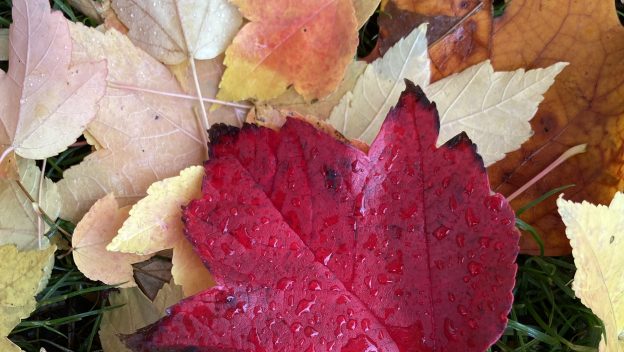
Death is beautiful. City streets and sidewalks are papered in it. Trees shout it with blazing reds and yellows—a rare season when the glow of sunset settles onto every country road and city block. And the individual deaths are as beautiful as the collective. If I dare use the worn-out snowflake analogy, each leaf is one-of-a-kind—the blend of colors, the shape and length of the stem, edges pointy or rounded, symmetry perfect or lopsided. Even the way it rides air currents to the ground is singular.

In the Celtic spiritual tradition, the phrase “thin places” describes those times when the veil thins between the now and the eternal, the ordinary and the extraordinary, and we see what is usually hidden. Death is one of those thin places.

Months before autumn, I walked a fog-covered beach on the Pacific Ocean, and death everywhere arrested me, stunned me, captivated me with its patterns and beauty. The oval-shaped outside of a small chiton shell—previously home to a creature that might have been the child of a limpet and a sea slug—was mossy green. But inside, surrounded by a wrinkly cream-colored girdle, an almost-neon aqua blue lit up the connected shell plates, and I stared in wonder. The shell of an urchin, now spineless, was covered with perfect rows of raised dots in muted tones of pink and green. The purple inside of a crab shell had patterns like light shining through water. Round jellyfish, symmetric from their thin edges to the white motif near their fat centers, lay stranded on the sand. A dead dragonfly, wings spread as if on display, had the bluest body, a peaceful gray-blue, but nothing dull about it.

My daughter picked up a crab shell which had been home to a couple dozen barnacles, and I imagined it in its heyday, scuttling through tide pools, unknowingly feeding the barnacles on its back, as well as itself. Uprooted seaweed formed circles and figure-eights. My daughters and I stomped on the seaweed air floats, trying to outdo each other with satisfying pops. One already-cracked float looked like Pac-Man, and another like a pelican’s head and neck. Shells, once symmetric, had broken into fragments and been polished smooth by the sand—pinks mottled like granite, colored ovals reminiscent of planetary rings, layered blues, and swaths of pearly iridescence. An art museum at my fingertips. 

As I contemplate the beauty of death, I can’t help but wonder what it will be like when someone I love dies. Will I feel the thinness between earth and heaven? Will there be beauty? Or will it be clinical, disturbing, exhausting, or—worst of all—sudden and too soon? I’ve never been with a person at death. I am curious—will there be a glimpse of what I have not seen before?

There is room for magic in morbidity. Although the leaves will turn brown, rot in the rain, and return to the soil, their week of splendor remains undiminished. Although every empty crab shell represents a death, and the waves and crunching feet will not leave them whole, they are no less exquisite. Although I will die, my passage from this life will squeeze the mortal and the immortal together for just a moment, creating a beautiful, painful, thin place.

Exposed by Proximity

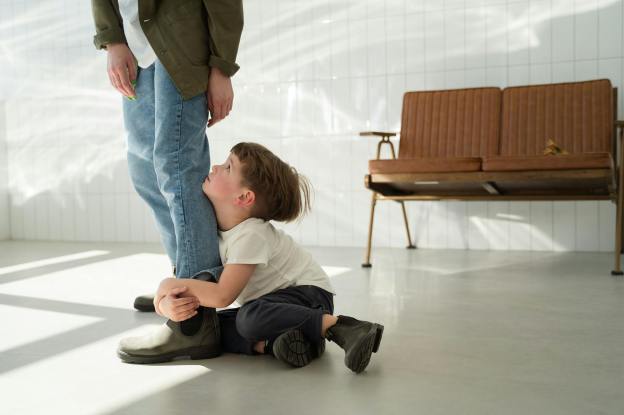
Children scare me. Even my own children. I do not like this, and admit it reluctantly. Children make noises at the wrong times, go where they shouldn’t in the blink of an eye, and express emotions with their bodies. In a word, they are unpredictable. 

The most likely culprit for my fear and discomfort is a desire to feel safe by being in control. This is also something I don’t want to admit. Isn’t it better to go with the flow? Not to mention that control is largely an illusion anyway. And Jesus not only loved children; He suggested we emulate them.

But that doesn’t help me with in-the-trenches moments with kids. I can’t ever find the one right answer I’m looking for. Should a kid have snacks or eat only at mealtimes? If I give someone else’s kid dessert, or put on a TV show, will that be the end of life as we know it? If two toddlers fight, and both hurt each other, do we call it even and move on, or should they be punished or lectured? How do I know in what moments to expect my children to toe the line, and in what moments to suspend expectations and get ice cream? And don’t even start on the pros and cons of vaccines. 

No matter the age of a child, my response to them could affect them for the rest of their lifetime. I am not okay with this. Will I be the one who offers grace or wisdom or a listening ear that gives permission for a child to like themselves? Or will I give advice at the wrong time, be lenient when the consequences are life threatening, or give peanut butter crackers to the kindergartner with a severe peanut allergy and get locked up for murder?

The stakes are too high. Somebody please lower them. Tell me I don’t have influence, I’m not culpable, my instincts can never go wrong. But no, once more I must make peace with uncertainty. I must receive the truth that I will both harm and help my children and other children. Sometimes I will hurt and another will heal. Sometimes I will heal what another has hurt. And some hurts won’t be healed. 

No matter the stakes, I am not superhuman. I will break what needs to be held together, and I will clamp down on what needs to be released. Damn, I hate that. 

Then again, maybe the children in my life are my greatest ally in accepting my humanness. I doubt the fear will go away. But maybe it could prompt a mantra: I am in this moment, with this child, and we are both getting to know ourselves. There’s something sacred under the scary feeling, a gift of mutual vulnerability that exists here where I am exposed.

Ocean Infection

Tiny puff of sea spray
Between surf and horizon
A huge mammal exhales
“There’s a whale!”

Kayt drops her book
Michael appears from the kitchen
Wide window in the dining nook, our portal

We point and words punctuate—
“Whale right!” “Tail! Tail over there!”

But Kyli sees whale-less waters
Her disappointment thick and raw, until
The silhouette of a tail
Appears clear—magic.

She nearly levitates
Shouting with joy
Infecting us all—
Her cousin jumps wildly with her
We clap our hands
Voices high-pitched with excitement
Wonder sparking between us
As our eyes return to the blue
Searching for another breath in the water.

Run-on Marriage

Last week Michael and I celebrated 20 years of marriage. The run-on sentence below illustrates our run-on marriage. (And yes, we’re still crazy about each other, in addition to driving each other crazy.)

I cannot get in bed when the bedcovers are frumpy, drifting off the end of the bed, sideways, knowing that if I do lie down and tug on them I will get too much sheet, too little blanket, and the wrong corner of the comforter; but I do not make my bed in the morning—I make it right before I climb in bed at night, tugging with exaggerated exclamations as I dislodge cats, and my poor husband too, because there’s a tiny possibility that I idolize sleep and this bed is my altar and before I sacrifice my body the altar must be prepared as if for a temperamental god of linens, and I like to remind my husband that before I met him my sheets would stay tucked in and straight for months at a time, but since his feet hang over the end of the bed and he tosses and turns at night, I have to straighten the covers every single day, and I accomplish this with more violent energy and bitter comments than necessary, although one would think after 20 whole years I would have adjusted and calmed down about it—but he huffs and makes less-than-charitable remarks every time he drives, and he has been driving for twenty-five years, so I guess we are both going to have our snide remarks and adult tantrums and all shall be well. 

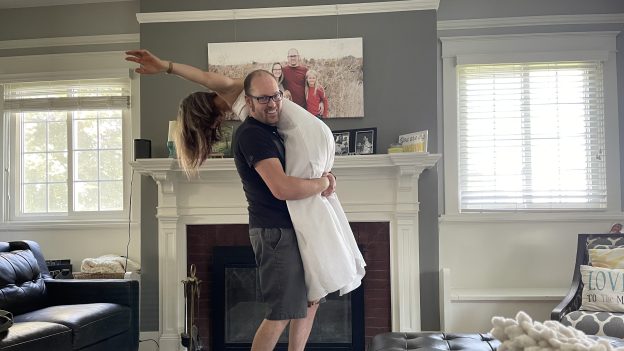
P.S. I usually use stock photos, but the photo for this post is of my husband and I earlier this month. I barely squeezed into my wedding dress, which I attempt every September as our anniversary rolls around.

Mothers Are Stalkers

Every mother is a stalker—stealthy as a fox, or loud and proud as a heckler. 

She may try on other hats—friend, playmate, shopping buddy, or cook. But she will always return to the well-worn stalker cap. 

No one knows exactly why. Perhaps all those years of sleep deprivation affected her brain. Or maybe her partner has become boring and she needs to trail someone interesting. Or her dream of being a paparazzo never panned out and she’s done repressing her hunger for juicy stories.

Could it be revenge—on her own mother, or on her child—for needing her when she didn’t want to be needed? Is it fear, masquerading as care? Control masquerading as curiosity? Perhaps sheer boredom is the culprit. 

Or it could be force of habit—one that began while watching an infant’s chest rise and fall, then following a toddler through play structures, teaching a child how to use a toothbrush, then how to handle a kitchen knife. A long stint as chauffeur cements the habit, and by the time a kid has wheels of their own, stalking is like a nervous mother-twitch that can’t be medicated.

Whatever the case, mothers are stalkers, and children are their prey. They follow, but never shoot. They scribble notes and report to their partner in bed at night. They buy new camo when the old is detected, and they keep on stalking even when the tap-tap of their walkers is a dead giveaway.

And, depending on your religious beliefs, upon death they have the best of all—that birds-eye view they always wanted, the ability to hover without being detected, and maybe even a direct line to put in a few suggestions to God about how their child’s life should go.

The Red Circle

A perfect dark-red, circular spot on the beige carpet. I reached down and touched it, first with a finger and then my thumb, pressing lightly. Sure enough, something wet and red thinly coated my fingers. It had to be blood. But where did it come from?

“There’s blood on the carpet,” I announced to my mother. We had just spent 40 minutes getting her from the dining table to the couch—a distance of about 12 feet. She was certain I couldn’t help her stand up, that my dad had to be there for her to move. My parents recently relocated, and dad was at the old house cleaning out the garage. They would sign closing documents that afternoon for the sale of the house. I came to be with my mother, whose mobility and cognitive ability had declined rapidly over the past few months.

Back at the dining table, I’d held out my arms to help her stand, but she made no attempt to respond. I moved the walker in front of her and held it steady so she could pull herself up, but still she didn’t move. Then she wanted to get down to the floor and crawl. She instructed me to bring some towels to soften the floor. I spread a thick blanket, doubled over, between her dining chair and the edge of the living room carpet. She leaned forward and tried to rest a hand on the floor, but lost her nerve. At her insistence, we called my dad. He said yes, I could move her. Again, I held out my arms—no response. I brought the walker over—she tried holding it in different ways but never got to the standing-up part. She tried again to get to the floor with similar results—her hesitant hand reached low.

I kept offering to help her stand, as that seemed to me the best option, but she said she didn’t want to hurt me. She is several inches taller than me, but only a few pounds heavier. I had helped her stand and walk many times before. Perhaps her reticence resulted from a recent fall, although I wasn’t there at the time of her fall. She asked who else could help her and named an acquaintance who had visited a couple days before. When she determined that I was, indeed, the only available person to move her, she asked for my dad again and cried. An hour earlier she had announced, “This afternoon I’m scheduled to have a nervous breakdown.” I was beginning to agree.

My mother insisted that she could not stand up with her feet on the smooth floor of the dining room, but only on the carpet. In response, I grabbed the front legs of the wooden chair she occupied and pulled it to the edge of the carpet. Now we had less than six feet to go. I held out my arms again, instructing her to hold onto my biceps as I held her elbows. I planted my knees against her right leg and pulled her up—sort of. She doesn’t straighten up all the way when she stands. I put my arm around her back to keep her from sinking back down, and pulled the walker in front of her.

A one-inch scooch, a six-inch step, a rapid little shuffle. She leaned forward on her toes, her center of gravity moving precariously in front of her as her heels came off the floor. I lifted her foot so she could move it forward. Then again the other foot. Then a step on her own. Then a one-inch scooch. Somehow she got her back turned to the couch and sank down onto the cushions. However, she wanted to lie, and would need to be closer to one end of the couch to make room for her legs to stretch out. Rather than attempt convincing her to stand again, I grabbed her blue jeans on each side of her hips and heaved her slowly across the couch. I lifted her feet onto the couch, then blue-jean-heaved her a little more until her hips rested perpendicular to the back of the couch. A large array of pillows served as a back rest. I spread a fluffy white blanket over her.

“I haven’t brushed my teeth in three days.” She seemed worried about looking well-kept for the house signing, although I had no idea how long it really had been since she last brushed. I poked around in the bathroom drawers and cupboards until I found floss, toothpaste, and toothbrush. She couldn’t floss. I tore off a piece of waxed floss, wound the ends around my fingers, and started with the teeth that were easiest to reach. After flossing most of her teeth, I handed her the toothbrush, which she had instructed me to wet, but not apply toothpaste. She proceeded with brushing on her own. When she finished, she asked me to take a picture of her shiny clean smile and text it to my dad.

It was at this point I noticed the red spot on the carpet. What could have produced a clean drop of blood? My mother suggested I check her knee, which I did—but given that she had jeans on, it couldn’t have dripped blood unless she had a gushing wound that soaked her pants in blood. We checked her elbows too—had she bumped into something and not realized it? No, no signs of blood on my mother. “I’m on my period,” I confessed, “but I don’t understand how I could have dripped blood on the floor like that.” As we discussed the possibilities, she concluded that my menstrual bleeding was the mostly likely culprit.

I wetted a paper towel in the kitchen and went to work on the red spot. Much to my relief, it came out of the carpet with minimal scrubbing. I had no interest in staining carpet at my parents’ house—the very same parents who kept cream-colored carpet in near-perfect condition for 20 years while farming and raising two kids. I knew better than to soil it.

As I turned, my mother noticed blood on my shorts. Another piece of the puzzle. I hastened to the restroom and found that indeed there was blood on my shorts. They were loose, pink-purple shorts made of sweat-pant material. As I cleaned them the best I could without actually taking them off and washing them, I realized what must have happened. When I sat on the edge of the couch to floss my mom’s teeth, I must have leaned into such a position that my underwear and pad weren’t fully in place. Hence, a few drops of blood had fallen onto my shorts, and from there one of them dripped to the carpet.

I have this idea that at 40 years of age, period “accidents” should be a thing of the past. It’s not like I’m new at this bleeding-out-of-my-vagina thing. But there I was, cleaning blood from various surfaces. My mother was unconcerned, a conversational ally as we pieced together what had happened. How strange that in the afternoon’s events, simply standing up would be infinitely more stressful than blood on the carpet.

Oddly, when it was all over, I primarily felt gratitude. It’s awkward to be a fully functional person around a not-fully-functional person. It feels weird that I can floss my teeth and walk where I want to, and my mother can’t. I’m never quite certain what to offer in terms of help, and since her mobility and cognitive ability are a little different each time I visit—sometimes more and sometimes less—it’s a moment-by-moment game. Not the kind of game I’m good at.

This blood on the floor was a gift. An opportunity for me to be vulnerable, to need help solving a problem, to have an awkward dysfunction of sorts. It allowed our roles to feel just a bit more “normal” for a few minutes—she the mother, I the child. I miss that.

A Mother’s Mundane Conundrum

“You’re just making me do it!” my daughter says with a surprising amount of conviction. “You just decided I have to do it.” She’s not wrong. Nothing will happen if she doesn’t clean her room. No one cares about it except me. I feel called out as an unnecessarily controlling parent, just as I do each time one of my daughters confronts me with these sentiments.

It seems I have arbitrarily decided most of the content of their lives. I require showers, food other than fruit and juice, feeding pets, getting out of the house for school—with clothes, lunch, piano books, shoes appropriate for PE, and a sweater. Would anything dire happen if all those things were left undone? No. One or both daughters could go to school late, in PJ’s, without a lunch, wearing the wrong shoes, and sweaterless. In fact, she could probably do that for a week before anything interesting or significant took place in response to her choices.

I dislike this feeling that I am the only reason she does most of what she does. And I don’t like it when she confronts me about it. I don’t know what to say. I agree with her. Most expectations really are arbitrary—for adults as well as kids.

There are plenty of things I could say that I don’t want to say. I could say, “Someday you’ll have a job,” but that has no meaning whatsoever to a nine-year-old. Or, “You have to learn to do things now so I’m not still reminding you when you’re thirty,” but is there any real danger of that? Or, “I’ll be embarrassed if you go to school in pajamas,” but do I really want to teach my kids to make decisions based on my embarrassment? Or, “Nasty things will start growing in your room if you don’t clean it,” —okay, maybe a month from now, so is that really motivation to tidy it up today? Or, “I’m your mom and I get to decide what you need,” except that I don’t think anyone should decide another person’s needs for them. You get the idea.

So here I am with nothing to say, a truthful human being looking me in the face, questioning my demands—and why are they demands? Perhaps because requests and suggestions haven’t worked, or because my emotions are now fueling this high-octane—but nevertheless mundane—occurance.

“You’re right,” I say. “I can’t actually make your body and your arms and legs do anything. But I can remind you there will be no screen time until chores are done. And if you don’t do chores today I might give you an extra cleaning job tomorrow.” This comes out sounding a tad desperate, and something like a threat—not exactly what I was going for. But you do what you have to do.

Motherhood seems to be a mix of desperation and compassion, empathy and threats, logic and insanity. Is that what childhood feels like too?

She whimpers. She complains it’s not fair. But eventually she trudges to her room and starts picking up clothes off the floor. My heart rate returns to normal as I breathe a sigh of relief. With any luck, I’ll have at least five minutes before this conversation repeats itself with my other daughter. Meanwhile, I whimper and complain internally as I return to a pyramid of dirty dishes. I guess we’re not wholly different.

Damn Hospital Corridors and Mothers

I’m dabbling in fiction again, which of course is influenced by my actual life, wherein my mother’s health is failing. This piece came from a writing prompt to begin with, “The hospital corridor was dimly lit…”

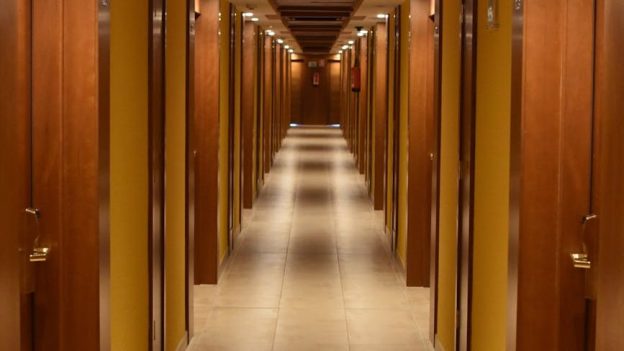
The hospital corridor was dimly lit, but only because the fluorescent lights on one side of the ceiling emitted partial light, accompanied by a buzzing sound. I wished someone would turn the lights off. One o’clock a.m. was never meant to be lit at all. Sinking to the floor, I checked the exact time on my watch, 1:17.

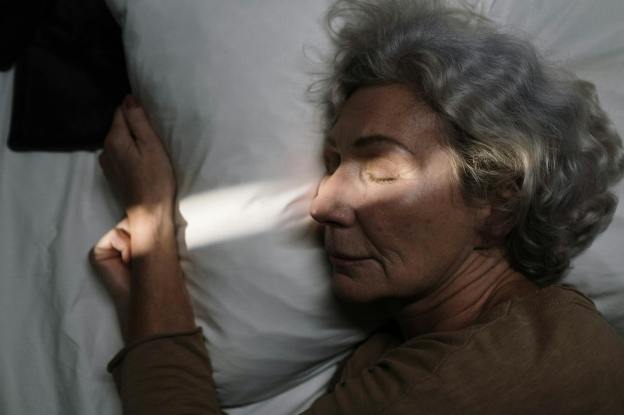
My mother slept. She’d been sleeping much of the day and night for some five years. Sleeping suited her phlegmatic personality and neurodegenerative disease. Sleeping was familiar.

But tonight, sleep could wander into death at any moment. And so we kept vigil—my brother and I—taking turns at her bedside, watching the face of each nurse who came in to check her vital signs. Did their expression show any hint of surprise or concern? Anything to indicate an imminent ending?

I’d never been this close to death before, and my feelings warred with my philosophies. It’s one thing to say death is natural, a passage as much as an ending, a new experience just like every other milestone in life. But there’s something heavy about a last milestone.

As I stared at the wall, unseeing, questions caught traction in my mind. This grief, is it about loss of the mother I have, or loss of the mother I wish I had? Or is it fear of what will happen to my brother and me when Mom isn’t here? Or am I feeling anger that I have to be here, to witness this, to hold it and see it and feel it and live it—that this dying person not only consumes my time when I’m at the hospital, but consumes my emotions and thoughts when I’m driving, eating, washing dishes? Who gave her permission to be woven into me in this way?

And what does the unweaving look like? Is it a severing, like a guillotine? Is it a careful unstitching, or an impassioned disassembly, tossing parts and pieces here and there? Or will my dead mother remain inside me, and will I like her better that way? What memories will make me smile? How much time will it take for me to internalize a narrative that holds us both gently?—a narrative that’s peaceful, not buzzing and half-lit like this damn hallway.

Forty and (In)secure

Twenty One Pilots’s song, “Stressed Out,” laments the insecurities of adulthood, noting that fear is still present, and we still care what people think. I turned 40 this month, and yes, I’m still insecure. It’s different than high school. And the same. I want you to like me. I want to be well-dressed and well-spoken, and most importantly, perceived well.

I’m a grown-up—have been for quite some time—and I can tell you what maturity doesn’t mean. Being grown up doesn’t involve control and confidence; it doesn’t mean growing out of awkward traits and social habits; it doesn’t include a clean house and well-kept yard, or a passel of perfect grown-up girlfriends.

I’m less sure what being a grownup does mean. But I’ve noticed I’m softer than I used to be—more flexible, a teensy bit less judgmental, and I know more about cooking and cleaning than I did 20 years ago.

I know less about God, love, and relationships. It’s been said that the more you know, the more you know you don’t know anything. I can confirm this.

There’s a real sense of loss, not landing in adulthood firmly in control and certainty, an expert in the kitchen, the workplace, the bedroom. I get tired of being wrong, confused, ineffective. If knowledge comes from experience, I am an expert in exhaustion, stress, and leaving my cell phone in obscure places.

I know I’m sounding a tad morose. But there is a happy ending. There’s something left after losing control, and the appearance of control, and pretending to have control. What’s left is eyes to see a different life entirely—a life of watching the cat lick his fur, thinking of my three favorite moments from the day just before I fall asleep, fighting less with my kids and husband, knowing there will not be a seismic event when my to-do list is left undone.

And I know myself better. I know I love writing and small groups. I know I like a clean house, but not enough to put in the work. I know I’m scared of the interminable wants and needs of my children. Being quiet and alone—especially in nature—returns me to myself. Banana splits and blended mochas almost always sound good. I try the hardest to be self-sufficient when I’m at my weakest. Animals make me happy. Getting called “a writer” makes me stand a little taller. Synchronicity feels like opening a birthday present.

My birthday, which this year fell on the first Sunday in May, played out like a dream Mother’s Day. My husband cleaned the kitchen, top to bottom. He and the kids cooked breakfast and dinner, and took me out for lunch. I sorted through a large tote, five bags, and an unconstrained pile of children’s clothing I hauled up from the basement, and found most of it could be passed on. I went to the park and watched goslings and ducklings, heard the smack-smack of their webbed feet in shallow water, and marveled at their fluffy bodies. I took a nap. With my parents and sister, I ate fresh-made blackberry pie with “40” cut into the top crust. Michael gave me a gift certificate to have the house professionally cleaned (when the dust settles from our six-month construction project). Like I said, a dream day.

It’s worth noting I couldn’t have planned such a day. All was gift—the generosity of my husband, my children, my sister. Many times I have planned a birthday party for myself, with friends and presents and homemade cake. But for forty, this un-forced birthday felt fitting. The people who love me gave what they wanted to give. And I received. I basked. I rested. And yes, I sorted children’s clothing—one of those things I never can find time to do.

Maybe I’m ready to accept this life I have. Whether I die tomorrow or in another 40 years, I will die complicated—a mix of peace and insecurity, frustration and gratitude, mundane and miraculous. And not at all grown up.

In Five or Six Hours the House Will Be Quiet

I’m not okay. This is how I know it’s time to write.

I’m sitting in the kids’ room by the fire I lit for them—my attempt to dote on them since they stayed home from school today.

Sore throat again this morning—it has been almost daily for weeks with my younger daughter, Kyli. The older one, Kayt, said probably nothing is wrong with her but she doesn’t want to go to school. Middle school “friendship” has been sucking the life out of her. I can’t help but wonder if her chronic exhaustion and headaches are as much social as they are physical.

I shone a flashlight down two throats this morning. Kyli’s looked red, and Kayt’s had a weird white blob that dr. google says is a tonsil stone. Never heard of those before.

By the time I sit down to write, it’s midafternoon. Homework time downstairs has devolved. My stomach clenches in response to unharmonious sounds, insufficiently diminished by their travel up the stairs to my ears.

Now Kayt has come upstairs to whine and writhe. Technically she came up to say Kyli is bugging her and won’t stop. Since I made clear arrangements for Kyli to come upstairs if they weren’t enjoying sitting together, I feel a gallon of frustration and a drop of empathy. So I tell her to send Kyli upstairs, and that’s why she’s begging, moaning, and asking unanswerable questions in a nails-on-chalkboard tone of voice. She has a weird thing about not being alone.

At 7:15 this morning, when I usually would have been seeing the girls off to the bus, instead I set up appointments at the urgent care center. This change in schedule involved calling the bus driver and texting, let’s see,—their teacher, my yoga instructor, my husband, and several people I had plans with later in the day.

Did I mention the power outage? Just got yet another automated call from the power company. I have an outage that should be restored by 4:30pm, says the message. The power has already been back on for half an hour, and it’s currently 3:30. Not to mention just a few minutes ago I received an automated call informing me that the outage was caused by wildlife (read “squirrel”), and my power had been restored.

I think I’ve received five automated calls, including one that announced an outage had been reported in my area and a truck had been dispatched. Yes, I’m aware. I reported the outage when an explosive BANG and corresponding flash of light outside the dining room window resulted in all powered devices in our home going blank.

My husband is in Denver for work.

My sister is home with a sick kid as well.

My younger daughter made a “fun cutting station” on the floor in her room, where folks can experience the satisfaction of cutting various materials—like blue yarn (now in pieces all over the floor), tiny foam squares, a rubber armband (okay, that actually is super satisfying), and a plastic packing sleeve.

On the kitchen counter downstairs is a bowl of homemade slime that looks like a hot-pink pile of animal intestines. The dining table is covered with rubber stamps and paper, ink pads and embossing supplies, dirty dishes, purple slime, saltines, and homework.

Finally. I breathe. Here’s a moment of peace. Kyli is taking a break from homework, so I allow Kayt to study upstairs with me.

Kyli is quietly making a creature out of air-dry clay (a substance which already covers a significant portion of the bathroom counter due to a previous creative session this morning).

I don’t like the multiplying messes.

Sibling snarkyness nauseates me.

Most of my day has born no resemblance to the Wednesday I thought would unfold when I opened my eyes this morning.

But I ran on the treadmill and took a shower this morning, and in an unplanned burst of self-care I even dried and straightened my hair, and put in earrings. I’m sitting here by the fire, cat on the hearth, journaling. I did a marvelous breathing meditation from The Artist’s Rule, and I laughed with my girls.

After our visit to urgent care, we went to school and picked up homework (the current quarter ends in two days and there is a small state of panic about grades). Then we filled the car with gas for “real low cheap”* at the station near the school, stopped at Walmart for grocery pickup, and came home for the whole slime-making, lunch-eating, power-outage bonanza, followed by the Sibling Homework Crisis of 2024.

So I’m not okay.

But also I am.

Because it’s okay to not be okay.

And I’m grateful my kids don’t have strep, and … this just in: Kyli is cutting a stick of gum into pieces, holding the scissors above her mouth so each piece drops in … back to gratitude—for the fire warming my feet, for furry and purry kitties, for a relatively small pile of dishes in the kitchen sink. I haven’t yelled at my kids, and I have listened to them. I’m going out with girlfriends this evening.

And—bless Mother God—in five or six hours we’ll (fingers crossed) be tucked in bed and the house will. be. quiet.

*If you want to acquaint yourself with the phrase “real low cheap,” watch this.