Tag Archives: grace

On Being Dead (Part 3)

I remember a moment when I strongly identified with the phrase, “sinner saved by grace.” Yes, I thought, this is the most accurate description of me. I am a sinner. I am also saved by grace. Simultaneously.

Now I’m not so sure.

In the post-gospel New Testament (Acts-Revelation), the words “sinner” or “sinners” are found 13 times. The word “sin” appears 90 times. Perhaps sin is more of a condition than an identity. More of an act than an actuality.

Nearly half (43) of those 90 occurrences of the word “sin” are in Romans, and 39 are in chapters five through eight. The words “dead” or “death” occur 37 times in those same four chapters. Is there a correlation between sin and death? As I read and re-read, highlight, and scratch my head, I notice two distinct connections, one with which I am very familiar, and the other which I have noticed only recently.

The first connection I see between sin and death is that sin leads to, or results in, death. All four chapters (Romans 5-8) speak to this dynamic, including the well-known verse, “For the wages of sin is death …” (Romans 6:23a).

The second connection I notice between sin and death is that death disconnects a person from sin. Dying quite literally makes it impossible to sin. Chapter 6 most fully addresses this:

“How shall we who died to sin live any longer in it?” (v. 2)
“… our old man was crucified with Him, that the body of sin might be done away with …” (v. 6)
“For he who has died has been freed from sin.” (v. 7)
“For the death that He died, He died to sin once for all … Likewise you also, consider yourselves to be dead indeed to sin …” (v. 10, 11)
“For sin shall not have dominion over you …” (v. 14)
“And having been set free from sin, you became slaves of righteousness.” (v. 18)
“But now having been set free from sin …” (v. 22)

What I’m hearing is that Jesus died for me, but not in the traditional sense that he had to “pay.” Rather, death is the only way to conclude sin, and Jesus died to gift me that decisive, deadly conclusion.

I died. I can no longer sin. Therefore my identity is not “sinner.” I am not a sinner. I am dead to sin and free from sin. The only purpose of having an awareness of sin was that it showed me I was turning gray, showed me the morbid path I travelled. Jesus stepped in to my lifeless pallor and saw it through to its end, death. In receiving His death as a gift, I claim my identity of righteous daughter.

Paul suggests I am now a slave of righteousness. I’m not entirely comfortable with such strong language. But I am intrigued by the possibility that the power that sinful behavior previously had in my life has been replaced by the power righteousness now has in my life. I am free—to do what is loving and holy and true. I am free—to not do what is selfish and common, empty and false. I am empowered by the mind and spirit of Christ in me. Righteousness is my impulse, my instinct, the way I am compelled to act.

Christians have a great following with the “you are a sinner” gospel because it is true to human experience, to our flesh. But flesh is really just all the lies we have believed about who we are. Rather than giving life, this gospel affirms that I am what I feared—a broken person who can’t stop behaving hurtfully.

I never once wondered if I was going to heaven when I died, but I wondered every day what the hell was wrong with me. As a “sinner saved by grace,” heaven was the only good I could see coming out of the gospel. Not very many people—and especially not me—seemed truly alive.

Death was my promised certificate of achievement, the consummation of my life lived in lies. But God took my death certificate and tore it up. “Forget that,” He said, “in my house we deal in life. Here is your life certificate.” Beneath “Life Certificate,” written in a glowing script, the paper reads, This is to certify that Tobi Danielle Goff is 100% alive, and her state of being is characterized by abundance, growth, righteousness, and luminescence.

Paul says my lied-to mind was “enmity against God; for it [was] not subject to the law of God, nor indeed [could] be.” (Romans 8:7, emphasis added) I could not remain as I was and be fully alive. I was stuck, wondering how to die to self, not realizing it was already done. As Dan Mohler observed, “Preacher’ll say, ‘This’ll cost you everything.’ Everything you were never created to be! … Why not activate faith and let go of the lie and test out truth? You’ll be wondering why you didn’t die a long time ago, ‘cause living without that is like being dead already.”1

Paul wrote, “… if Christ is in you, the body is dead because of sin, but the Spirit is life because of righteousness.” (Romans 8:10) At this point I get a little confused. Am I dead or alive? Did I need to die, or was I already dead? Or was I already alive and I just didn’t know it? Take your pick. My process seems to have roughly happened this way: 1) I noticed my spirit and life were dead-ish, 2) I realized I was thinking and acting in ways that produce death, 3) I wanted to die but I didn’t know how, 4) God invited me into death and the quietness of the tomb with Him, 5) I realized I didn’t need to do or not do anything—life, death, and resurrection were already accomplished for me, 6) I agreed with God—and continue to agree, over and over— that I am His righteous daughter.

I’ve heard “dying to self” described as a continual, painful process. Maybe it is, but I find that wildly intimidating. Especially if I’m supposed to come up with the courage to die every day. But if, in Jesus, my death was already accomplished, then “dying daily” is simply agreeing with what is already done. It is acknowledgement of a new state of affairs. It is acceptance of a gift.

I often say, “God does the heavy lifting.” If I’m carrying a heavy load, chances are I misunderstand. If the burden isn’t light, chances are I’ve put on my work jeans and pulled the wheelbarrow out for some unnecessary hauling. As Matthew Pierce aptly noted, “Jesus and I can’t both pay the price for my mistakes.”2

“Living in the Spirit” is another way of saying I agree with God. When I agree with God my old view of me (broken, sinner) dies, and I get a new view: righteous daughter. I am meant to be alive in a greater sense than my physical aliveness, and there’s something about wholeness that’s invigorating. Something about finding my God-created spirit buried under lies, dusting it off, and rejoicing because I have found treasure. This treasure doesn’t sustain me from the outside, like money or sunshine or my favorite sweater; it sustains me from the inside, like being chosen first when I’m not the best, like holding hands, like finding out I belong.

Endnotes:
1 https://www.youtube.com/watch?v=ngfEH7_8FGY&ab_channel=CityCenterChurch
2 https://mpierce.substack.com/p/all-of-my-sins-are-because-of-elon

Holiness in Poop, Fire, and Child

First, poop.

I have a developing curiosity about Jewish blessings, but as of yet, I am not at all educated about them. Intrigued by Barbara Brown Taylor’s words about blessings in An Altar in the World, I took to the internet with my curiosity. I found Jewish blessings for special occasions, and blessings for a host of daily experiences, such as waking up and eating. To my delight, one of my first discoveries was a blessing for going to the bathroom. This may be a common fascination among blessing newbies, as it was within the small sampling of blessings on more than one website. I wonder how many practicing Jews say it after each visit to the restroom. One site suggested it as the perfect blessing for changing a child’s diaper. Each version is a little different, and since I don’t read Hebrew I am looking only at English translations. Here’s how Rabbi Danya Ruttenberg quotes it:

Blessed are You, God our deity, sovereign of the universe, who formed humans with wisdom and created within them many openings and many hollows. It is obvious in the presence of Your glorious throne that if one of them were ruptured, or if one of them were blocked, it would be impossible to exist and stand in Your presence. Blessed are You, God, who heals all flesh and performs wonders.

Ruttenberg goes on to say,

Even if the God language in this text doesn’t resonate with you, there’s something really important here. This blessing encourages us to experience awe in the face of the human body’s complexity, and an awareness of the myriad of things that have to go right in order for us to continue drawing our next breath—and the breath after that. The fact that we’re able to eliminate waste as we’re meant to is a wonder in its own right, a miracle worthy of our respect and gratitude. The simple fact of being embodied is worthy of our spiritual engagement.1

What if I engaged spiritually with more bodily functions? In addition to pooping and peeing, passing gas, sneezing, burping, crying, even vomiting could be worthy of awe. What about sex? Sweating? Swallowing? As JJ Heller sings, “Everything is sacred when you take time to notice.”2

Second, fire.

One night late last December I woke up to my husband’s snoring. After “gently” shoving him with my arm, squashing my head down in my feather pillow so both ears were covered, and trying the finger-in-the-ear method, I gave up and padded to the guest bed in my office. Shortly thereafter, my daughter Kayt woke me up and, after semi-successfully getting her back to bed, anxiety kicked in. Kayt had awoken me the night before, so surely this was a sign of new sleep patterns, wakeful nights spreading quite possibly to eternity. Then I had visions of everything that could go wrong on our upcoming Florida vacation. I pictured the four of us shivering on a cold beach; my husband and I experiencing buyers remorse at Legoland; an alligator grabbing my tiny seven-year-old; and a long drive to the state park I had visited as a child, only to find out their canoe rental was closed.

I felt panicky and gloomy. I tried to think of people to pray for. And then I thought of Anne Lamott’s words from my evening’s reading in Dusk, Night, Dawn: “Even now we aren’t in charge of much, and it is exhausting to believe or pretend we are … Watching the ways we try to be in charge can help us get our sense of humor back, and laughter is a holy and subversive battery charge.” I could not think of anything comical about my mental state, so I sat down with Jesus in His room in my heart and asked Him where the humor was. To my surprise, He went Pixar on me and personified Anger, from Inside Out, the scene where he ignites, flames coming out of his head, and Disgust uses him as a blowtorch. So I grabbed Jesus/Anger like a blowtorch and we kind of incinerated His room, and I smiled in the darkness. My chest expanded and I breathed. Holy comic relief. And more evidence for my theory that God is crazy. He ricocheted around His room in my heart like a fireball on top of a balloon releasing air, and I giggled.

Eventually I slept, fitfully. Whenever I was awake enough to be aware, I remembered Jesus with flames coming out His head and it centered me. Holy and subversive, indeed.

Third, child.

A couple days after the Inside Out incident, I asked God if I was being too irreverent—you know, with the flaming head, and God’s butt (another gem from Anne Lamott). What is holiness, and are there rules for how to behave in the presence of a holy God? I don’t have an answer, but God gave me a picture:

Holiness is a sleeping child. Its beauty captures our attention without us quite realizing it. We gaze at soft eyelids, rumpled hair, smooth skin, a trace of jam—and our own faces soften into a smile, almost unexpectedly.

Apparently holiness looks more like a sleeping child than perfection or pomp. Grandeur, yes—the grandeur I see in the face of a sleeping child, recognize in the faithfulness of my own body, and know in a 3am giggle that releases me back to rest.

Endnotes:
1 https://www.huffpost.com/entry/poop-and-gratitude_b_3684747
2 https://www.azlyrics.com/lyrics/jjheller/biglovesmallmoments.html

Receiving Joy

“Expect suffering. I want to receive this teaching,” I wrote in my prayer journal. Five days later I came down with the worst cold I’d had in years. Perhaps God in His great grace had prepared me by putting suffering on my mind beforehand. Whatever the case, He blessed me with a spirit of acceptance. I had one angry tantrum (in my head and on my face) for a couple of hours, followed by a good cry, some pats on the cheek from my seven-year-old, and a slightly scared inquiry from my husband as to whether I needed anything.

It’s frustrating being sick and knowing no one else is going to cook or clean or help the kids with piano practice and pet care and chores. It’s frustrating to cancel the play date and the sleepover and the dinner with friends and the meal delivery to other friends.

But it’s also nice to rest in bed, to watch my children try some new things I usually do for them, to have more time for prayer, and to practice gratitude.

By God’s grace I had an attitude of receiving instead of fighting, and somehow—honestly, I find it rather mysterious—the sickness was a blessing. And it was followed by the biggest surprise of all. On the fourth day I woke up full of joy. As I drifted between sleep and wakefulness I felt that both were bliss. When I looked outside, the world seemed more beautiful. My energy was coming back, and where usually I would feel a sense of guilty relief—I can finally catch up on days of neglected tasks—I felt alive, vibrant. It all seemed very silly, like an overreaction. But there it was, that intangible we call joy.

Suffering (which admittedly is a strong word to describe a cold) has a tremendous capacity to grow me, to introduce me to my mature and whole self. This post-cold joy was a treasured moment in which I caught a glimpse of Spirit-fruit in my life. I was awed. I was grateful.

Papa God, I have opened my hands (literally, daily) and I have received Your abundance. There is a sweet moment of contentment here, releasing the past and not knowing the future, tasting the pleasure of this moment, that I have received a blessing from You.

Good(?) News

The gospel as I learned it was bad news, followed by ok news. Somehow the “good” got left out. I understood the gospel as the news that we are all sinners, separated from God, but that Jesus reunited us with God by taking our punishment. Despite being an “up-front” Jesus girl, selling religious books door-to-door and leading worship and Bible studies, I never could tell someone, “You’re a sinner. But don’t worry! God punished Jesus instead of you.” Wow. I mean, my life was hard already. Thanks for this “news.”

I went to the seminars (Revelation and prophecy) most loved by my particular faith tradition, and filled in all the blanks in the study guides. I marked my Bible with dozens of chain studies. But I never talked one-on-one with anyone about salvation. Most people I knew were Christian, or if they weren’t it was because of the experiences they had when they used to be Christian. On the rare occasion I interacted with someone who wasn’t Christian or ex-Christian, bringing up their sinner status seemed a bizarre thing to do. So I never did.

How could I distill spiritual experience into one conversation in which a person “admits” they are a sinner and thanks Jesus for helping them? I’ve had countless conversations that have given life or liberty or love to one or both parties. This is so often how I see God at work. I wonder if people don’t need a three-sentence salvation speech as much as they need someone to hear and affirm their own spiritual experiences. The salvation speech takes the gospel right out of our hearts and places it on the table in front of us for a transaction. If salvation is a transaction, Jesus wasted His time coming down here to be a human for over thirty years. He could have really simplified things by just getting sacrificed for our sins as a baby.

But what if salvation isn’t a transaction? What if Jesus came for another reason? As I continue to engage spiritually, to hunger and thirst and be filled, I wonder what it might look like for me to “share the gospel.” Is there actually something I could say that I believe? That I find compelling?

I am seen by Father/Son/Spirit, loved, held, wrestled with. I can share my experiences. But what about a three-sentence gospel? I’m not sure such a thing has any merit, but I’ve started forming one just in case.

Bad/ok news: You can be be better. Here’s how: you are a sinner, separated from God, but Jesus has reunited you with God by taking your punishment. Trust Jesus. (But not God, since He was coming after you with a flaming sword.)

Good news: You couldn’t be better. Here’s why: You are made in God’s image. You have believed some crappy things about yourself that aren’t true. Jesus came to reacquaint you with your true and holy self.

In his book, No Longer I, Jacob Hotchkiss writes, “We mistook a sinless spirit, a pure heart, to be the end of the Christian life, when actually it is the beginning…” This explains why I have spent my life reaching, heart and hands outstretched, hoping that this might be the time I would receive something good, something healing, something to make me whole. I didn’t know I had it all the time.

Gregory Boyle, Jesuit priest and gang recovery waymaker, lives from the certainty that every person has “unshakeable goodness.” This is hope. Unless I have invested my whole life in being good; then my unshakeable, preexisting goodness is terrifying. But in either case, settling in to my unshakeable goodness is freedom and life, joy and bravery, a lifelong celebration of the unshakeable goodness in everyone. Which is better: looking at every person as a sinner, or looking at each one as a masterpiece?

Jesus said, “God didn’t send me into the world to condemn it, but to save it.” Everyone in the world already has a new identity in Christ. We are all new creations. And as we acknowledge this, transformation happens. We need not strive for something that is already ours. Our belief, then, is not in something outside ourselves, but in an inheritance that is already ours. The good news is that we are whole.

This is overwhelmingly good—great—terrific news, and it is difficult to believe. Whether Christian or not, most of us have spent our whole lives thinking we could be better—with the next self-help book, diet, relationship, or job. Or maybe just with the next cup of coffee, pair of jeans, or good nights sleep. We have believed to our bones that we could maybe arrive someday, and it’s up to us to keep trying. With each disappointment, with each morning we awake and realize, I’m still me, hope wanes. Christians often cope by performing. As Kevin Sweeney insightfully says in his book, The Making of a Mystic, “It’s easier to try and spread the gospel to every part of the world than it is to allow the gospel to be spread to every part of your soul.”

The challenge is not to accept the reality that we are not—and never will be—enough, but to believe the shocking truth that we are already enough. We are whole, we are full, we are loved and lovable, we could not be better. This might change every phone conversation, work meeting, messy room, conflict with friends or kids.

When we look at ourselves, are we willing to say, “I am good”? It’s either that or “I am a sinner.” And since that hasn’t worked well for me the last 30 years, I’m gonna give this a try. Check in with me in 30 years, and I’ll let you know what happens when “I couldn’t be better” is my go-to.

My whole life I have never felt comfortable evangelizing—inviting people to church or doctrinal Bible studies. No reasonable person invites their friends to bondage. Church was a place I belonged, but it was not a place of freedom. It was a place of rules that I was damn good at following, so most of the time I felt pretty good. But the “good” of self-righteousness doesn’t hold a candle to the good of “you are God’s masterpiece. Right now. Already.” Self-righteousness requires a lot of maintenance—painting, roofing, updating furniture, replacing wooden steps before they rot through. A masterpiece is complete, valuable and valued, ready to be enjoyed. People stop and look; they lose track of time.

You are a masterpiece. And so is the person in front of you.

Rest Already

“Rest first.” This is God’s favorite thing to say to me. It’s incredibly irritating. I am terrible at resting, compelled to be a productive and functional human being. But God is provokingly persistent.

“Rest first.”

But I’m too messy to rest.

“Rest first.”

But there’s work to be done.

“Rest first.”

But people need me.

“Rest first.”

But I don’t deserve to rest.

“Rest first.”

But rest makes me feel restless.

“Rest first.”

But what if I get tired and sleep too long?

“Rest first.”

But what if I’m missing something? What if right now is the moment I need to grab what You have for me and hold on tight?

“Rest first.”

At this point I’m out of excuses, so I sit slumped down with arms crossed, pouting.

I have fought God tooth and nail on His invitation to rest first, and His corresponding refusal to “fix” me before I can rest.

In my defense, it’s impossible to rest when I don’t feel safe in my own skin. My journal bears witness to this ongoing struggle.

August 1 - What am I afraid of? Myself. And I think I’m afraid of admitting I’m afraid of myself, because it took me a long time to write that down, and I’m feeling really vulnerable.
September 22 - I wanted to be alone today, but it occurs to me that perhaps I wanted to get away even from myself, and this is hard (read “impossible”) to do. If I’m scared of me, anxiety is inescapable. Even if I get away from people and distract myself with busyness, in the end I’m still with myself.

I have been plagued with fear that I am a liability in life. Every time I fail, or don’t show up how I want to, it seems my fear is confirmed, and I am, in fact, a liability. Fighting this battle, against what I perceive as my own nature, sucks away time and energy like a board meeting. I struggle against my own self, day in and day out. I am a liability. I must protect myself and the people around me from this truth by performing well. Every. Single. Time.

But fighting and performing inevitably fails. I suppose the redeeming feature of failure is that eventually I become willing to consider what God is saying; consider thinking differently; consider rest.

I am allowed to be a mess.

I am allowed to skip out on some work.

I am allowed to take a break from meeting people’s needs.

I am allowed to rest.

I am worthy of rest.

I am not going to miss out on anything.

In her book Braving the Wilderness, Brené Brown uses the phrase, “Strong back. Soft front.” For me, this is a depiction of what it means to have an identity in Christ. I was created by God; I am inhabited by God; I am destined for perfect union with God. This is my strong back. I am not waiting to find out who I am today—to define myself by success or failure. I know who I am.

And today my soft front is three things: 1) love for people—especially my family, 2) grace for myself, and 3) holding things loosely—especially tiredness, fear, sadness, confusion, and loneliness in my marriage. These things are transient, but God and love and grace aren’t going anywhere.

I am able to have a soft front only when I have a strong back. If I have no back, I rely on an exoskeleton of performance to hold me together. But when I have a backbone of awareness that I am loved and righteous, I become soft and able to rest; and after rest, to embrace the person in front of me.

This freedom pokes its way into my consciousness through friendship, quiet time, reading. I write down moments of grace-full thinking and return to them:

“I am beautiful without adding or taking away anything, just like the lilies of the field. I am clothed by God, and my clothing is not distinguishable from me, just like a violet. I am clothed in dignity.”

“I am not a liability.”

“I am learning how to hold myself, receive comfort from God, and receive comfort from people. This is a valuable skill. I have survived without it, but I will thrive with it.”

“I have permission to enjoy my own company. I get to decide how I treat myself.”

Some time ago I wrote reminders to myself on a notecard, including: “I believe God is trustworthy,” and “I believe my husband is trustworthy.” With some trepidation I recently added, “I believe I am trustworthy.” After a lifetime of being told that sinful humans can’t be trusted, believing I am trustworthy may be what returns me to myself. I can be trusted to make decisions, manage my emotions, spend my time. In other words, I can be trusted to be in charge of myself. I am not on trial with God or anyone else, so all of these decisions are simply opportunities to learn. I can be curious about myself—about life—and I can be compassionate with myself.

Earlier this year I really got my panties in a wad, worrying that I wasn’t receiving what God had for me. After months of struggling I admitted things weren’t looking too good and set up an appointment with my counselor, Beth. When I told her I was worried and distracted by wanting God to fix me, and fearful I wasn’t letting Him do what He wanted to do, Beth said, “But you do know how to listen to the Holy Spirit and trust Him.”

After my long struggle I felt it would be necessary to claw my way back to peace and trust. But Beth said it’s just a tweak, a chiropractic adjustment, and I am back in trust with God. And so I journal again, choosing to trust God, and in so doing, to trust myself.

“God with the Welcoming Lap, I leave behind my perfectionist, outcomes-based thinking, and I return to trust. I am fully capable of responding to Your Spirit.”

In Zach Williams’ song, “Fear Is a Liar,” this line arrests me: “…you could be the one that grace could never change.” Despite (or maybe because of) being a lifelong Bible-believing Christian, I fear I could be the one who can get it wrong, miss out, not respond how or when I’m supposed to. This lie has felt so close to truth.

There’s a whole conversation about whether it’s hard to be “saved” or hard to be “lost,” which I’m not going to get into. I will say that believing it’s hard to be saved is a death sentence for a perfectionist. What helps me unclench is knowing “It is finished.” God already did the thing that rescued me. I can go with what He did, instead of what I’m doing. I can agree with Him, instead of my wretched feelings. He says I am righteous. Full stop.

And so I pray: “I leave behind my stubborn fear that I am the one grace could never change. I am capable of trusting You. I am not a helpless victim. I am able to hear You, trust You, and choose You. I am not in need of the right formula, or the right circumstances, or the future version of me that is better than this one. You created me with the ability to choose and to trust. ‘Being good’ was completed by Jesus, and there is nothing left for me to perform.”

Oh, sweet rest, how I longed to fall into your soft pillows, pull up a thick blanket, and be still. And here I am finally, with both feet tucked in, glasses off, curled up around my pillow, almost laughing with joy before I sink into peaceful stillness. Rest.

Just A Daughter

I write assuming a familiarity with the story of the “Prodigal Son.” If you are not familiar with this story, or would like to refresh your memory, it is found in the Bible, Luke 15:11-31. All quotes below are from the New Living Translation.

My sense of identity has wreaked havoc over much of my life. For my first thirty years I had an identity much like the older brother in the story of the “Prodigal Son”:

All these years I’ve slaved for you and never once refused to do a single thing you told me to. And in all that time you never gave me even one young goat for a feast with my friends. Yet when this son of yours comes back after squandering your money on prostitutes, you celebrate by killing the fattened calf!

I was good at being good. I excelled in work and school, often receiving certificates, awards, and promotions. I was valedictorian of my class in high school. In college I received the Washington State Student Employee of the Year Award, and graduated summa cum laude. I always went to bed on time and ate lots of vegetables. I was honest, hard-working, and kind. I married the first man I dated. We read the whole Bible together as well as several dating/marriage books within the first few years of our relationship. I volunteered in dozens of capacities at church and led a women’s small group for ten years. I suppose I was a poster child for “good Christian daughter.”

I don’t recall being angry—as the older brother in the story—but I did feel like the rebellious-turned-religious people always had the better testimonies. They seemed to be alive, to experience God in a way that I didn’t. I was jealous of their stories. For me, the fatted calf was the vibrant life of the converted person. I wanted to be filled with the Holy Spirit, bountiful in His fruit, and though I begged God for this I saw no changes.

The year I turned 30, two things happened: my daughters turned one and three years old, and our family decided to join another family in starting a house church. The combination of navigating the emotional minefield of parenting toddlers, while beginning a ministry that called on me to simply love the people in front of me, called my “goodness” into question. It quickly became apparent that I was short-tempered, controlling, emotionally fragile, and judgmental. As I watched myself fail every day, I quickly took on the identity of the younger brother:

Father, I have sinned against both heaven and you, and I am no longer worthy of being called your son.

I spent nearly six years with this as my constant narrative. I didn’t use those words exactly, but every day I felt worthless and ugly-hearted. Whenever I took a moment to feel my inner world, I invariably cried. All I could see was failure, after failure, after failure. Though I was still the older brother, staying home and working hard, I didn’t hear the voice of the Father:

You are always with me, and all that I have is yours.

Instead I rehearsed the speech of the younger brother: “I am no longer worthy.” This is the identity I received for myself. It is an identity rooted in lies from a foreign land where I am not a citizen. I felt bankrupt, lonely, and no longer good at being good.

There is no joy living in the mansion if in my head I am still reciting the speech of repentance. The younger son in this story was not literally dead or lost. He was breathing and he knew the way home. He was dead and lost because he didn’t know who he was. And while I lived in the Father’s house but didn’t know who I was, I, too, was dead and lost.

It is excruciating to have the identity of the prodigal while living in the Father’s house. I was dead, knowing I “should” be alive; lost, knowing I “should” be found. I felt like a zombie, walking dead in the land of the living. So although I never left home, I needed to look my Father in the face, admit my belief that I was unworthy and had squandered His inheritance, and hear His response (gender changed):

Bring the finest robe in the house and put it on her. Get a ring for her finger and sandals for her feet. And kill the calf we have been fattening. We must celebrate with a feast, for this daughter of mine was dead and has now returned to life. She was lost, but now she is found.

My identity here in my Father’s house is this: a daughter who is alive, found, celebrated, and given authority. I do not slowly earn these things. They are mine yesterday, today, and tomorrow.

Dead daughters say, “Thanks for the nice room, dad. I know I don’t deserve it. I’m still really sorry I wasted your money and disappointed you. I’m gonna work hard to become better today.” What a slap in the Father’s face! When He completely ignored my “I’m not worthy” speech and started a riotous party, that was my clue He’s not expecting recovery before relationship. If I’m still working hard and apologizing a lot, it’s because I didn’t hear what the Father said to me.

Maybe it’s time to realize that between me and God, nothing is lost by my bad behavior. There is nothing to be “made up” to God. When I am with Him, my identity is always that of an unblemished daughter.

I have been the older brother (self-righteous), the younger brother (self-loathing); now it’s time to be just a daughter.

In Whose Image?

Often we see God through who we are, but He’s inviting us to see ourselves through who He is. This is a funny thing, because I see God as judgmental, quick to withdraw, difficult to please, bored with me, hoping I’ll get things right, and tired out by having to deal with me. But God sees me as righteous, holy, treasured child, pearl of great price, a delightful companion, and gracious. He is not waiting for me to be more. He’s showing me I am already all things in Christ.

I have believed I will be loved as long as I don’t cause any stress, trouble or inconvenience for anyone, and therefore my identity revolves around being responsible and having a decent attitude. When I put this on God, here’s what it sounds like: God loves and accepts me if I am responsible and cheerful, and don’t stress, trouble, or inconvenience Him (or any of His children). Although I know that to be a bald-faced lie, I live out of that space, spending nearly all my energy and capacity trying to be good and do the right things. I will sacrifice my family and my own soul to appear above reproach and to have a defensible, “good” life. I have dragged God into this by insisting that His focus be on improving my behavior (which He steadfastly refuses to do), leaving little room for anything else.

As I move from the shack of conditional love to the estate of my trustworthy Papa God, I retrace my steps through a letter to my younger self.

Dear younger self,

I can see why you feel safe only when you are happy and responsible. You make sense. You didn’t have anyone to comfort you or help you process your inner world, so you disregarded your inner world to protect yourself, and your life became all about your outer world.

Control was modeled to you as the only method of security, so you adopted control as a way to manage yourself and the people around you, in order to feel safe. When this stopped working well for you it was very scary. You felt trapped and became depressed and angry. Safety as you knew it had been stripped from you.

You held on the best you knew how, sought help, and grew. You have always been an amazing person. From now on, Papa God’s got you. You are home, and you no longer need to prove or protect yourself.

You will continue to be the courageous, spunky and fun person you have always been, and you have my permission to enjoy yourself and enjoy life.

To life!

Love, Me
September 2022

When I make Him in my image, God can be dark, unpredictable, and hard to please. Fortunately for me, His agenda is to make me in His image. This changes everything. God becomes light, steadfast, and already in favor of me, and I become those things too. His Spirit is in me, inviting me to know in the dark what I have seen in the light, and to live not propelled forward by terror that I am not enough, but anchored in peace that I could not be better.

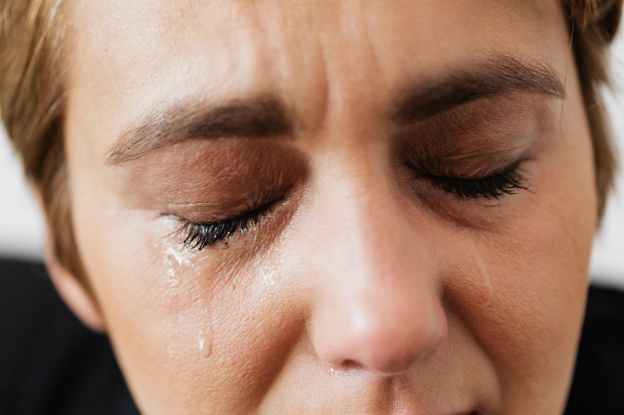
Tears

Tears

Blessed are You,
Lord our God,
King of the Universe,
for tears—
gentle trickle wetting cheeks,
or soggy, snotty tears of billowing sorrow
or fear,
or shame.

Blessed are You
for the intimacy of tears,
the honor of witnessing
the inside
of another human being,
coming out.

Blessed are You,
Lord our God,
King of the Universe,
for Jesus weeping
tears of sorrow,
anguish,
compassion,
consecrating our tears with Yours.

Picking

There are few daily joys more pleasurable than picking my nose. If I don’t have a pinky fingernail long enough to pick the boogers from my nose, that takes some of the fun out of it. (Maybe this is the real reason I have always preferred to keep my nails long.) If a booger comes out dry I usually drop it wherever I am or flick it across the room so I don’t have to be responsible for its unknown landing place. But when the dry part comes out trailing some not-so-dry stuff, I have a real dilemma. If I’m sitting down it’s out of the question to rise from my chair simply to get a tissue. But neither do I want to stick this rubber cement from my nose on the furniture. Sometimes what I’m wearing has a perfect hem to fold the booger in, where it can reside unnoticed until it is washed away in the washing machine. When I’m outdoors the options open up quite a bit. I can hide a booger in grass, camouflage it on a tree trunk, or stick it on the bottom of a picnic table.

For the first few years of my marriage, all boogers I picked in the car were stuck on the side of the upholstered seat, down near the lever that moves the seat forward and back. My husband protested loudly enough about this crusty collection that I now keep a napkin in the center console for booger-collecting purposes. If for some reason the napkin isn’t there, I can usually find a straw wrapper or a receipt. I may have stuck a juicy booger on a coin once, when that was all that was available. Some people I know eat their boogers, which removes all the trouble of having to find a place for them, but booger-eating has not been one of my secret pleasures.

In addition to picking my nose, I also enjoy picking a guitar. Growing up with a guitar-picking father—who played his classical guitar most of the day and often far into the night—picking was the soundtrack to my life, long before I owned my first guitar at age fifteen. Not long after I learned to strum a few chords I learned different picking patterns. In high school I played around with song-writing, and my dad recorded an album of me singing and playing my songs, titled “Searching.”

My childhood was also chock-full of picking fruit. In addition to the 45 fruit trees, three grape arbors, and bursting vegetable garden, we grew and harvested many kinds of berries: red and black currants, gooseberries, josta berries, raspberries, blackberries, boysenberries, strawberries. I picked everything from green beans (somewhat tedious) to zucchini (a little poky) to asparagus (quick and easy). I picked weeds from rows of corn; grapes from their stems, for juicing or freezing. I picked flowers from our wild flower garden, and from my own little flower plot. Nasturtiums were my favorite, and I gave special attention a miniature rose bush I received for my birthday one year.

I also picked up sticks—hundreds of sticks—every year after my father painstakingly pruned those 45 fruit trees and three grape arbors. Grape prunings were the worst. They twined into a tangled mass under the grape arbor and my sister and I would wrestle them in flailing, unmanageable, rolling piles, to the burn heap. When the sun went down and we were cozy inside by the wood stove, we often pulled out pick-up sticks. I spent hours on the floor in the living room playing games of pick-up sticks with my sister or mom.

There are at least two things I haven’t picked: a lock or a pocket. I’m also not big on picking my teeth. I have occasionally picked someone’s brain, but my passionately curious husband far outdoes me on this one. He is interested in everything from bee keeping to philosophy and enjoys picking brains about almost anything. He is also better than me at picking up his feet, and placing them. I have fallen down three different flights of stairs at our house and my spacial awareness is below average.

I have picked at my food, picked over tables of used books for sale, picked off ticks, picked at lint on my shirt, picked on my children for making messes, and picked up the pieces of broken plates and cups. I have picked my way through the mess on my daughters’ bedroom floor in the middle of the night, and I have picked a bone with my husband over the proper use of a Sunday. Too many times I have been the pick of the bunch—valedictorian, Washington State student employee of the year, rising staff member of the year. I’m sure someone told me this is how it works: being excessively responsible results in a life that is excessively easy. I am disappointed and angry that this has not been the case, and have picked to pieces the concept of responsibility.

I have never picked a fist fight, and I’m not quick to pick a verbal fight, but I have certainly picked at a lot of things that ought to be left alone—hang nails, broken things, people I don’t know well enough to criticize, dried-on gum, sunburns, people I love. I have also picked apart my self until I am riddled with holes, and I have picked apart the human beings closest to me. I have looked down on them, or refused to look at all, forgetting that dignity is not earned, it just is.

I have been free to take my pick, of schools, boyfriends, produce at the grocery store. I have wondered whether this freedom to pick and choose is a really a freedom, or if it’s more like a train wreck. I watch myself choose what feels good in the moment (but not five minutes later), choose to hurt someone else so I can feel better, choose to point out what’s wrong instead of what’s right, choose to leave when staying would be true loving. Who decided it was a good idea to leave the picking up to me?

I have picked a hole in my own heart and then wondered why I find it hard to fully love. I have led an untroubled life in regards to upbringing and circumstances, but I have created trouble by looking on myself and others with judgement, and ruminating in the ensuing shame. I have been slow to pick up on this, not realizing that a life well-lived is lived not in good behavior but in a safe heart. Abundance happens when I let my own heart be a safe place for me to reside, and when I offer my heart as a safe place for those around me to enter in. When I am good company for myself I become good company for others. Love is big enough for all my yuck. I don’t have to pick myself clean. I will be messy, and I will be surrounded by messy people, and I will still pick me, and I will pick the person in front of me.

Photo by Joaquín M: https://www.pexels.com/photo/a-close-up-on-a-hand-picking-a-daisy-9815822/

What I Forgot to Learn From Birds and Babies

Look at the birds of the air, for they neither sow nor reap nor gather into barns; yet your heavenly Father feeds them. Are you not of more value than they?” (Matthew 6:26, NKJV)

“The early bird gets the worm,” we say; but God provides for all the birds. And Jesus lauded them not for getting up early, but for receiving what they need when they need it; not for sowing, reaping, and gathering into barns, but for partaking in the provision of their Creator. “Look at the lilies,” He said, “they neither toil nor spin; yet even King Solomon in all his glory was not dressed like one of these.” (see Matthew 6:28, 29)

For though by this time you ought to be teachers, you need someone to teach you again the first principles… you have come to need milk and not solid food.” (Hebrews 5:12, NKJV)

Feeling offended by this assessment from the writer of Hebrews, I have rushed to grow up, skipping the part where I am dependent on my Father; the part where I trust because trust is all I know and all I have. I am a toddler convinced that I’m 18. I’ve made it out of the house, onto the street with my bag of snacks, and I’m very proud of myself. When a car approaches, I don’t even know to feel afraid until it has nearly killed me—when I feel the rumble of the engine in my chest, hear the screeching tires, feel the heat.

How often I wanted to gather your children together, as a hen gathers her brood under her wings, but you were not willing!” (Luke 13:34b, NKJV)

Perhaps this is when I consider embracing my status as toddler in my Father’s house. Streets can come later. Now is the season of still-warm folded laundry; a booster seat pulled up to a laden table; being carried when I get tired; handed a sippy-cup when I am thirsty. This is a time to relish the dependance that goes hand in hand with abundant provision.

“‘I will be a Father to you, and you shall be my sons and daughters,’ says the Lord Almighty.” (2 Corinthians 6:18, NKJV)