Tag Archives: sacred

Exposed by Proximity

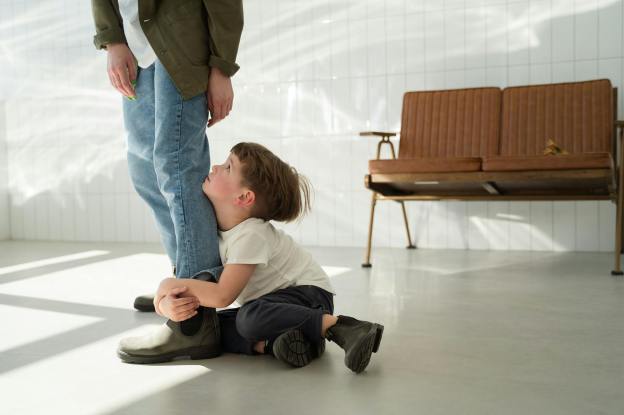
Children scare me. Even my own children. I do not like this, and admit it reluctantly. Children make noises at the wrong times, go where they shouldn’t in the blink of an eye, and express emotions with their bodies. In a word, they are unpredictable. 

The most likely culprit for my fear and discomfort is a desire to feel safe by being in control. This is also something I don’t want to admit. Isn’t it better to go with the flow? Not to mention that control is largely an illusion anyway. And Jesus not only loved children; He suggested we emulate them.

But that doesn’t help me with in-the-trenches moments with kids. I can’t ever find the one right answer I’m looking for. Should a kid have snacks or eat only at mealtimes? If I give someone else’s kid dessert, or put on a TV show, will that be the end of life as we know it? If two toddlers fight, and both hurt each other, do we call it even and move on, or should they be punished or lectured? How do I know in what moments to expect my children to toe the line, and in what moments to suspend expectations and get ice cream? And don’t even start on the pros and cons of vaccines. 

No matter the age of a child, my response to them could affect them for the rest of their lifetime. I am not okay with this. Will I be the one who offers grace or wisdom or a listening ear that gives permission for a child to like themselves? Or will I give advice at the wrong time, be lenient when the consequences are life threatening, or give peanut butter crackers to the kindergartner with a severe peanut allergy and get locked up for murder?

The stakes are too high. Somebody please lower them. Tell me I don’t have influence, I’m not culpable, my instincts can never go wrong. But no, once more I must make peace with uncertainty. I must receive the truth that I will both harm and help my children and other children. Sometimes I will hurt and another will heal. Sometimes I will heal what another has hurt. And some hurts won’t be healed. 

No matter the stakes, I am not superhuman. I will break what needs to be held together, and I will clamp down on what needs to be released. Damn, I hate that. 

Then again, maybe the children in my life are my greatest ally in accepting my humanness. I doubt the fear will go away. But maybe it could prompt a mantra: I am in this moment, with this child, and we are both getting to know ourselves. There’s something sacred under the scary feeling, a gift of mutual vulnerability that exists here where I am exposed.

Extremely Sacred

While running errands and trying to decide whether to even make time to contemplate a “word of the year” for 2025, a word found me. “Sacred.” This word is an invitation to presence, or mindfulness, or prayer without ceasing—whatever you call that awareness of life in oneself and in every bit of everything. Inside this wealth of aliveness is soul-rest, humility, compassion, and curiosity.

In her book The Artist’s Rule, Christine Valters Paintner repeatedly explores sacredness, suggesting that we consider our “life story as a sacred text,” and life as an invitation to “discover the sacred in all things, all persons, all experiences.” It is much easier for me to let stained glass be sacred and catching up on emails be secular. Let Jesus love me, but let me appropriately dislike my neighbor.

“Sacred” requires that I hold space for what is difficult or repulsive. It demands that I return to myself over and over, to the wholeness of belonging. Worst of all, it is an invitation to relinquish judgment—of myself first, and of everyone and everything else.

But if all ground is holy ground, what then? Paintner writes, “growth happens in any context and … any situation in which we find ourselves can offer the fullness of grace.” Any situation. God everywhere. Kitchen sink, coffee shop, marital discord, frosty grass, leftovers for lunch, heart disease. I think sacred awe is quiet. Or maybe innocent like a child, un-brittle, open.

Although “sacred” is gentle, it is not soft. It knows God’s upside-down kingdom, and is relentless about including “outsiders” until none are left. This radical inclusion happens at every level—inside me, where I try to sort out the acceptable and unacceptable parts; in my family, where it’s easy to reward whoever has the best behavior; in my community, where I gravitate toward people who agree with how I do life; in my country, where the shared umbrella of freedom is torn to shreds by those of us who can’t bear to take refuge beside our enemies; in the world, where shared humanity is forgotten in the quest for survival, or seniority, or security.

“Sacred” also includes a call for me to know who I am and what I’m about. Paintner quotes Richard Rohr, speaking about a sacred “yes” and “no,” by which he means “that affirmation or negation that comes from a deep place of wisdom and courage, even if it creates conflict or disagreement.” I do not like this. But the longer I live, the more apparent it becomes that living in harmony with what is life-giving will result in dis-harmony with the tall and manicured stack of what-life-was-supposed-to-be. Curiosity holds all things lightly.

Rohr continues, “The sacred yes is not willful or egocentric, but rather is willing and surrendered. The sacred no is not rebellion or refusal, but always the necessary protecting of boundaries.” A willful yes and a rebellious no—these are familiar. “Surrender” is bitter herbs. I predict this beauty of sacred walls and doors will take a lifetime to assimilate.

Trump’s inauguration was emotional. I didn’t watch it. I don’t know anything about it. By emotional, I mean it brought out powerful emotions in millions of Americans. Inauguration day didn’t feel like just another day. It felt momentous. There is space for this, too, in the sacredness of 2025. Politics cannot escape the inclusive expanse of God’s sacred breath.

Personally, I worry more about loving my mother than I do about executive orders. Yes, that is my privilege speaking, and also my choice. It would be simple to apply “sacred” in broad strokes and avoid attending to whether I treat my children’s experiences with reverence, and my spouse’s foibles with kindness. Must I see the sacred in cat hair and dust, codependence, kids sick at home? Yes, yes, let it be so. I will be a woman of extreme sacredness, surrendered (not always willingly) to the eye surgery that tunes my eyes to see an extremely sacred world.

Here’s to reverent attention in 2025.

Sacred

Sacred

Blessed are You,
Lord our God,
King of the Universe,
for sleep and sunshine and summer,
for salamanders and salad,
slugs and spiders,
for skin.

Blessed are You for sorrow and “sorry,”
surprises and scrambled eggs,
sweet and sour,
song and silence,
strength and surrender,
swings and swans and swooning,
smoothies and smooches.

Blessed are You,
Lord our God,
King of the Universe,
for sending Your Son,
Your Self,
Your Soul,
for mine.

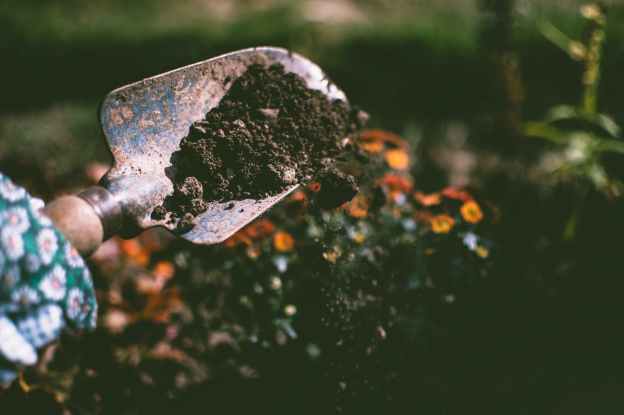
Holy Dirt

Holy Dirt

Blessed are You,
Lord our God,
King of the Universe,
for dirt—
soft enough to nurture a seed,
yet strong enough to anchor a tree.

Blessed are You
for the ground we walk on,
blessed brown substance.
It holds water for growing things
or softens into luscious, liquidy magic,
perfect for pigs, or three-year-olds.
It holds fence posts and foundations,
or allows us to dig even deeper,
to bedrock or water or oil.

Blessed are You,
Lord our God,
King of the Universe,
for children and gardeners,
builders and farmers,
whose hands and fingernails
bear evidence of the blessing
(even after a good washing)
and return day after day
to the soil, remembering
what the rest of us have forgotten—
that dirt is sacred.