Category Archives: Invitations to Grace

Death Is Beautiful

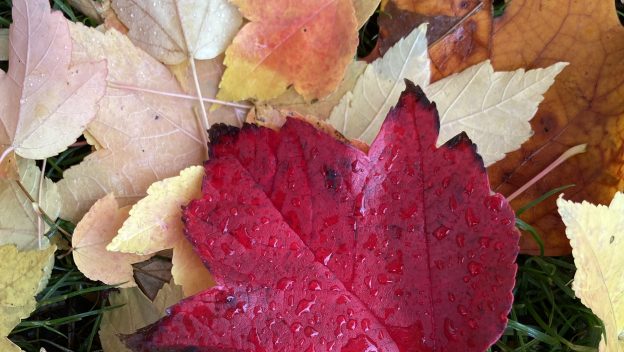
Death is beautiful. City streets and sidewalks are papered in it. Trees shout it with blazing reds and yellows—a rare season when the glow of sunset settles onto every country road and city block. And the individual deaths are as beautiful as the collective. If I dare use the worn-out snowflake analogy, each leaf is one-of-a-kind—the blend of colors, the shape and length of the stem, edges pointy or rounded, symmetry perfect or lopsided. Even the way it rides air currents to the ground is singular.

In the Celtic spiritual tradition, the phrase “thin places” describes those times when the veil thins between the now and the eternal, the ordinary and the extraordinary, and we see what is usually hidden. Death is one of those thin places.

Months before autumn, I walked a fog-covered beach on the Pacific Ocean, and death everywhere arrested me, stunned me, captivated me with its patterns and beauty. The oval-shaped outside of a small chiton shell—previously home to a creature that might have been the child of a limpet and a sea slug—was mossy green. But inside, surrounded by a wrinkly cream-colored girdle, an almost-neon aqua blue lit up the connected shell plates, and I stared in wonder. The shell of an urchin, now spineless, was covered with perfect rows of raised dots in muted tones of pink and green. The purple inside of a crab shell had patterns like light shining through water. Round jellyfish, symmetric from their thin edges to the white motif near their fat centers, lay stranded on the sand. A dead dragonfly, wings spread as if on display, had the bluest body, a peaceful gray-blue, but nothing dull about it.

My daughter picked up a crab shell which had been home to a couple dozen barnacles, and I imagined it in its heyday, scuttling through tide pools, unknowingly feeding the barnacles on its back, as well as itself. Uprooted seaweed formed circles and figure-eights. My daughters and I stomped on the seaweed air floats, trying to outdo each other with satisfying pops. One already-cracked float looked like Pac-Man, and another like a pelican’s head and neck. Shells, once symmetric, had broken into fragments and been polished smooth by the sand—pinks mottled like granite, colored ovals reminiscent of planetary rings, layered blues, and swaths of pearly iridescence. An art museum at my fingertips. 

As I contemplate the beauty of death, I can’t help but wonder what it will be like when someone I love dies. Will I feel the thinness between earth and heaven? Will there be beauty? Or will it be clinical, disturbing, exhausting, or—worst of all—sudden and too soon? I’ve never been with a person at death. I am curious—will there be a glimpse of what I have not seen before?

There is room for magic in morbidity. Although the leaves will turn brown, rot in the rain, and return to the soil, their week of splendor remains undiminished. Although every empty crab shell represents a death, and the waves and crunching feet will not leave them whole, they are no less exquisite. Although I will die, my passage from this life will squeeze the mortal and the immortal together for just a moment, creating a beautiful, painful, thin place.
Exposed by Proximity

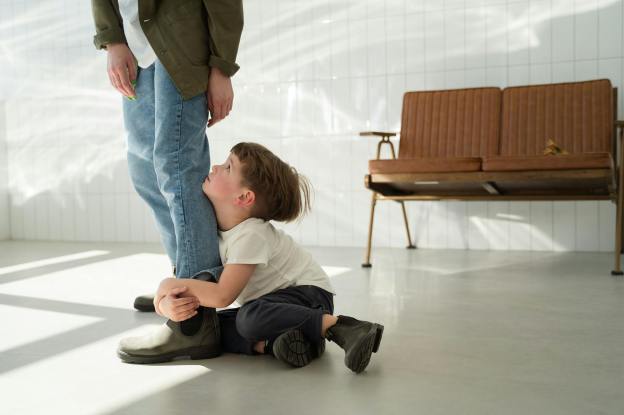
Children scare me. Even my own children. I do not like this, and admit it reluctantly. Children make noises at the wrong times, go where they shouldn’t in the blink of an eye, and express emotions with their bodies. In a word, they are unpredictable. 

The most likely culprit for my fear and discomfort is a desire to feel safe by being in control. This is also something I don’t want to admit. Isn’t it better to go with the flow? Not to mention that control is largely an illusion anyway. And Jesus not only loved children; He suggested we emulate them.

But that doesn’t help me with in-the-trenches moments with kids. I can’t ever find the one right answer I’m looking for. Should a kid have snacks or eat only at mealtimes? If I give someone else’s kid dessert, or put on a TV show, will that be the end of life as we know it? If two toddlers fight, and both hurt each other, do we call it even and move on, or should they be punished or lectured? How do I know in what moments to expect my children to toe the line, and in what moments to suspend expectations and get ice cream? And don’t even start on the pros and cons of vaccines. 

No matter the age of a child, my response to them could affect them for the rest of their lifetime. I am not okay with this. Will I be the one who offers grace or wisdom or a listening ear that gives permission for a child to like themselves? Or will I give advice at the wrong time, be lenient when the consequences are life threatening, or give peanut butter crackers to the kindergartner with a severe peanut allergy and get locked up for murder?

The stakes are too high. Somebody please lower them. Tell me I don’t have influence, I’m not culpable, my instincts can never go wrong. But no, once more I must make peace with uncertainty. I must receive the truth that I will both harm and help my children and other children. Sometimes I will hurt and another will heal. Sometimes I will heal what another has hurt. And some hurts won’t be healed. 

No matter the stakes, I am not superhuman. I will break what needs to be held together, and I will clamp down on what needs to be released. Damn, I hate that. 

Then again, maybe the children in my life are my greatest ally in accepting my humanness. I doubt the fear will go away. But maybe it could prompt a mantra: I am in this moment, with this child, and we are both getting to know ourselves. There’s something sacred under the scary feeling, a gift of mutual vulnerability that exists here where I am exposed.

A Different Kind of Trust

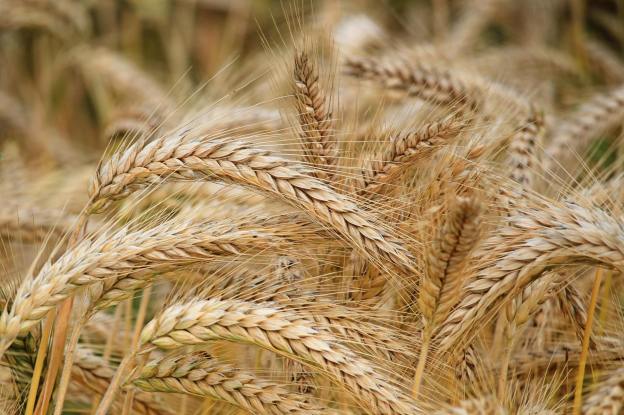
I take into my body every day a substance I know almost nothing about, a refined form of an ancient plant—maybe a grass? Today the bouquet on my table consists of a dozen stems I gathered from the roadside a mile from home, at city limits where the speed limit increases from 35 to 50. This bouquet is the raw material for foods I eat daily, but I have harvested it for beauty and not for appetite. 


I’ve been learning about relationships since forever. As a teen I imbibed books by Joshua Harris and Elizabeth Elliot. I thrill a little every time I take a personality test. When my husband, Michael, and I went through pre-marital counseling together, we answered personality questions about ourselves and about each other, and our therapist came back with the results overlaid and a description of our relationship dynamics. I didn’t know that was possible! Unbounded delight and satisfaction. 


As I hold a stem from the bouquet, I find it rose-like in that it is beautiful, but it will hurt me if I handle its sharp edges carelessly. I’m not sure how one prepares it for consumption, but I think a severe beating is involved, to separate its parts. If I’m not mistaken, animals were traditionally employed to help with this task. But even this violent unmasking of the plant doesn’t render it edible—at least not to the standard of most palates. Additional breakdown, with stones or blades, nudges it closer to consumption. Even then, it doesn’t appear on dinner plates or in snack trays. It waits in the cupboard for a kitchen chemist to combine it with oil, water, yeast, sugar, and any number of other ingredients. The resulting gooey blob is then baked, fried, boiled—cooked in some way. Once cooked, the food may be spongy (in a good way) or crunchy, and bears no resemblance to the stalk I hold in my hand. 


I’m hungry to understand relationships, both because I’m intrigued, and because I do not want to leave my relationships to chance. Marriage tops the list of highly-scrutinized relationships, followed closely by the bonds I have with my kids, and with my parents. What’s happening when my husband gets super talkative? Does quietness mean completely different things for my two children? How have my mom and dad survived this long in the world with their seemingly brittle ideas about religion and diet, and not one single coffee date?


Although I don’t know how to plant, nurture, harvest, thresh or prepare grain, I do know that an established industry takes the plant through all those steps for me, and I ought not eat it otherwise. I owe this knowledge to my elementary school education, and the times my mother reprimanded me for eating raw flour—probably in the same era I sampled dry dog food. 


I am convinced I will not get relationships right by chance, by intuition, organically. Research, knowledge, and choice are required. I have used this knowledge to understand and to be understood; to shame myself and my spouse; to prove I’m right; to try new patterns and to defend old habits. Most of all, I use it to dispel mystery, because the mystery of love is uncomfortable; the bread of love is finicky—too dense or not dense enough, sometimes rising only to fall, tantalizing when it’s warm, less palatable cold. Does my reading and analysis save me from this roller-coaster ride? I think not. But it does help me feel less alone. 


As I drive from my small town to the next small town, I count fields of wheat. At least I think it’s wheat. Truth be told, I trust an industry I know little about, and a process I prefer not to attempt to replicate. On the baking aisle I can choose the brown bag or the blue-and-white one, non-GMO or organic, but I’m only pretending to understand. The way I know wheat best is on my tongue, in the form of bread, mixed with flavors like cheese and pickles, homemade raspberry jam, or peanut butter and applesauce. I don’t need to know all the details.


Could it be that the way I know relationship best is in the presence of a friend?—trying a new flavor of ice cream, laughing about how I only shaved one leg, crying about a pet passing heavenward. Maybe I don’t need to understand all the details in order to nourish and be nourished . . . in both food and friendship.

Disrupt the System, Applaud Early

Applause: public approval or praise expressed by clapping hands together.

Some fifteen years ago, I stood while applauding after a Distinguished Faculty Lecture at my alma mater. Is it a standing ovation if only one person stands? I stood, exuberant about the depth of understanding and connection I experienced during the lecture. But as my peripheral vision told me that no one else stood, self-consciousness bubbled up. Why am I the only one deeply affected? Does everyone else already have a depth of experience such that the lecture was run-of-the-mill for them? My pulse quickened and I lowered into my seat, certain everyone must be giving me the side-eye, judging my way of being in the world.

Looking back, I am proud of that moment. I know now that many of us who speak or write or reveal ourselves in some way, need only one person to stand. Only one person to send a note letting us know our words created connection.

Late last July, I attended “heART on display,” an event featuring artwork by incarcerated or formerly incarcerated individuals. Cedar Rain Spirits, a distillery and BBQ in downtown Walla Walla, hosted the event, curated by Devon Player, whom I met through the Walla Walla Community Change Team. Outside the narrow storefront, a sandwich board on the sidewalk announced the event. Inside, people mingled, music blared, and art lined much of the two long walls that extended to the back of the venue.

For the next hour, I perused art, snacked on free hors d’oeuvres, asked a few questions, and flattened myself into tables and walls to avoid bumping into fellow guests. As I chose art to purchase—proceeds to benefit Running Waters Equity Fund and the Black Prisoners Caucus—Devon took the mic and introduced a guest speaker, Anthony Covert. We all quieted where we sat or stood, and turned to listen.

Anthony was sentenced to 432 months (36 years) in prison at the age of 18. He served 16 of those, and walked free on June 10, 2024. As he talked about sitting in prison, alone with himself, I stumbled into sudden affinity with him. We “outside” (unincarcerated) folks have so much available to distract ourselves; it is a rare and excruciating experience to be alone with ourselves. “ But when you’re sitting in that prison cell and all you got is those four walls—sometimes with a celly, sometimes not—you have to sit with yourself.” And, he says, you have to ask yourself questions, about how you came to be in this place, and what your purpose is now that you’re here. 

My own season of being alone with myself and asking hard questions transpired during stay-at-home momming. I recognized that singular agony of sitting with oneself, and the subsequent decision to engage with tricky, heavy questions. As an incarcerated, black young man, Anthony felt it in the isolation of prison. As a middle class, white mother of an infant and toddler, I felt it in the isolation of motherhood. Although our experiences differed, Anthony’s words connected intimately with my inner world as a stay-at-home mom. Because he exposed his pain, I felt seen in mine. Our stories held hands for a just a moment. 

I wanted to applaud, but other listeners were intent, soaking up the story, not ready to respond. Anthony continued, and when he shared the completion of a college degree, while incarcerated, with a 3.98 GPA, everyone applauded, including me. Later, when he talked about his clemency hearing and the unanimous vote to grant him clemency, we applauded again. It was then that I noticed my moments of connection were not the same as the moments of applause. Before Anthony’s clemency hearing, when anxiety was high, Anthony’s friend Demar told him, “Go in there and show them who you are.” That moment connected. That moment I wanted to clap or sigh, or give the man a hug. Show them who you are.

Why the dissonance between my moments of kinship with the speaker, and our collective moments of applause? Could it be that as a society we are quick to applaud measurable achievement, but not moments of quiet strength? What about times of agonizing surrender—to our brokenness, and simultaneously to our wholeness? 

Anthony described us on the “outside” as an invisible army that stands with those on the “inside.” Because our worlds are disconnected, there is a wall isolating our compassion and assistance from the insiders’ knowledge, and/or response. Knowing this, may we be courageous to continue engaging—despite the lack of testimonials, catchy postcards, and fundraising galas that feed the selfish side of our generosity. 

“ There’s no fixing the system. It is what it is,” Anthony said. “But what you can do is disrupt it in certain areas, right? To give people opportunities to come home.”

What if applause—public approval or praise—happened earlier in the story, and it served to recognize nothing more than our humanity, the intrinsic dignity of our existence? What if clapping said, “you got this,” more than, “you did something big and measurable”? Better yet, what if approval and praise showed up in the process and in the conclusion? What if it gave people opportunities to come home—to themselves, to their families, to their communities? I need this. I suspect we all do.

I want to applaud early—for my children, my spouse, my friends, my community. A healer is “someone who can see the movement toward wholeness in you more clearly than you can at any given moment,” wrote Rachel Naomi Remen. Let’s open our eyes to see. Put your hands together for humanity. 

Let’s applaud smallness. Clap for the courage it takes to engage with our own selves and our messy stories. Cheer at the thin places in our stories, where pain and intention form a bond and point us in a new direction. Celebrate wholeness even as it lingers in the wings. Disrupt the narrative in ways that invite belonging. 

Weird but Not Worried

Weird but Not Worried

Blessed are You
Lord Jesus,
King of the Universe,
for sending Your disciples to preach—
even Judas—
before they grasped
what You were all about.

Blessed are You
for letting thousands of people
get hungry on a hillside,
for letting demons
run a fortune of bacon
over a cliff to drown,
for letting a woman use her hair
as a washcloth, on You.

Blessed are You
Lord Jesus,
King of the Universe,
for never being much of one to worry
about Your next meal
or Your fickle followers
or that you sounded crazy
or preached too long.
You saw the person in front of You
like they’d never been seen before
and didn’t worry about the rest.

Blessing My Small Self

Lord, wash me not of my imperfections, but of the ways I try to hide them.

Four-days-unwashed hair.

Running late, always running, always late.

Hoping no one finds out how infrequently I launder the bedsheets.

I never before thought of blessing these things. Now I see them in need of blessing, of integration.

The voices of emotion.

The voice of smallness.

The voice of vulnerability.

The voice of longing.

Christine Valters Paintner writes, “Sometimes we need to welcome our ‘small selves’—the poor, meek, humble parts of ourselves—to allow our big radiant selves to be in service to them … Perhaps there is something even more profound than all of the amazing things we are doing in the world. It is this simple unadorned self that is blessed. The smaller selves are blessed.” (The Artist’s Rule, pg. 87)

The wisdom of these smaller selves is the wisdom of being human, of being malleable, of being unpolished and beautiful.

I want to make peace with my shadow side, my imperfections. I feel in conflict with myself, like half of me is inside a fortress, and half of me is huddled against the outside walls—like all of me is afraid.

Interior freedom feels like being present with myself, like saying “not today” to crappy thoughts. It feels literally spacious, permission to take up more room with my body and breath. Is there room to make mistakes? I feel small when I think about making mistakes.

In Celtic spirituality, “thin places” refers to locations or times where the veil between the physical and spiritual realms seems thin, where a closer connection to the divine arrives, perhaps unexpected. It is possible that no one else wants my small self, but God does. He meets me in the moments when I am aware of a limitation, a failing, a smallness. Maybe these moments are another “thin place.”

I notice that my sense of self is rigid, even brittle. Can I reimagine myself? Fleshy, muscular, vulnerable, more cottage than castle, more field than fortress.

I am meadow. No meadow has walls. No meadow tries to look the same every day. A meadow doesn’t look at its thin patches with embarrassment.

My whole heart longs for grace and mercy. I want to mete out mercy, because it is the right thing to do. But I’m not sure mercy can be “meted.” It is given out not so much in measure as in waves. It is oceanic, much bigger than I realize.

I am meadow, and in meadows deer graze, butterflies drink, shy rabbits and tiny mice feel at home. “Welcome home to myself,” I say.

My big self sets the table for my small self, and together we dine in the meadow.

In Five or Six Hours the House Will Be Quiet

I’m not okay. This is how I know it’s time to write.

I’m sitting in the kids’ room by the fire I lit for them—my attempt to dote on them since they stayed home from school today.

Sore throat again this morning—it has been almost daily for weeks with my younger daughter, Kyli. The older one, Kayt, said probably nothing is wrong with her but she doesn’t want to go to school. Middle school “friendship” has been sucking the life out of her. I can’t help but wonder if her chronic exhaustion and headaches are as much social as they are physical.

I shone a flashlight down two throats this morning. Kyli’s looked red, and Kayt’s had a weird white blob that dr. google says is a tonsil stone. Never heard of those before.

By the time I sit down to write, it’s midafternoon. Homework time downstairs has devolved. My stomach clenches in response to unharmonious sounds, insufficiently diminished by their travel up the stairs to my ears.

Now Kayt has come upstairs to whine and writhe. Technically she came up to say Kyli is bugging her and won’t stop. Since I made clear arrangements for Kyli to come upstairs if they weren’t enjoying sitting together, I feel a gallon of frustration and a drop of empathy. So I tell her to send Kyli upstairs, and that’s why she’s begging, moaning, and asking unanswerable questions in a nails-on-chalkboard tone of voice. She has a weird thing about not being alone.

At 7:15 this morning, when I usually would have been seeing the girls off to the bus, instead I set up appointments at the urgent care center. This change in schedule involved calling the bus driver and texting, let’s see,—their teacher, my yoga instructor, my husband, and several people I had plans with later in the day.

Did I mention the power outage? Just got yet another automated call from the power company. I have an outage that should be restored by 4:30pm, says the message. The power has already been back on for half an hour, and it’s currently 3:30. Not to mention just a few minutes ago I received an automated call informing me that the outage was caused by wildlife (read “squirrel”), and my power had been restored.

I think I’ve received five automated calls, including one that announced an outage had been reported in my area and a truck had been dispatched. Yes, I’m aware. I reported the outage when an explosive BANG and corresponding flash of light outside the dining room window resulted in all powered devices in our home going blank.

My husband is in Denver for work.

My sister is home with a sick kid as well.

My younger daughter made a “fun cutting station” on the floor in her room, where folks can experience the satisfaction of cutting various materials—like blue yarn (now in pieces all over the floor), tiny foam squares, a rubber armband (okay, that actually is super satisfying), and a plastic packing sleeve.

On the kitchen counter downstairs is a bowl of homemade slime that looks like a hot-pink pile of animal intestines. The dining table is covered with rubber stamps and paper, ink pads and embossing supplies, dirty dishes, purple slime, saltines, and homework.

Finally. I breathe. Here’s a moment of peace. Kyli is taking a break from homework, so I allow Kayt to study upstairs with me.

Kyli is quietly making a creature out of air-dry clay (a substance which already covers a significant portion of the bathroom counter due to a previous creative session this morning).

I don’t like the multiplying messes.

Sibling snarkyness nauseates me.

Most of my day has born no resemblance to the Wednesday I thought would unfold when I opened my eyes this morning.

But I ran on the treadmill and took a shower this morning, and in an unplanned burst of self-care I even dried and straightened my hair, and put in earrings. I’m sitting here by the fire, cat on the hearth, journaling. I did a marvelous breathing meditation from The Artist’s Rule, and I laughed with my girls.

After our visit to urgent care, we went to school and picked up homework (the current quarter ends in two days and there is a small state of panic about grades). Then we filled the car with gas for “real low cheap”* at the station near the school, stopped at Walmart for grocery pickup, and came home for the whole slime-making, lunch-eating, power-outage bonanza, followed by the Sibling Homework Crisis of 2024.

So I’m not okay.

But also I am.

Because it’s okay to not be okay.

And I’m grateful my kids don’t have strep, and … this just in: Kyli is cutting a stick of gum into pieces, holding the scissors above her mouth so each piece drops in … back to gratitude—for the fire warming my feet, for furry and purry kitties, for a relatively small pile of dishes in the kitchen sink. I haven’t yelled at my kids, and I have listened to them. I’m going out with girlfriends this evening.

And—bless Mother God—in five or six hours we’ll (fingers crossed) be tucked in bed and the house will. be. quiet.

*If you want to acquaint yourself with the phrase “real low cheap,” watch this.

Toothpaste

Toothpaste

Blessed are You,
Lord our God,
Queen of the Universe,
for chocolate chips
melted into a couch cushion,
bandaids on the shower wall,
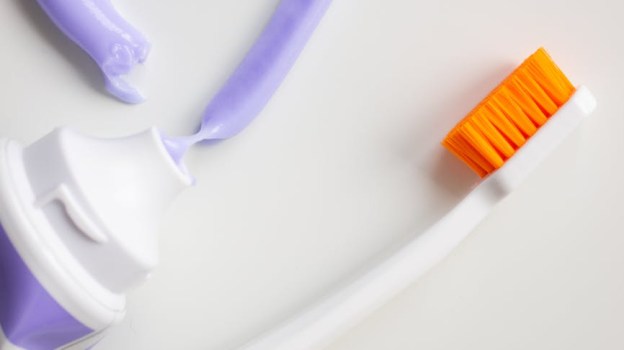
and toothpaste. so. much. toothpaste—
crusted onto the tube,
smeared on the bathroom counter,
cemented to sinks and walls.

Blessed are You
for Cheerios on the kitchen floor
crushed into powder,
coat wet and dirty
from a night in the back yard,
sandal forever lost
in the mud of Anthony Lake,
chip crumbs in the bunk bed.

Blessed are You,
Lord our God,
Queen of the Universe,
for candle wax dripped
down the cupboard door,
Q-tips cut into pieces,
gum saved on the dining table “for later.”

Two young humans dwell here
who create often and live large.
May they always have
permission to be messy and alive,
and enough money for toothpaste.

Prayer, Revised and Expanded

My journal takes me back in time. September 25, 2015. Thirty years old. Married ten years. Two daughters—Kyli two months past her first birthday, and Kayt a month shy of her third. That means on the day I wrote this prayer I had a one-year-old and a two-year-old. No surprise that “broken,” “scared,” “no match,” and “tired” feature in this heart-cry, penned during a rare stolen moment. My heart bled out through the ink of my pen. I turned to the page and to my heavenly parent, because together they were the safest place I knew.

April 17, 2024. Thirty-eight years old. Married 18 years. Kyli and Kayt are now 9 and 11. We’re deeply settled into the house we were in the process of purchasing in 2015. And I’m writing, which I now realize is not only a safe place for me, but also a creative passion.

Today I’ll respond to myself in this prayer. A spiritual journey is a both/and experience, dense with contrast and contradiction. And so today maybe I disagree with my thirty-year-old self, but my experience and beliefs then were as valid as my experience and beliefs now.

Truthfully, I haven’t been writing spiritual content much recently. I’m weary of cultural Christian ideas, the sin-and-salvation language, the beliefs that tied my hands behind my back. But set all that aside, and there is a friendship. Prayer is a celebration of friendship.


Good morning, Lord.

I am in a place I know You do not intend for me to be. I’m literally sick with worry. I can’t stop my head from spinning and my heart from panicking. Please speak truth to my heart and save me from myself.

You can be in this place. It’s okay to not be okay. You won’t feel this way forever. And yes, keep believing there are better things ahead. You are held.

I believe the solution is walking with You, but I can’t even do that. I am so broken, so scared, so selfish. Please do it for me, Lord. Take my heart, take my marriage, take my parenting, take my responsibilities at church and book group and other places, take the move to the new house, take meal planning and grocery shopping, take the lies that cripple me. Take my heart of stone and replace it with a heart of flesh.

What does it look like to “walk with God”? You are beautiful and your life is beautiful. You are worn out. Ask for help. Take medication. Drink coffee. Watch TV shows. Cry. Plan a day for yourself—that is not selfish. Your heart of flesh is already there. And this grieving might be just the thing to help you find it.

I confess my selfishness, my desire for control, my fears, my misbeliefs. They are sin and they do not honor You. Please take them from me. Please fight this fight for me. I am no match for sin, no match for the devil, no match for life.

Overwhelmed, flooded, depressed, alone, trapped. You feel these things deeply. You are stronger than you think, and not as strong as you think. You might have to let get of what you’re holding tight, and holder tighter to the things you’ve been letting go. Don’t know what that means? Don’t fret. God really does have your back, and She’s not the least bit disappointed.

I can do nothing … but isn’t that a good thing? For Your strength is made perfect in weakness [2 Corinthians 12:9]. Please hedge me behind and before and lay your hand upon me [Psalm 139:5]. Please take away my addiction to negative emotions. Teach me to rejoice in Your victory in my life, to give You the glory, to have a heart of thanksgiving.

These things you dream of will happen. You will learn to enjoy feeling happy, to like yourself, to feel gratitude and joy.

Lord, I am lonely. I am broken. I am too self-centered to see the beauty of You and the many good gifts You are showering on me daily. I surrender to You, Lord. Please save me from myself, Lord.

God will save you from yourself by introducing you to your true self. It’s okay to be lonely and broken. You are also brave and kind and capable.

I need time with You daily in prayer and in the Bible but I feel helpless to make that time. Please do it for me.

God loves to spend time with you. She hears you.

Thank You that You see me as I am and love me. I am so tired of myself. I am so grateful that You are not overwhelmed by my brokenness. Thank You that You use brokenness for Your glory. Give me a testimony that will draw others to You. Lord, if I need a mentor, please provide.

Keep speaking these truths. And when you’re too tired to speak them, the Spirit will speak them for you. You don’t need a testimony; you are a testimony. And you always will be.

I am terrified of the day ahead of me. Take this from me, Lord. Give me eyes of faith. Remind my heart to lay everything at Your feet and let You do the heavy lifting. I want to take Your yoke upon me and learn of You, and accept the rest You promise [Matthew 11:29]. I want to be Your servant and friend so that others will be drawn to You.

Oh dear one, these days are so long and so hard. I see you. You can do hard things. And God is teaching you to rest, even now.

Thank You for my brokenness, thank You for trials and difficult times. Thank You that You are enough and everything else is a cherry on top. I choose by the power of Your Spirit to abide in You. Please let me be a branch today. [John 15:4, 5]

Way to go! You are receiving with open hands. But you know, “everything else” is the stuff life is made of, and it’s okay to want it to feel lighter. You are a branch. You are a badass. Many good things are coming for you, and one day you will feel excited about what the day holds. In the meantime, go get some coffee.

Easter-Egg Life

As I practice both/and living, I learn to allow myself a mix of grace and hard work. Both/and living means, for me, a life that embraces paradox and nuance—different than black-and-white, either/or living.

It’s not unlike the Easter-egg hunt in our back yard last weekend. Several families gathered to spend a lazy afternoon enjoying haystacks (make-your-own taco salad), early spring sunshine, and Easter candy.

Our gathering was ripe with contrast:
Warm sun, cold wind
Hollow (plastic) eggs and solid (hard-boiled) eggs
Edible treasures and inedible treasures
Young and old (three generations of family)
Hiding and finding
Large eggs and small eggs
Textured eggs and smooth eggs
Relaxation and busyness
Eating and drinking (can’t do them at the same time)

Dozens of eggs peeked from grass clusters or perched in low branches. Most of them were easy to spot, but some hid deep in overgrown grass, or camouflaged with bushes and trees. Kids ran through the yard and collected the easy-to-find eggs, then dumped out the baskets to assess their treasures, popping candy into their mouths as they sorted the hollow, plastic eggs from the dyed, hard-boiled eggs. After they’d satisfactorily sorted their first take, they went out again, looking for the harder-to-find eggs. The second round yielded less results; nevertheless, each child’s collection of candy and coins, tiny animal toys and stickers, continued to grow.

My journey into paradox has involved opening the components of my life, like eggs collected in a basket, to find out they were filled with chocolate I couldn’t eat, money I couldn’t spend, and to-do lists I couldn’t finish. My basket stank. The hard-boiled eggs rotted, and the hollow eggs held no treasure. They were labeled—religion, self-help books, pulling myself up by my own bootstraps, always doing the right thing—but the contents disappointed. I thought I’d painstakingly collected resurrection power, or at least a lucky rabbit, but instead I had unearthed anxiety.

The hardest work in my life has been excavating the mountain between me and grace. My value has long been rooted in performance and productivity, and—far from what the church patriarchs predicted—it’s excruciating for me to be “lazy.” I have been incapable of resting my soul, unable to move in “the unforced rhythms of grace” (Matthew 11:29, MSG). A planned life and a protestant work ethic leave grace hanging to the side, like an awkward, unneeded appendage.

Late Easter afternoon, as we covered bowls of salsa and picked up trash, my daughter Kyli kept asking my help to find one more special egg. She knew it had $1 in it which would be hers to keep, along with the container—a beautiful, 3D-printed, shiny black egg that screwed open and shut, with mermaid-scale texture on the outside. I searched with her willingly at first, becoming more reluctant after each subsequent request. I had hidden the egg in question, but I couldn’t remember where, and I soon tired of looking.

It’s not that hard work or self-help books are inherently or predictably bad. It’s just that my basket lacked wholeness. I needed to collect eggs containing decadent chocolates meant to be eaten, money to spend, and lists of what I’d already done. I struggled to find those eggs. I saw them in other people’s baskets, but whenever I went collecting with my basket, I found more of the same eggs I’d already collected.

At length, one of Kyli’s uncles found the black egg under an apricot tree. Kyli squealed with joy, opened the egg to retrieve the dollar, then carefully added it to her egg collection. Soon she returned to our play-set, where the cousins were sending all manner of things down the slide—rocks, smaller cousins, broken plastic things. All was well in the world and she could focus on the fun at hand.

Like Kyli, I never did find the special “eggs” I was looking for. Someone else found them and handed them to me. Much to my surprise, the eggs I didn’t work for are some of my favorites. I used to think working hard mattered a lot, and productivity trumped enjoyment. I’m grateful to the authors, friends, and family who have lovingly placed “grace eggs” in my basket. I’ve learned to have fun.

It’s not that I won’t work hard; I do and I will. The difference is, as I putter and tumble and stride through my days, I like them. I like me. I like people and pets and all kinds of weather and books and food and friendship and I almost like it when my kids wake me up at night. At least, I’m pleased they trust me and know they don’t have to be alone when they’re scared or can’t go back to sleep. This, I think, is grace.