Uncomfortable Extravagance

And when Jesus was in Bethany at the house of Simon the leper, a woman came to Him having an alabaster flask of very costly fragrant oil, and she poured it on His head as He sat at the table. But when His disciples saw it, they were indignant, saying, “Why this waste? For this fragrant oil might have been sold for much and given to the poor.” But when Jesus was aware of it, He said to them, “Why do you trouble the woman? For she has done a good work for Me. For you have the poor with you always, but Me you do not have always. For in pouring this fragrant oil on My body, she did it for My burial. Assuredly, I say to you, wherever this gospel is preached in the whole world, what this woman has done will also be told as a memorial to her.”

Matthew 26:6-13, NKJV

Why do we as humans pride ourselves on being calculated, miserly, scrupulous? Why do we look down on extravagance and take effort to make sure we are not associated with it? What is it about excess that makes us so uncomfortable?

We like to keep things small and controlled. Big makes us squirm. I wonder if this woman who poured oil on Jesus tended to live a higher-risk, less calculated life. Or was this her one moment of letting go, carried past sensibility by love?

Maybe an extravagant way of living—even as we observe it in billionaires and deride it—is not to be changed, but simply to be made beautiful by the grace of God and His leading. We are so eager to change things that seem to us a liability. We are quick to criticize.

Perhaps the extravagant person has a gift, a rare talent. What if, even when I disagree with them, I could begin by recognizing the gift?

Where the disciples saw waste and carelessness, Jesus saw love. His existence as a human being on planet earth was in itself a ridiculous extravagance.

Lord, teach me to see love in the extravagant.

Time Unmeasured

Time Unmeasured

Blessed are You,
Lord our God,
King of the Universe,
for the times when we forget time—
that endless measuring
of eggs boiling
and appointments approaching,
fevers and heartbeats,
days away from home.

Blessed are You
for sacred moments—
talking long into the night,
time interrupted by friendship;
for routines interrupted by joy,
or sorrow
or sudden awareness of a bird
on the windowsill.

Blessed are You
for the impromptu dance party
and the phone call
I didn’t have time for,
that slipped past
the measuring of time,
and became my favorite
moments of the day.

Blessed are You,
Lord our God,
King of the Universe,
for the smell of a freshly peeled orange,
giggles in the kids’ bedroom,
kisses,
which abruptly align me
with the moment I’m in—
evidence that being alive is timeless.

Books I read in 2022

Favorite new-to-me Author: Barbara Brown Taylor

  • Leaving Church: A Memoir of Faith
  • An Altar in the World: A Geography of Faith
  • Holy Envy: Finding God in the Faith of Others

As I review the list of books I read last year, I am reminded of God’s propensity to show up with impeccable timing. My introduction to Barbara Brown Taylor was one such instance. Last year my sister connected me with Writing for Your Life, and I considered attending one of their conferences featuring Barbara Brown Taylor as a speaker. I wasn’t familiar with her so I decided to order one of her books—see if I might like (or dislike) her writing. The book I ordered was Leaving Church, an appropriate title, given that our family had recently stepped down from six years in house church leadership.

When I start writing quotes on note cards, I know I’ve found a favorite new author. I felt seen and affirmed as I read Barbara’s story. Here are samples from my note cards:

“I had kept my soul so hitched to the plow that it stood between the traces even after the harness was off, oiled, and hung on the wall.”

“If you decide to live on the fire that God has kindled inside of you instead of rushing out to find some sticks to rub together, then it does not take long for all sorts of feelings to come out of hiding.”

“I decided to take a rest from trying to be Jesus … Today I will take a break from trying to save the world and enjoy my blessed swath of it instead. I will give thanks for what is instead of withholding my praise until all is as it should be. If I get good enough at this, I may even be able to include my sorry self in the bargain.”

So good.

After Leaving Church, I read An Altar in the World, which again coincided with a turning point in my life—or maybe created that turning point. The final chapter is about blessing, a topic I had never heard of, despite the word’s frequent appearance in Scripture and around the dinner table. Barbara wrote, “The most ordinary things are drenched in divine possibility.” I was captivated. I began writing blessings, beginning each with the phrase, “Blessed are You, Lord our God, King of the Universe.” I have found joy as I discover the divine in dirt and desire, bodies and brokenness, tears and trees. I have written nearly thirty blessings, and post one to my blog and social media every Monday. This has been an exciting journey for me into the world of poetry. Even more amazing, it has opened my eyes to the wonders of the natural world and of daily experiences, in a way I never thought possible.

Next I read Holy Envy: Finding God in the Faith of Others, a continuation of Barbara’s personal faith story, and an invitation to God’s presence in the people and practices of faiths other than Christianity. An excellent read.

Fiction and Stories

  • Run To Overcome: The Inspiring Story of an American Champion’s Long-Distance Quest to Achieve a Big Dream, by Meb Keflezighi with Dick Patrick
  • Just Mercy: A Story of Justice and Redemption, by Bryan Stevenson
  • Nobody Don’t Love Nobody: Lessons on Love from the School With No Name, by Stacey Bess
  • Overcomer, by Chris Fabry, a novelization based on the motion picture by Alex Kendrick and Stephen Kendrick
  • Carry On, Warrior: The Power of Embracing Your Messy, Beautiful Life, by Glennon Doyle Melton

Short notes on these:

Run to Overcome My favorite part was the first couple of chapters, detailing the author’s early life in Eritrea, and the determination of his parents to seek out a new life for their large family.

Just Mercy This story demonstrates what compassion and empathy, justice and mercy look like with skin on. I highly recommend it. (The movie is good too).

Nobody Don’t Love Nobody Another flesh-and-blood illustration of compassion, this is a moving story that forever changed the way I view helping others.

Overcomer Enjoyable read. Based on the movie, which I also enjoyed.

Carry On, Warrior One of the qualities I most admire in writing is the ability to put one’s inner world into words. Glennon Doyle Melton has a gift for this. Carry On, Warrior was a funny, refreshing and personally challenging read.

Spiritual and Self-Help Books

  • Barking to the Choir: The Power of Radical Kinship, by Gregory Boyle
  • Tattoos on the Heart: The Power of Boundless Compassion, by Gregory Boyle
  • Almost Everything: Notes on Hope, by Anne Lamott
  • Grace (Eventually): Thoughts on Faith, by Anne Lamott
  • The Making of a Mystic: My Journey With Mushrooms, My Life as a Pastor, and Why It’s Okay for Everyone to Relax, by Kevin Sweeney
  • Braving the Wilderness: The Quest for True Belonging and the Courage to Stand Alone, by Brené Brown
  • MOMumental: Adventures in the Messy Art of Raising a Family, by Jennifer Grant
  • The Hidden Half of the Gospel: How His Suffering Can Heal Yours, by Paul Coneff with Lindsey Gendke
  • No Cure for Being Human (and Other Truths I Need to Hear), by Kate Bowler
  • Free From Sin: The Audacious Claim of Gospel Freedom and What It Means for You, by Jonathan Leonardo
  • No Longer I: The Power of the Gospel Like You Have Never Heard It Before, by Jacob Hotchkiss
  • Grace Based Parenting: Set Your Family Free, by Tim Kimmel

I’ve ordered these books by how much I enjoyed them (starting with the most enjoyable). I won’t comment on every one.

Gregory Boyle and Anne Lamott were my favorite new authors in 2021. I continued reading them this year and was not disappointed.

The Making of a Mystic caught my eye because Gregory Boyle often quotes the great mystics, but I had no idea what a mystic is. When I watched this book interview with Kevin Sweeney, author of The Making of a Mystic, I was intrigued. I ordered the book and read with rapture. It is a fascinating personal story, and an invitation to a new way of seeing, well, everything.

Brené Brown is a longtime favorite author. I thoroughly enjoyed Braving the Wilderness. Here is one of my favorite passages, from the chapter titled, “Hold Hands. With Strangers.” (emphasis added)

While we may all be gathered behind the same bunkers of political or social belief and ideology, we’re still alone in them. And even worse, we’re constantly monitoring ourselves. The looming threat of blowback should we voice an opinion or idea that challenges our bunker mates keeps us anxious. When all that binds us is what we believe rather than who we are, changing our mind or challenging the collective ideology is risky.

When a group or community doesn’t tolerate dissent and disagreement, it forgoes any experience of inextricable connection. There is no true belonging, only an unspoken treaty to hate the same people. This fuels our spiritual crisis of disconnection.

MOMumental is a humble and humorous collection of stories about Jennifer Grant’s parenting adventures. It is encouraging, which every parenting book should be if at all possible. I fell in love with Jennifer’s children’s books—especially Maybe God Is Like That Too—which led me to try one of her books for women. This is one of those books I wish I’d read six or seven years ago, when I needed more moments of grace to survive preschool parenting.

The Hidden Half of the Gospel, Free From Sin, and No Longer I were theological reads, with which I developed a love-hate relationship. I found life-giving ideas that resonated with my personal journey. I also found a prescriptive way of speaking that triggered my shame-based, black-and-white patterns of thinking. I take full credit for this, as I would not say any of them endorse shame and legalism. It was simply a manner of speaking that was at times triggering for me.

In conclusion, I am not the same person I was a year ago, and that is due in part to many of these books. Reading good writing is a thrill, as are the “me too” moments, and the “I’d never thought of it that way before” moments. Reading opens me, and oh, how I want to be open. Here’s to another year of reading, another year of intimacy with beautiful, broken people.

Holy Dirt

Holy Dirt

Blessed are You,
Lord our God,
King of the Universe,
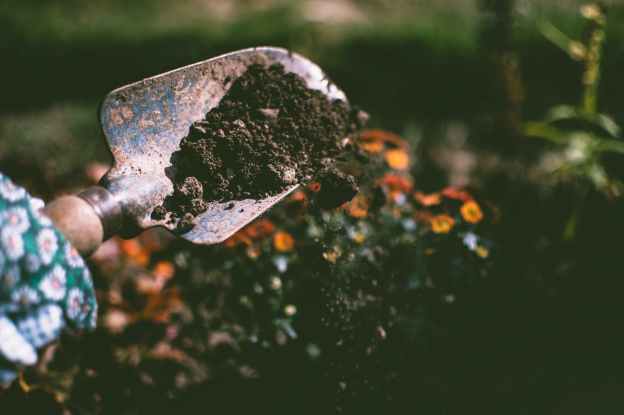
for dirt—
soft enough to nurture a seed,
yet strong enough to anchor a tree.

Blessed are You
for the ground we walk on,
blessed brown substance.
It holds water for growing things
or softens into luscious, liquidy magic,
perfect for pigs, or three-year-olds.
It holds fence posts and foundations,
or allows us to dig even deeper,
to bedrock or water or oil.

Blessed are You,
Lord our God,
King of the Universe,
for children and gardeners,
builders and farmers,
whose hands and fingernails
bear evidence of the blessing
(even after a good washing)
and return day after day
to the soil, remembering
what the rest of us have forgotten—
that dirt is sacred.

Case In Point

If you were my neighbor, you might have seen my butt, clad in my favorite snowflake leggings, disappear into our kitchen window on a Tuesday morning in early December. It was the end of one act in a drama that began Monday evening.

My husband left Monday morning for a work trip to New York, and since my friend Tiffaney’s husband was also out of town for work, we planned a Monday night moms-and-kids sleepover. It was a snowy day, school was canceled, but we stayed busy putting up our Christmas tree, doing a few snippets of homework, baking pies, running errands, and getting props ready for the school Christmas program.

Late that afternoon I backed our Highlander out of the garage and pulled up to the sidewalk by the back door. I pushed the button to close the garage door but it didn’t respond. I’ll back up several feet and try again before I pull out, I thought. We loaded up our snow clothes, sleepover bags, and a pie, and by the time we pulled out I had forgotten about the open garage door.

Five minutes later we arrived at Tiffaney’s house, parked at the end of her driveway, and tromped through the snow to her warm kitchen, carrying our bags of clothes. We stowed our things away in the downstairs guest room and the kids went out to play in the snow, while I settled down to a puzzle in the living room and Tiffaney made dinner. The kids came in after dark, their icy clothes leaving melting puddles here and there in the entryway. After dinner they played, then put their PJs on and had a bedtime story by the fire. It was a cozy and delightful evening.

In the morning we had pumpkin pie and muffins, veggie sausage and fruit for breakfast, then scurried to gather our things and get out the door for school. Tiffaney left with her kids while my girls and I gathered the last of our things by the kitchen door and prepared to take armloads of snow clothes to the Highlander. My keys weren’t in my purse, but I’m notorious for misplacing things, so I wasn’t alarmed. I checked my coat pockets next. “I don’t know where my keys are.”

“I had them last night,” my older daughter said with concern. “I don’t know what I did with them.”

I had forgotten she took the keys to get a sled from the Highlander. While I felt slightly relieved that I hadn’t unknowingly misplaced the keys, I now also felt a much higher level of concern at the possibility of not being able to find them at all. We began searching, starting in my daughter’s coat pocket, where she remembered putting the keys. But they weren’t in the coat pocket, or the pants pockets, or anywhere we looked in the house. We continued the search outside where there were still several inches of snow on the ground. We walked slowly to the Highlander, heads down. Tiffaney’s neighbor, Ben, noticed us searching the ground and asked if we had lost keys. “Yes,” I said, “we used them last night and now we can’t find them.” He promptly offered to take my girls to school, and I gladly accepted.

Tiffaney came home and together we continued searching for the keys, but found nothing. I texted my parents that I was coming over to get a spare house key. My parents live across the street from my house and they keep a spare key, so it would be easy to go home from there and grab the extra Highlander keys to use until I found the lost key ring. Tiffaney dropped me off at my parents’ house, where I was greeted with the unwelcome news, “We can’t find the key to your house.” Mommy and Daddy were searching kitchen drawers and coat pockets, but to no avail. I decided to walk over to my house and look for a way to break in. I tried all the doors and a couple of windows, but everything was locked. As I stood at the back of the house, looking at the windows, I noticed the latch was pointing a different direction on the kitchen window than it was on the other windows. Maybe it’s not locked.

I carried our orange step-ladder from the still-open garage to the kitchen window. Propping it open, I climbed up and tried the window. It opened! Sliding it all the way up, I angled my head and shoulders through the narrow opening, held onto the counter as I balanced awkwardly over the piles of dishes in and around the sink, and finally lowered myself to the kitchen floor. From there it was a dozen steps to the back door, which I unlocked as I headed out to put the ladder away. I tromped back through the snow to my parents’ house with the news of my lucky break-in, and retrieved my purse.

As I was walked home again it dawned on me that I couldn’t have opened the kitchen window if the garage door was closed and I didn’t have access to the ladder. Sometimes my mistakes or forgetfulness can be in my favor! Glad to finally be home, I settled down to write until Tiffaney could take me back to her house to retrieve the Highlander. Then life resumed as usual.

Monday’s sleepover was such a hit that we showed up again Wednesday evening to spend the night. There was still snow on the ground, and we searched for the keys to no avail. Tiffaney took all the kids to her son’s school Christmas program, and I got better acquainted with Alice, who got stuck at the bottom of Tiffaney’s driveway. Using door mats, car mats, blankets, and—finally—a neighbor, we got her little car to the end of the driveway. Tiffaney’s house was beginning to feel like one adventure after another.

Snow melted over the weekend, and we offered the neighborhood kids—fourteen of them—a $2 reward for finding my keys. Sunday it rained and I stayed inside. Monday I increased the reward to $3, and Tiffaney chimed in on our group text, “I’ll double that!” Three of us adults also combed the sledding hill on Monday but found nothing shiny or key-like.

Another week passed, it snowed again, and Christmas vacation began. I was at my writing desk on a Wednesday morning, two weeks after I had climbed through our kitchen window, when my daughter appeared in the doorway wearing her snow pants and coat. “I hear metal,” she said, shaking up and down. She reached down, opened the side pocket of her snow pants, and pulled out the missing keys! She had put them safely in her pocket … just not her coat pocket. I joyfully texted my friends.

The drama had finally reached its conclusion after fifteen days of waiting. That’s plenty of time to fret about the astronomical price of a new key fob, my—or my daughter’s—lack of responsibility, and the outlaws who might be running around with keys to my house. It’s plenty of time to scold and moan and budget. Enough time to compare all the “shoulda’s” with reality. It’s enough time to buy a new fob, schedule an appointment to have the house re-keyed, and write a chore list long enough so my daughter can pay me back for said fob.

But I didn’t do any of those things. I blame God for this. I also blame Tiffaney, who is queen of going with the flow, and who spent more time praying than fretting—in fact she prayed about finding the keys just a couple of hours before my daughter found them.

I am still getting acquainted with the me who doesn’t freak out about everything, shame and blame, and frantically try to fix things in record time. This new me appreciates my friends and gives grace to my children. She allows for changes in plans and inconveniences. She waits, with a slow pulse.

Don’t get me wrong, I can still throw a first-class tantrum. When things go sideways I still panic and reach for my two favorites—anger and control. But I love this whole story because it’s a case in point that I am freer than I used to be. I am free to love, to make mistakes, and to allow others to make mistakes. I am free to receive life open-handed, to laugh, to pray, to wait, to be in community. No matter the outcome, all the energy I might have spent steaming out my ears for two weeks was put to better use. Thank you, Papa God, for seeing fit to replace my heart of stone with a heart of flesh.

Fearless Curiosity

Fearless Curiosity

Blessed are You,
Lord our God,
King of the Universe,
for invitations,
offers,
questions.

Blessed are You
for openings that invite curiosity
about myself
and about the opportunity in front of me.
I hold the two up together,
see if they match—
like socks in the laundry.

Blessed are You,
Lord our God,
King of the Universe,
for valuing me categorically,
which allows me to be interested
rather than fearful,
curious instead of compelled.
Whatever is in front of me
will neither shackle me
nor set me free,
for only You hold the keys
to love and belonging.

Home and Healing

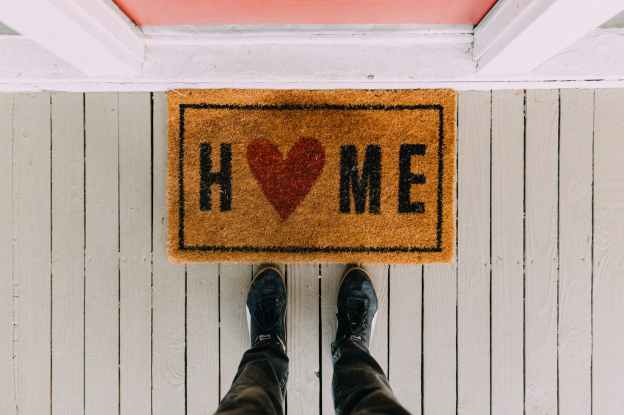
I get confused about Healing and Home, in a chicken-or-egg sort of way.

By Healing, I mean what Christians often call sanctification—the sacred pathway of becoming.

By Home I mean, “It is finished.” (see John 19:30) Christ accomplished all, and all is mine and His, and we are one. (The Christian ideas of justification and glorification may both be included here).

Which comes first, Healing or Home? Home leads to Healing because it tells me the truth about who I am, but Healing brings me Home because it enables me to believe the truth about who I am.

Wondering which one follows the other may be a distraction from the miracle that both are forever true. Home stands complete, perfect, sure and strong as granite. Healing takes the journey, bearing witness to growth and death and life—transformation on repeat. Healing leads me Home … but Home permits me to Heal.

The Bible—which at this time is an enigma to me—says much about Home and Healing. It speaks about what we have now, and what we are moving toward; about how things are, were, and will be. It’s all mixed up together. Take the first chapter of Ephesians, for example.

I pray that your hearts will be flooded with light so that you can understand the confident hope He has given to those He called—His holy people who are His rich and glorious inheritance. I also pray that you will understand the incredible greatness of God’s power for us who believe Him. This is the same mighty power that raised Christ from the dead and seated him in the place of honor at God’s right hand in the heavenly realms. Now He is far above any ruler or authority or power or leader or anything else—not only in this world but also in the world to come. God has put all things under the authority of Christ and has made Him head over all things for the benefit of the church. And the church is His body; it is made full and complete by Christ, who fills all things everywhere with Himself.

Ephesians 1:18-23 NLT

I feel a bit woozy after I read this passage. Past, present, future—it’s all there. And what a lineup of shocking statements. I am part of God’s inheritance (why does He have an inheritance?). God’s power for me is the power that resurrected Jesus. Jesus has authority over all authorities, “not only in this world, but also in the world to come.” The church is Christ’s body (say what?). “All things everywhere” are filled with Christ (really? All and everywhere are VERY inclusive words).

But I’m gonna roll with it. God my Father placed Christ above all things, and He placed me in Christ. He is “far above” because He is bigger and more alive than power and dominion and rules and authority.

I am in Him. By His stripes I am healed from control, because He is above control, and I am in Him. (see Isaiah 53:5) His authority supersedes the illusion of human control (the illusion that I can control myself or another person, or that I can be controlled by another person).

Even the apostle Paul seems astonished by (yet very confident about) this craziness.

What shall we say about such wonderful things as these? If God is for us, who can ever be against us? Since He did not spare even His own Son but gave Him up for us all, won’t He also give us everything else? Who dares accuse us whom God has chosen for His own? No one—for God Himself has given us right standing with Himself. Who then will condemn us? No one—for Christ Jesus died for us and was raised to life for us, and He is sitting in the place of honor at God’s right hand, pleading for us. Can anything ever separate us from Christ’s love? Does it mean He no longer loves us if we have trouble or calamity, or are persecuted, or hungry, or destitute, or in danger, or threatened with death? No, despite all these things, overwhelming victory is ours through Christ, who loved us. And I am convinced that nothing can ever separate us from God’s love. Neither death nor life, neither angels nor demons, neither our fears for today nor our worries about tomorrow—not even the powers of hell can separate us from God’s love. No power in the sky above or in the earth below—indeed, nothing in all creation will ever be able to separate us from the love of God that is revealed in Christ Jesus our Lord.

Romans 8:31-35, 37-39 NLT

As I consider what little I can grasp from this shocking passage, I am surprised by this comfort: I belong. This is a relief.

I belong in (inside) Christ. I don’t need to worry, because I’m Home. I have arrived.

Sometimes I may feel lost—as if trying to read a map through tears. Or frozen still, breathing shallow, as shape-shifting shadows approach.

Yet nothing can separate me from the love of Jesus. I am always Home. I am always in His heart, His thoughts, His body. Whether I am thriving or dying, grieving or joyful, begging or praising, suffering or sitting pretty, married or divorced, addicted or sober, giving or taking …

I am Home, which is an invitation to Healing.

I am Healing, which is my invitation Home. The door is always open.

Sacred Space-Holder

Sacred Space-Holder

Blessed are You,
Lord our God,
King of the Universe,
for comforting me,
inviting me to find relief
in this mystery:
You are hidden in me,
and I am hidden in You.

Blessed are You
for holding open
a sacred space
big enough for me—
my loneliness and fear,
tiredness and anger,
sadness and failure—
all of this somehow fits
in Your embrace.

Blessed are You,
Lord our God,
King of the Universe,
for being big enough
and small enough
to hold me.

Risky, Radical, Radiant

“Quack if you’re buckled,” I said, as I neared the end of our driveway. Two “quacks” sounded from the back seat where my daughters situated their backpacks and coats, ready for another day at school. It was a Friday in early December, a half-day of school. As I glanced left before turning right out of our driveway, I noticed flashing lights on Wallula Road, a block and a half north of us. I wondered aloud if there was an accident.

Half an hour later, as I returned home from dropping the girls at school, I noticed there were still lights flashing down the street. In fact, there seemed to be emergency vehicles stretching along most of the block. Curious, I drove past my house and continued toward the flashing lights. When I got near, I saw a car bumper in the front lawn of the corner house. I pulled to the side of the road and stopped. Across the street was a power pole that had snapped like a toothpick. A giant “splinter” over ten feet tall stuck out to the side, and the base of the pole was a bouquet of splinters, looking like a bristly patch of tall grass. I could see one damaged vehicle—a red SUV. I didn’t want to impose too much so I turned around and drove home.

Four hours later, as the girls and I returned from school pick-up, we decided to drive down and see the accident, but found that all the roads had been blocked off a full block away from the intersection, where emergency lights still flashed. We parked at home and decided to walk down as a family, so the four of us set off on foot to investigate.

As we neared the flashing lights, we saw utility trucks at work, preparing to replace the broken power pole. One large truck held the broken pole with a giant gripper, presumably so its weight wasn’t continuing to hang on the wires. A man with a chain saw trimmed part of the broken pole, while other men in bucket trucks hovered nearby. The damaged red SUV was still there, and further down the road we saw what looked like a white car, totally mangled, loaded on a flatbed truck. A section of chain-link fence beyond the telephone pole was decimated. Emergency responders were still cleaning up pieces of wood, metal and glass from the collision. Our kids watched in wonder as two men moved a windshield—shattered, but still in tact.

Like us, other neighbors surveyed the scene and checked their phones for news articles. We discussed the likelihood of someone dying. My husband was optimistic about modern cars preserving life, while our older daughter concluded someone must have died. We watched for a while, then walked home for lunch.

At 2:41 that afternoon a friend texted: “Please pray for Rudy Scott and his family.” Attached was a link to a news article announcing that Martin Scott, age 73, had died at the scene of the crash that morning. Martin was a professor at Walla Walla University, where my husband and I both received our Bachelor’s degrees. Martin’s son, Rudy, hired my husband after college, giving him his first full time job as a software engineer. These were people we knew, who—although we weren’t close to them—were a strong thread in the weaving that is our community. To have that thread suddenly snapped sent a shock through the whole fabric, leaving it visibly weakened.

I thought of all the times I have made the same right-hand turn on Wallula that Martin was making when an oncoming car going way too fast crushed his vehicle and his life. I wonder what it is that compels me to take my life in my hands every day as I drive? What made it so important to humans to get places fast instead of walking, as our ancestors did for thousands of years? On the mornings following the accident, as I drive my kids to school, I look around at all the cars on the highway and think, Why do we do this?

Freshly aware of life’s fragility, I perused a CBS News article1 listing the 59 leading causes of death in the United States (data from the year 2017). Of the top twenty, 17 are health-related, including various cancers, heart disease, and Alzheimer’s. Only three are “accidental” in nature: number seven was accidental poisoning (which included drug overdoses), number 14 was motor vehicle accidents, and number 15 was accidental falls. As I continued down the list, cancer figured prominently among an ongoing list of other health issues, including pneumonia, birth defects, and obesity, to name a few. The outliers in the 21st-50th leading causes of death were suicide, homicide, and accidental suffocation.

It’s funny how my friends and I avoid risk by not swimming during thunderstorms, locking our doors, and killing spiders, but we keep driving, taking pharmaceutical drugs, and—apparently—falling. More often than we’d like to admit, we take sides around the unknowns of life, choosing opposite courses of action to avoid risk. Several of my friends signed up to volunteer for vaccination clinics so they would be among the first to receive the Covid vaccine, while an unvaccinated family member continued giving me newspaper clippings about the Covid vaccine causing death, even after I was vaccinated. As far as I could tell, both were going for the same outcome—avoiding risk.

I have always been low on the risk-taking scale. I rarely break rules, avoid risky social or health habits, and I married a stable and risk-averse man. Together we avoid risk by over-discussing every decision, keeping tight control on our time, money, and emotions—hoping somehow to keep our world spinning in the right direction. And we manage to keep enough control to sustain the illusion that we can avoid risk. Our carefulness seems to be working. This is a dangerous position to be in. Having not been overtaken by disease or loss of a loved one or financial hardship, we continue on our merry way, thinking we can manage our little world by making the “right” decisions.

I am sobered by Martin Scott’s death. My reading and wondering—rather than giving me comfort—resoundingly confirm that I have little control over when and how I die. Pain and suffering are also an unmapped course, appearing in my story at random, mostly unrelated to how I live my life. I realize that I spend time every day avoiding risk—from the amount of sleep I get and the things I eat, to how fast I drive and whether I remember my cell phone when I’m going out. But what am I gaining? How often do the benefits of risk-avoidance outweigh the heaviness of the fear and worry that drives so many of those behaviors?

I’m not the first to wonder if I’m avoiding living by trying to avoid dying. Risk-avoidance serves as a nice distraction from being gracious to myself, loving the person in front of me, petting the neighbor’s dog, or visiting a sick friend. When I leave a tool in the rain to rust, I am much more grieved by the ruin of the tool than by the cruel way in which I treat myself for this mistake. Somewhere inside I know that love is more important than stuff, but that synapse seems disconnected from the synapses making all my decisions. And what if love is even more important than life?

When Air Florida Flight 90 crashed into the Potomac River in January 1982, passenger Arland Williams—who was in the water with a handful of other initial survivors—handed the rescue line to others in the water rather than be rescued himself, and in the end disappeared under the water and lost his own life. Shortly after, Roger Roosenblatt wrote these words in an essay published in Time magazine: “So the man in the water had his own natural powers. He could not make ice storms, or freeze the water until it froze the blood. But he could hand life over to a stranger, and that is a power of nature too. The man in the water pitted himself against an implacable, impersonal enemy; he fought it with charity; and he held it to a standoff. He was the best we can do.”2

Would I, too, be willing to give up the fight against my own circumstances and take up the real fight for the life of the person next to me? Could I let go the distraction of apparent safety and hold fast to the only narrative that lasts—the living out of love and redemption?

As wild as this loving sounds, perhaps the hardest thing of all is not to love, but to be loved. I used to think being loved was easy. I like kind words and gifts and hugs—all the “love languages.” What’s not to love? But meeting a God who insists on love in the most unlikely spaces—adultery, death, arrogance—I am forced to consider receiving a love that leans into my most shameful moments, unforgivable selfishness, and spiteful diatribes. This is an uncomfortable love. It brings roses to war, and gives trophies to losers. It does things all wrong, and insists on being present at the most inconvenient times. I would like to receive Love in a pretty dress at the front door, but it insists that if we are going to be in relationship, the bathroom floor is also included (those nights you embrace the toilet bowl while the flu has it’s way with your digestive system). This Love is as fiercely present in a divorce courtroom as in a wedding ceremony, in an AIDS victim as in a marathon runner, and in a gun-holder as in the man bleeding on the ground.

This Love does not pick and choose, and I’m not at all sure I want to give it my allegiance. Yet I realize Love has wooed me sufficiently that I am already involved. I have moved into the risk zone. Several years ago I wrote, “How can I love my life and hate it at the same time?” I was miserable in my own self, yet it was obvious that I had an objectively good life—faithful husband, healthy children, flexible schedule, nice home, good friends, lots of family nearby. I guess that was the moment it became painfully clear that circumstances do not buy happiness. This realization was followed by a period of mourning, which included all the stages of grief: denial, anger, bargaining, depression, and acceptance. Those were some difficult times. A death necessary to precede new life.

I’m learning to love life—not just mine, but my husband’s life and my daughters’ lives, the life in trees and birds and rivers, the wonders entering my awareness all day through my five senses. I am daring to be alive, knowing it is more risky than being half dead, and choosing it just the same. As Superchick’s song, “Cross the Line,” says: “Play it safe, play by the rules / Or don’t play at all—what if you lose? / That’s not the secret, but I know what is: / Everybody dies but not everyone lives.”3

What does it look like for me to “cross the line” into living? It looks like sleeping in (that’s not productive!), drinking coffee (stimulants are bad for you!), writing when the sink is full of dishes (pleasure before work?!), accepting unexpected conversations, and weather, and sickness. It looks like spending a little more than I normally would, and planning Christmas without a spreadsheet. It looks like rearranging the living room furniture so it’s all facing the fireplace, and wrapping an unfinished Christmas gift without feeling guilty at all that the right time to finish it will be after Christmas. It looks like letting things fall in place every day, retiring the sledgehammer I previously employed to fit everything in the “right” place.

Another song from my high school years comes to mind, and I quietly sing: “Living might mean taking chances / But they’re worth taking. Loving might be a mistake / But it’s worth making … And if you get the choice / To sit it out or dance / I hope you dance.”4

God has been watching me sitting at the edge of the dance hall, hiding behind a glass of punch. He has sat beside me and listened to every excuse in the book: I’m tired. I’m afraid of what I’ll do or not do out there on the floor. When the song ends, I won’t know what to do next, and standing on the dance floor without a glass in my hands is too vulnerable. Everybody else knows what to do, and as long as I’m sitting here they may think I know what to do. But the moment I stand up, the thinking will be over, and the doing is too much. Being seen is terrifying.

God never stops sitting with me to dance, yet He never stops dancing to sit with me. He is always doing both. This gives me courage. I can move from sitting to dancing, without losing myself. Where He is, there I am also. This strengthens me to set my glass down and watch without hiding, to feel the desire to dance emerge from beneath the excuses.

Once I allow myself to want to dance, the want becomes an ache, a longing, until finally I stand, half-wistful, half-determined, and God and I take the floor together.

When the song ends, it is a little scary. I don’t know if anyone else could see God, so it may have looked like I was just dancing by myself. What do I do next?

My husband comes to me, takes my hand, and leads me further out on the dance floor. As the music carries us, I realize with astonishment that my husband is an excellent dancer. I am surprised. I didn’t know that either of us were dancers. But here I am, and I can dance too!

Now I’m getting excited. Maybe I could dance with my daughters, and with my friends. Maybe I’ll dance with beautiful skies and beautiful music, and with heartache and questions and strangers. Perhaps I was made to dance through life. Should the unthinkable happen, and the dance floor open over a swimming pool—as in the classic Christmas movie “It’s a Wonderful Life”—maybe I will keep dancing, wet and surprised and delightfully free.

Endnotes:
1 https://www.cbsnews.com/pictures/death-index-top-50-ways-americans-die/56/
2 https://en.wikipedia.org/wiki/Arland_D._Williams_Jr.
3 https://www.azlyrics.com/lyrics/superchick/crosstheline.html
4 https://www.youtube.com/watch?v=RV-Z1YwaOiw&ab_channel=LeeAnnWomackVEVO
It Is Finished

It is finished

Blessed are You,
Lord our God,
King of the Universe,
for darkness—
daily invitation to rest—
to be quiet in ink-dark night
or a night moonlit and star-twinkled.

Blessed are You
for spirit rest,
my insides sitting down,
breathing deep,
inhaling Life.

Blessed are You,
Lord our God,
King of the Universe,
for the authority of rest
to dethrone “right” and “wrong,”
straining and struggling,
worth by performance,
and value by others’ opinions of me.

Blessed are You
for this sacred act of resistance,
this radical move to stop moving,
this subversive whisper
suggesting that rest is a nap—
but also more—
a knowing
that what is most important
is already done.
“It is finished.”