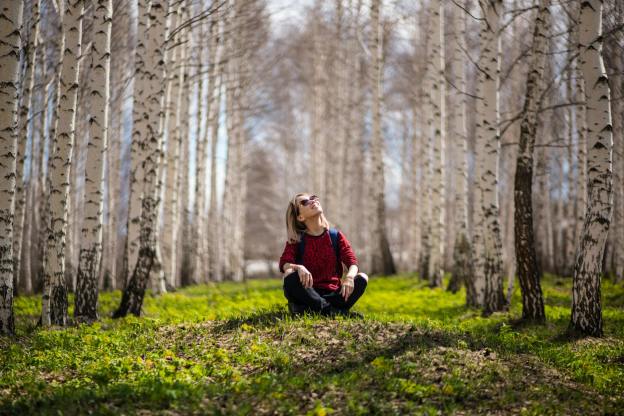
What Version of Me Belongs?

I have chosen between attachment and authenticity a thousand times at least.

What do I mean by this?

I’ll loosely define attachment as a healthy sense of relational connection and belonging. And let’s think of authenticity as the ability to know ourselves and show up in the fullness of who we are, including the little quirks and details.

The choice between attachment and authenticity occurs when we must—or perceive we must—choose one of the two. For example, let’s say you’ve made a new acquaintance and you’re arriving at her house for the first time, with a plan to chat over a cup of tea. You might feel a little anxious, not knowing whether this will be awkward, and wondering about the future of your friendship. When you step in the door, your friend offers to take your coat. You’d rather leave it on until you warm up a bit, but instead you take it off and she whisks it away to a side room. Then she offers you scones, which are obviously hot from the oven and smell delicious. You accept and then notice there are raisins in them. You don’t like raisins. But rather than pick them out, you decide to eat them. In these moments, you are choosing attachment over authenticity. Sharing your preferences feels risky for the relationship, so you keep them to yourself.

Often, as in the above examples, we base our decision not on reality (you have no idea whether your friend would be offended by you picking out the raisins), but on a perception of what would best maintain your attachment—your relational connection—in the moment.

Let’s think about scenarios where the stakes are higher. A teen might have to choose between the authenticity of letting their parents know they’re transgender, or preserving attachment by not sharing that information. A pastor may have to choose between authentically and vulnerably requesting help for an addiction, or maintaining his position and his church relationships—his connection and belonging—because he knows he cannot have both. A person may choose to have sex with their partner because it’s easier to do what they don’t really want to do than it is to say the vulnerable truth and deal with the possible fallout of disconnection.

As children, and even as infants, when presented with a choice between authenticity and attachment, we choose attachment. Our survival depends on it. As we become adults, our circle of resources widens, and our options become more diverse. We don’t have to choose attachment over authenticity every time. Still, there is an element of risk to authenticity, and we weigh this consciously or subconsciously every day.

One of the most challenging environments to navigate this dynamic is religious circles—which in my case extend to my children’s private education, friends past and present, my readers, and even neighbors. Church seems a strange place to make a choice between belonging or being myself, yet I have felt it often there. Christians say, “Come as you are.” But I don’t think we meant it. Or, we mean it with a tag-on—“Come as you are, when you’re ready to change that to be like us.”

I have believed I can’t be me, because whatever improved version of me God has in mind is better than the current version of me—“sinful and selfish” me. Somehow being myself means heresy. I can’t be true to myself and to God at the same time. You know, something about “a house divided,” or how man’s thoughts are “evil continually.”

These days, I’m not sure I belong in church. But it doesn’t matter like it used to. I belong in myself, and that is sweet relief. I belong in the living room of God, who has become both mother and father to me. I am bonded spiritually, and it’s the safest place I’ve found yet to excavate and inhabit my authentic self.

God doesn’t ask Her children to choose between attachment and authenticity. Belonging is a foregone conclusion, and God’s favorite pastime might be holding your hand as you get acquainted with your authentic self. I think God emits joy-sparkles when He gets to witness you noticing yourself and connecting with the fun, complex, messed up, whole and holy person that you are.

Wherever attachment and authenticity occur together is sacred. These holy spaces may be inside us, in marriage or friendship, in nature or a good book. I’ve discovered that in settling into my own self, I can hold the paradox that I am okay and I am not okay. And it turns out God is way bigger than they said She was.


My understanding of these concepts leans heavily on Gabor Maté and Krispin Mayfield. Many thanks to them both for acquainting me with my own inner safety.


P.S. I posted an update today about trauma-informed writing groups. Check it out here.
On My Drive Today

I saw a tractor throwing dark earth, and
A field of cosmos—pink, purple, white.
I saw a hedge, large and tall and perfectly green, notched at the top like a castle,
And a grave with balloons on it.
I saw a small, black travel bus with the words “my party bus”
In chunky white letters across one end.

Rows of perfectly spaced deciduous trees at a nursery wore fall colors, and
Weeds decorated the aisles between.
Neon-green skeletons perched on a wire fence,
And a navy-blue Tesla followed me for miles.
I crossed a mirror-still river,
And passed under two branches, touching
Like outstretched fingertips above me.

I saw tractor-crossing signs, deer-crossing signs, political signs, and
Line after line of baby trees and shrubs, only a foot tall,
Every shadow in perfect formation across groomed dirt rows.
I saw horses swishing their tails,
And clouds, dressed for a slumber party.

I saw metal buildings, colored by rust, and
Old, wooden farm buildings painted rust-red.
I saw a stream in an overgrown meadow,
Water profuse with delicate, floating plants.
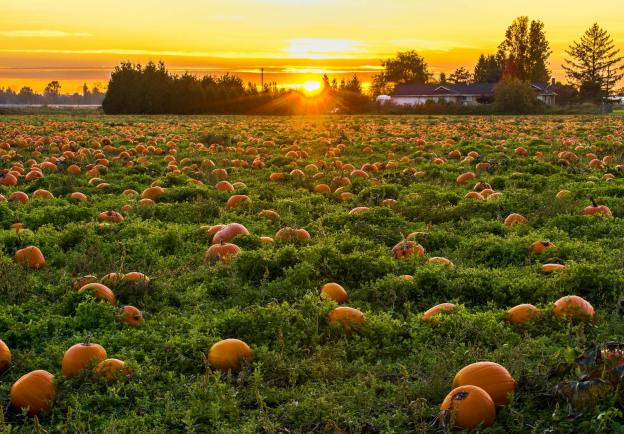
I saw pumpkins combed into rows—no vines, just orange fruit for acres,
And the long shadows of a fall afternoon.

Alternative to Prayer Requests

This morning I wanted to pray for friends, but instead I circled unsettling questions—questions I’ve returned to many times.

Why would I ask God to do something She’s already doing (i.e. Please be with this suffering person)?

Why does the Bible say Jesus will do anything we ask in His name?

Why should I have a say in God’s agenda for today? Especially when I’m pretty sure God doesn’t even have an agenda.

I want to pray for my friends—the text messages of prayer requests are waiting—but every way I know feels like useless chatter. I know countless book have been written and sermons preached to “answer” these questions, but I don’t really want answers. I want to acknowledge the awkwardness of prayer.

Talking to God about my frustrations—like this frustration with prayer—feels natural. She’s not offended when I call Her a liar for saying I’ll receive anything I ask in Jesus’ name. But today I’m annoyed because I don’t know how to bridge the gap between sharing my inner world with God and talking/asking/supplicating/mentioning my friends and their lives.

Our two tiger-striped cats sit at the window, attending to squirrels and whatever else moves outside the glass.

The sky lights slowly, cool gray clouds warming to creamy white.

I think about God and I sitting on the couch in His house, an image I return to often, always an invitation to relax into the overlap between us—His breath, my body. And it occurs to me that I could invite my friends to this couch.

I scoot over and invite Anna to the open spot between us. Her mother is dying in another country and she doesn’t know if she’ll make it in time to say goodbye. As she sits between us, something flows from her body, releasing her, and the three of us witness it together.

Next I think of Jen and her heaviness, hovering just under the surface of her pleasant and positive demeanor. Sitting with her creates space for the heaviness to stay or to go.

Then the couch shapes into a large, comfortable circle to make room for the family of a young man who passed away suddenly. His wife and children, his brothers and their families, all squeeze in to witness the grief in silent togetherness. Who knew coziness and pain could hold hands like this?

So God and I stand witness (or rather, sit witness) to each of my friends and family who come to the couch. No words are exchanged, no requests made, no answers given. We honor God with our presence as She honors us with Hers. We remember we are not alone. We see the depravity of our circumstances and the beauty of love, together.

When I finish praying, I know I will do this again. And I am touched and awed by the ease with which God converses with me in Her living room, whether in words or silence—the ease with which He engages my frustration and discomfort, and invites me to forego awkward requests in favor of sitting together.

Thank You, Papa.

Am I Delaying Jesus’ Coming?

I may be impeding the second coming of the Messiah.

Let me explain.

As I embrace spiritual uncertainty, my Christian denomination is included in that uncertainty. My faith group of origin—and current community—is Seventh-Day Adventist (SDA), but I refer to myself as “badventist” to portray the distance I feel from the doctrines I signed my name to uphold more than 30 years ago.

The name “Seventh-Day Adventist” incorporates two of the church’s most precious truths: we rest and worship on the seventh day of the week, and we believe in the soon second coming, or “advent,” of Jesus Christ. According to SDA’s, biblical interpretation of Scripture predicts a worldwide decline before Jesus descends from “heaven” and carries away the saints—including those who resurrect upon His arrival. After that we sit around for 1,000 years, Earth incinerates, then gets made new, and we move back in. (Disclaimer: this is what my brain recalls of our church’s teaching. The well-studied may find errors.)

This pre-second-coming world decline involves an increase in “knowledge,” natural disasters, merrymaking, Antichrist, and moral decline. Many SDA’s also believe that every person in the world must hear the gospel of Jesus Christ before the second coming—hence, a focus on evangelism. Missionaries travel all over the world to tell people about Jesus and undertake projects like translating the Bible into local language.

In this worldview of planet-decline-followed-by-destruction, it can be considered wasteful to invest too much in taking care of the planet—I remember a sermon titled, “It’s All Gonna Burn.” Wouldn’t it also be wasteful, then, to care for people without telling them about Jesus? If they’re happy and healthy but don’t know about Jesus, they’ll go to hell happy and healthy. Not much “eternal value” there. (Although SDA’s don’t ascribe to an eternally burning hell, just a quick fiery death.)

At the time of this writing, I find myself on a quest to help people without telling them about Jesus, and it looks like this: I believe writing is healing, speaking and hearing our stories is healing, and in marrying those two healing forces, my desire is to guide small groups in writing together and reading aloud our writing. The goal is to create space for marginalized people (which is all of us, at times) to have a voice, to own our stories, and to find wholeness in the process. The goal is not to introduce people to Jesus. So, am I delaying the second coming, heaven, and the world made new?

When I was a kid, we had neighbors up the road who believed in God, but—I was shocked to find out—believed the world would gradually get better and better, instead of worse and worse. A google search informs me their belief may be called postmillennialism, in which Jesus essentially will return to a saved earth. This almost makes more sense to me.

It sounds like the SDA view is suggesting that the more people who know Jesus, the worse off the world becomes. Doesn’t that seem odd? Spread the gospel everywhere, and once everyone has heard about Jesus the Earth will be in the worst shape it’s ever been. Jesus will then swoop in to save the righteous few and burn up the rest. I’m having doubts about how all this will go down.

For the time being, I mostly leave the destiny of the world in God’s hands—surprise me. I don’t need to know. Anyway, humans have a pathetic track record when it comes to predicting the future—even from intensive study of Scripture.

Having said all that, I still experience a nagging feeling that it’s “wrong” to help people without telling them about Jesus. Am I delaying the glorious new earth by helping people get healthier and not introducing them to Jesus? Shouldn’t I introduce them while they’re acutely aware of their need of a Savior? Once they get healthy they might be less motivated to “convert.”

In all honesty, I’m not firmly settled on the question—or the answer. But I am sure about setting this aside, for now. God partners with me—or I partner with Her—to relieve suffering. If I’ve missed the mark by excluding overtly religious material from my writing group curriculum, I have complete confidence in God to point me in a new direction.

Who knows, maybe we’re all invited to make this world a better place in order to set the stage for the return of our Beloved.

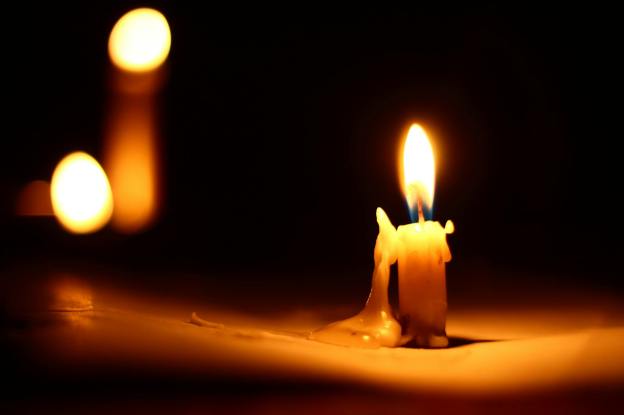
Even a Candle Has Seasons

Even a Candle Has Seasons

Even a candle has seasons,
A smooth-topped beginning,
Wick white and waxy.
First burst of flame,
First melted pool.

Midlife of a candle
Suggests service.
It is seasoned, available,
Each lighting a faithful burn.

The candle wanes.
It’s fiery moments are numbered.
Uneven wax shows age.
It’s weight is diminished.

Then, the last burn—
The light, the heat, the flicker.
Perhaps it pops and sputters
Until its pulse is gone.
It, too, has passed.

Every lighting was a beginning,
Every extinguishment an end,
Every burning a symbol—
Every thing has seasons.

In Five or Six Hours the House Will Be Quiet

I’m not okay. This is how I know it’s time to write.

I’m sitting in the kids’ room by the fire I lit for them—my attempt to dote on them since they stayed home from school today.

Sore throat again this morning—it has been almost daily for weeks with my younger daughter, Kyli. The older one, Kayt, said probably nothing is wrong with her but she doesn’t want to go to school. Middle school “friendship” has been sucking the life out of her. I can’t help but wonder if her chronic exhaustion and headaches are as much social as they are physical.

I shone a flashlight down two throats this morning. Kyli’s looked red, and Kayt’s had a weird white blob that dr. google says is a tonsil stone. Never heard of those before.

By the time I sit down to write, it’s midafternoon. Homework time downstairs has devolved. My stomach clenches in response to unharmonious sounds, insufficiently diminished by their travel up the stairs to my ears.

Now Kayt has come upstairs to whine and writhe. Technically she came up to say Kyli is bugging her and won’t stop. Since I made clear arrangements for Kyli to come upstairs if they weren’t enjoying sitting together, I feel a gallon of frustration and a drop of empathy. So I tell her to send Kyli upstairs, and that’s why she’s begging, moaning, and asking unanswerable questions in a nails-on-chalkboard tone of voice. She has a weird thing about not being alone.

At 7:15 this morning, when I usually would have been seeing the girls off to the bus, instead I set up appointments at the urgent care center. This change in schedule involved calling the bus driver and texting, let’s see,—their teacher, my yoga instructor, my husband, and several people I had plans with later in the day.

Did I mention the power outage? Just got yet another automated call from the power company. I have an outage that should be restored by 4:30pm, says the message. The power has already been back on for half an hour, and it’s currently 3:30. Not to mention just a few minutes ago I received an automated call informing me that the outage was caused by wildlife (read “squirrel”), and my power had been restored.

I think I’ve received five automated calls, including one that announced an outage had been reported in my area and a truck had been dispatched. Yes, I’m aware. I reported the outage when an explosive BANG and corresponding flash of light outside the dining room window resulted in all powered devices in our home going blank.

My husband is in Denver for work.

My sister is home with a sick kid as well.

My younger daughter made a “fun cutting station” on the floor in her room, where folks can experience the satisfaction of cutting various materials—like blue yarn (now in pieces all over the floor), tiny foam squares, a rubber armband (okay, that actually is super satisfying), and a plastic packing sleeve.

On the kitchen counter downstairs is a bowl of homemade slime that looks like a hot-pink pile of animal intestines. The dining table is covered with rubber stamps and paper, ink pads and embossing supplies, dirty dishes, purple slime, saltines, and homework.

Finally. I breathe. Here’s a moment of peace. Kyli is taking a break from homework, so I allow Kayt to study upstairs with me.

Kyli is quietly making a creature out of air-dry clay (a substance which already covers a significant portion of the bathroom counter due to a previous creative session this morning).

I don’t like the multiplying messes.

Sibling snarkyness nauseates me.

Most of my day has born no resemblance to the Wednesday I thought would unfold when I opened my eyes this morning.

But I ran on the treadmill and took a shower this morning, and in an unplanned burst of self-care I even dried and straightened my hair, and put in earrings. I’m sitting here by the fire, cat on the hearth, journaling. I did a marvelous breathing meditation from The Artist’s Rule, and I laughed with my girls.

After our visit to urgent care, we went to school and picked up homework (the current quarter ends in two days and there is a small state of panic about grades). Then we filled the car with gas for “real low cheap”* at the station near the school, stopped at Walmart for grocery pickup, and came home for the whole slime-making, lunch-eating, power-outage bonanza, followed by the Sibling Homework Crisis of 2024.

So I’m not okay.

But also I am.

Because it’s okay to not be okay.

And I’m grateful my kids don’t have strep, and … this just in: Kyli is cutting a stick of gum into pieces, holding the scissors above her mouth so each piece drops in … back to gratitude—for the fire warming my feet, for furry and purry kitties, for a relatively small pile of dishes in the kitchen sink. I haven’t yelled at my kids, and I have listened to them. I’m going out with girlfriends this evening.

And—bless Mother God—in five or six hours we’ll (fingers crossed) be tucked in bed and the house will. be. quiet.

*If you want to acquaint yourself with the phrase “real low cheap,” watch this.

I Am Going to Start Living

I Am Going to Start Living

I am going to start living like a monk,
though I have no brown robe or penis.
What I have is a love of silence.
“Be still,” You say
and I am moved.
You have seen straight through me.
You have revealed my desire
and answered it with abundance.
It is enough to hold hands in the silence.

I am going to start living like an artist—
comfortable clothes,
maybe a paint smudge here and there.
I will print my soul on paper,
allow it to be read.
I will notice the way leaves grow
and petals fall,
and I will study the delicacy
of a spider’s web
and the beauty of a human hand.
And You will be nudging me and pointing,
for always there is more wonder.

I am going to start living like a mystic
disguised as a mom.
The paradox of my children’s sass
is the perfect—daily—invitation
to discard right answers.
As I haul a bag of right answers
to the trash bin by the garage,
I smell how clean the air is,
and I hope when I return to the kitchen
the kids will smell it too—
life-giving molecules
dancing all around us.


Thanks to Christine Valters Paintner for the writing prompt that set me to writing this poem—from her book The Artist’s Rule.

Reasons for Self-Hatred

“Many unhealthy behaviors begin as necessary coping mechanisms.”

I hear various versions of this sentiment repeatedly from therapists and psychologists. What may be a harmful habit today, they say, served us well in a previous season of life. I get how this applies to people-pleasing, secret-keeping, anger-stuffing, and high-performing. I’m less sure how it applies to self-hatred which, at first, sounds universally useless to me.

But maybe it did begin somewhere useful. Maybe my self-hatred sprouted when I couldn’t stop big feelings during infancy and toddlerhood, feelings that overwhelmed both me and the people around me. Flooded with emotion and its unwieldy side effects, what could I do but show my disagreement with the outburst by hating myself?

I buried self-hatred under the more acceptable coping behaviors of performing and pleasing. But whenever I couldn’t perform and please—when I showed up in the world in a way I didn’t like—self-hatred jumped out of the trunk to take the steering wheel.

There were more scenarios than I realized, as self-hatred tried every position in the car, from back-seat driver to navigation system, snack hoarder to complainer. Further exploration reveals at least a dozen ways self-hatred has served me:

  • It keeps me small, and being small keeps me from being seen, because being seen is risky.
  • It beats “them” to it. If I can make myself feel bad sooner and more than you can make me feel bad, I’m not vulnerable to you.
  • An excuse to be sad. When I don’t know why I feel depressed, loathing myself makes it seem legitimate … OR maybe I’m sad because I hate myself. Either way, it’s a handy excuse.
  • A layer of protection between you and my pain, and between myself and my pain. During the years of parenting my preschool daughters, hating that I was exhausted, angry, and shut down seemed easier than admitting I felt lonely, empty, scared, and inadequate.
  • A way to belong. When my mom got frustrated with herself, she often said, “I’m such an idiot.” I could fit in at home by thinking and speaking poorly of myself. And the church taught me not to toot my own horn. Apparently it’s not spiritually sound to think well of myself (leave that to God, I guess?), so self-hatred is also a way to fit in spiritually.
  • Keeps me from being perceived as naive as Pollyanna.
  • Protects me from trying to do things I’ll fail at.
  • A way of responding to failure—it spares me the time and energy of taking responsibility. (ouch)
  • A shortcut. It’s faster to process, “I did that because I’m bad,” than it is to process, “I did that because I’m human and humans get depleted and defeated sometimes, and what is depleting or defeating me right now?”
  • A form of power. When I had infants, I “couldn’t” be angry with them. In order to feel some control (power) over my anger, I directed it toward myself.
  • A way to remain in “relationship” with the unwanted parts of myself, even though the relationship is toxic.
  • It proves my loyalty to certain ideals. It allows me to act outside of my standards without confusing myself or anyone else by condoning the behavior. So self-hatred proves I have morals (even if I don’t live them out).

This all sounds so ridiculous.

And familiar.

All of a sudden, it sounds like a lazy way out, but it makes so much sense, and I feel sad, but grateful that I can see it, and profoundly grateful that other options are available to me. I don’t need to dislike myself to belong with people, and certainly not to belong with God. So maybe I can give it a break.


Go ahead, sit down and make your own list. It might be time to break up with one of your coping mechanisms.

Come Wanderer

Come, come, whoever you are.
Wanderer, worshipper, lover of leaving.
It doesn’t matter.
Ours is not a caravan of despair.
Come, even if you have broken your vow
a hundred times.
Come, yet again, come, come.

-Rumi

“Come … wanderer,” God invites.

In what ways have I wandered?

The wilderness of parenting.

The jungle of marriage.

The labyrinth of religion.

Is wandering about being lost?

Or is it about looking for something new? Something about which I can’t say, “Oh, I knew that.”

Wandering leaves me wondering if I fit in, if I am still invited in.

You invite me in. “Come,” You say, “come wanderer.”

Yes, I am invited. Yes, I belong. Yes, there is a place for me, even—maybe especially—when I don’t fit in to the containers I used to fit in—the labeled Tupperware, the organized totes.

Now the pieces of me are less organized, but still You say, “Come,” and all of me comes even though I thought maybe the pieces were too scattered.

They are not. All of them respond to Your voice.

It is not my job to organize myself. Or to stop wandering. Everywhere I go, You meet me there.

If wandering has taught me anything, it is that You are everywhere.

“Come,” You say, and I am surprised to find You are standing right next to me. You are not calling from a great distance. “Come,” You say, “let us wander together. Show me something you’ve found here. And I’ll show you some things too.”

Wandering and loneliness are intertwined, and You and I, we are familiar with both.

“Come,” You say, and I know that You know this place, that You are no stranger to wilderness or jungle or labyrinth. These are Your kitchen, your garden, your cathedral.

“Come,” You say, and I know that I have always been home. For You are home to wanderers.