One Year on Antidepressants

The year after my daughter Kayt was born felt like three years. I guess that’s when my depression began. I often said I would’ve rather given birth a second time than gone through that first year with an infant. After a lifetime of receiving praise and recognition at work and school, the transition to an unnoticed 24/7 job was rather like being plucked from the heart of New York City and dropped in backwoods Alabama. Nothing worked the way it had before.

Kayt was perfect. Even the nurses in the birthing ward said she was one of the cutest babies they’d ever seen. I liked many aspects of caring for her, but I didn’t like being tired all the time, and I didn’t like having little control over how I spent my days. As months and years passed, my resentment grew. I was angry that I didn’t get to rest. Rest always felt like a liability because it could be interrupted at any time by someone else’s urgent needs.

Depression runs in my family—both sides—but I understood little about depression. I thought it meant feeling dark all the time, being unable to get out of bed, unable to accomplish anything. Since my go-to when I’m stressed is to do more, my productivity was rarely affected by my sense of well-being (or lack thereof). I plodded on, day and night. Cook, clean, shop for groceries, open mail, plan birthday parties. Nurse babies, read to toddlers, remind preschoolers to get dressed, fight with kindergartners about the letters of the alphabet, drive kids to and from school. I was often up at night. My kids never did that magical thing the parenting books call, “when they start sleeping through the night.”

When Kayt was 21 months old, our second daughter, Kyli, was born. A year later we moved to a larger house in the same town. The girls woke several times every night for weeks after we moved. A few months later, I started counseling. I was perfectly miserable in my perfect life, and I wanted help.

My counselor, Beth, became a trusted partner on my journey. She saw me—the real kind of seeing—and she started me on the path to seeing myself with compassion. But after seven years of intermittent personal therapy and marriage counseling, Michael and I found ourselves in a dark period. My depression deepened around April that year, and by the time it leveled out in June, it had made a significant negative impact on our marriage. I resisted our marriage counselor’s nudges toward trying antidepressants, until the moment I decided that if I could do something to spare my husband from a hollow wife, and my kids from an angry mother, I ought to try it.

My kind doctor offered to see me one morning before her first patient, so I didn’t have to wait months for an appointment. She prescribed Fluoxetine, and in mid-July last year, I began the drug experiment. Four days in I wrote, “I have had a significant increase in difficulty with sleeping (which is usually a non-issue for me). I have had trouble falling asleep, staying asleep, and going back to sleep, and twice I’ve been awake long enough in the wee hours of the morning that I start to feel nauseated and have to eat something before I can go back to sleep. Michael and I both feel that I do have improved emotional capacity. It has been a tiring week, but my ability to handle things without getting overwhelmed and shutting down seems to be better than usual. And I would say I feel less dark and discouraged, despite the difficulty sleeping and the resulting tiredness.”

A few weeks later my sleep had mostly returned to normal. By October I was settling into feeling more alive than I had in ten years, so when Michael suggested that the medication was affecting my libido (it was), I told him in no uncertain terms that I would not sacrifice my mental health for an orgasm. After working through that with our counselors, it was smooth sailing.

Fall became winter and I marveled at my capacity to enjoy life. I felt a renewed sense of agency as I regained the ability to choose a response other than anger to life’s frustrations. I knew I was lucky to have responded so well to the first medication I tried. A few friends had cautioned me or expressed concern about antidepressants, and I was well aware that a wide range of negative effects were possible. But the primary effect the medication had on me was to make me feel human again.

As spring approached, I wondered what my annual spring depression would look like. Three years in a row I’d darkened inside as the days grew longer and trees blossomed. My doctor said I could increase my dose of Fluoxetine if needed. Three weeks into April, I did. In my notes I wrote, “To this point, I have only positive things to say about being on Fluoxetine. I have come alive, enjoy so many things, and am more flexible and joyful. Started feeling my spring depression a few weeks ago, so I’m planning to try the higher dose for a month. Then hoping to go the opposite direction and maybe stop taking it later this year.”

Five days later I wrote, “I feel blank, like this higher dose of antidepressants has removed all ability to feel, all motivation, and almost all thought. I’m not sure I’ll be able to keep it up for a month. I write from my mental and emotional activity, so if there isn’t any, I’m not sure I’ll be able to write. I do have three topics in mind though, so I will try to write, and I will drink coffee and text friends and maybe do some yard work, definitely take a shower, force myself to cook, invite myself to enjoy the sunshine, maybe color some birthday cards for friends. I know I am okay, but I miss feeling it. I guess the plus side of being emotionally numb is that I don’t respond to everything with anger.”

Ten days later: “Thirty mg of Fluoxetine is a mixed bag. Motivation is down, libido is down, I don’t feel much emotion, haven’t cried except when Phred died (the family cat), and it seems like writing is more of a struggle. I’m just more numb, more blah. On the other hand, I feel pretty calm, not very angry. I’ve been more easily in touch with what I like and what I want, instead of what I should do, and I’ve been doing more fun things with the girls—a little less focused on tasks and more oriented to quality time. It’s weird to in some ways be more connected and in some ways more disconnected.”

After only two weeks on the higher dose, I was unable to refill one of my prescriptions and I dropped back to 20mg of Fluoxetine. A few days later I wrote, “I’m feeling good about it, now. I was pretty ‘muted’ and I’m feeling a bit more alive the last couple of days, and not too heavy.”

My spring depression slowly receded, and this summer has been the least stressful summer since kids came along 11 years ago. There’s no way of knowing how much of this has to do with antidepressants. My relationships, personal growth, the ages of my children, and even what I choose to eat and read are all in the mix. Ultimately, I’m glad I threw some drugs in there. I feel like I got my life back this past year, and I rediscovered the version of me that isn’t bitter and exhausted.

What have I learned about my mental health during this past year? I’ve noticed some things that don’t help me: exercise, to-do lists, a full schedule, guilt and shame (which can come from self-help books, religion, and—most often—my internal dialogue). There’s a longer list of things that do help me: small groups, one-on-one time with friends and with my spouse, coffee, writing, stillness, being flexible (I’ve learned this significantly reduces anger), learning to stay in friendship with myself and live out of my Spirit center, time in nature, recognizing when I fear myself, and allowing myself to experience intimacy and connection out of my imperfections (not my perfections).

My doctor encouraged me to take antidepressants for one full year and go from there. I’m a few days past the one-year mark, and trying to make a decision. I slept like shit last night and I feel like shit this morning, which makes me hesitant. On the other hand, I know what to watch for when I decrease medication: anger, loss of friendship with myself, feeling overwhelmed/helpless, moving from enjoyment to duty, feeling afraid. I’ll start my lower dose on Friday and see how it goes. There’s nothing to be afraid of. God and I and most of the people in my life are on my side. I’m not in a battle against myself (despite what the church taught me). I’m part of a big, dysfunctional human family, where everyone belongs simply because we are alive. And ultimately, belonging (and drugs) is the way out of depression.

Invisible Inspiration

Invisible Inspiration

Blessed are You,
Lord our God,
King of the Universe,
for wind,
invisible.

It chases leaves
across empty lots,
or dances with them in trees.
It bends branches,
teaching them to be flexible.
It tangles long hair
and balloon strings,
carries smell
and sound and mist.

Blessed are You
for wind that stirs up water,
plays with grasses in the fields,
and entices flowers to bob and weave.
It inspires me though I have never seen it
and never will.

So may I be inspired
by Your Spirit
dancing with me,
tangling me,
teaching me to be flexible,
and bringing all manner of things
to my attention.
May I feel it—feel You—
everywhere,
for You in Your invisibility
touch more than I ever will
with my flesh and bones.

Between Grace and Perfection

My parents did just about everything right. They read the Bible together every day, consumed a home-grown whole-foods diet, kept the house clean and the yard weeded, and if there was a squeaky door my dad fixed it within an hour. They kept cream-colored carpet clean for thirty years, while raising two children. Need I say more?

Things turned out right most of the time for my parents. Their kids turned out well (ask around if you don’t want to take my word for it), none of the fruit from their 40-plus fruit trees spoiled on the ground, and never was a penny wasted or a sock lost. We lived below the government-defined “poverty level” income my entire childhood, and rumor had it that one neighbor thought we were millionaires. My dad has always been an expert at making his money work for him, even if it meant a three-squares-of-toilet-paper limit and eating freezer-burned garden produce.

If anyone could make the claim that doing things “right” actually works, my parents could. They didn’t waste anything—not a drop of hot water, not a plate of food, not a moment of time. My parents liked their life and the way they lived it—at least most of the time. I observed them and assumed if I did everything “right” I would like myself, as well as my life. And for a while my experience affirmed this idea. Then it didn’t. When I discovered a seething dislike for myself, I was confused. Why was I perfectly miserable?

It turns out a performance-based value is no value at all.

With much effort—which involves releasing my grip more than trying hard—I have s l o w l y learned to like myself. The claws and flaws of perfectionism are still imprinted on me, but I practice living from a different space, acknowledging that growth is not about becoming better, so much as it is about healing. My sister shared an Instagram post with me that describes this well:

Healing is not becoming the best version of yourself. Healing is letting the worst version of yourself be loved. So many have turned healing into becoming this super perfect version of ourselves. That is bondage. That is anxiety waiting to happen. Healing is saying every single version of me deserves love. Deserves tenderness. Deserves grace. When we get to a place where we can see and empathize with every version of ourselves, even the version of ourselves we can sometimes be ashamed of, that’s when we know we are walking in a path of healing.

@somaticexperiencingint

Some days, I have both feet on that path. I get ugly with my kids and I embrace the ugly me. I forget something important, and I find a new way to handle it. Some days, I’m back on the perfectionism path, scrutinizing every move, finding fault everywhere; or feeling self-righteous (the alternative to self-loathing when value is performance-based).

Most days I’m hopping back and forth. I accept grace for losing my temper when a website loses all the information I entered, but swear under my breath when I find a dirty sock that didn’t make it in the wash with the rest of the load. I walk by the overflowing kitchen counter without a single shaming thought, but get panicky when I text a friend about a change in plans. I calmly pay the overdue penalty on a bill that got buried under piles of unopened mail, but flog myself for losing it with the kids while trying to leave the house for a school program.

One gift of imperfection is acceptance that sometimes I will still try to be perfect. Even this urge to perform is worthy of tenderness and grace. There is room for it within my wholeness and healing. I will keep dancing this dance in which both grace and perfectionism get time on the dance floor.

Pine Needles

Pine Needles

Blessed are You,
Lord our God,
King of the Universe,
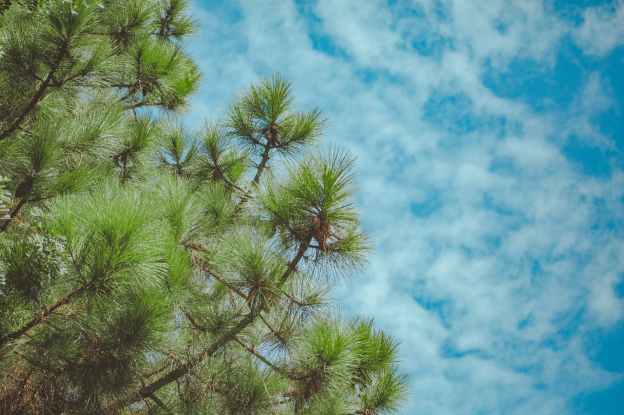
for pine needles.
They begin soft, small,
bright green. New life
at the tips of aged branches,
pushing last year’s needles
from youth to middle age.

Blessed are You
for brown needles,
falling,
carpeting the forest floor,
muffling running hoofs,
holding moisture for growing things.

Indigenous peoples
form these thinnest of leaves
into baskets, mats, art.
Mourning doves
pluck them from the ground
to balance them in bushes or trees,
making slipshod nests to hold eggs,
then baby birds—
dead needles witness new life.

Blessed are You,
Lord our God,
King of the Universe,
for the life of a tree needle,
and for its death.
It surrenders, not knowing
whether it will become dirt
on the forest floor
or something new
in the hands of a child
or the beak of a bird.

May I, too, trust death
to bring life,
and allow respect
to mingle with fear
of the unknown.

My Love of Children?

“I don’t like kids.” This is my response when anything kid-related comes up—Vacation Bible School, babysitting, homeschooling, school field trips. Please, please, please don’t put me in charge of a bunch of kids. I don’t know what to do when they fight, or when they won’t be quiet in a group setting, or when they say a bad word, or cry, or have an allergic reaction. I don’t know what to say when one person gets left out or when there’s drama over seating arrangements.

Truth be told, I’m a little scared. I’m afraid of not having the “right” answer to all the little and big things that come up. This is likely a form of decision paralysis. (I didn’t know I had decision paralysis until my counselor asked me if I did, and I was unable to answer yes or no.) I’m afraid I’ll do something a parent doesn’t approve of, or that a kid will ignore my instructions and I won’t know how to enforce what I’ve said.

Simply put, I’m afraid of me. I lack confidence in my ability to relate to and care for children, and I’m scared of letting myself down or letting a kid down or letting another parent down. I watch my friends parent any kid that is in front of them—resolving conflict, redirecting wild energy, correcting selfish behavior—and I am amazed. I feel anxious in those scenarios with my own children, let alone someone else’s.

Imagine my surprise when I accidentally discovered I love children. I was following a writing prompt from Julia Cameron’s book, Write for Life. My assignment was to complete this sentence ten times: “What I’d really like to write about is …”

After my first four answers, the next phrase that came to mind was, “… my love of children.” Surely someone had injected a foreign thought into my vein of thoughts. I almost dismissed it and moved on, but it insisted on being written down. So I wrote, “What I’d really like to write about is my love of children.” Then I added two question marks to make it clear I didn’t take full ownership of that answer. I finished the list without any more rogue thoughts.

The second part of the exercise was to choose one item on my list and write about it for five minutes. I chose number five, my love of children. Here’s what I wrote.

I love the children I know.

I love their faces, their voices, their giggles and tears.

I love the questions they ask, and the answers they give.

I love their trust, accepting help with hair-brushing and snack-opening and shoe-tying.

I love their creativity.

I love the drawings and crafts they give me, and how we can be fast friends after one stick of gum broken in half and shared.

I love their bird-nest hair and their smooth braided hair.

I love how they fart in their sleep, and talk in their sleep, and complain about how “terrible” they slept, just like a grownup.

I love the way they hug, with vulnerable hearts and trusting bodies.

I love the ways they imitate—words, TV shows, other kids, parents, animals.

I had no idea.

This exercise gave me permission to exist in both spheres: the one where I don’t like kids, and the one where I love kids. I experience the same fears of myself and of the countless moments that require wisdom or intervention, but at the same time I enjoy a new awareness that I love the kids I know. I really, really love them. And I like them too.

Sacred

Sacred

Blessed are You,
Lord our God,
King of the Universe,
for sleep and sunshine and summer,
for salamanders and salad,
slugs and spiders,
for skin.

Blessed are You for sorrow and “sorry,”
surprises and scrambled eggs,
sweet and sour,
song and silence,
strength and surrender,
swings and swans and swooning,
smoothies and smooches.

Blessed are You,
Lord our God,
King of the Universe,
for sending Your Son,
Your Self,
Your Soul,
for mine.

“Contradictions”

I eat ice cream, and spinach. I wear cotton, and polyester. I go to church, and theaters. I smile, and I grimace. I buy local organic vegetables, and clothes made in Vietnam. I tell my kids to hurry up, and to slow down. Am I crazy?

Perhaps I should take a stand for church, and against Hollywood. Maybe I should stop frowning. Smiling releases dopamine and endorphins. Frowning doesn’t. When my kids disobey, I’ll smile. When my husband is decompressing from work stress, I’ll smile. When my friend is telling me about her divorce, I’ll smile. When I’m angry, I’ll smile? A one-size-fits-all facial expression almost sounds simple and straightforward, but in the end it would complicate my life.

Most folks agree that a balanced diet (whatever that means) is also wise. Vegetables, ice cream, whole grains, and french fries coexist in our weekly intake of food. Fortunately, we have nice little pyramids and diagrams that tell us how much to eat from each food group. I haven’t found one of those for emotions. Or for what percentage of my clothes should be cotton and American-made.

I have watched people try to define God. I have participated in this endeavor. It feels good to know what side God is on. Have the right answer. Settle in. But the more I get to know God, the more I get bumped around, and the more it looks like there are many answers to the same question. Perhaps life with God is more like this: “The wind blows where it wishes, and you hear the sound of it, but cannot tell where it comes from and where it goes. So is everyone who is born of the Spirit.” (John 3:8, NKJV)

A dear friend said to me, “God is pro life and pro choice.” My mind wasn’t sure what to do with that, but my spirit shouted YES! Of course God is pro life and pro choice. God doesn’t choose between babies and their mothers. He chooses babies and their mothers. God stands in the middle when humans say there is no middle. Isn’t the cross the ultimate middle? How could God be connected with humans? Creator with created? Sin with perfection? And yet, somehow, sin and perfection came together on the cross. “For He made Him who knew no sin to be sin for us, that we might become the righteousness of God in Him.” (2 Corinthians 5:21, NKJV)

God is a bit crazy, but I like His crazy. I could look into this for the rest of my life, and I think it’s worth looking into.

A Blessing for Time

A Blessing for Time

Blessed are You, Lord our God, King of the Universe,
for Solomon’s wisdom: a time for everything.
A time to feel and a time to numb.
A time to argue and a time to agree.
A time to shower and a time to stink.
A time for kale and a time for funnel cake.
A time for cleaning and a time for doing anything but.
A time for water and a time for wine.

Blessed are You for creating and embracing
every shape, angle, paradox—all we see as incompatible.
You invite us out of the disconnections we struggle under,
to the connections we fear. We dare to hold hands,
to join what appears unjoinable.
We are shocked by Your current, flowing in real time.

Blessed are You, Lord our God, King of the Universe,
for gathering all under Your wings,
though You know we may explode
like a chemistry experiment,
or implode like a punctured balloon.
You made a time for everything—
for this moment—
whether calm or catastrophic,
serene or scattered,
fragrant or foul.
Blessing is the birthright of time.

Husband of a Mother

6:30 am. One bedroom door slams. Then another. Kids are scream-crying. Mom is crying behind one of those slammed doors, quieter but just as desperate. Dad was hoping to sleep until his alarm rang, but there will be no such extravagance today.

6:35 am. Dad slowly gets out of bed and stumbles across the hall in his boxers to hold and hear his distraught children. When he returns to the bedroom, Mom is in bed, spurting bursts of tears and anger, like a poorly-contained science experiment. Dad sinks back in bed to hold and hear the despair, and to quietly wonder how long this season of life will call on him to be more, always more.


Father’s Day was sweet and satisfying this year. We ate out at The Maple Counter for breakfast, shared gifts, and watched soapbox car racing on YouTube. As I was thinking about my husband, Michael, and how fortunate I am to parent with him, it occurred to me that perhaps as difficult and meaningful as it is to be a father, it is equally difficult and meaningful to be the husband of a mother.

A mother is immersed in emotions she often doesn’t understand. She sleeps much less than advised for mental and physical well-being. She is drenched with guilt and fear, which sometimes masquerade as control. A mother is on call 24/7—for days, weeks, months, years. She is on call for baby cries and soiled clothes, doctor appointments and play dates and skinned knees, temper tantrums and broken hearts, scissor and glue supervision, holding hands and finding shoes and wiping faces that don’t want to be wiped.

Who would sign up to be a support person to a mother? Such a person will be called upon to understand in times that defy understanding. They will bear witness to exhaustion, weeping, anger, and a beautiful body that is tired of being touched. They may endure the pain of watching a once-energetic woman become a hollow, methodical soul who can’t summon the energy to answer a question and has forgotten how to have fun. They will watch a mother pour hours into the planning and executing of a birthday party and have no capacity left for a goodnight kiss. They may stand by feeling helpless. They may step in to help and be criticized or ignored. They will be the object of resentment simply because they sleep a whole night or eat lunch while it’s still hot.

To stand with a mother, to witness her life, to love her, is a difficult prospect indeed.

Michael loved me as his wife for seven years before we were parents. He has loved me nearly 11 years as a mother. The demands on my time and emotions are less now than they were in the early years, but they will never end. I will always be a mother; my loving attention will never be only his again. He will witness the lives of our daughters not only as their father, but as a husband to their mother. He will forever be on this ride defined by unexpected turns and raw hearts, the kind of ride that remakes you with or without your permission, and invites you deep into love. Husband of a mother.

To all the men who love a mother, and to my husband especially: thank you.
Thank you for noticing.
Thank you for staying.
And thank you, too, for being selfish and annoying and knuckle-headed.
I couldn’t bear to be imperfect alone.

An Invitation to Mystery

An Invitation to Mystery

Blessed are You,
Lord our God,
King of the Universe,
for caterpillars,
who quietly eat their way
from size zero to plus-size.

When they grow up
they find a place to hang
from their last proleg,
upside down.
Do they know they will never
eat another leaf?
that their next meal
and every meal thereafter
will be liquid?
Do they know they will
keep only their six front legs?

We humans were like caterpillars
in the garden of Eden,
squishy and naked,
immersed in plenty.
But we didn’t trust the plenty,
didn’t trust ourselves,
didn’t trust God.
We left the mystery of plenty
for the certainty of scarcity.
Perhaps it would have been better for us
to surrender to love,
and to allow love
an element of mystery.

Instead we work
to stay the same size,
the same shape,
eat the same leaves.
We use what we know
to fight against God
and each other,
forgetting that mystery
has its own peace,
and not-knowing sometimes
makes butterflies.