Father Church, Mother Earth

I attended church every Sabbath (Saturday, in my faith tradition) for the first thirty years of my life. That’s 1,560 Saturdays. Allowing for a few skips, I’ll round down to 1,500. I participated in at least a few hundred of those, either up front or behind the scenes, most often in music—song service, choir, special music, offertory. I served as deaconess and Sabbath School Superintendent, provided children’s story, directed and participated in skits, coordinated VBS (Vacation Bible School), collected offering, counted offering, served on the floral committee . . . You get the idea. Church held an unquestioned space in my life.

Fast forward ten years, to a Sabbath in early spring. I drive to the far side of the small town where I live and meet my sister at Mill Creek Channel. We’ve only just begun walking the paved trail when I spot a mother mallard riding the creek, which is high and moving fast. Cement dividers at regular intervals create mini waterfalls. A single duckling follows Mother Mallard, and I wonder aloud if its siblings drowned from similar rough rides. In the froth where the water drops, the duckling disappears for a moment, then pops up like cork.

Five minutes later we cut off the path, toward a patch of trees where we’ll find what we’ve come to see. For much of the winter I’ve been coming here on weekends, and in spaces that were bare last time I visited, green plants have proliferated. A few steps into the greenery, a tree trunk bears a light-colored, concave mark a couple feet above ground, where a beaver has gnawed off an almost-heart-shaped patch of bark and wood. Walking past this, we step over and around tender new trees and bushes, and baby horsetail plants that look like bottle brushes.

Evidence of beavers is everywhere—small trees felled by a characteristic hourglass-shaped chewing pattern, wood chips, logs stripped of bark, and at the stream, multiple stick-and-mud dams upon which tall grasses grow. Coming up from the stream bank, we hoist ourselves over a large, smooth log and walk to the edge of this semi-open space, where the brush becomes thick and prickly. A ground-level tunnel through the underbrush indicates one of the beavers’ paths. A few feet in front of the tunnel opening is a tree I’ve been photographing, perhaps 18 inches in diameter and so tall I don’t venture a guess at its height. Where the beavers have chewed into the tree, only a thin portion of the trunk remains. I had hoped to track their progress in felling the tree—at what point it would succumb to gravity?—but I am disappointed to see that here, and elsewhere in the clearing, it appears the beavers are no longer active. The only change is the color of wood chips on the ground, from bright and fresh two months ago, to a dark gray. Have the beavers been captured and moved elsewhere?

I will come again and look, but for now we weave our way out of the spring undergrowth and return to the paved walkway. Here we part ways, as my sister returns to the parking lot and I continue along Mill Creek Channel. A handful of minutes later, I cross the creek on a corrugated metal bridge. The rushing water, visible under the bridge, makes me feel unsteady on my feet. Reaching the other side, I walk to a bench maybe twenty yards away and it and sit down.

Although I know the water is flowing “down,” some wavelets appear to flow “up,” jumping and curving in a seemingly reversed fashion. At my feet, wild grasses with freshly-minted purple and green seed-heads wobble and sway in a light wind. Under the water, longer grasses, submerged when the creek rose with rainwater, flow long and smooth. The air smells fresh, almost like a waterfall, and I breathe in slowly. Walkers, alone or in groups of two or three, all accompanied by one or more dogs, pass behind me, but I scarcely hear them over the loud and steady surge of the water. An occasional birdsong breaks through.

The sky is blended blue and white, and the sun on my back comes and goes as clouds shapeshift and bend to the wind. All this hospitality, my soul soaks it in. My back and shoulders relax. Sitting here, I recall decades of Sabbaths in church. If I still attended church, that’s where I’d be right now. I don’t miss it. Why?

How could I belong to something for 30 years and feel no sense of loss? Or maybe the sense of loss has faded away with time. I did miss traditional church when we transitioned to leading a house church. House church was different—in ways I loved, and ways I didn’t love. When we stepped away from house church after six years, I didn’t know what was next. Traditional church felt weird; staying home felt weird. 

Today, I think I might know what’s next. This. Mother Nature. Or, if you prefer, God’s presence in the outdoors, in the rhythm of water, the sound of birds, the antennae on an insect smaller than my fingertip, patterns in tree bark and in the sky. I need this mothering, a learning of beauty, impermanence, sound and silence. Here I find endless discovery saturated with companionship.

On many Sabbaths last winter I took a walk on another nature path not far from our home, either alone or with one or more of kids/husband. The secluded trails enchanted me with their secret stream and vines with berries, bright red and white. I watched a flock of starlings shapeshift in the sky above a meadow. I sat in the grasses at the base of a naked deciduous tree and paid attention—to the slug on my shoe, the cold and sunny sky. I felt my feet on the earth, and marveled at an enormous wild apple tree. And each time my car crunched out of the gravel parking lot, I was kinder, more hopeful, more grounded. These were lessons learned not in words but in silence. Not through instruction but curious awareness. I found complexity, not perfection. Death mixed with life. The way living things trust the land, and the land trusts living things.


As I sit by Mill Creek, I think about all this and wonder if church is my Father, and nature my Mother. I spent 30 years in my Father’s house; will I spend another 30 in my Mother’s house? I have explored ad nauseam the ways God is my father. But I’ve only just begun to learn how God is my mother.

Mothers are complicated. I want to release my expectations—based on my experience with my own mother, based on what the Bible or churches say about God as mother—and I want to experience it, to accumulate stories of my Mother and I, to come up against the edges of her that nudge me where I don’t like to be nudged, to soak in the warmth of her voluminous embrace. I suspect Mother God will at times disappoint me, and I will try her with my stubborn certainties. I also suspect that, like my Father, she is both safe and wild. 

I rise and follow the path along this side of the creek, taking pictures of farmhouses flanked with bright green meadows, and closeups of pink blossoms on trees. I am startled by a bird flying rapidly toward me, an osprey. He or she carries a stick some two feet long, and passes directly overhead. I turn to keep the bird in sight, and it lands across the creek on a nesting platform where a nest is taking shape. 


A few days later, I pull books off my shelf, looking for descriptions of masculine and feminine traits—not physical traits, but the ways of being that lie within those terms. Will I find evidence that church leans masculine and nature leans feminine? Are Mother God and Mother Nature one and the same?

In Mirabai Starr’s book, Wild Mercy, I find these descriptions:

Feminine: An aggregate of qualities such as mercy, loving-kindness, wildness, inclusiveness, radical truth telling and tendencies such as nurturing, subversive, relational, community building, heart centered, honoring of embodied experience, comfortable with ambiguity.

Divine Masculine: The sublime aspects of the masculine spiritual paradigm, an inclination toward detachment [objective, impartial, unemotional] and transcendence, intellectual clarity and religious rigor, purification and perfection.

(Bracketed words are mine)

Wildness. Nurturing. Honoring of embodied experience. Comfortable with ambiguity. These I find in nature. I soak in them and I am still thirsty; my capacity to hold more remains undiminished. I dip into Mother Nature again and again, and I come home to myself every time.


Last summer, when my sister was sorting through old family papers, she texted me a picture of a sheet of lined, yellow paper, torn from a mini legal pad. “TOBI June 89 (4 yrs)” is printed at the top in my mom’s writing, and below that, four quotes from my four-year-old self:

“Do you think God needed a ladder to get the sky up there?”
“Is Jesus going to be comin’ ‘round the mountain when he comes?”
“God isn’t a he, God is a she!!”
“Do you think God made our feet first so we could stand while he made the rest of us?”

Three questions and a statement, as only a four-year-old can say them.

After years of grappling with whether it would be offensive to use feminine pronouns to refer to the divine, and with my recent curiosity about Mother God, the statement grabbed me. It seemed my four-your-old self had shown up to give me permission to fall in love with an (obviously!) female God.


In my early thirties I sought help through mental health therapy. I brought my list of goals to the first session, but only later would I come to understand that essentially what I wanted was the ability to live with myself comfortably. My Christian therapist tasked me with writing out internal messages I’d inherited from my dad, and then writing what God might say instead. I cherish the many pages of writing which came out of that exercise, and the ripple effect of healthier thought patterns that affirm my value and wholeness. And I wonder if it is time to do the same exercise for mothers—my earthly mother and my divine Mother. What is my mother’s legacy inside me, and how is God’s mothering different? What are Mother Nature’s messages to me? 

And what will be the ripple effect this time? Mirabai Starr writes, “… I believe in the healing energy of the feminine as a fire that can melt the frozen heart of the world, the artistry that will mend the tattered web of interconnection.” This I want to receive, and this I want to regift to my children and my community. Let me be a melter of frozen hearts, mender of tattered connections. 


I sit on my porch, tea in hand. Tall, green-leafed bushes grow outside the deck railing, and trees canopy the lawn and driveway, such that nearly my entire view is green. (Later, I ask Google the meaning of the color green, and the AI overview tells me green has a calming effect that slows metabolism and promotes physical and emotional wellbeing. Green also symbolizes renewal.) An inordinate amount of rustling arises as squirrels and birds nose and scratch their way through old autumn leaves beside the gravel drive, searching for tiny treasures in exoskeletons. The new, green leaves of the canopy move continually, and I am amazed by their responsiveness to mere whispers of air. A squirrel sleeps on a tree branch—the same branch I can see from an upstairs window, where I often watch squirrels sleeping or bathing, like a cat. Sleeping squirrels, dancing leaves, the color green—these are “the artistry that will mend the tattered web of interconnection.” These are my Divine Mother.

blessing for openings and closures

A Blessing for Openings

Blessed are You
Lord our God
Queen of the Universe
For openings—
A break in the clouds
A hole in a tree
A path through underbrush

Blessed are You 
For boxed parcels
And bagged gifts
The eagerness that rises in me
To unwrap, receive, connect
Open arms
Open seat
Open heart

Blessed are You
Lord our God
Queen of the Universe
For my favorite shoes by the back door
open for my feet
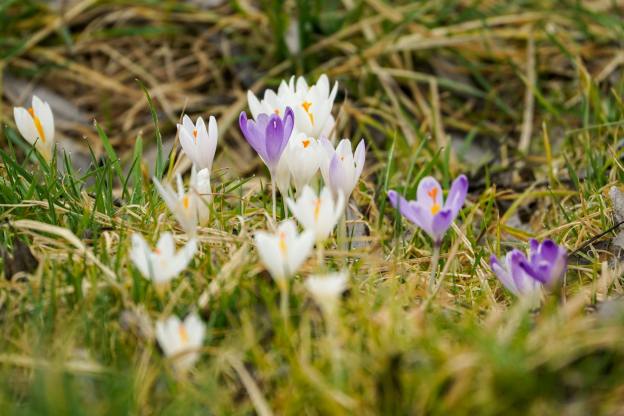
For wide-mouthed tulips
And the expectant gape of baby birds
For the “always open” sign at Your house
Inviting me in again and again


A Blessing for Closures

Blessed are You
Lord our God
Queen of the Universe
For closures—
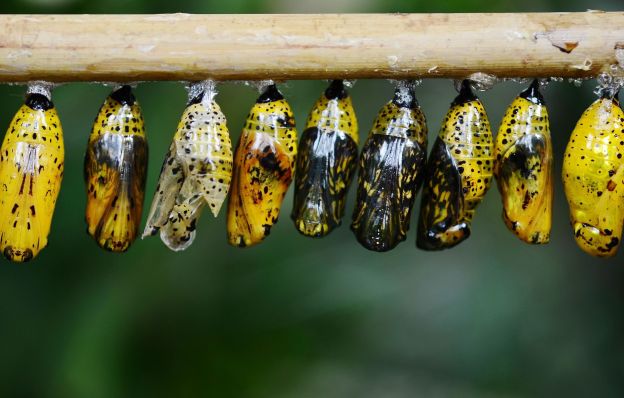
Sealed cocoon
Den of hibernation
Contraction of womb post-birth

Blessed are You
For coats zipped against the cold
The way I hold my nose against garish smells
How my eyes close to shut out light
Or hold in dreams
Or await a surprise

Blessed are You
Lord our God
Queen of the Universe
For the miracle under my bandage—
Skin closing to keep my insides in
And my outsides out
The way Your love encloses me
And heals me again and again

How to Be a Spouse

Just a few skills
Are necessary
For domestic bliss

Tell the truth—or don’t
Get naked—or don’t
Find a shared hobby—or don’t

Does that clear things up?
I think it covers the bases

Or maybe I’ve simplified it too much

Make love frequently
But never by the calendar

Ask questions
But not too many
or at the wrong time

Enjoy time together
Except when it’s spoiled by a fight, work stress, grief,
exhaustion, parenting trouble, or general malaise

Have a sense of humor
But don’t make sport of anything sensitive

Share your inner world
But be warned—it may be
as overwhelming to your spouse as it is to you

Be kind, even when you don’t feel like it,
Although your spouse may pick up
on a vengeful undercurrent in your demeanor

I hope this careful guide
Increases your confidence
As you engage in the simple process of marriage

Take care of yourself
But not obsessively

Be assertive
Unless it’s time to let the other person lead

Plan surprises
Within reasonable parameters of budget and schedule

I think that mostly covers it
You’ll have it down in no time

Just a few skills
Are necessary
For domestic bliss

Dear Darkness,

At first I thought the crack in my confidence, my wellbeing, my competence, was small, like the tiny valleys in the top of an old wooden table, or a playground injury a bandaid can soothe.

But it was not small. And to my horror, as it widened, I discovered beneath it a cavern of self-loathing and uncertainty—a cavern so large that it must have grown as I grew, stalactites of shame and stalagmites of anger forming one drip at a time beneath the surface of straight A’s and awards.

Had I sensed it there all along, this cave into which I felt myself falling? I fell until the crack through which I’d fallen seemed a mile above me, a splinter of light, unreachable. This new reality of you, and coldness—it all smelled like loneliness.

I wanted the old world back, didn’t know how to be me in this new world, didn’t dare look around. Instead I huddled to maintain the smallest sense of self. Was it years before I looked up? My eyes had adjusted, and to my wonderment I found I am not alone, as others move about in this underground home, and tiny lights shimmer from all the shining walls.

My misunderstanding becomes curiosity. Thank you for your patience. I think I may come to like it here.

Regards,

Middle-Aged Me

Mixed Media Life

“In visual art, mixed media describes artwork in which more than one medium or material has been employed.” (en.wikipedia.org)

My friend Jessica and I are not responsible for each other, and I believe our friendship relies on this independence, this mutual exclusion from the logistics of each other’s lives. We share books and ideas and emotional burdens, stories of our inner and outer worlds, coffee and laughter. We need each other, I think, but in a loose way, accompanied by the kind of gratitude that arises from walking through a beautiful flower garden or enjoying a homey meal. This type of relationship makes sense to me. 

Not so with parents and children. I have two of each, and they confuse and contort me in ways I didn’t know were possible. It’s as if my parents signed the deed for my soul at birth and have never relinquished their claim. My sense of self is uncomfortably tethered to them simply because they are my parents.

And my children. Oh, my miraculous children. Try as I might, I cannot find a fitting analogy for the ways we are connected. Are we spilled cans of paint running together? Magnets, by turns attracted and repelled? Is our relationship symbiotic or parasitic? Are we growing together like two trees planted in the same spot, or growing apart like two trees fighting for sunlight, so near we continually reach away from each other?

There is nothing simple about a parent-child relationship. I think one culprit for this disarray is that a parent is both emotionally and logistically responsible for a child. This creates an inherent tension, as my kids often point out when I attempt to comfort them in their unhappiness over a logistical decision I made. Can I really have it both ways? Can I be the perpetrator and comfort the victim? Can I pack lunches and arrange medical appointments and manage bedtime and screen time and also be a relational ally?

I watch as my husband checks in with our daughters out of care and curiosity, and I check in with them to see if their chores are done or ask how long they’ve been on TV or what they’ve eaten today besides Fritos and chocolate chips. Is the difference between my spouse and I a matter of personality, or is it because managing the logistics of my children’s lives precludes me from curious, sincere connection? How does a person do both?

This tension shows up in other relationships, including with the Divine. If God is logistically in charge of the universe, can She also be relationally intimate with its inhabitants? Certainly a God who allows discomfort and disaster (or causes it, depending on your point of view) cannot also fill the role of companion and friend. Can God be the perpetrator and comfort the victim? This puts God in an awkward position, if not an outright abusive one. And I feel the tension—preachers pretend God makes sense, parents bend rules to maintain friendships with their children, children follow rules to hold on to belonging in their family.

This overlap of logistical and relational responsibility is nonlinear, a rat’s nest, perhaps even unethical. As a parent, am I responsible for my children’s wellbeing, or their happiness? If push comes to shove, what gives? Might the loss of our relationship at a future junction actually contribute to their wholeness?

And what about God? In what ways is He responsible for my life, and how does that affect our friendship? Is God a CEO, committed to specified outcomes? Is She a mother? Is He a brother? A friend? A father? The owner of a vineyard? If God must choose, will They care for me relationally or logistically? Will He cure the cancer, prevent the accident, stop the abuse? Or will She feel the pain, inhabit the difficult spaces, and entertain the questions with me? I guess both.

God does both. Parents do both. I am annoyed by this. I am disconcerted.

Perhaps the realm where I most frequently feel this clash is marriage. Here my spouse and I are each responsible for ourselves, but also for one another. We carry responsibilities that affect the well-being of the other. Who makes the money, rakes the leaves, puts gas in the car and food on the table? If either of us drops the ball, the other feels it hit the ground. And while this juggling match requires attention and energy to keep the balls in the air, we also engage in a completely different kind of symbiosis, a relational companionship, an emotional load-sharing, a physical embrace.

I’ve lost count of the number of times my husband has let me know I’ve sacrificed our friendship on the altar of life’s logistical demands. We teeter back and forth between duty and delight, often off balance. The silver lining, I suppose, is that this balancing act has taught me not to expect, but to cherish, those times when both our delight with each other and our daily tasks hum along in harmony. More often one or the other weighs in heavier. And a marriage can’t survive much of this weight imbalance.

A logistical heaven may be a relational hell. And a relational heaven may be a logistical hell. Each extreme spells death for its opposite. But neither is mediocrity the answer. Neutral will not keep this thing together—not marriage, not parenting, and certainly not God-ing. We must show up with our passion intact, and our natural bent toward one extreme or the other. Mediocrity is at least as dangerous as the extremes. Living demands a passionate balancing act.

Does God care equally whether I am dead physically or emotionally? How then will He decide whether to allow my death in order to avoid heartache, or preserve my life to the detriment of my heart? Am I lungs and a heartbeat, or soul and spirit? I suspect both.

It’s always both. It’s logistics and friendship. Mental and physical health. Emotions and chores. And a rare opportunity for beauty. Because when I embrace the mess, I begin to weave and grow and build something—a work of art that could never be made with only one material. To borrow a term from the world of art, life is mixed media. Some of this for structure. Some of that for color. Some of the other for texture. All for living.

What She Wants Most

Escape. This is what she wants most in the world. 

She has bumped into a cliché, that this is not the life she wanted. 

But also it is. The husband, the house, the backyard with towering trees and a play-set for her daughters.

She has decided she needs a week alone, preferably on an island far from here. Away from the husband who wants sex. Away from the house that is just a little too full of life and all that life implies. Away from the back yard where nothing bothers to ask before it grows another foot, and her young daughters still need supervision to be outdoors and help to go down the slide. Every fall the towering trees dump a million and one leaves, and in the prickly cold the family rakes and hauls and piles.

The worst thing of all is that when she reaches the ends of her fantasies—the deserted island, the silent retreat at a monastery, or even the house to herself for a week with no kids and no husband—yes, at the ends of the fantasies she is still weary, estranged from herself, married to her chosen life, nothing has changed. And that is the dagger to her heart. Past the hopeful fantasies lies the truth, that she doesn’t want another life, but neither does she want this one—the sleep-challenged nights, the rotting homemade play-doh, the almost-empty bin of cat food, dishes on repeat, never alone but often lonely, a dutiful, tired, empty well.


She is lying. About the escape. This is what she wants most in the world. 

She has explored her options and reached a conclusion. She wants to be at home with herself. She wants to feel relaxed in her own skin, perhaps even to like herself. She is aware of this possibility only dimly, and aware it will cost more than the option of escape. Escape is quick. Therapy is slow. But it becomes apparent that her own hostility toward herself is the culprit of her discontent. And this revelation is an invitation. To what, she’s not sure. Is this a battle? A puzzle? A zombie apocalypse?

Perhaps yes to all of the above. This is unsettling, though perhaps less unsettling than the lonely, empty well. This battle/puzzle/apocalypse promises change, momentum. She gets to keep the husband, the house, and the kids, and discard the shame and scarcity.

She doesn’t know it yet, but she will discover self-friendship. She will experience her own self as her most trustworthy ally, and she will learn to enjoy her own company. She will discover that friendship with herself is an expansive container, able to hold the pieces of her life, even those that seem incongruous. She is not a pantry, but a cathedral.

And when she has absorbed this truth, she might still take that week alone when she gets the chance, but rather than an escape, it will be a celebration.

Spring

What am I here for
But to watch buds fatten
On tips of branches in early spring
To notice the colors of the sky
How sun and clouds play with light
And wind plays in trees

Enormous branches wave and pitch
Every squirrel has sea legs
And every bird knows wind in its feathers
The way I know air in my lungs

Warty limbs offer footing for hawks and squirrels
Predator and prey on the same playground

Mourning doves build flimsy nests
Robins weave bowls sturdy and deep
Open-air homes, no walls, no roofs
Yet safe for fragile eggs and naked babies

I live fortified in walls and clothes and knowledge
Yet no more safe than birds and buds
“Look at the lilies of the field and how they grow
They don’t work or make their clothing
Yet Solomon in all his glory
Was not dressed as beautifully as they are”*

*Matthew 6:28b-29, NLT

Every Step of the Way

“Mama, are you gonna be with me every step of the way?” Her faced warped in sorrow, and in her teary eyes I saw she needed an answer, needed to know she would not be alone. 

Three months earlier, our family made an excursion to the locally-owned pet shop across town, where a hay-like smell and the sound of chirping birds accompanied us to the corner of the store where for-sale rodents ran on exercise wheels and nosed around in paper bedding. Kyli, eleven years old, wanted a hamster. Soon one of the employees was carefully scooping through a small aquarium nearly full of paper bedding, searching for the elusive, white dwarf hamster Kyli had selected. Kyli’s aquarium, identically full of bedding, sat nearby on the floor, ready to receive her pet. It seemed a long time before the rodent handler came up with a wiggling clump of bedding and transferred it to its new glass home.

Lucy, as Kyli named her, liked life buried in bedding. But we’d close the bedroom door, shove a blanket in the gap between the door and the floor, and scoop Lucy out to run around in a supervised corner and hide under our crossed legs. Kyli had incredible patience and insisted on gaining Lucy’s trust slow and gentle. One evening Lucy got into Kyli’s closet, which at that time contained an amorphous heap of items on the floor. Determined not to hurt or scare Lucy, Kyli waited patiently outside the closet for her pet, and asked me to stay with her. Lucy scooted into the folds of a Home Depot tote bag, then back out to disappear behind a crumpled sheet. We listened as she poked plastic toys with her nose and scrambled into a cardboard box. I mentally tapped my toe, Let’s get this hamster put away so I can brush my teeth and get in bed with a book.

Then Lucy came, with the barely perceptible tap of tiny claws on the floor, out to the open area. I held my breath as Kyli slowly extended a hand toward her; Lucy scurried back into the tote bag. I suggested we carefully start pulling things out of the closet. Kyli said no, that would scare her and might hurt her. I suggested clamping something down over her fast when she came out. Kyli said no. Lucy scampered out of the closet and almost crawled under Kyli’s dresser. Kyli shooed her away from the under-dresser “cave,” and I jumped in to scoop her up . . . she shot back in the closet.

I suggested blocking some of the open areas into the closet, so when she came out we could quickly block the rest and prevent her from going back in. We tried this, but Lucy easily eluded us. She must have come out in the open area a dozen times, as I sat on a pillow on the bedroom floor, making pointed suggestions about how to speed things along. Kyli talked me through being patient. “Mama, I don’t want her to be scared. We have to wait until she comes out. You’re gonna be okay.” 

“We could be here all night,” I grumbled. But eventually we corralled her and successfully lifted her back into her cage. Nearly an hour had elapsed.

Since Lucy had a way of scuttling into hard-to-reach hiding places in the bedroom, we took to sitting with her in the bathroom. With a blanket tucked into the gap under the door, she could run around without disappearing. Although not excited about being held, she warmed up to it, and seemed to enjoy exploring our hands and laps. 

One day, as she explored on and under the blanket by the door, she squeezed into the hallway. Before we knew what was happening, one of the cats seized her and carried her under sister’s bed. Papa dove under, scraping his back on the bed frame, frantically reaching for the cat, who dropped Lucy. Kyli screamed in fear throughout the ordeal, and although Lucy looked fine, her mannerisms over the next couple of days shed some doubt on her wellbeing. We monitored her, unsure what she needed, but she ate and drank and had no visible wound, so we were hopeful she would be okay—until the morning we found her lifeless in the cage.

On Thanksgiving Day we dressed in black and Papa dug a hole beside the shrubs along the back fence. Kyli settled Lucy in a sturdy wooden casket about six inches long, made by her wood-shop teacher, and added dried flowers, the toilet-paper roll Lucy loved to run through, and a smaller box containing her tiny body. We shared memories of Lucy and buried her. 

Kyli felt all the things common to loss. Frustration with herself. Disappointment in how things turned out. Anger at the cat. She blamed herself for not being a good enough mama to Lucy. She often felt sad in the evenings, and with tears in her eyes would say, “I want her to know how much I loved her. I don’t know if she knew. What if she didn’t know?”

The grief softened over time, as grief often does. By January Kyli started talking about getting a new pet. In the meantime, her aquarium had served as home to a snake she and some classmates found in the schoolyard, and although they released it after a few weeks, it molted while in captivity, leaving Kyli a snakeskin souvenir. We washed and disinfected the aquarium. On the day of parent-teacher conferences, we once again traveled as a family to the pet store—only to find the cages in the rodent corner mostly empty. One contained an aging gerbil. Another, a white hamster that bit the pet-store lady assisting us, and drew blood. There were no dwarf hamsters, just Jumbo Biter. There was, however, one tan-and-white gerbil that seemed like an option. Kyli went into the back room with the pet-store lady to get a closer look, and before we knew it we were back on the highway home with Miss Gerbil in the aquarium. A bag of cat food balanced atop the cage to secure the screen lid.

Kyli named her new pet Tophee—Toph for short (like “trough” without the “r” sound)—and we stationed her in the dining room where we could see her often and get to know her. She was more active than Lucy had been, and more apt to scamper around on top of her bedding where we could see her. One day when Papa picked her up so Kyli could hold her, she shot off his hand to the floor, where she and we frantically scampered around until I grabbed her tight in my hand to lift her to safety. She did not appreciate this and bit me hard, leaving a bloody cut at the tip of my middle finger. Kyli again decided to take a gentle approach, reaching into her cage so Toph could get acquainted with her hand, talking softly to her and giving her treats, not taking her out of the cage to be held.

After a couple weeks, Kyli noticed Toph didn’t seem to want to open her eyes. Were they crusted shut? We couldn’t tell. Sometimes they were open, sometimes not. And she seemed to burrow less. We also questioned if she was drinking water. The hand-me-down water bottle she used sometimes required a bit of prodding to produce water. After some deliberation, and Kyli desperately wanting to take Toph to the vet, we took her to the pet store for an unofficial assessment. The pet-store lady who’d helped us purchase Toph, put on a long leather glove and reached in to hold and assess the little critter. She thought Toph might be dehydrated, asked about the warmth of our house, and suggested we try a new water bottle and watch to see if the eye situation worsened—if so, it could be a respiratory infection.

We moved Toph to a quiet corner of the living room, hoping she could rest more and get well. Over the next several days, she drank from her new water bottle, ate celery slices and Romaine lettuce, and seemed more active. Until she didn’t. Soon we realized we’d hardly seen her at all, as she seemed to be sleeping most of the time. We hauled a six-foot-long cardboard box from the basement to the dining room so we could hold and observe her outside of her cage. I scooped her up and placed her in the box. My heart sank as I watched her walk. She teetered to one side, getting in a few steady steps and then struggling again to maintain balance. Kyli watched tensely, and began to panic as I expressed my concern. We’d had rats who behaved that way, and they had to be put down for neurological problems.

I sat in the box with Toph; Kyli cried, “Why me? You had a hamster that lived for a long time, and you threw it against a wall! Why can’t I have a pet that doesn’t have all these problems?” I lifted Toph to my lap, sleeves pulled over my hands to protect against bites. She sat on my leg, barely moving, thin and lethargic. This was more than Kyli could bear and she paced around the living room crying, not wanting to look at Toph, feeling guilty for not being able to keep her healthy, desperate to do anything we could for her. As I sat in the box with Toph, Kyli approached me, tears on her cheeks, her face twisted in fear and sorrow. It was too much. Too much not-knowing. Too much angst at the thought of an innocent animal suffering. Too much powerlessness and insufficiency and fear. Kyli reached out her hand to me—“Mama, are you gonna be with me every step of the way?”

I, too, felt powerless, insufficient, and fearful. How could I be present to Kyli’s grief? How could I make a decision about taking a $30 rodent to a vet who would certainly charge more than $100? Kyli’s question handed me a lifeline. In asking me to be with her, she gave me something to hold onto. “Yes. Of course. I will.” I will be with you. I wouldn’t have it any other way. We will question together. We will cry together. We will make difficult choices together. You are not alone in your fear and grief. Together we will watch and worry and wait. Together we will make decisions. Together we will hold our insecurities and unanswerable questions. Together.

The next day I called the pet store for more advice. They wondered if Toph was warm enough, so we moved her in front of a heater vent, put a blanket over half her aquarium, and decided to offer her water on a spoon two or three times a day, buy new food, and give her some jarred baby food as well—pureed pumpkin. Toph again seemed to perk up, had an enormous appetite for sunflower seeds, and began rummaging around her cage more often.

But after a week, she returned to excessive sleeping and her sides still caved in a bit where she should be plump and round. We didn’t know what she needed. We consulted the internet, the pet store, and artificial intelligence. We didn’t know if she’d make it or not. I echoed Kyli’s sentiment—why can’t it just be simple? And I was grateful, knowing we would be together, every step of the way.

Beach morning

Clouds spread high and even, exposed quilt-batting pinned above the landscape.

Great Blue Heron perches afront a high cliff, dark against tawny, bare earth.
Suddenly, silently, he extends broad wings. Legs momentarily dangle long before he points his toes straight behind and glides north along the shoreline.

Hummingbirds cavort, pausing occasionally in the bushes below our deck. One zooms into my personal space, then speeds away, so quick I register its presence only when it’s gone.

Two piles of sea lions lie strewn on behemoth, exposed rocks in the frothy tide far below, where yesterday we found wide swaths of sea anemones packed together like dinner rolls, and a Dungeness crab picking its way through submerged, holly-green sea plants.

The air is calm and balmy, the sound of waves steady.

Assorted seabirds pass overhead, wings beating duck-like.
An osprey circles once, twice, a third time. Its feet drop slightly as it releases a sizable white poo that disappears as soon as I spot it.

Blue clouds on the horizon hold my gaze—color of blue sky, but fluffy like whipped frosting. 

caw-caw rides air from the beach to my ears. Sea lions are on the move.
They wiggle their way toward the surf, descending the sloping rock like otters with no legs, bodies gallumping in a wavelike motion, ungraceful.
A raggedy row of them moves like an uncomfortable caterpillar. A dozen submerge and swim away; the “caterpillar” comes to an awkward halt, twitching a few times at the tail end, then settling, as if an invisible being has hit snooze. Nine more minutes of sleep. 

A long, low island of rocks emerges, left of the tall sea-cliff island that is nearly always visible.
A wave crashes, snapping my attention back to shore and sleeping sea lions. One twitches its hind flipper like a cat’s tail.

A flash of blue catches my eye. Stellar Jay lands on the porch railing, hops down, picks up the beef jerky that fell yesterday when we fed seagulls. Effortlessly, she ascends again to the railing. She pins the jerky against it, reaching between her toes to rip pieces off, her scruffy morning hairdo dark against the sky. Before I have drunk my fill of her beauty, she hops away. Holding the last bite of jerky, she springs grasshopper-like in short bounds along the railing until she disappears beyond weathered shingles.

I think about binoculars, so I can see what kind of birds cluster on the rocks far from shore. But fog has moved in, curtain call on this beach morning.